
'There should always be a book within arm’s reach'
Books have become the arty, elemental collectibles we need
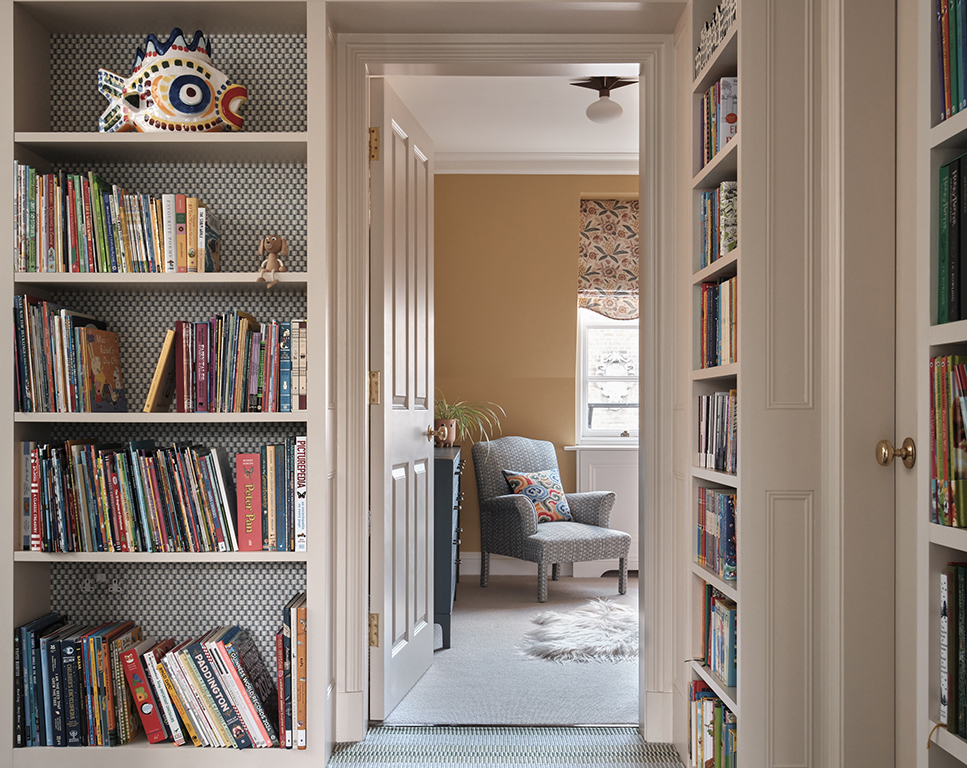
Few objects combine aesthetics, function, history and personality as effortlessly as books. Essential design elements, they add visual texture, soften architecture and create rhythm within a space without feeling repetitive or formulaic. But perhaps their greatest quality is their ability to tell a story — not only literally, but through the homes and buildings they inhabit.
The role of books in design has long since moved beyond simply storing a collection. Yet somewhere in the last decade or so, the personal library lost its way. Design-savvy types seduced by ‘shelfie’ design began displaying books in gradients of spine colour, or — horror! — with spines against the wall and the neutral-coloured pages facing out. Today, book displays are intentional in ways that are less purely aesthetic. Spaces where books are as accessible as they are ornamental are growing in popularity with many designers quick to point out their value beyond embellishment.
‘I’m always wary of books being treated as decoration,’ says Venetia Rudebeck, cofounder of design practice Studio Vero. Books, she says, are to be picked up and rifled through. ‘I tend to keep them on coffee tables or side tables, where they’re part of everyday life. At home they’re constantly moving around, and rightly so. Books invite curiosity into a room. They encourage you to pause, open something unexpected and follow a thread of thought. There should always be a book within arm’s reach.’
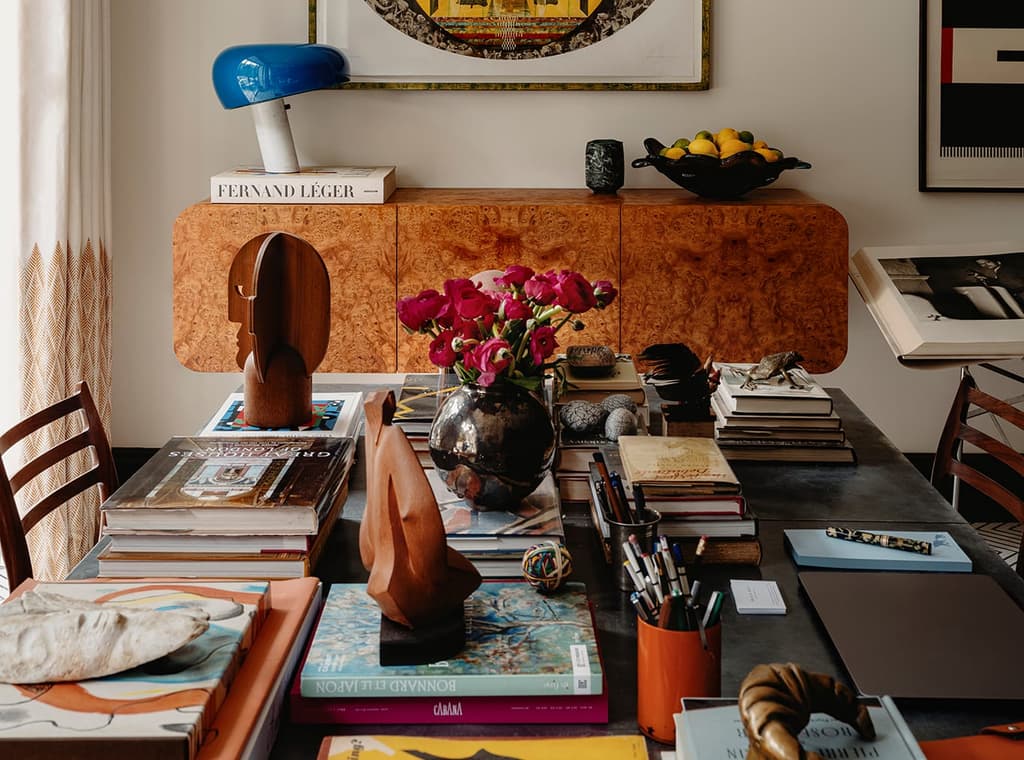
Having a book to hand has become even more appreciated in a world dominated by technology. ‘It’s nice, in this world that’s so digital, to work more analogue and get references and images and inspiration from books,’ says Alex Eagle, founder of design practice Eagle & Hodges. Recently, the practice installed a warm wood library across one wall of the penthouse at St Clement, a new hotel at 180 The Thames in London. It’s tastefully styled with a selection of books, some displayed face-out like artworks.
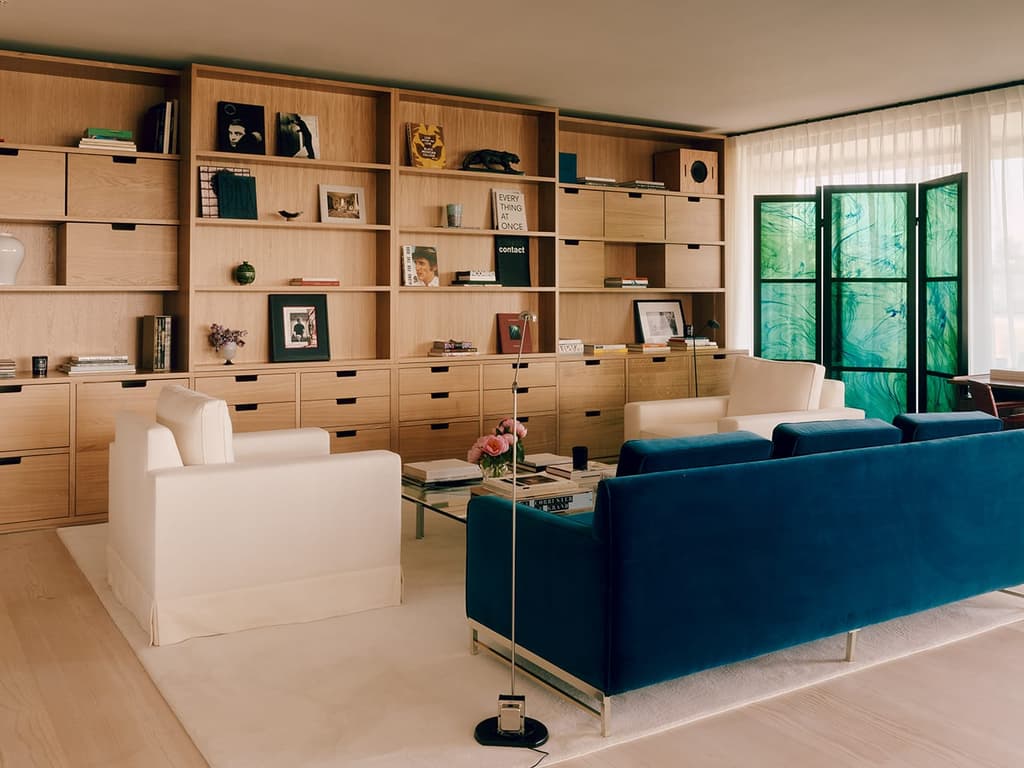
In her own home office, Eagle has designed floor-to-ceiling bookshelves to display a collection she’s been building for more than two decades. Collections such as these, consolidated in a small, purposeful space, are growing in popularity. Jayne Alexander, founder of the Marylebone travel bookshop Travellers’ Tales, has fielded increasing demand from clients seeking bespoke home library curation. ‘The bookshelf has evolved beyond decoration,’ she says. ‘No longer styled simply by colour or filled with books bought by the metre, today’s libraries are carefully curated to reflect a homeowners passions, travels and personality.’
When it comes to designing a bespoke library, books should be knit seamlessly into the architecture of the room. For an apartment in London’s Mayfair neighbourhood, design studio De Rosee Sa curated a collection spanning literature, art, architecture and history before designing bespoke rust- and slate-coloured joinery to house it. ‘We wanted the library to feel completely integrated into the room,’ says cofounder Claire Sá. ‘The shelving is every bit as considered as the furniture, lighting and materials, allowing the books to become part of the architecture rather than simply objects on display.’
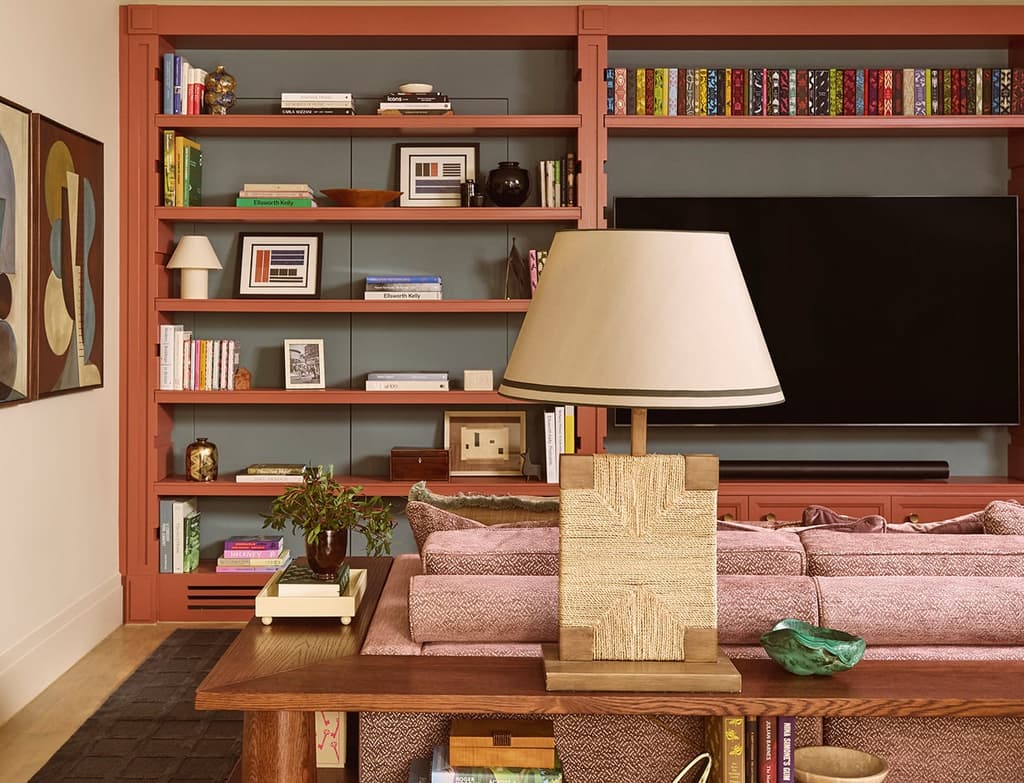
It’s an approach echoed by Sophie Pringle, founder of design studio Pringle & Pringle. Discussing a wall-to-wall library that doubles as a TV snug, she explains how bookshelves can bring warmth, texture and personality while wrapping around a seating area to create ‘somewhere to retreat and switch off’. Shelving can also be a clever architectural solution in a challenging room, transforming an awkward alcove or the space beneath a pitched roof in a loft.
‘Rather than seeing a generous ceiling height as empty space, we introduced a mezzanine to create separate reading retreats for the children,’ says Pringle. ‘One mezzanine is colour-drenched to create a cosy hideaway, while the other uses paint to complement the wallpaper, subtly zoning the space without adding physical divisions.’
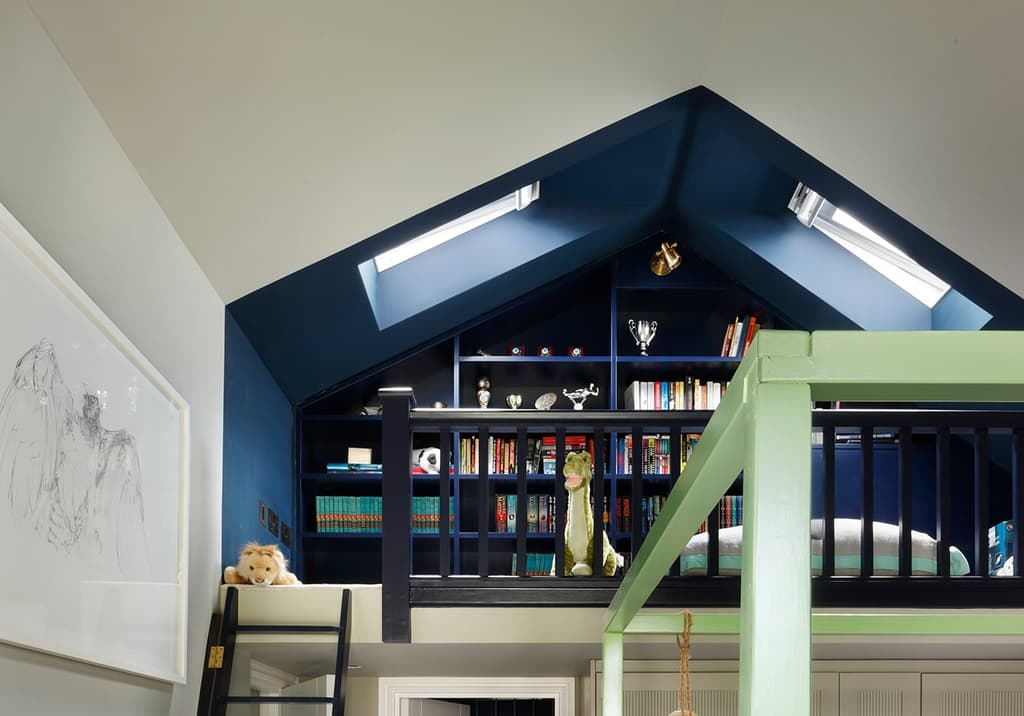
Children’s bedrooms, she adds, are places where books become integral to the design. In some projects, says Pringle, ‘we have designed deeper shelving at each end of the bed for stacking books spine-out, with shallower shelves behind the headboard to display books face-out. It not only makes books easier for young children to choose but also turns colourful covers into part of the decoration and encourages a lifelong love of reading.’
Maybe that’s why books continue to hold such a unique place in our hearts and homes. In an era when so much of life plays out on a screen, a thoughtfully placed bookshelf or well-thumbed novel offers something increasingly rare: time spent mindfully absorbed. The best libraries are not designed simply to be admired, but to be lived with.
Read next: Saint Laurent opens its Paris bookstore, curated by Anthony Vaccarello
Read the room!
Related stories


Newsletter
Want news delivered to your inbox?