
Imperfect perfection: the exquisite rise of resin
'Air bubbles, colour variations and fractures become part of the finished piece'

Once associated with industrial manufacture and the glossy furniture of the mid-20th century, resin is enjoying renewal in contemporary design. Increasingly, the material is being used to explore our relationship with the natural world — and the tension between the organic and the manufactured.
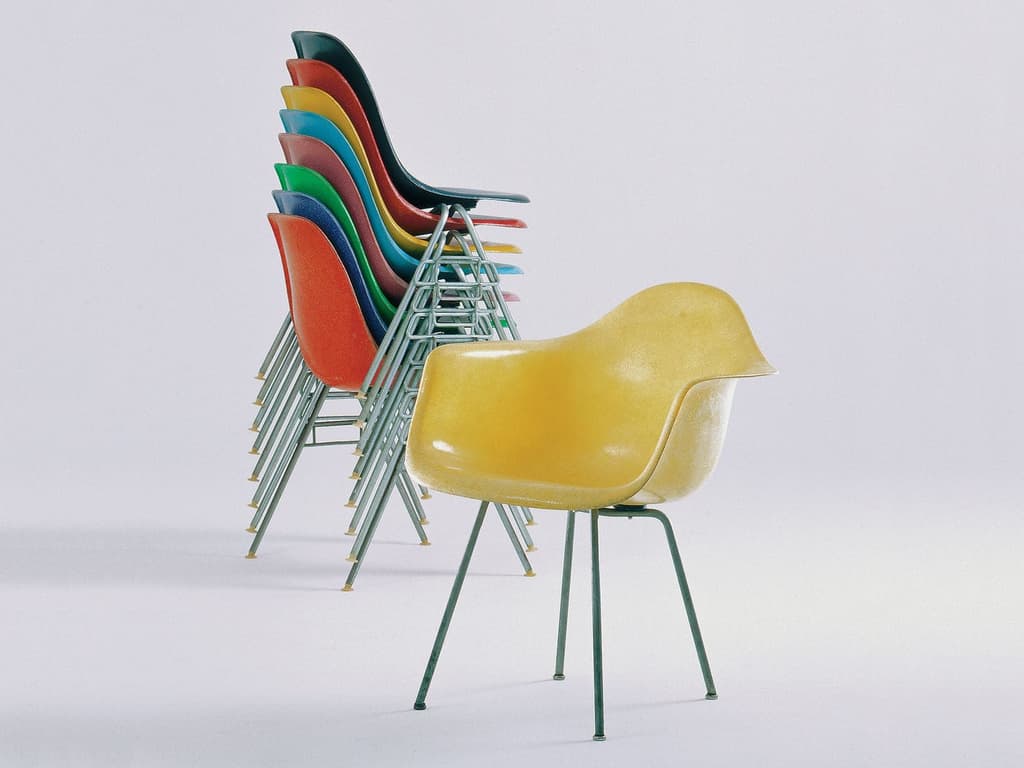
Resin is, of course, far from novel. Natural resins have been harvested for thousands of years, produced by trees and plants and transformed into varnishes, incense, medicines and decorative materials. Ancient civilisations prized pine resin and frankincense, while amber — fossilised tree resin — was carved into jewellery and objects. Its transformation into a modern design material came with synthetic developments in the 20th century. Unlike natural resin, these could be manufactured at scale, poured into moulds, coloured and combined with other materials, allowing designers to explore forms and finishes previously difficult to achieve. Charles and Ray Eames were among those who demonstrated how resin-based materials could embrace colour, malleability and potential for mass-production. Their 1950s fibreglass-mix shell chairs demonstrated the potential of polyester resin in design.
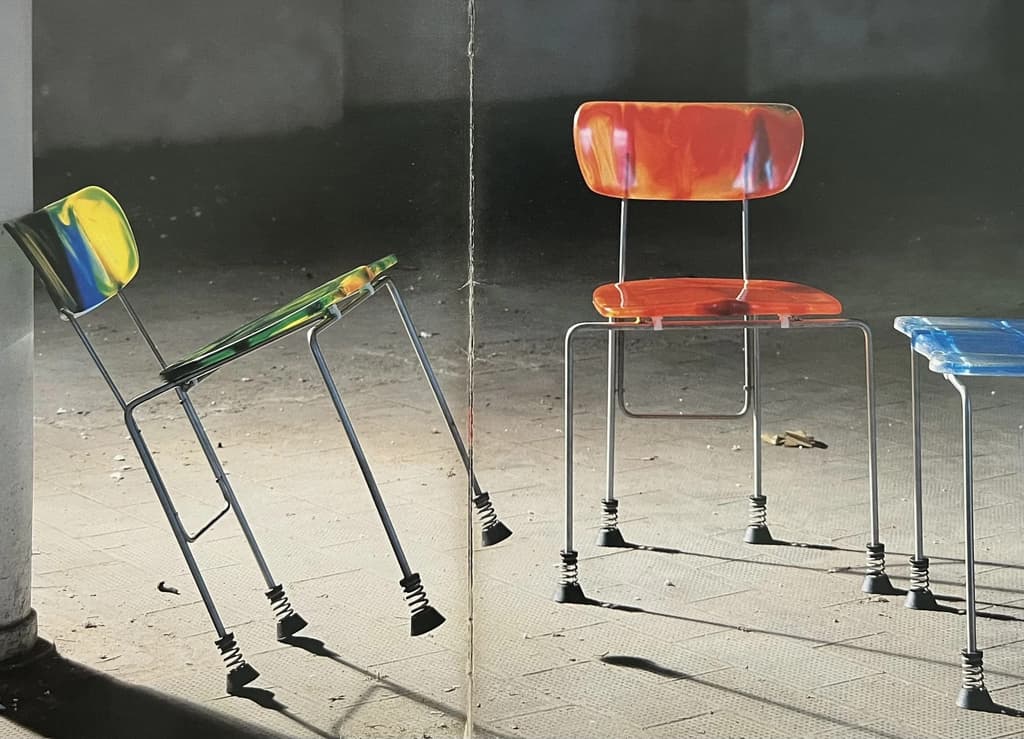
The material’s expressive possibilities were pushed further by Italian designer Gaetano Pesce, who treated resin less as a route to industrial perfection than as a medium for experimentation and chance. His epoxy resin Broadway collection and polyurethane resin Fish series demonstrate his fascination with organic, anthropomorphic forms and the unpredictability of synthetic materials. For Pesce, irregularity was not a flaw but part of the design. Resin could be fluid, amorphous and expressive, allowing furniture to exist somewhere between functional object and sculpture.
Today designers continue to use resin to explore preservation, imperfection and the relationship between nature and manufacture. In his Flora series, Polish designer Marcin Rusak embeds discarded blooms, often cast-offs from the floral industry, in resin, transforming organic matter into furniture and sculptural objects. Flowers that might otherwise exist for only days are suspended indefinitely, their colour and form captured in time.
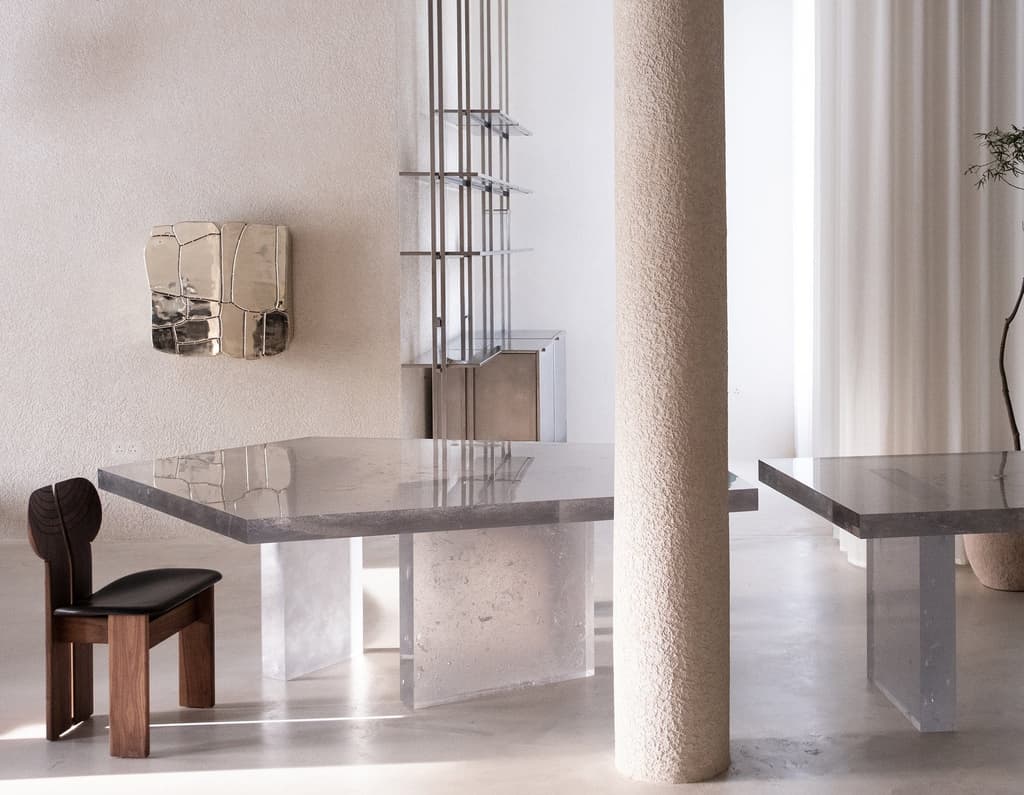
At this year’s London Design Festival, the design studio Paraforma will present a series of resin-cast pieces inspired by Charlotte Perriand’s Table Studies, a collection of organic, asymmetrical tables developed in the 1930s. Made from epoxy resin, the furnishings will feature at the Mayfair boutique Monologue and explore the material’s ability to manipulate light and perception.
‘Rather than pursuing absolute clarity and perfection, we became particularly interested in the bubbles, impurities and irregularities that emerge during the casting process,’ says Paraforma cofounder Valentina Grittini. ‘What might conventionally be considered mistakes became part of the material language of the pieces, giving each cast its own character.’ Her tables change in appearance throughout the day as light moves through and across their surfaces, making them responsive to their surroundings rather than entirely static. Like Pesce, Paraforma is drawn to the unpredictability of resin, allowing the casting process itself to influence the final form.
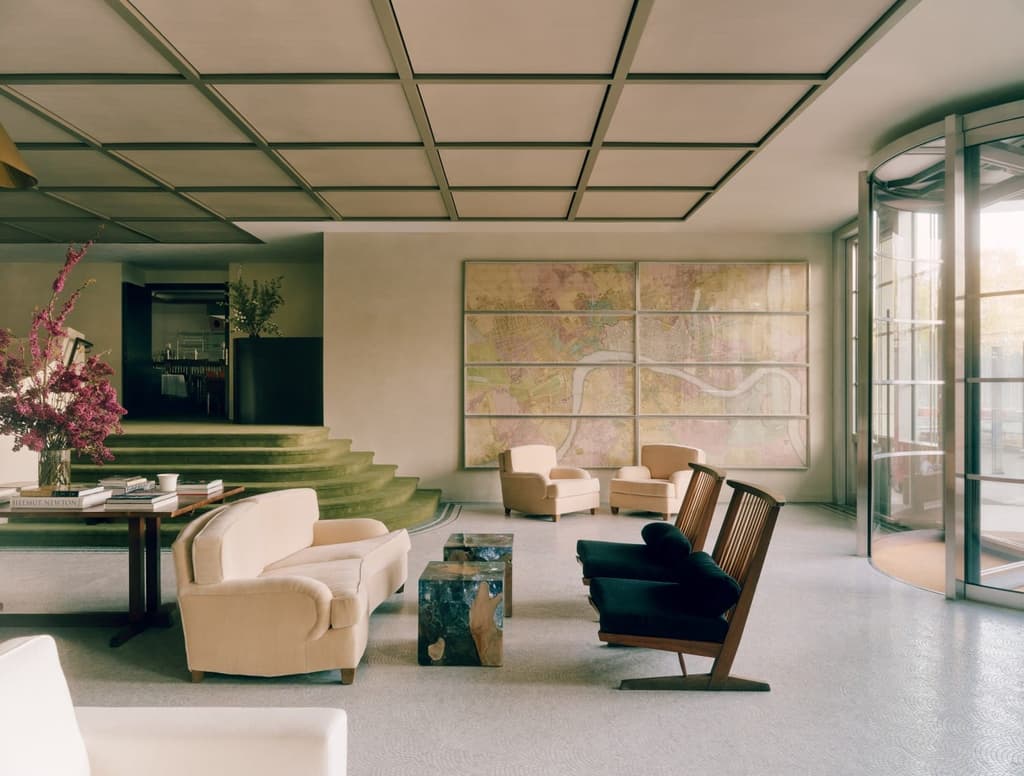
A similar dialogue between the natural and manufactured can be found in the work of Andrianna Shamaris. Her Cracked Resin collection combines reclaimed teak with resin, which fills the natural grooves and fissures of the wood with a deliberately cracked surface reminiscent of quartz or fractured stone.
The pieces were recently incorporated into the interiors at 180 The Thames and the new hotel St Clement by Eagle + Hodges. For cofounder Alex Eagle, their appeal lies in this tension between the contemporary and the natural. ‘The encapsulation of nature frozen in time in this resin just felt so beautiful,’ she says. ‘They are like sculptures but they can be used as tables, which I love.’
It is this combination of permanence and unpredictability that makes resin so compelling. Air bubbles, variations in colour, uneven curing and fractures can become part of a finished piece. In the hands of contemporary designers, it also becomes a way of holding time still — preserving flowers and the imperfections that emerge through the making. The medium is the message, and a source of experimentation. As Valentina Grittini describes, ‘The final material is shaped as much by the process as by the original intention… It shifts design away from the idea of a predetermined object and towards a process of collaboration, testing and discovery. Resin becomes interesting not only for what it can produce, but for the way it asks us to work.’
Read next: These design rebels are pushing the industry to its limits
Bright and breezy, this family home is steps from Museo Frida Kahlo
Related stories



Newsletter
Want news delivered to your inbox?