
A writing desk feels more essential now than ever
It's a place to stop, to think and to reconnect with work

From the desks of poets to the drawing boards of revolutionaries, the writing desk has long been a site of contemplation and intellectual independence. Today, with work moving into the home, a proper desk feels more vital than ever. These spaces are not simply functional; they offer a personal sanctuary for deep thought and creation. According to creative director Alex Eagle, of design practice Eagle & Hodges, ‘It’s less about productivity and more about creating somewhere that encourages reflection, creativity and focus.’ In this sense, the writing desk marks out a moment within the home — a space to sit with oneself in solitude. This sense of pause is ever more valuable as our lives become busier. A well-designed desk offers both quiet inspiration and purpose.
Certain designers have long understood this sensibility. For example, the desks of midcentury Danish furniture designer Arne Vodder, who would have been 100 this year, embody the balance between functionality and beauty. Often made in rosewood or teak, they are characterised by their lightness — floating surfaces, soft curves and an absence of harsh geometry — reflecting the principles of Danish design, where restraint and materiality come together.
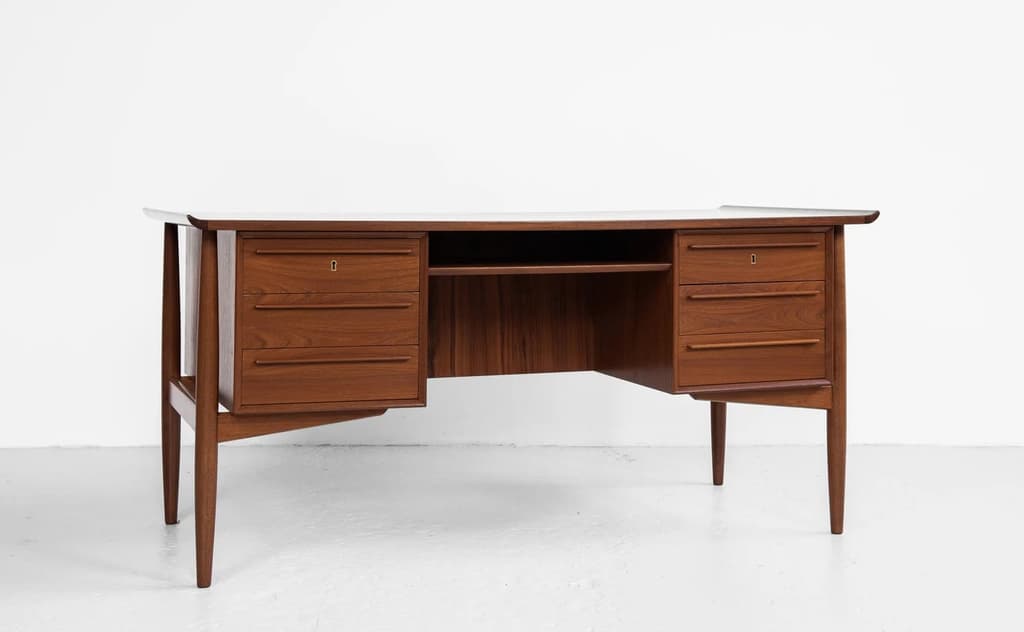
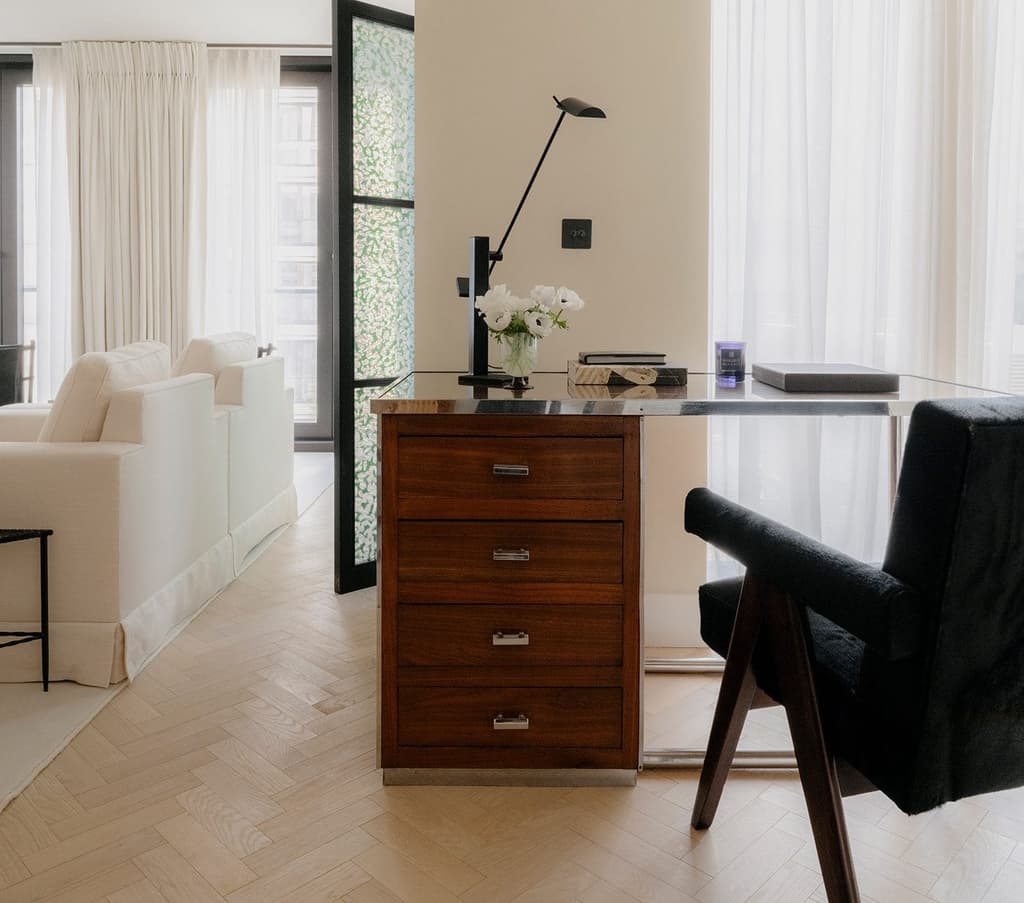
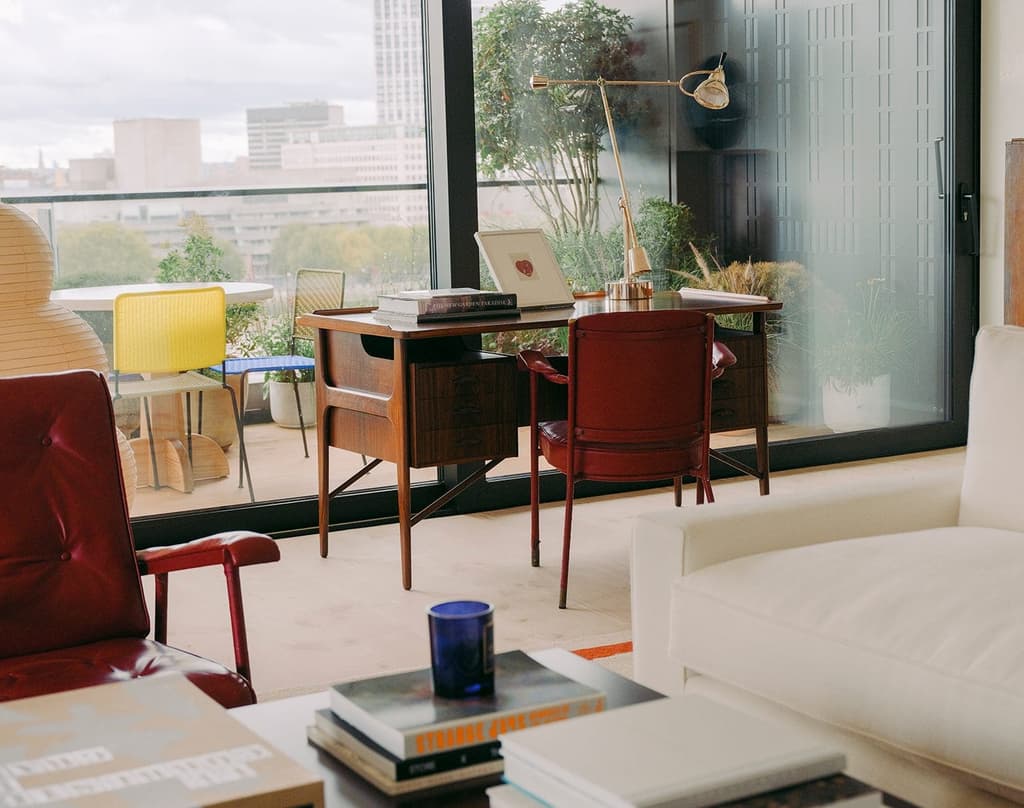
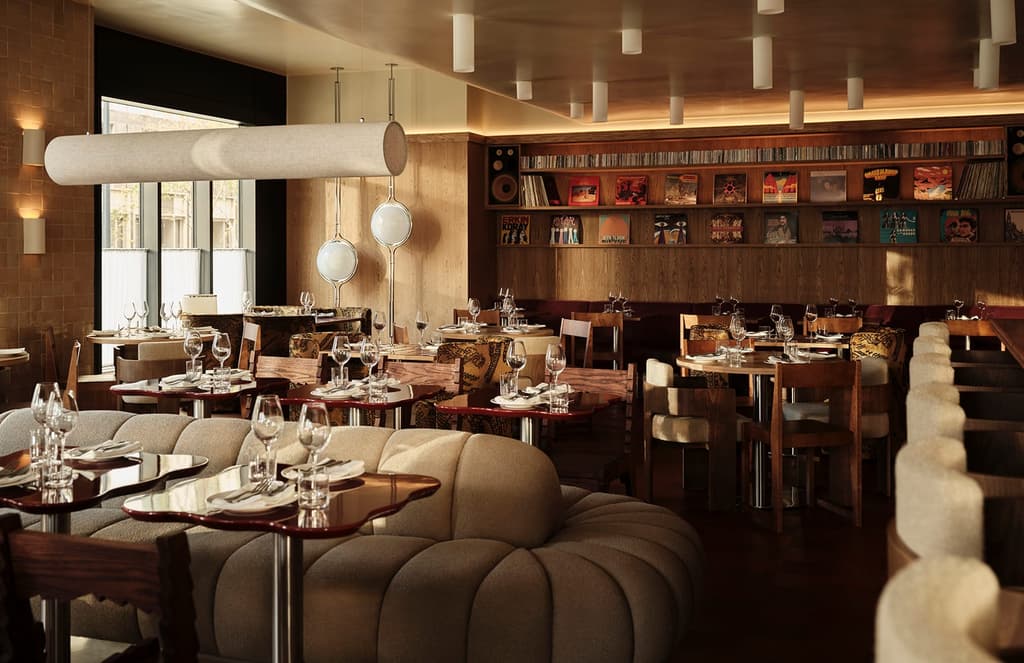
At the new St Clement hotel and the apartments at 180 The Thames, Eagle & Hodges have incorporated several Scandinavian pieces, including one by Danish designer Svend Aage Madsen. ‘I love beautiful, textured timbers — particularly dark cherry wood, rosewood and mid-century Danish pieces — which bring warmth, richness and character,’ says Eagle. The choice was deliberate: ‘We avoided oversized desks, instead selecting smaller, more elegant pieces that feel domestic rather than corporate.’ Positioned to face outward, towards windows revealing the London skyline beyond the Thames to the South Bank and Westminster, these desks are not just a place to work but an invitation to reflect and revel in a new view onto the city.
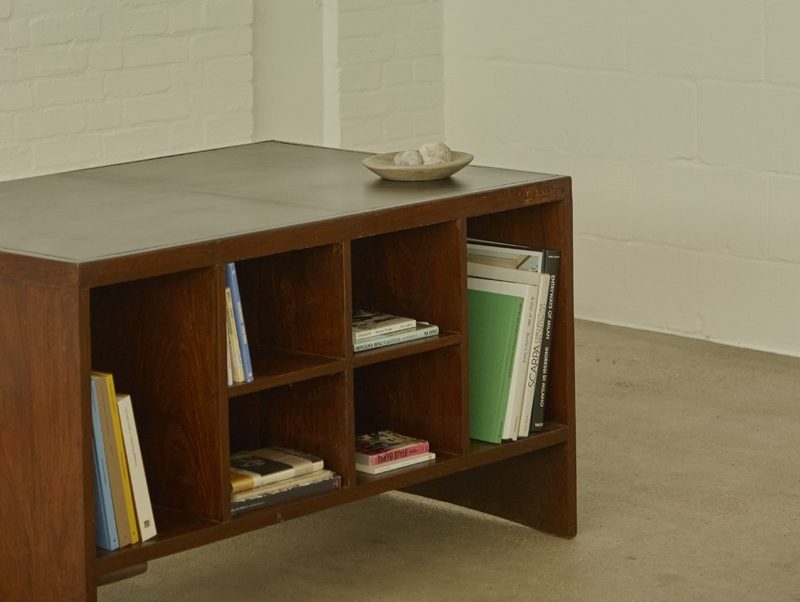
If Arne Vodder’s designs represent delicacy and restraint, the work of Pierre Jeanneret offers a more architectural interpretation of the writing desk. His 1950s Pigeonhole desk, defined by its solid teak construction and distinctive compass-leg geometry, leans instead into utility and presence. With its forward-facing storage compartments, the piece is designed to sit as the centrepiece of a room rather than against a wall — a focal point that is part workspace, part sculpture.
The Pigeonhole is a staple in the collection of design gallery Spazio Leone. For director Gen Leone, sourcing a desk means looking for ‘a balance between proportion, craftsmanship and presence’. This, he explains, is what defines a piece. ‘A writing desk should be functional, but it should also have a strong architectural quality.’ What makes Jeanneret’s desk special, he notes, is that it is both practical and visually commanding — a space not only to work but to inspire.
At a time when our attention is increasingly fragmented, the writing desk offers something essential. It’s a place to stop, to think and to reconnect with the act of working: slowly, deliberately and with intent.
Read next: These new London apartments provide Thames-front living with a cultural quarter in-house
Last bastion of London gentrification? The River Thames
Related stories


Newsletter
Want news delivered to your inbox?