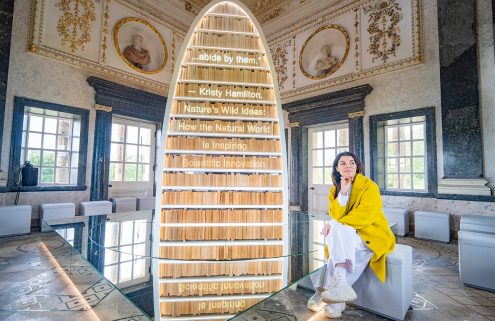
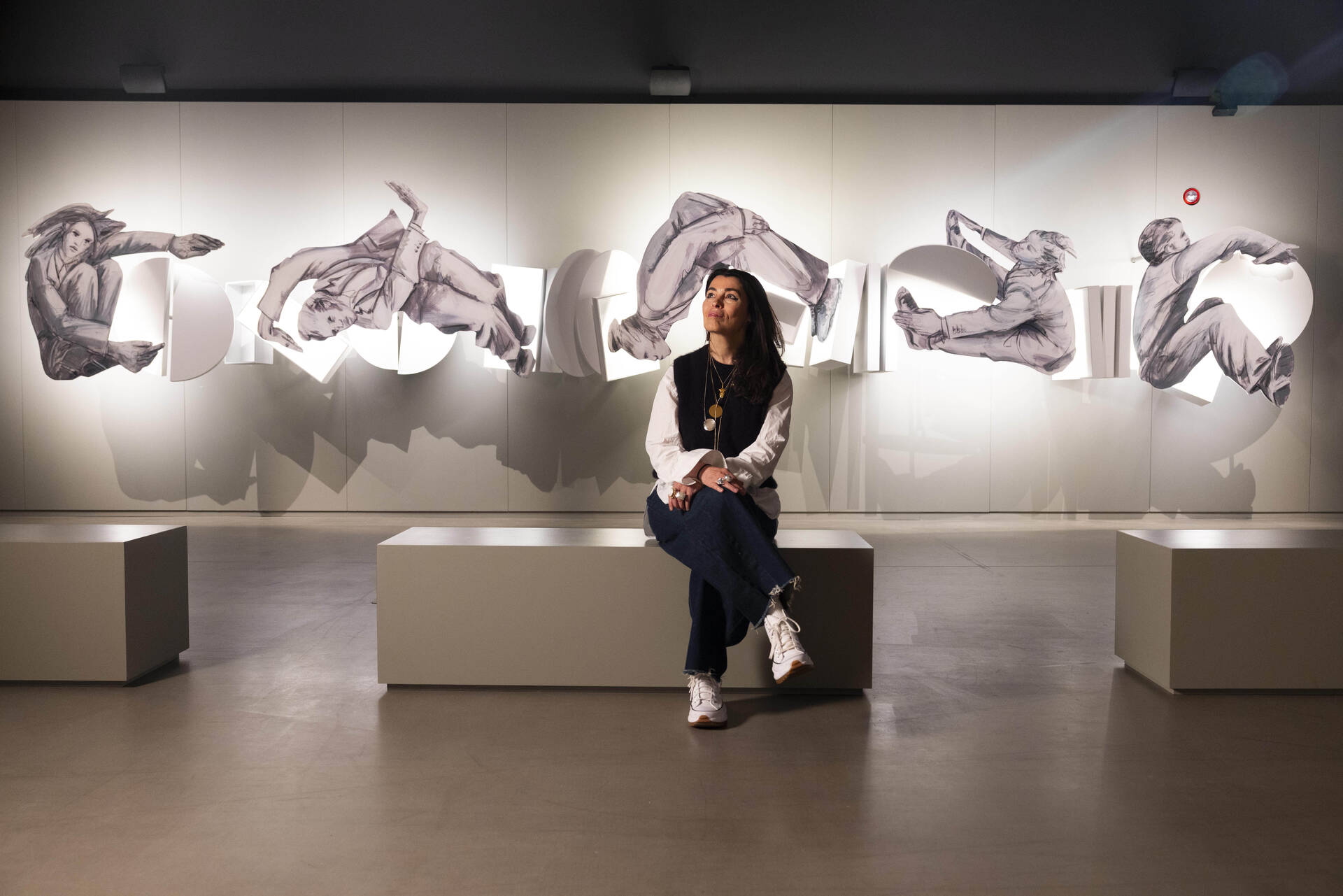
A few weeks ago our correspondent Jasmine Jackson spoke with Es Devlin, an artist, multimedia designer and scenographer on the eve of her new commission at London’s V&A Storehouse. The installation, called The Everythingists, is a 3D mural animated by lights and an orchestrated soundscape. It responds to another of the V&A’s treasures: the gargantuan Firebird backcloth designed by Natalia Goncharova for a performance at the Ballets Russes in 1926. The name is a play on ‘Everythingism’, a movement spawned by cultural hybrids like Goncharova, herself a futurist painter, costume designer and writer.
A century later, we find ourselves in a new era of Everythingism, in which designers like Devlin incorporate music, light, drawing, painting, intricate constructions and complex technology in their work. Like so many self-described artists of past generations, who also dabbled in sculpture, poetry and architecture, Devlin uses the term ‘artist’ to describe her profession. ‘I chose the word that allowed me to be most porous,’ she says. ‘You can be called an artist and no one’s going to stop you doing a set design. Whereas if you’re called a set designer, some people might not want you to call you an artist.’ She considers the strict delineation between genres ‘quite a recent thing’, and not an entirely positive one.
Many designers agree — not least interior designers, who operate in environments that must be all things to all people. If they’re working with a new-build, they’re on set from the first architectural sketches until the kitchen is stocked. If they’re renovating, they bring a ‘vision’ to the project as opposed to a discipline. Many say the umbrella term ‘designer’ doesn’t quite describe their holistic brand of cool. ‘Creative director’ is more like it.
‘Increasingly, creative people are expected to move fluidly between disciplines rather than stay within one defined lane,’ says Alex Eagle, a fashion, interior, furniture and accessory designer who curates a boutique and co-runs the design firm Eagle & Hodges. ‘The most interesting work often happens in the spaces between categories, where fashion informs interiors, interiors inform hospitality, hospitality informs retail, and all of it is connected by a point of view rather than a specific medium.’
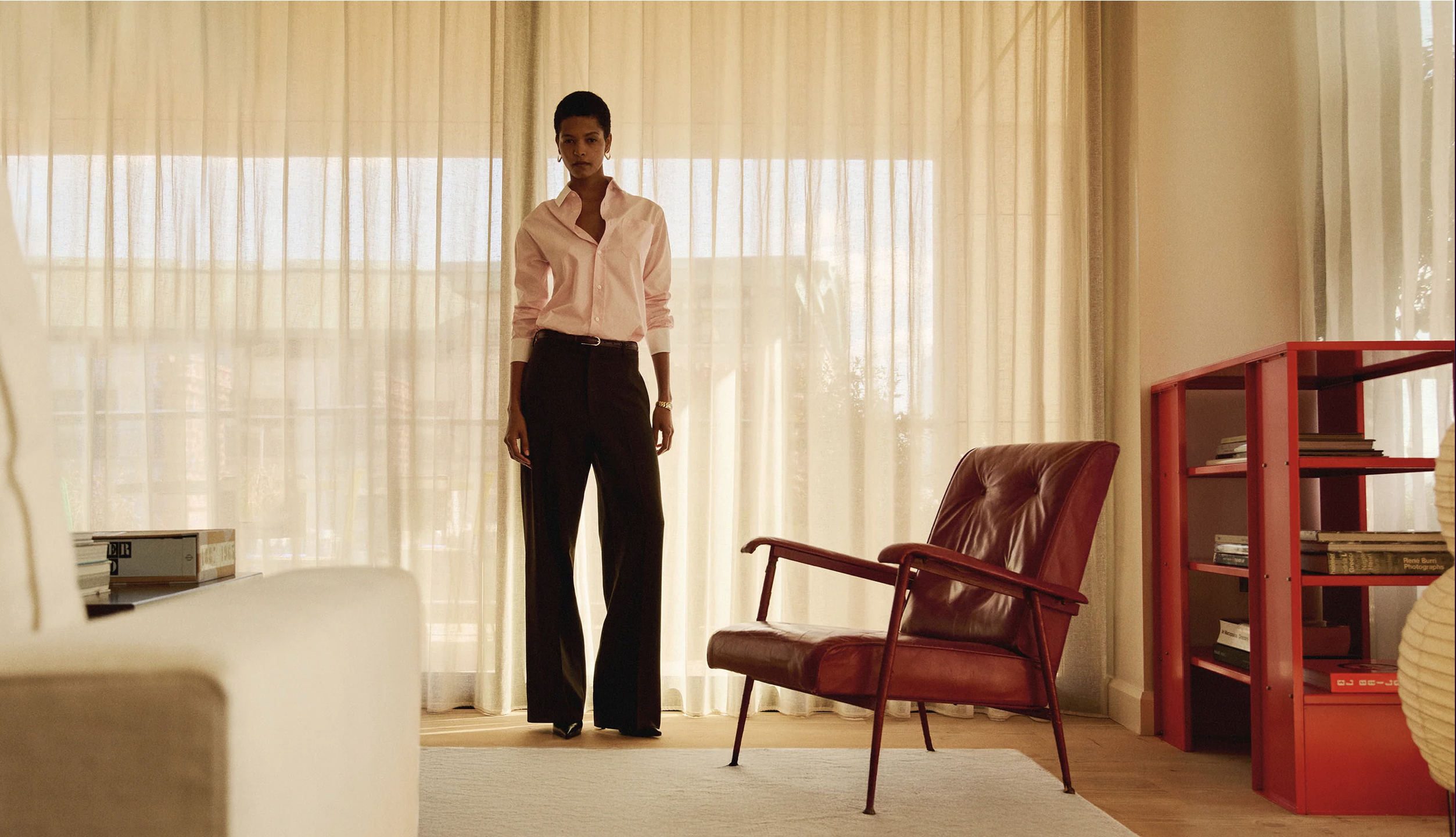
Eagle never studied to become a multi-hyphenate, but having an old-fashioned curiosity about people and practice sent her in disparate directions. She became a creative director who could be working on designs for a home, hotel, health club, fashion line and cultural programme at any given time. ‘I see them all as part of the same conversation,’ she says. ‘What links them is not the discipline itself but the sensibility behind it — the ability to curate, edit, connect ideas and create an atmosphere. Rather than specialising more narrowly, creative directors are building ecosystems around a particular way of seeing.’ In an era when clients are increasingly savvy, skilful and demanding, an overarching tastemaker is increasingly valuable.
Like Hollywood actors showcasing their paintings at blue-chip galleries or the writer who takes photographs and DJs on the side, many creative people are finding success in the interstices between vocations. How would you characterise Virgil Abloh, the late fashion designer who trained as an architect, directed music videos and designed electronics for Pioneer? Or Franky Roussell, the Manchester-based founder of Jolie Studio, who develops custom scents for her projects?
‘We’ve spent the last decade working alongside neuroscientists to better understand the relationship between environments, sensory stimuli and human behaviour,’ says Roussell. ‘Throughout that research, scent repeatedly emerged as one of the most powerful yet underutilised tools within the built environment. Unlike many other design elements, fragrance has the ability to bypass rational thought entirely and connect directly with memory, emotion and feeling. It’s an area I’m incredibly excited by and one that I’m currently exploring beyond interiors.’
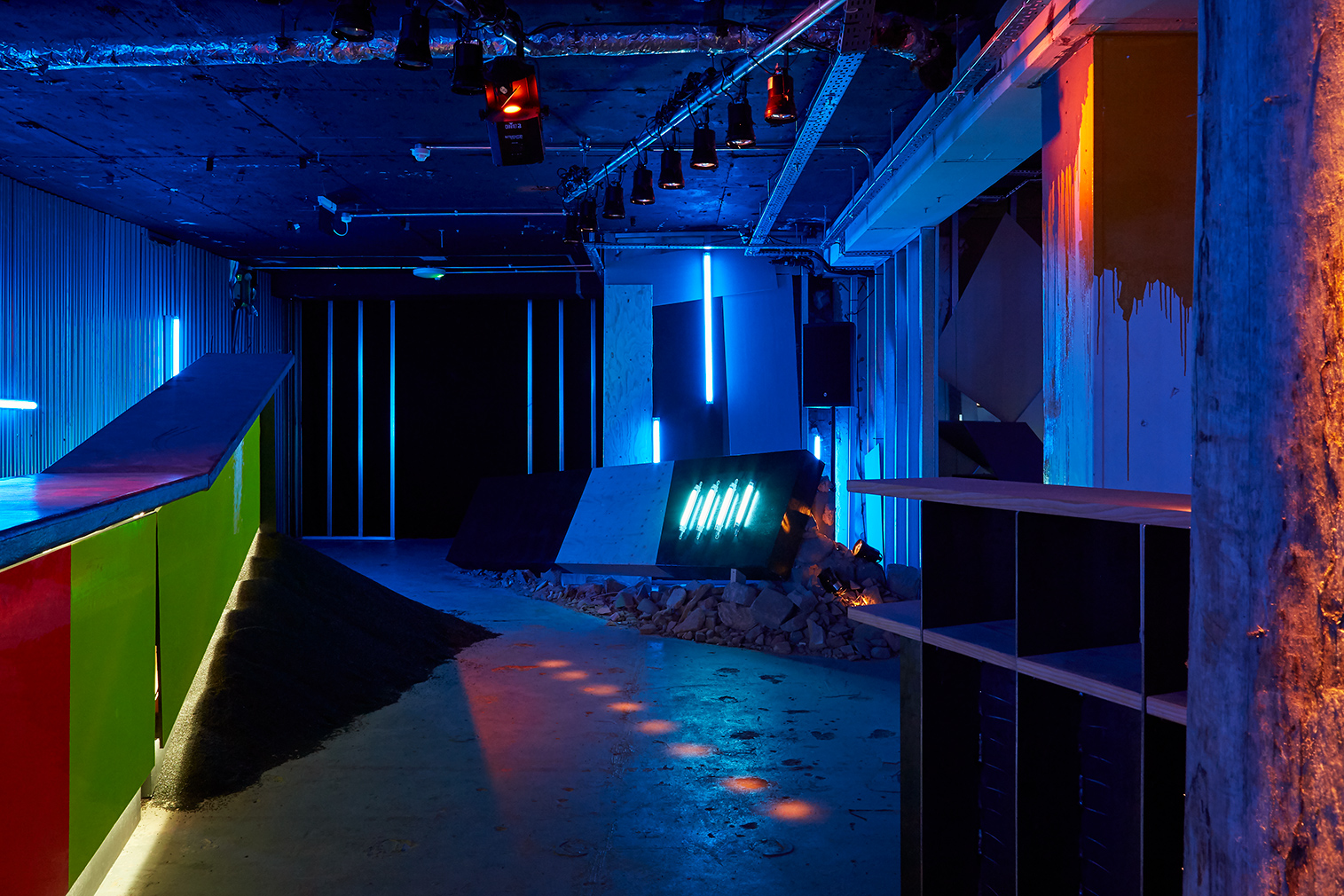
Stephanie Barba Mendoza, an interior designer by name, is in fact a multi-hyphenate who describes her home as a laboratory. It’s where she plays with outrageous colour combinations, crafts mantelpieces out of tortoiseshell, retools lighting, upholsters antiques and collaborates with landscape designers. It’s no surprise she cut her teeth working for Martin Brudnizki, an engineer of fantastical, layered schemes that resemble movie sets.
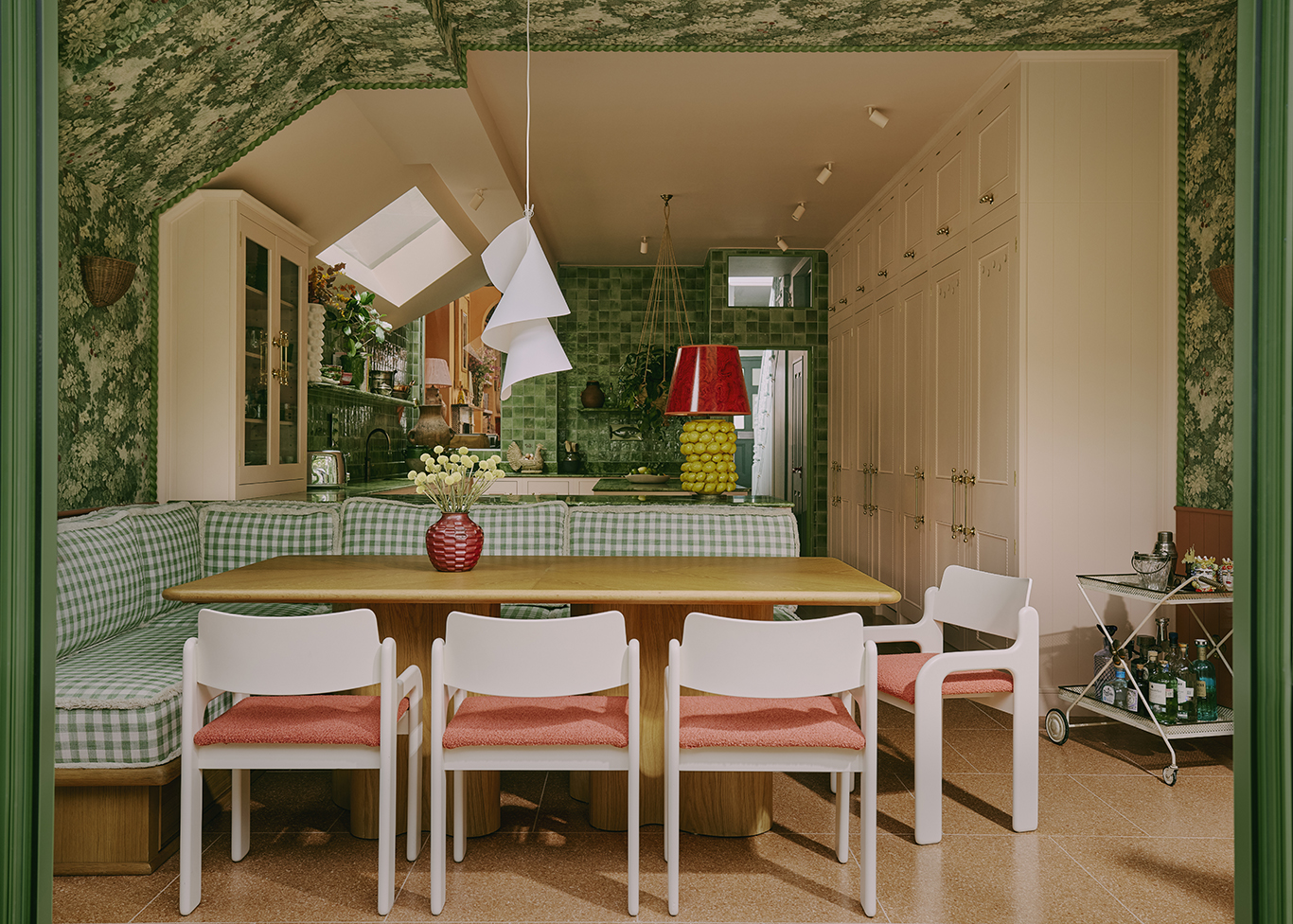
‘The multi-hyphenate label definitely rings true for me and our work, where every project is considered holistically,’ she says. ‘Nowadays, our role naturally extends into different disciplines and we have to shapeshift with that — I often find myself required to act as a stylist, a lighting advisor and an art consultant within one working day.’ How a space is experienced, she says, extends even to understanding of the notes of scent and how fragrance dictates atmosphere.
‘The modern creative director is often not an expert in one thing,’ says Eagle, ‘but someone who can draw connections between many things.’ The result is like a Goncharova work: immersive, all-encompassing and greater than the sum of its parts.