
Explore these spaces fusing Danish and Japanese design
We've been inspired by the new Hikari district in Copenhagen

Copenhagen’s nostalgic amusement park Tivoli Gardens dates back to 1843. Yet this summer it opened a new district named ‘Hikari’, a vibrant ode to Japanese culture, celebrating the historic design dialogue between Denmark and Japan. Known as ‘Japandi’ over the past decade, the cultural connection can be traced back far further to the mid-19th century, when Japan opened up to the West after a long period of national isolation. Ever since, Danish and Japanese designers have exchanged inspiration – finding common ground in crafted woodwork, a deep appreciation of nature and philosophies such as wabi sabi and hygge that, while distinct, share values of honesty, humanity and peace.
Hikari at Tivoli Gardens, Copenhagen
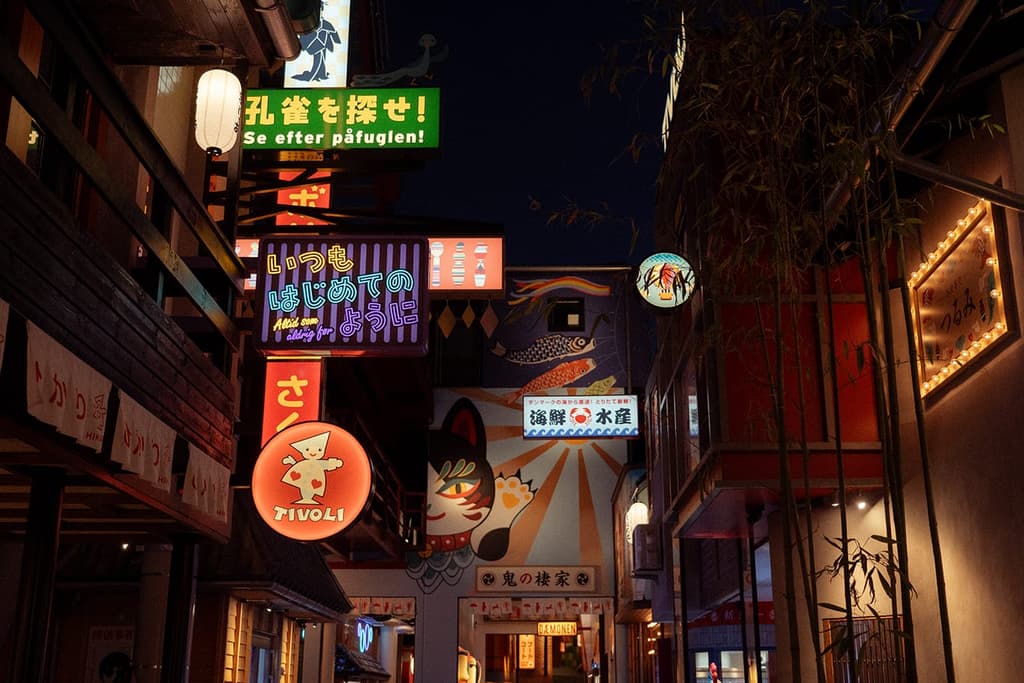
Founded on the premise of bringing cultures of the world to Copenhagen, the ever-evolving Tivoli Gardens now welcomes the sensory intensity of a Shibuya street to the park beneath the soaring Demon rollercoaster. Designed by the in-house team with a band of experts in Japanese culture, graphic signs, original vintage doorways, kawaii characters and authentic street food beckon from every angle. Visit a konbini convenience store, the Hotel Hikari funhouse or, if you’re brave, the Typhoon’s Eye for a wild spin of weightlessness.
House of Finn Juhl hotel, Hakuba
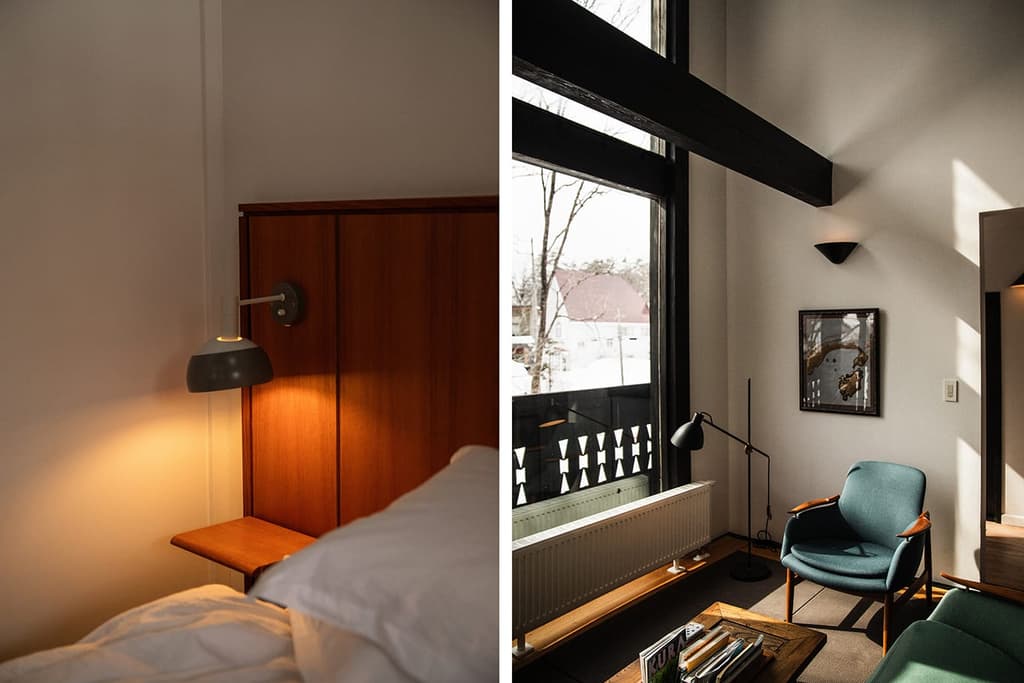
In Hakuba village, in the Japanese Alps near Nagano, the five-room House of Finn Juhl boutique hotel invites guests to admire the harmony of the eponymous designer’s organic wooden furniture designs within the culture and nature of Japan. A mid-century icon, Juhl was fascinated by Japanese craft, epitomised in his 1957 Japan Series furniture collection and in wider work, some of which continues to be produced in Japan today from a small workshop in Yamagata.
Galleri Sonja, Bornholm
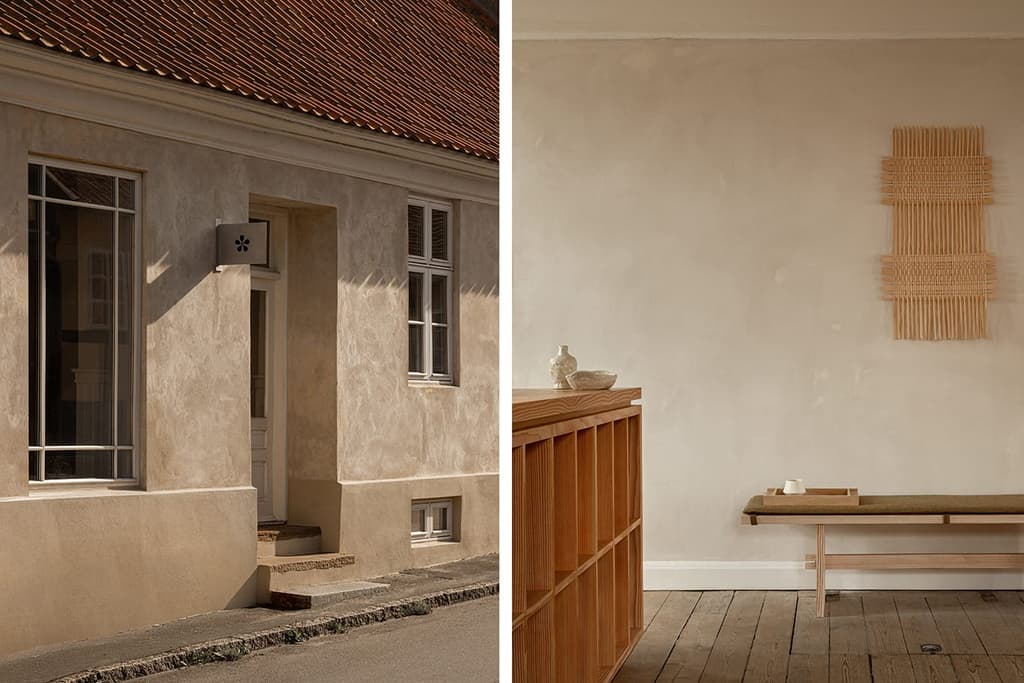
Found on the northern tip of Bornholm island, Galleri Sonja is a café, shop and gallery selling local handmade ceramics and woven textiles alongside works by Japanese craftspeople. The calm sanctuary embodies Copenhagen-based Norm Architects’ soft minimalism, which combines ‘Japanese simplicity’ and ‘Scandinavian functionality’: the sliding bar display echoes shoji screens, while soft tones of sand, ash and stone reflect the natural landscape.
Blue Bottle Coffee, Nagoya Sakae
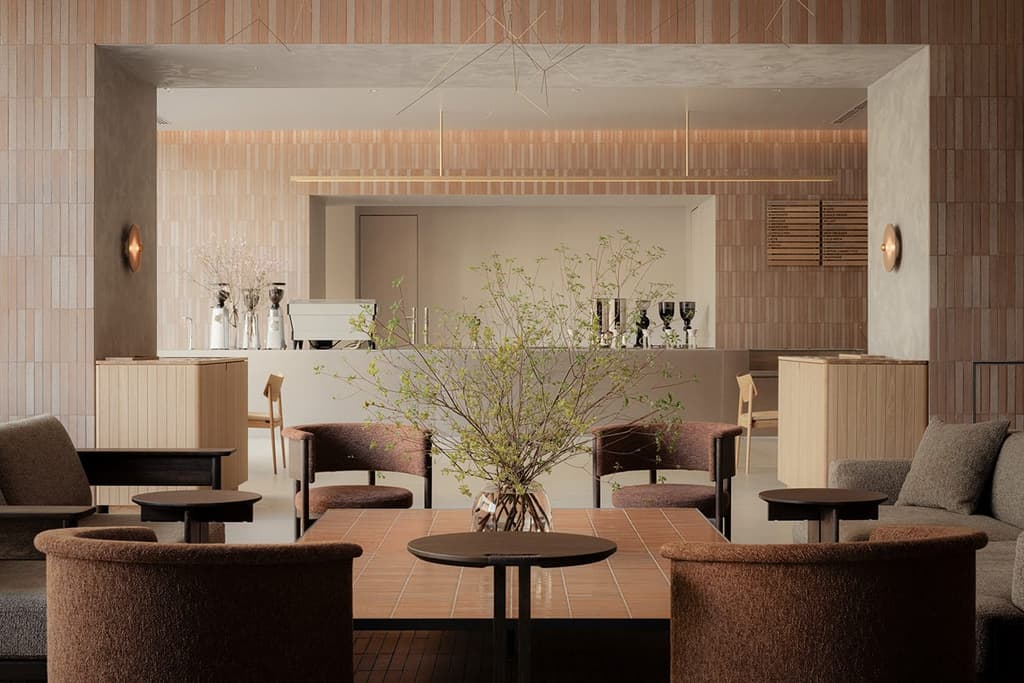
Leading Japanese wooden furniture manufacturer Karimoku has its origins in 1940 in Aichi. Its lifestyle brand Karimoku Case, established in 2019 and directed by Norm Architects, blends Japanese craft heritage with Danish sensibility. Designs from the Karimoku Case collections define the interiors of this coffee shop in Nagoya and complement the interior architecture by Keiji Ashizawa.
Sushi Anaba, Copenhagen
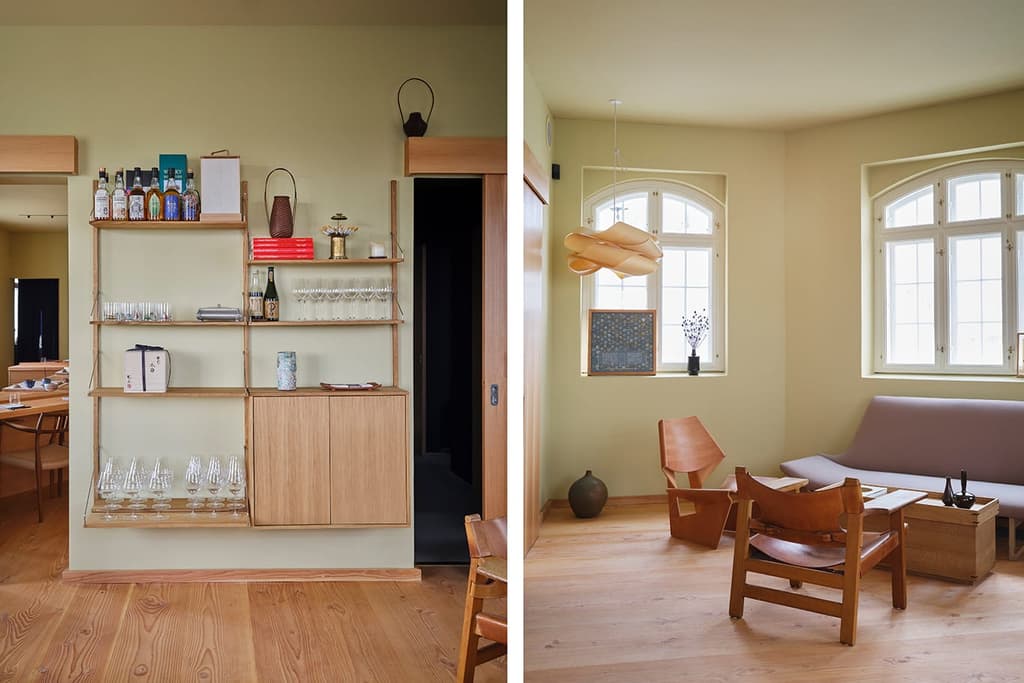
In Copenhagen’s once industrial Nordhavn, there’s a restored Customs House built of limestone and pine beams dating back to 1916. Inside, Tokyo-style Edomate omakase, drawn primarily from sustainable Danish and Scandinavian seafood, is served up by head chef Mads Battefeld and his right-hand Japanese chef Machu Kojima. The 14-seat sushi counter is crafted by Danish-Japanese duo Akiko Ken Made, while Finn Juhl’s Japan Series and 48 Sofa Bench bring warmth to the lounge.
Trunk Hotel, Yoyogi Park, Tokyo
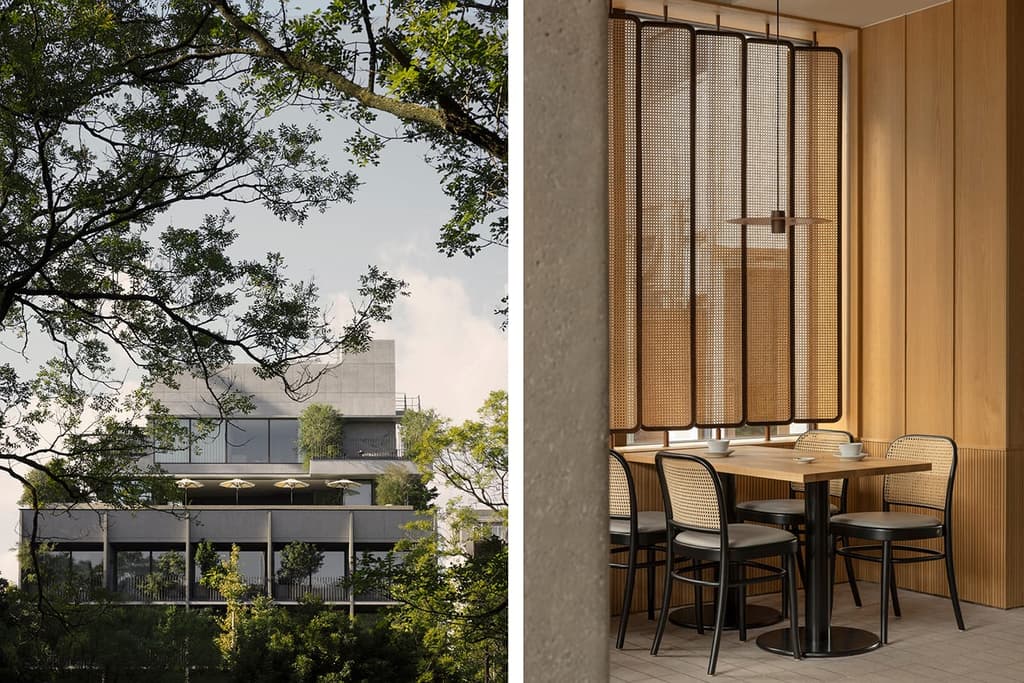
The layered contemporary architecture of Keiji Ashizawa fuses brutalism and nature in Tokyo’s Oku-shibu. This is the Trunk Hotel Yoyogi Park, which rises as a calm, urban refuge designed in collaboration between architect Ashizawa and Norm Architects. Space flows, guided by a softly alternating neutral palette of natural materials and colours. Sinuous furniture and upholstered geometries meet the gentle rhythms of elegant wooden louvres and patterned wool carpets by Japanese manufacturer Hotta.
Kinyōbi, Copenhagen
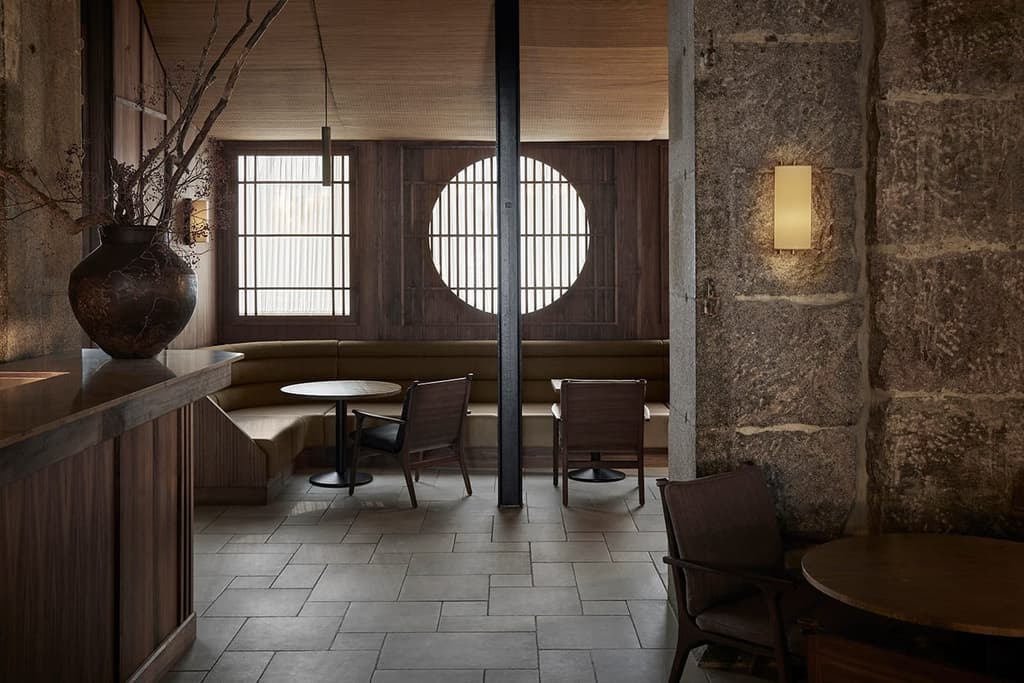
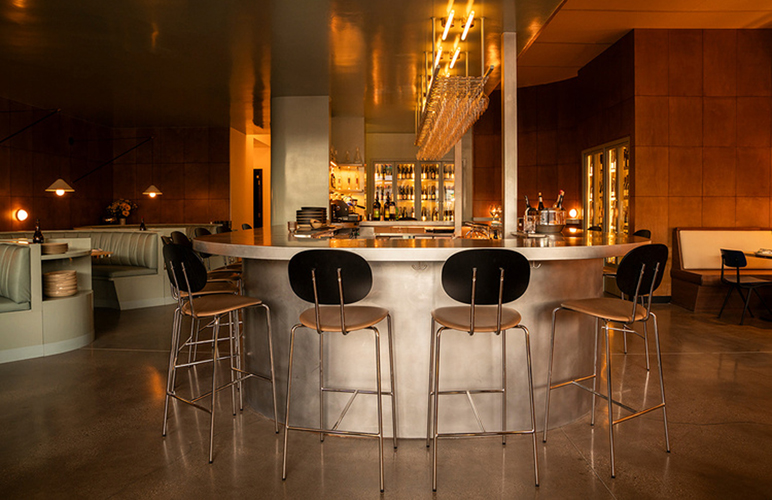
This cinematic restaurant, lounge and listening bar was created by chef Will King Smith inspired by Tokyo’s late-night low-fi urban culture. Space Copenhagen has designed a sequence of intimate spaces, framed by walnut panelling, vintage consoles and exposed stone columns. Like a Japanese cabinet, the bar back slides open and shifts into shelving for vinyl records. Ambience is brought by Gubi pendant lamps by Paavo Tynell, made of hand-stitched bamboo, and a sculptural paper lantern above the open kitchen and counter.
Read next: Kengo Kuma designs a hot spring hotel on the Japanese island of Kyushu
Japanese craftsmanship shines at this Kyoto machiya turned hotel
Related stories

Newsletter
Want news delivered to your inbox?