
Novel ideas: embracing the analogue office library
Print is alive and well and coming into work
Is the office library the new must-have corporate amenity? As companies continue to leverage the workplace to attract key talent, the quality and variety of spaces beyond the desk have never been more important. And the most compelling might be the one that takes us quietly back to basics in this noisy digital world — the one where focus is not only encouraged, but actively protected.
‘The rise of libraries in offices is a signal of change, with many workspaces being redesigned around what employees need to be their most productive,’ says Georgina Fraser, head of human capital at CBRE. ‘This includes quiet spaces, thinking spaces and research spaces in addition to traditional and collaborative areas. For some organisations, the library is more than a productivity lever. It is a message to employees that various types of work can be accommodated.’
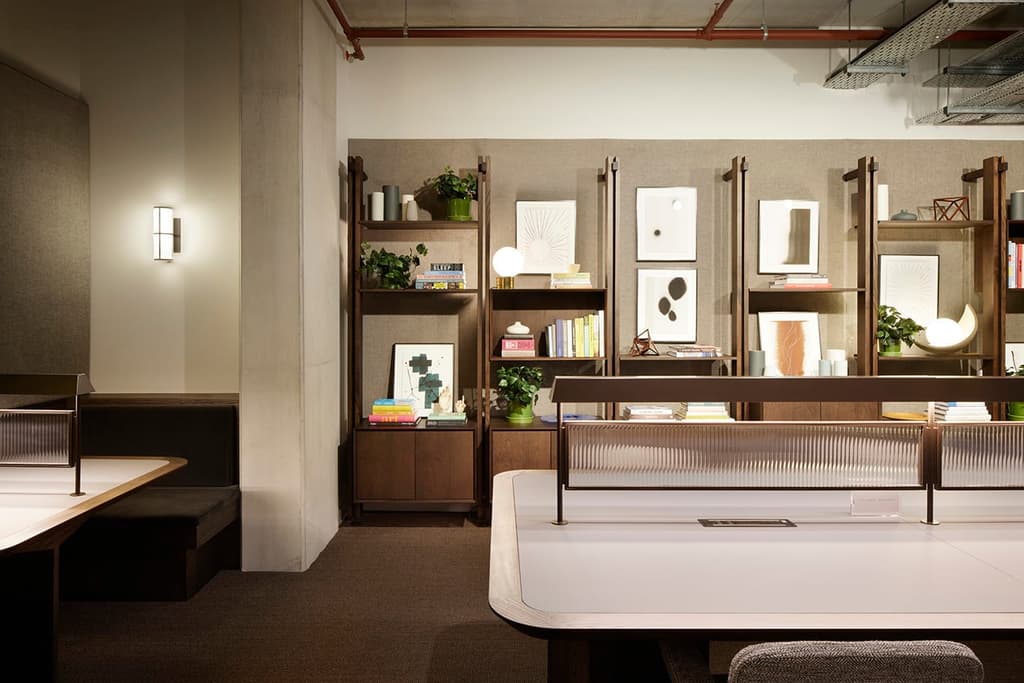
The library at Henrietta House, CBRE’s London HQ, is a prime example. Designed by MoreySmith, this collegiate-style quiet zone complete with low-level lighting and partitioned nooks has been created with research and concentration in mind. ‘When we designed the London headquarters for CBRE, we wanted to give people somewhere to get away from the noise of the everyday, to have time to think, away from their phones and laptops,’ says Linda Morey-Burrows, founder and principal director of MoreySmith. ‘The company has almost 2,000 people in the building, and we wanted to create a classic, university-inspired library, almost like something from the movies.’
One of the most popular spaces in the building, CBRE’s library doesn’t just promote productivity, adds Morey-Burrows. Strictly tech-free, it has also become a haven for employee wellbeing, providing an escape from the sometimes overwhelming cacophony of modern digital life.
At Sony Music, where sound is intrinsic to the brand, Morey-Burrows was given a similar brief — to create somewhere employees could retreat for quiet reflection. ‘The whole space for Sony Music is creative with a real music vibe,’ she says. ‘The library is a place to escape the music, learn and think clearly.’
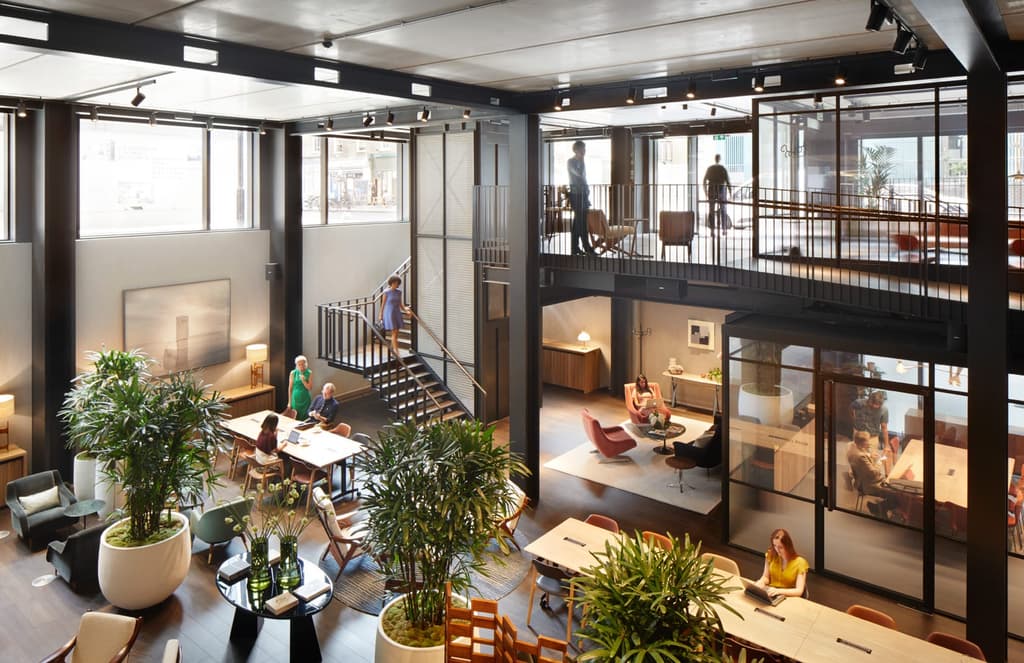
One of the most striking examples of a contemporary office library can be found at the Renzo Piano-designed offices of Norwegian law firm BAHR in Oslo. Working with the local architectural firm IARK, they moved once hidden book archive out of storage and into the open atrium, transforming it into a central focal point visible from every floor. The collection is staged with custom-made shelving, rugs and lounge chairs that contribute to a bright, open space inspiring research. It encourages employees to take informal social breaks and enjoy unexpected interactions.
At the HQ of Penguin Random House in Gurugram, India, the idea of bringing books into the heart of the workplace has been taken further still. Designed by SJK Architects, the interiors draw on the publisher’s most fundamental asset: the written word. Bookshelves have become architectural features and design details inspired by literature run from the reception area into the timber amphitheatre. Arguably the whole office is one big library where a clever use of interiors underlines the publisher’s cultural identity.
And in Mexico City, a stepped library has been used to fill the space around the main staircase at an 80-year-old law firm. Designed by Esrawe Studio, light oak wood walls create a series of bookshelves wrapped around a wide wooden staircase. Benches have been added to provide a place for employees to sit and read. The client wanted the book collection to be easily accessible to staff and visitors rather than secreted away.
Even companies anchored by technology are embracing the lure of the library. At PayPal’s London HQ, architectural practice HLW was asked to implement low-tech ‘retreat spaces’ where employees could recharge. This included an office library where backlit bookshelves, soft furnishings and materials designed to support low level acoustics were used to create a cosy, quiet sanctuary in an otherwise fast-paced work environment.
‘As offices become more flexible and collaborative, they also need to recognise the diverse needs of the people who use them,’ says HLW’s Bronte Turner, ‘so there is a growing need for spaces that offer respite, a place to retreat, quiet and a break from constant digital stimulation.’
In an age of perpetual connectivity, the office library offers time and space to concentrate. Far from being a relic of the past, it could be one of the most forward-thinking investments a business can make.
Read next: 'Meet me in the foyer!'
Are we finished with dining rooms? Not so fast, say designers
Related stories

Newsletter
Want news delivered to your inbox?