
'I'm not here to make friends': how to design for office introverts
Employers are starting to listen — and not just to the loudest voices
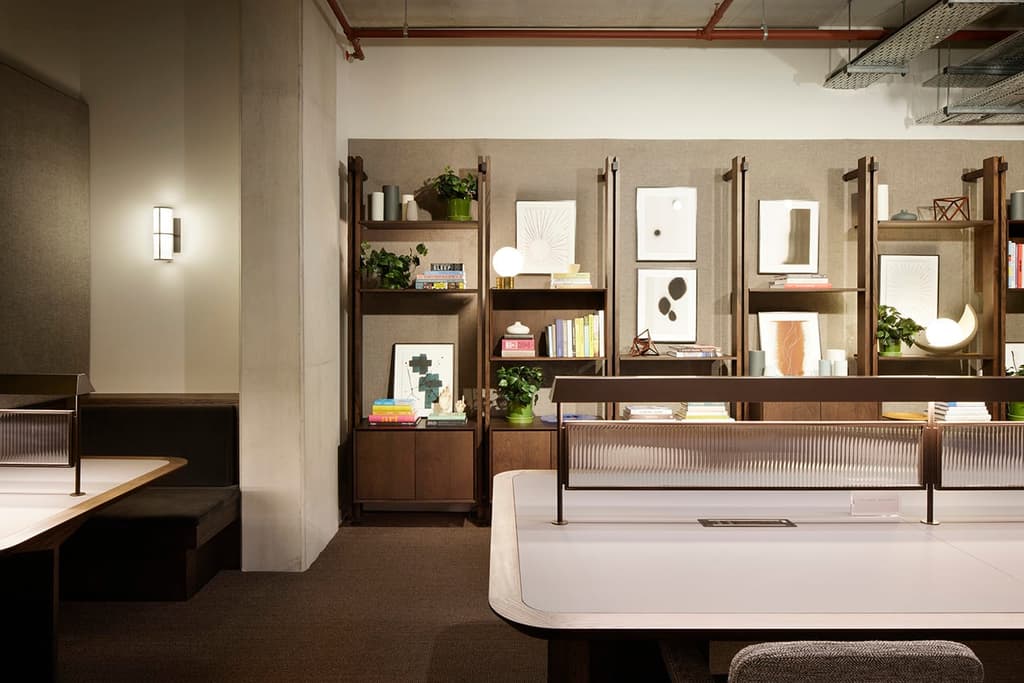
Have workspaces become too collaborative? On first reading, one might assume there can be no such thing. Places to gather, share ideas and socialise bring offices to life after all, and the lure of the hive has been a powerful tool in drawing people back post-pandemic. But while the promise of all things open-plan and convivial sat at the heart of the return-to-office movement, questions are now being raised around how well current workplace models serve deep-focus work and, by association, introverts.
Put bluntly, collaborative spaces aren’t right for everyone — and certainly not every moment of the workday. Personality types aside, not all professional tasks can be done in an environment akin to an airport departure lounge and not every moment spent in the workplace needs, or indeed should, be a social one. Space to focus is just as key to a productive team as space to connect — particularly in the age of hybrid work where an increased reliance on video calls creates a louder, more stimulating environment.
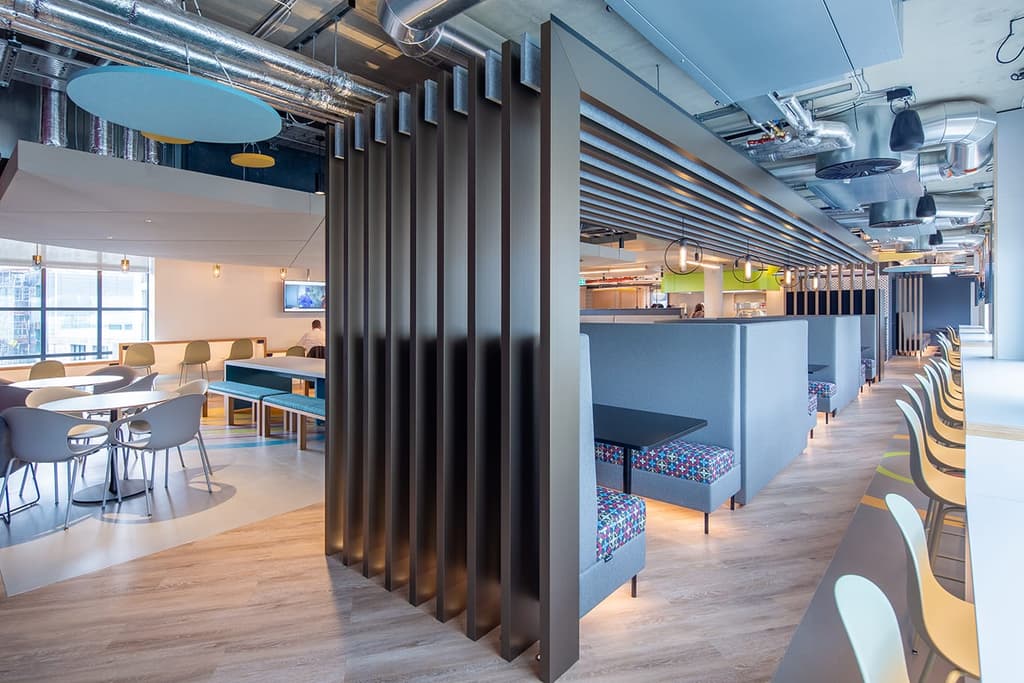
The current prioritisation of shared space in offices across the globe stems, in part, from a post-pandemic push to reassert the office as a place of connection. ‘We saw, when we came back to more regular office attendance after Covid, that a lot of our clients had put in more breakout areas and open spaces to promote the fact that the office was a place for collaboration,’ says Yetta Reardon Smith, workplace and design lead at Savills. ‘In short, it went too far. Yes, the office needs to offer something people can’t get at home and yes, part of that is about connection. But within that there need to be spaces for everyone — not just those who thrive in a busy setting.’
And not just the decision-makers, either. ‘When there is a change to be made around something like working environments, employee opinions are usually canvassed and then run past senior leaders,’ says Tom Redmayne, head of Europe and global sales at Industrious, a co-working company with more than 200 locations across 65 cities. ‘But extroverts tend to be the loudest when those opinions are being gathered and leaders making the final decisions are often more towards the extroverted end of the spectrum. So, there can be a bias.’
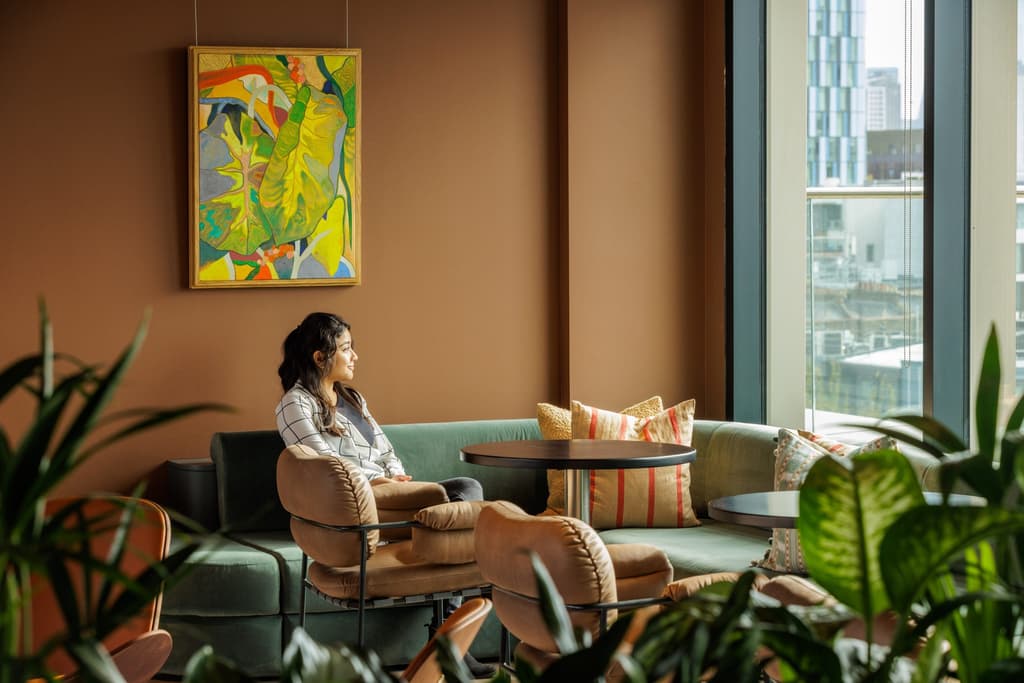
Increasingly, that bias is being challenged by evidence. ‘We have done a study that shows 70% of people who work in our offices are actually introverts,’ says Redmayne. ‘They don’t want to play beer pong, and they don’t want big office parties on a Friday night.’ They want a quiet space to get some work done — which is why Industrious has actively embraced calmer layouts and colours, greater privacy and acoustic considerations across its portfolio. They have seating nooks, respite rooms, larger-than-average phone booths and quiet spaces overlooking nature. Puzzle tables, to promote mindfulness, are some of their most popular offerings, says Redmayne.
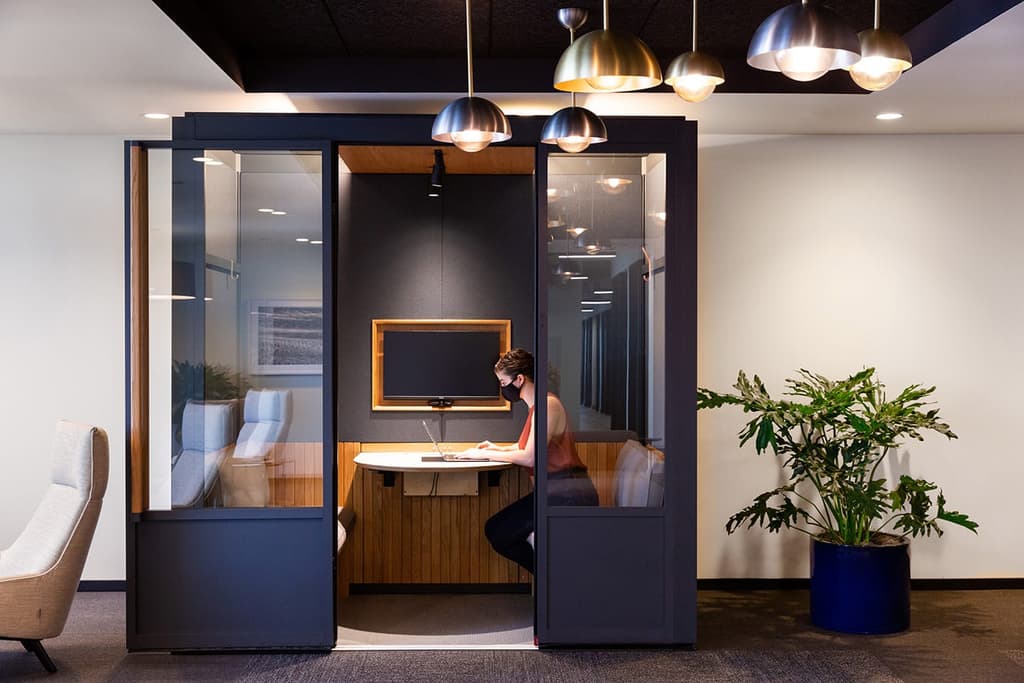
The new generation of office providers are particularly motivated to deliver precisely what their members want and need – if they fail to provide adequate quiet spaces, tenants can simply move elsewhere. They also have more freedom and flexibility to adapt spaces more quickly than large-scale developers. Occupier demand is absolutely driving change. ‘There are three key space composition types within workplaces to be aware of,’ says Georgina Fraser, head of human capital at CBRE. ‘Quiet, active and recharge. In the last three years, due to demand, we are seeing designers increasing the allocation to quiet spaces, with clients often telling us of the need to increase the allocation of quiet pods. We are also seeing a rise in the number of library spaces being put into offices.’
The library at Henrietta House, CBRE’s own London HQ, designed by MoreySmith, is a case in point. A collegiate-style quiet zone for research and concentration, it features low-level desk lighting and partitioned nooks for acoustic separation and focused tasks. A major draw since the redesigned HQ opened in 2022, this oasis of calm on the seventh floor of an otherwise bustling 145,000sqft building is proof that a space doesn’t have to be loud to gain recognition.
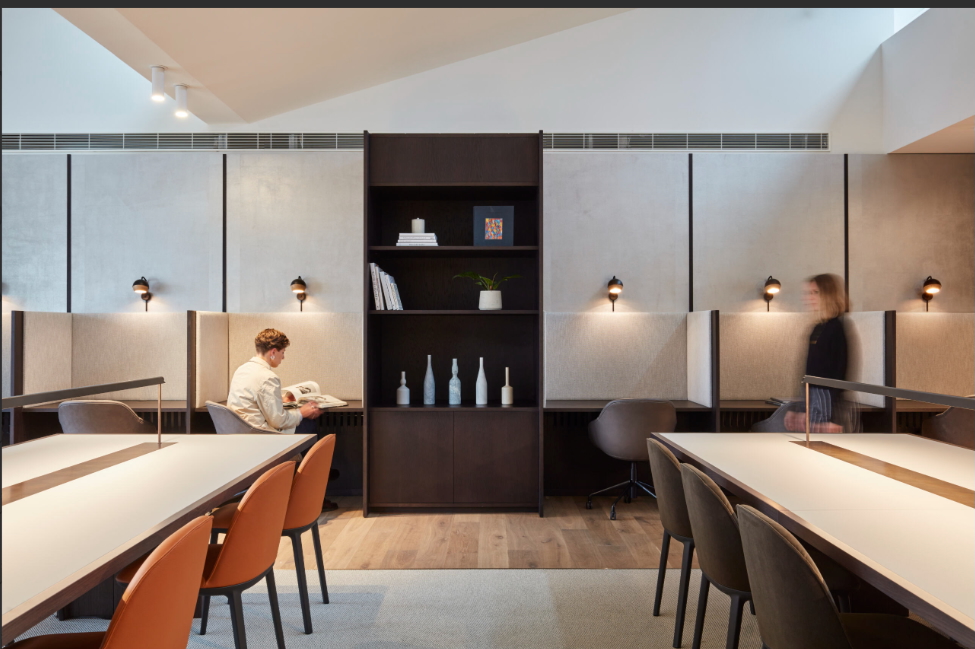
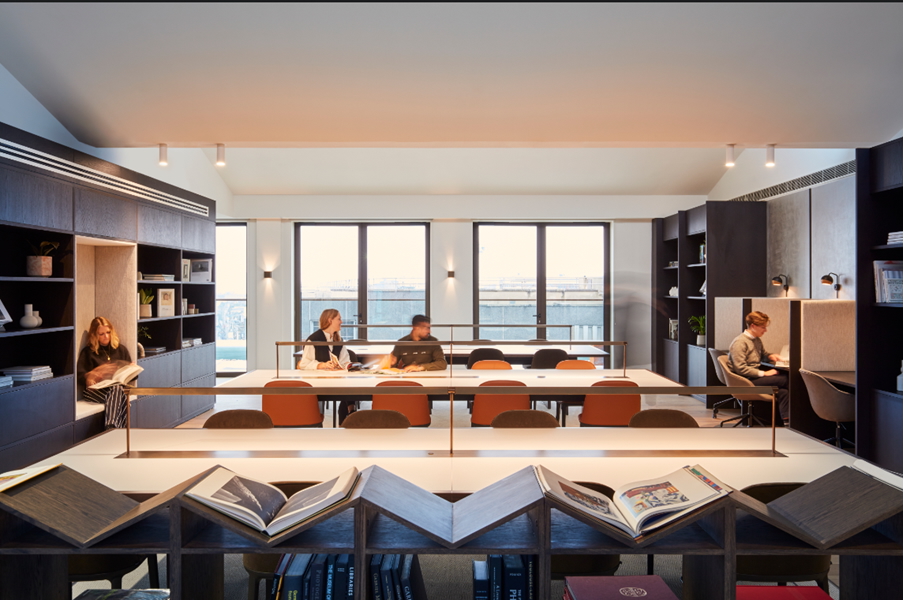
The design-led office developer Derwent London is also a fan of a library. It has allocated one in each of its lounges: two member’s club-style spaces open to all occupiers across its portfolio. ‘We’ve been very deliberate about balancing calm, contemplative spaces with more energetic social areas so introverts can find somewhere quiet to concentrate and recharge while extroverts have places to meet, collaborate and host clients,’ says executive director Emily Prideaux.
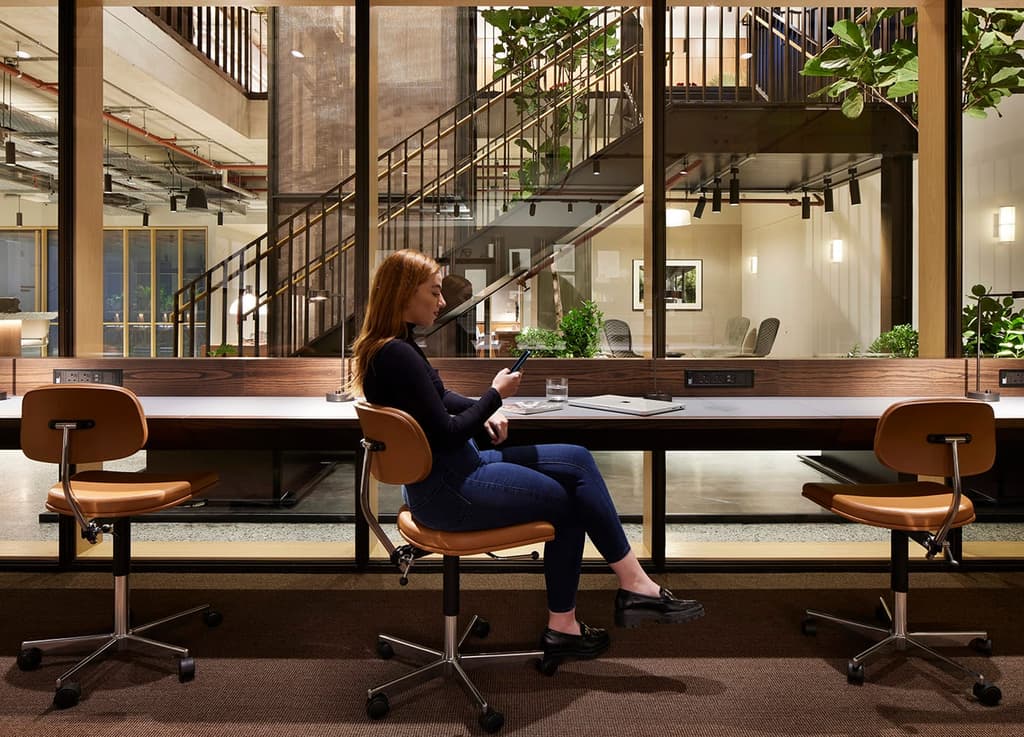
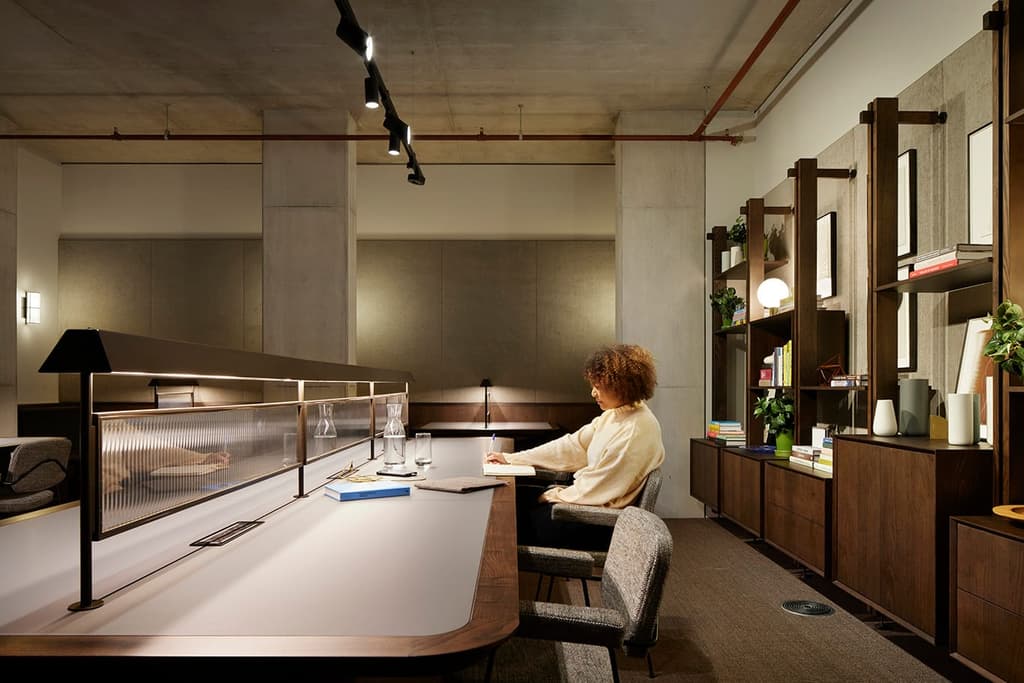
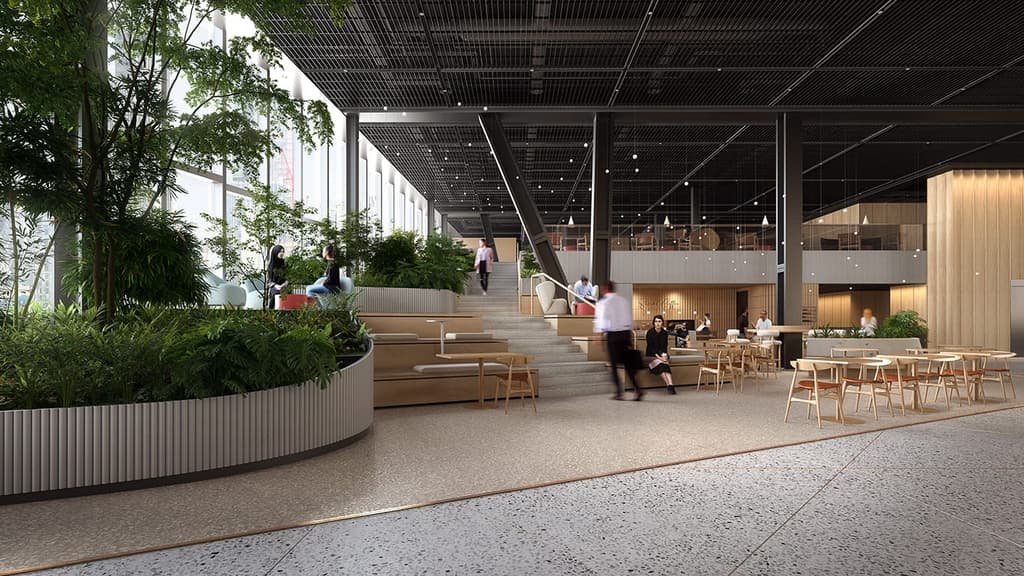
At 2 Finsbury Avenue, British Land’s £750m dual-tower in London due to complete in 2027, behavioural research by Danish architecture practice 3XN GXN has informed a more explicit spatial response to personality and working style. The needs of the big five personality traits used in psychology – openness, conscientiousness, extraversion, agreeableness and neuroticism — were applied to all communal spaces. In the high-traffic lobby, a café and an elevated, highly visible working area appeal to extroverts and people open to social interactions. For introverts there are booths positioned to the side and a seating area secreted away behind the escalators.
‘Our approach is to design spaces around people, recognising that different personalities and work styles need different environments to thrive,’ says Mike Wiseman, head of campuses at British Land. ‘Design isn’t just theory – it’s essential to observe how people actually use space and adapt accordingly. Offices need to make sense for people and work for the widest possible range of needs.’
‘The best workplaces now need to support downtime just as much as collaboration,’ adds Oliver Knight, head of workspace at the developer Landsec. ‘In MYO, our own flexible serviced offices, we’ve spent time thinking about that balance, from quieter booths and lounges for more focused work through to shared meeting areas and terraces designed for collaboration and social interaction. The aim is to create a workplace where people have more choice across the day and can move naturally between different environments.’ Because that’s the thing about how we feel from one day, hour or minute to the next – it’s rarely set in stone. While there are people who might define themselves as inherently introverted or extroverted, we all have the capacity to be both, depending on the circumstances.
‘How we work best is not just different for different people, but changes for us at different times of the day or week,’ says Samantha McClary, chief executive of the British Council for Offices. ‘Workplaces that offer both space for concentration and contemplation and for collaboration, and that can flex easily between the two, will be the workspaces that no only deliver the best for the people that occupy them, but that enable those people to be their most productive selves, which is a great investment for the business occupying the space.’
Read next: ‘What if you ran an office building like a boutique hotel?’
6 products rebooting the office cubicle for the post-pandemic world
Related stories

Newsletter
Want news delivered to your inbox?