Amid an increasingly crowded calendar of art biennales across the world, sā Ladakh stands apart, quite literally. Spread across 230 kilometres of rough terrain more than 3,000 metres above sea level, it is positioned as the world’s highest regenerative art biennale, its eight sites focusing as much on the region’s ecology and communities as the art.
Curated by Vishal K Dar with Tsering Motup Siddho, the third edition (on view until 31 August) is called Signals from Another Star. It brings artists from the surrounding area — all too often overlooked — into dialogue with a landscape shaped by memory, weather, trade routes, communities, histories and even war. Along with some international practitioners, they ask how art might engage more deeply and responsibly across the Leh-Kargil corridor. Each presentation is designed to provoke reflection and stir an emotional response.
Unsurprisingly, sā Ladakh isn’t the easiest show to access: the high-altitude journey demands careful planning, with visitors advised to seek medical guidance before travelling. ‘This isn’t a conventional biennale,’ says founder Sagar Singh. ‘It’s a pilgrimage across Ladakh. You have to slow down, acclimatise, understand the landscape and let it change the way you see.’ For those hardy art-lovers, we’ve highlighted our top five art installations to look out for.
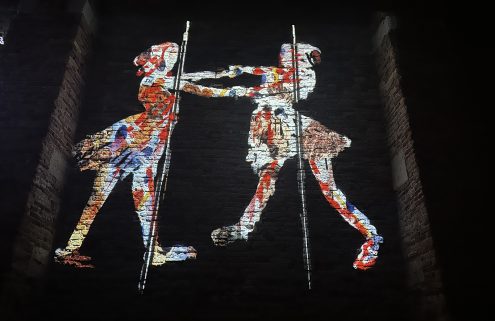
Za s Chu Thungse, by Tashi Namgail
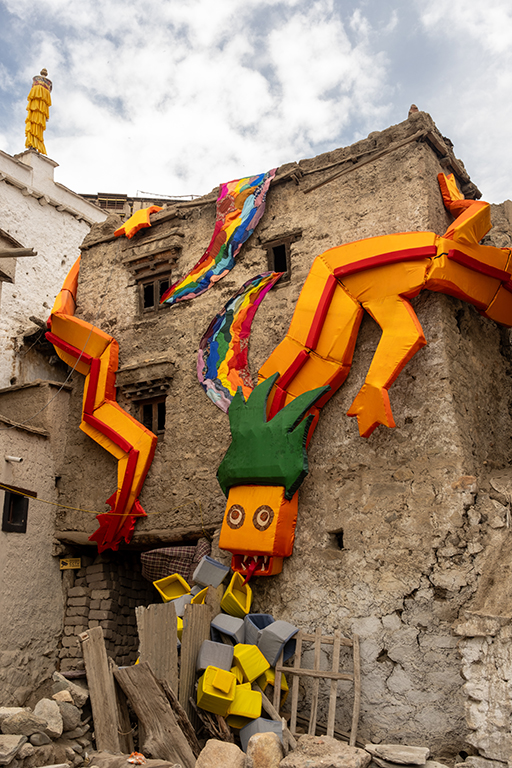
Leh Old Town is one of the Himalayas’ oldest continuously inhabited settlements; with narrow lanes, mud-brick homes, courtyards and temples, they bear witness to centuries of cultural exchange. Located below the 17th-century Leh Palace, Namgail’s site-specific installation uses traditional spinning and weaving elements to relay a childhood folk tale: throwing an old shoe towards the end of a rainbow, it promised, would make it burst open and release its treasures. Revisiting this tender myth, the rainbow-dyed work reflects on wonder, longing and the dreams that continue to shape our ideas of fortune and the lives we hope to build.
Burrowed in Time, by Chemat Dorjey
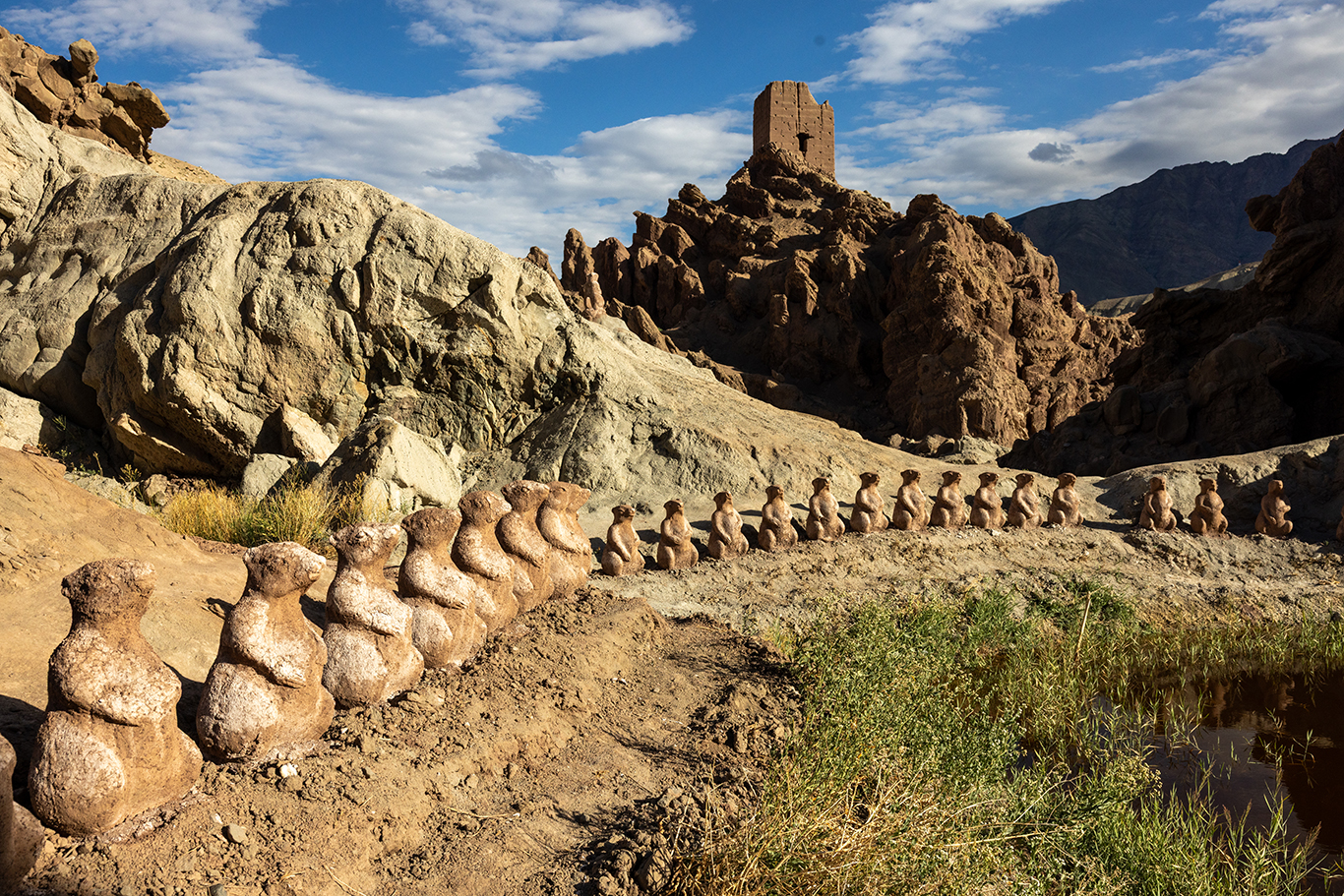
Historically one of Ladakh’s most important settlements and political centres, Basgo lies along the Indus River, its monasteries and forts now standing in partial ruin. Within this landscape, Dorjey’s site-specific installation showcases miniature clay marmot sculptures that explore the animals’ intimate relationship with the terrain. Their bodies become vessels of memory, adaptation and survival, shaped by seasonal rhythms and the quietude of hibernation.
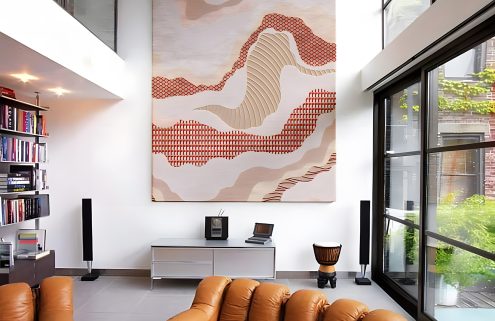
Rising from the Soil, Soaring to the Sky, by Amrit Karki
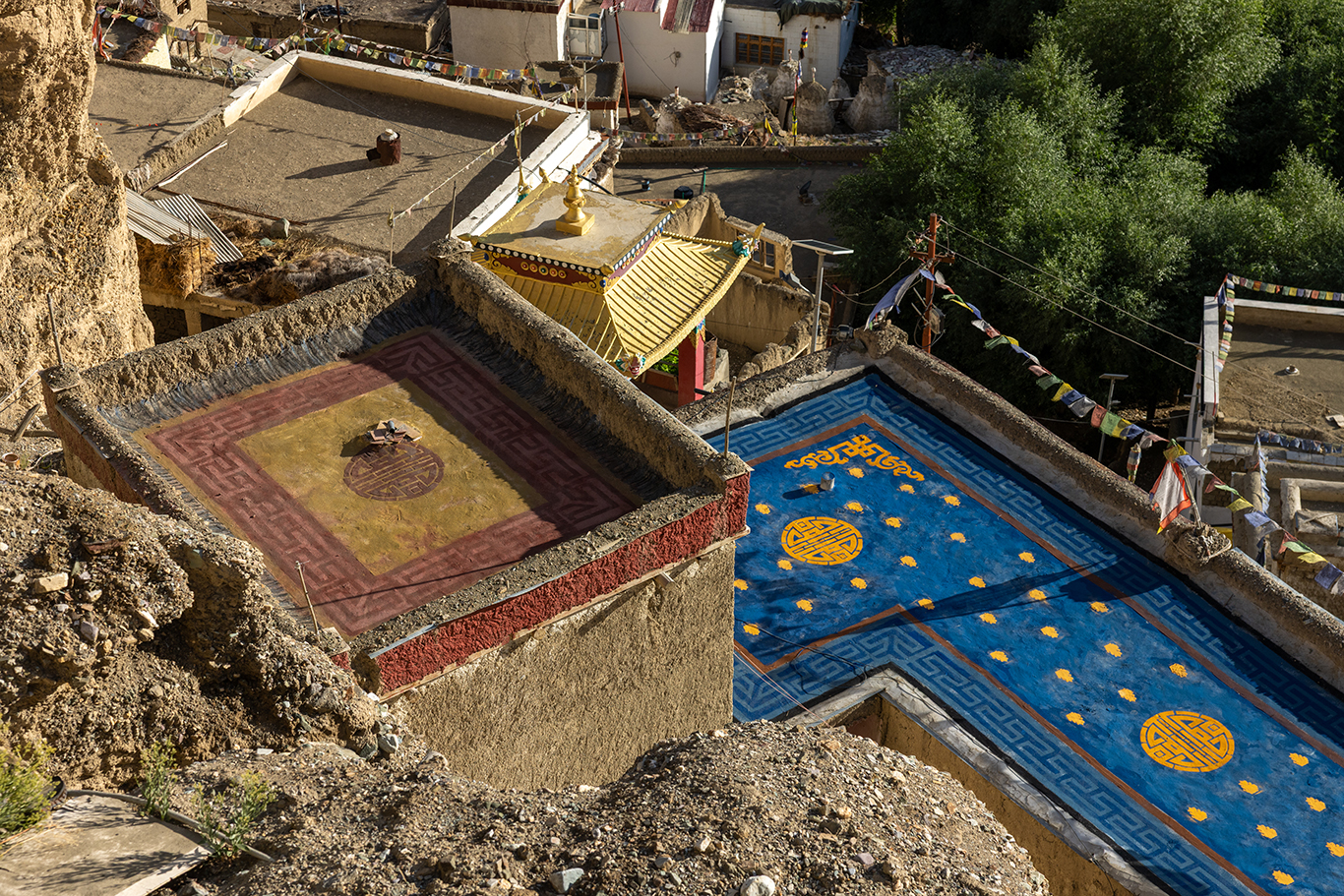
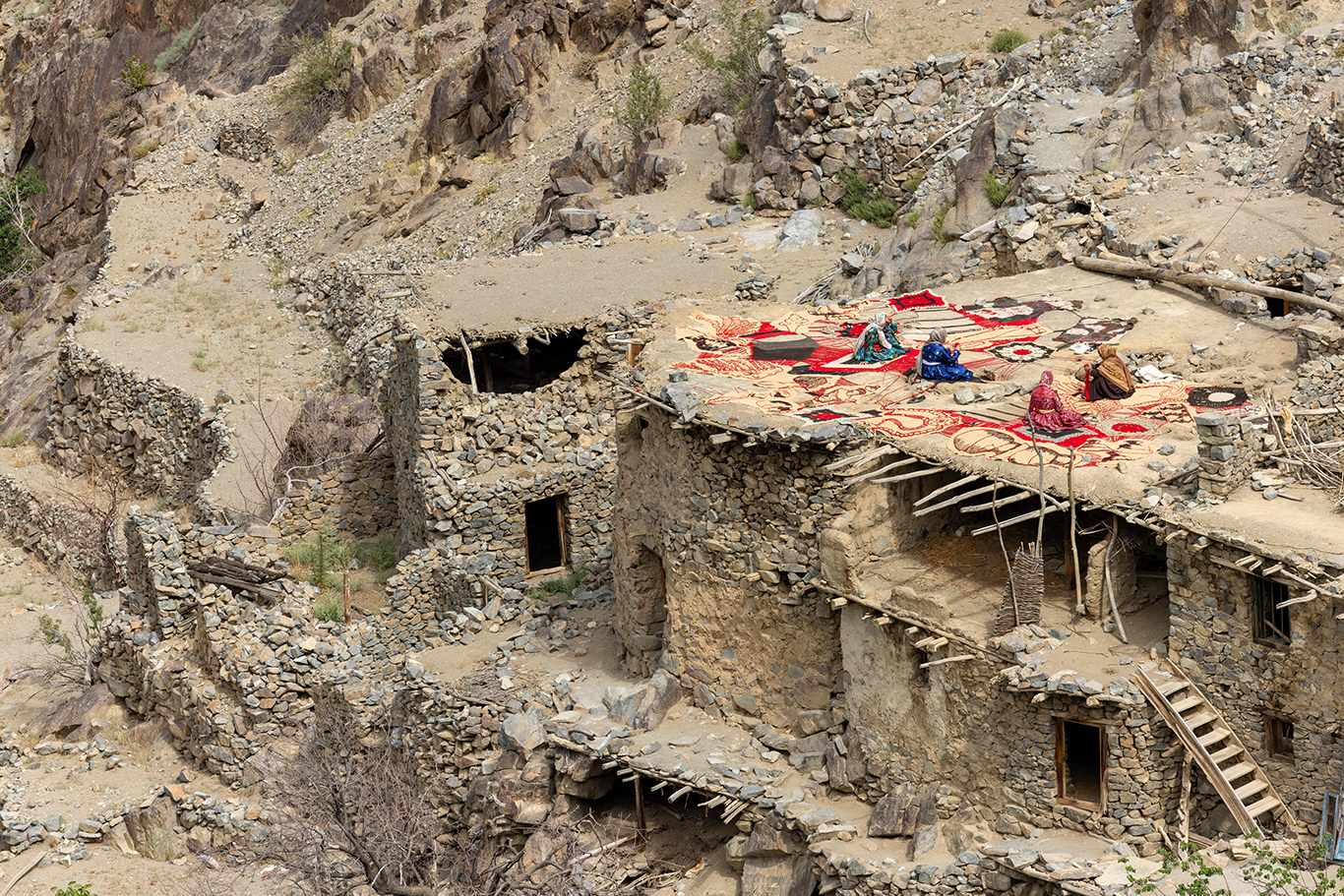
Known as Ladakh’s ‘moonland’, Lamayuru region sits 3,510 metres above sea level, its eroded terrain lending it a unique character. Here, Karki’s Rising from the Soil, Soaring to the Sky uses natural earth to represent carpet motifs woven across Himalayan cultures. Spanning 1,008 square feet over adjoining rooftops, the work is designed to be walked upon and undone by footsteps, wind and rain. As it slowly returns to the soil from which it came, the installation urges people to experience beauty not as something fixed, but as something continually made, altered and lost.
Blue Scaffolds in Zbayul, by Avantika Bawa
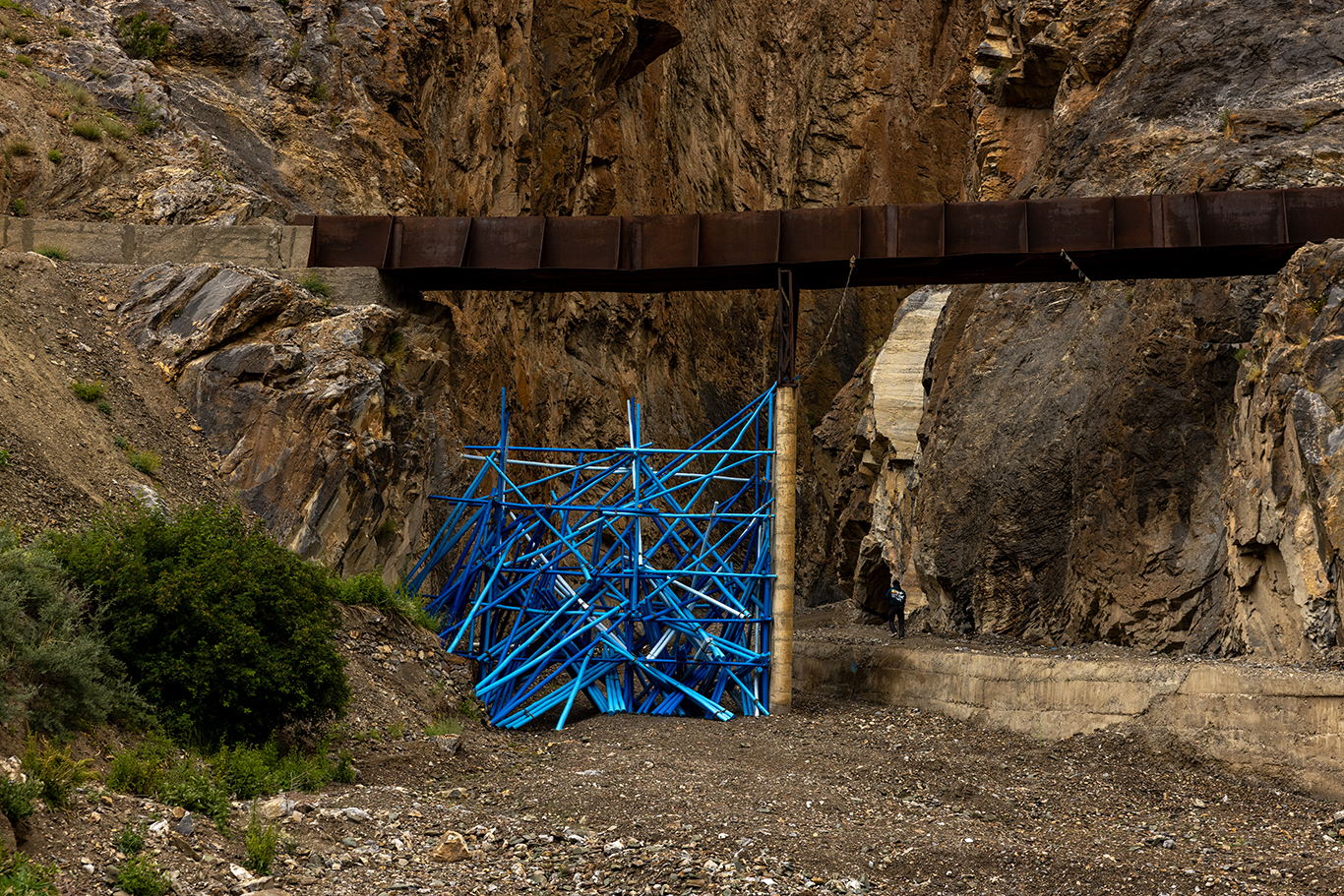
Henasku, in Kargil district, is the ‘invisible village’, a ruined fortified landscape that once resisted a Mughal invasion. Here, Bawa’s Blue Scaffolds in Zbayul forms a vivid blue structure beneath an abandoned aqueduct. Its repeated lines stretch across the valley, echoing both the water and distant sky. Acting like a false support system, the work responds to the site’s decaying architecture, while its tilted forms create a sense of tension and uncertainty.
Invisible Threads, by Zahara Batool
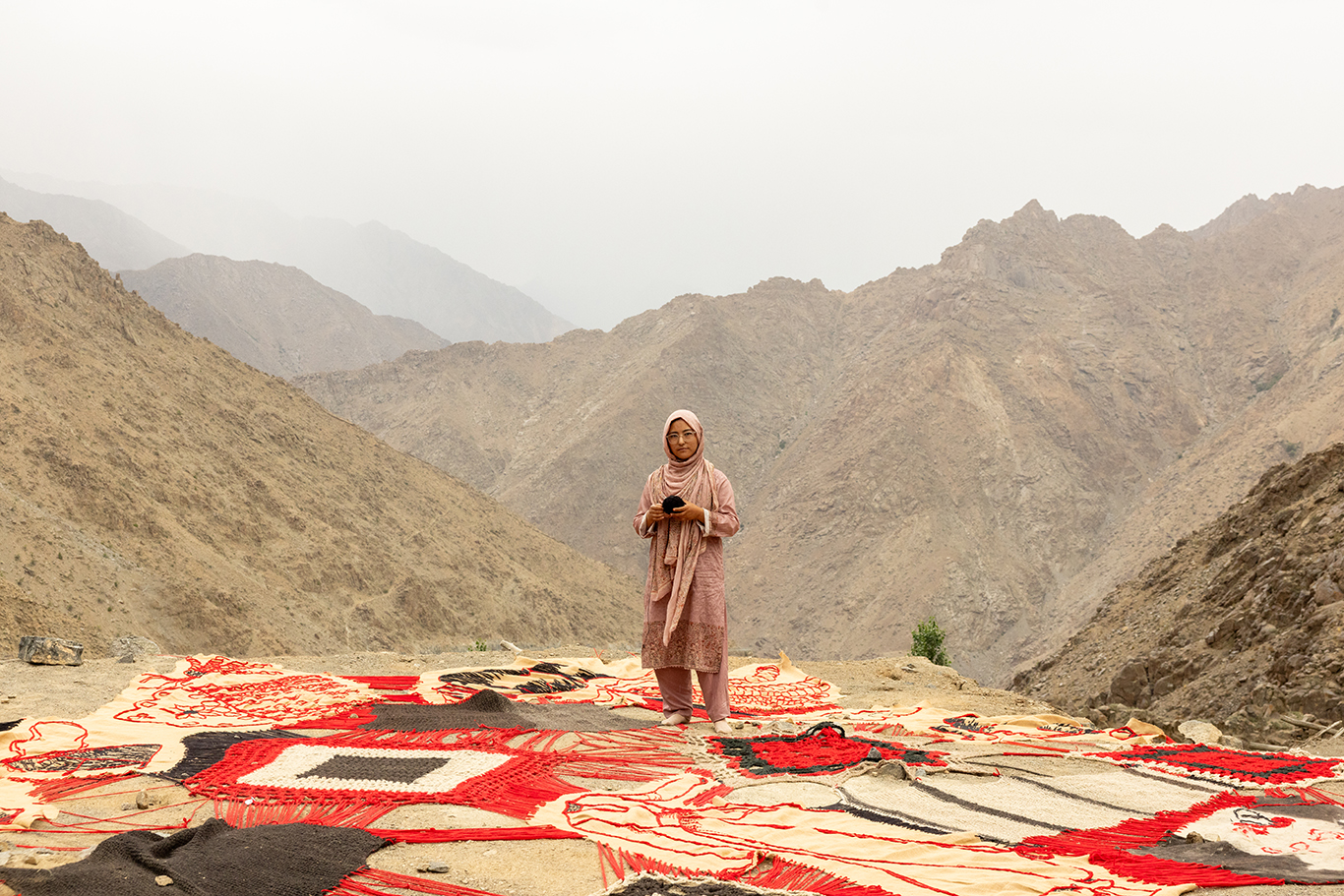
Perched at 3,000 metres along the India-Pakistan border, Hunderman village was once a thriving stop on the Silk Route before becoming a site of conflict during the wars between the two countries. Since its integration into India in 1971, the village has come to be known as a ‘museum of memories’. Here, Invisible Threads brings together women artisans who weave, knit and assemble textiles as acts of repair. This showcase will stretch to the exteriors of the village, with the handmade pieces placed on the collapsed ruins of a once beautiful and peaceful city.