
In India, five new restaurants conjure the past with mouth-watering results
They give a masterclass in good taste

Restaurants today promise far more than a memorable meal. Their interiors have become vehicles for storytelling, offering diners a glimpse into the cultural identity of a place. This feels especially resonant in India, where a new generation of eateries is looking to the past — and globally — without resorting to imitation. Take a look at these five restaurants that transform architectural memory into immersive dining experiences.
Social, New Dehli
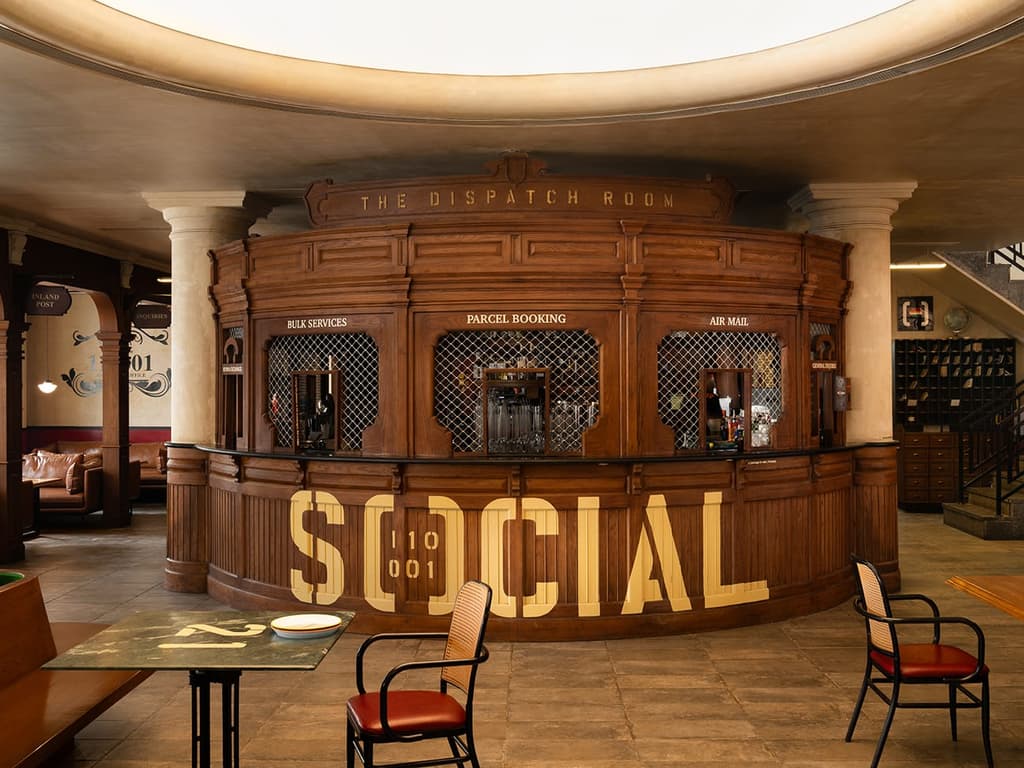
The post office remains a vivid repository of memory for Indians: dusty yet strangely endearing, with quiet theatre behind a row of service windows. With the recent discontinuation of India Post’s Registered Post service, a big chapter of that world has come to a close. In New Delhi, Social revives its atmosphere with a gently nostalgic hand. Designed by Studio LCD in collaboration with the Impresario team, the restaurant borrows from the familiar visual language of government offices and postal buildings. An oval island bar recalls old teller counters, while the timber-lined Dispatch Room nods to the unseen workings of the postal service. Wooden chairs, postal reds, bureaucratic greens, limewashed walls, brass details and stone surfaces come together in an interior that feels slowly accumulated over decades.
Cafe Beats, Rajkot
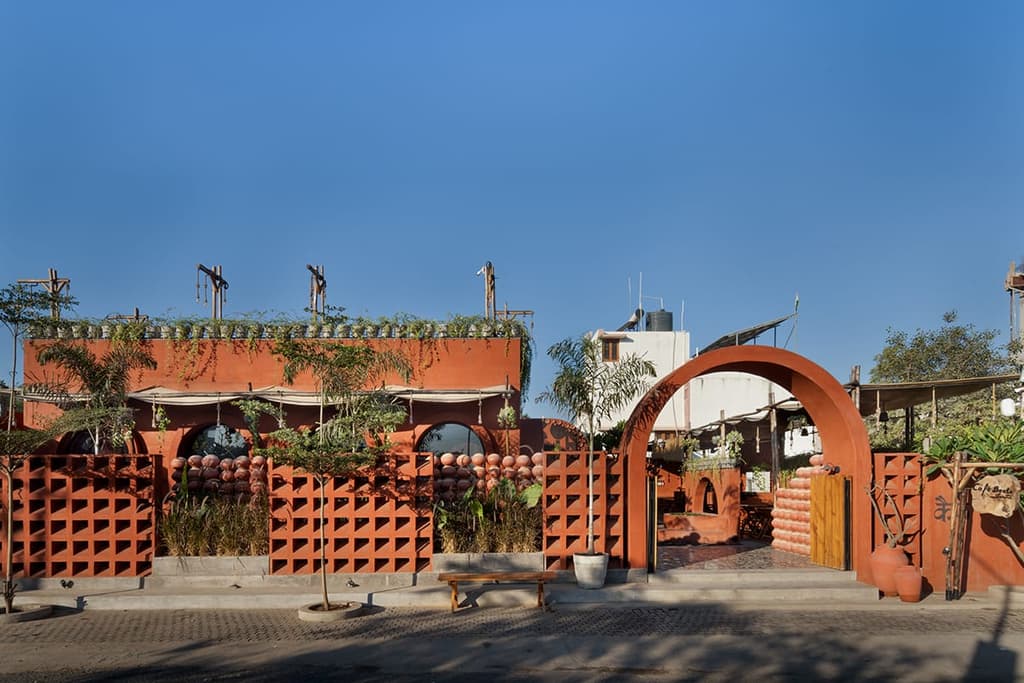
Traditional Indian courtyards were conceived as places of pause — spaces for rest, reflection and gathering within the home. Sparsh Design Studio draws on this idea for the resto-café, shaping its interiors around the atmosphere and social rhythm of the courtyard. Terracotta-plastered walls, arched openings, jali screens and bold black murals establish a distinctly vernacular language. A lily pond, cascading greenery and timber furniture soften the architecture and reinforce its connection to the outdoors. An informal amphitheatre, also used for seating, becomes a gathering point, while a sculptural installation of earthen matkas at the entrance offers a nod to rural Indian homes and traditional craft.
Mirove Artisanal Kitchen, Jaipur
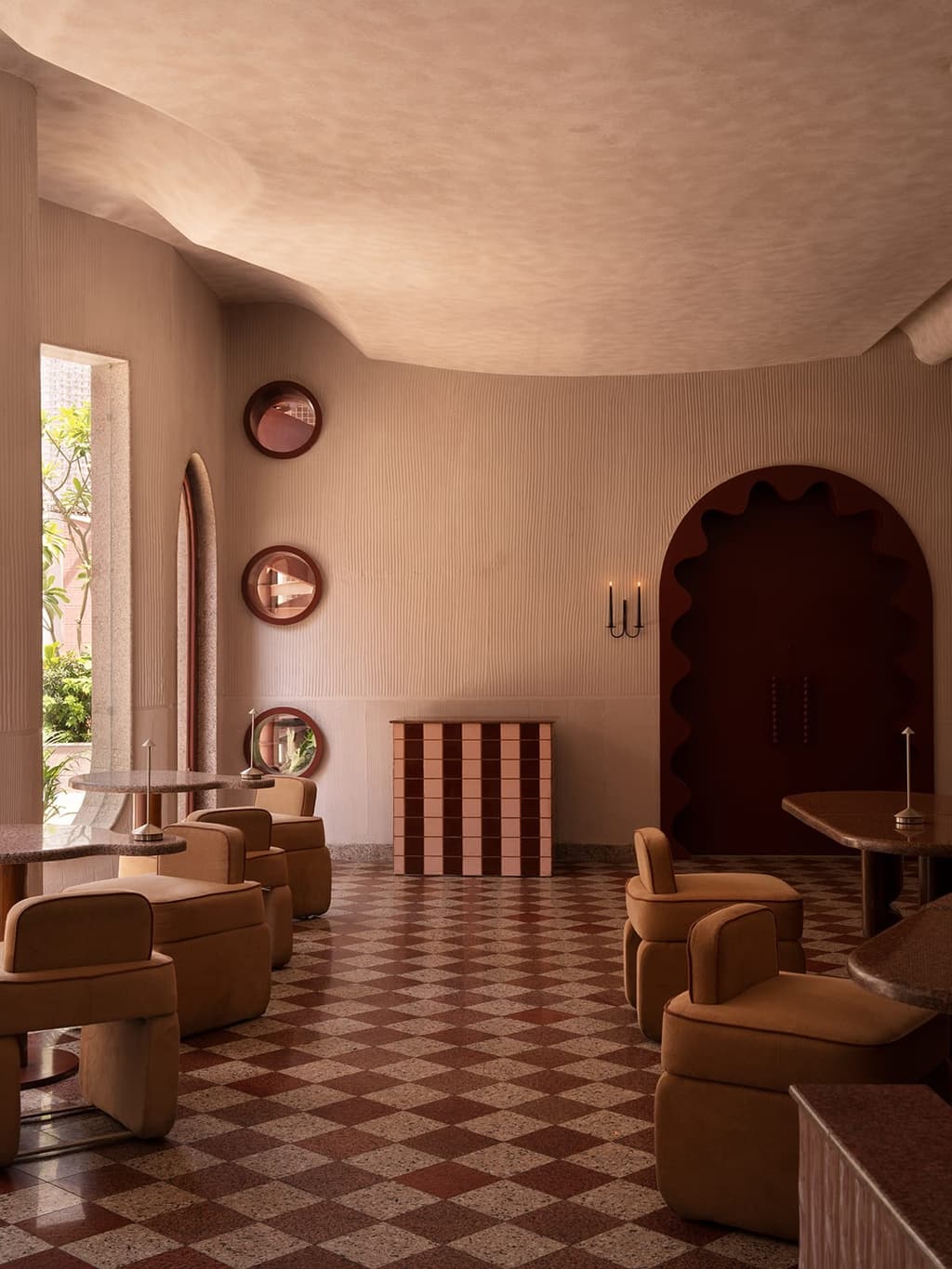
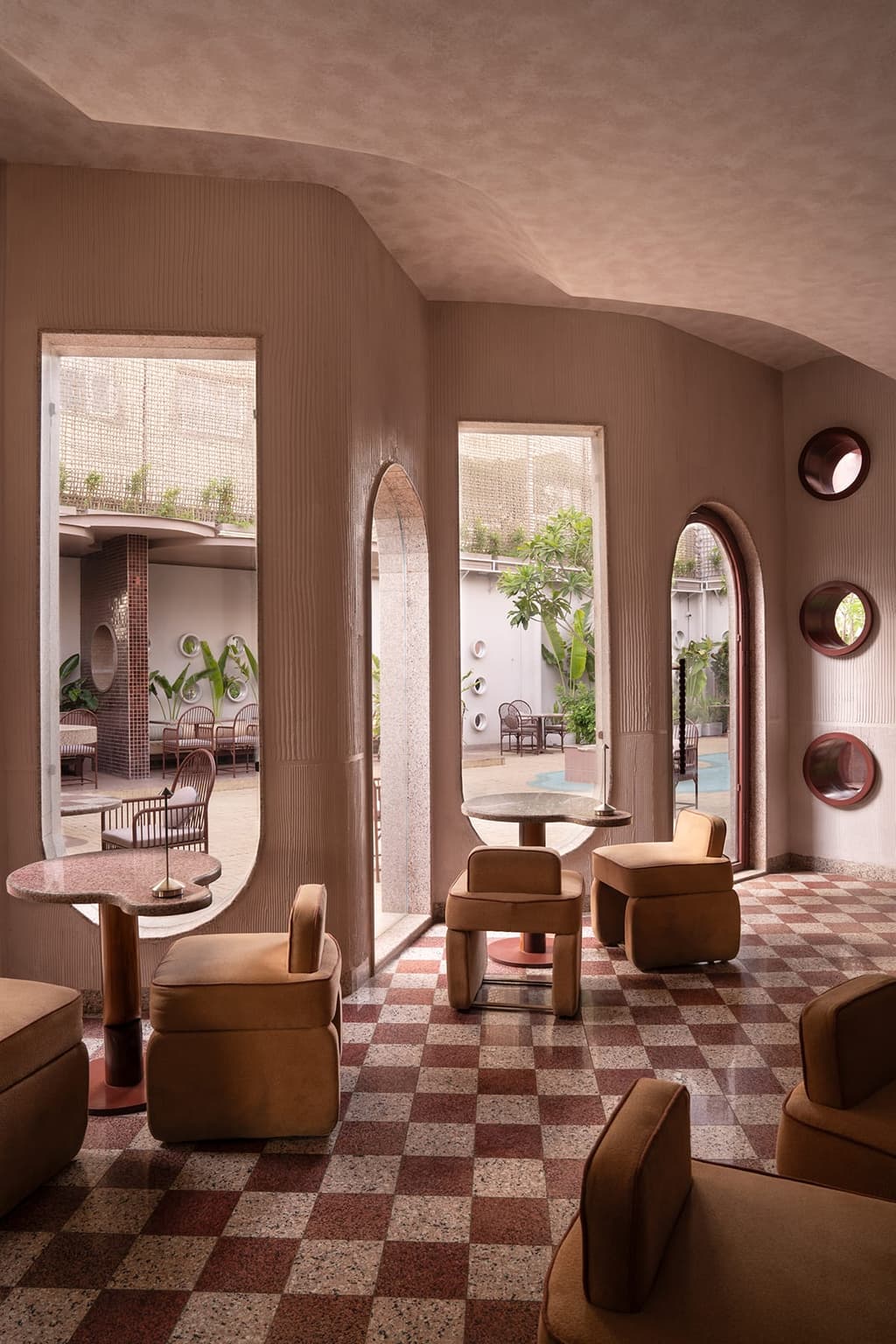
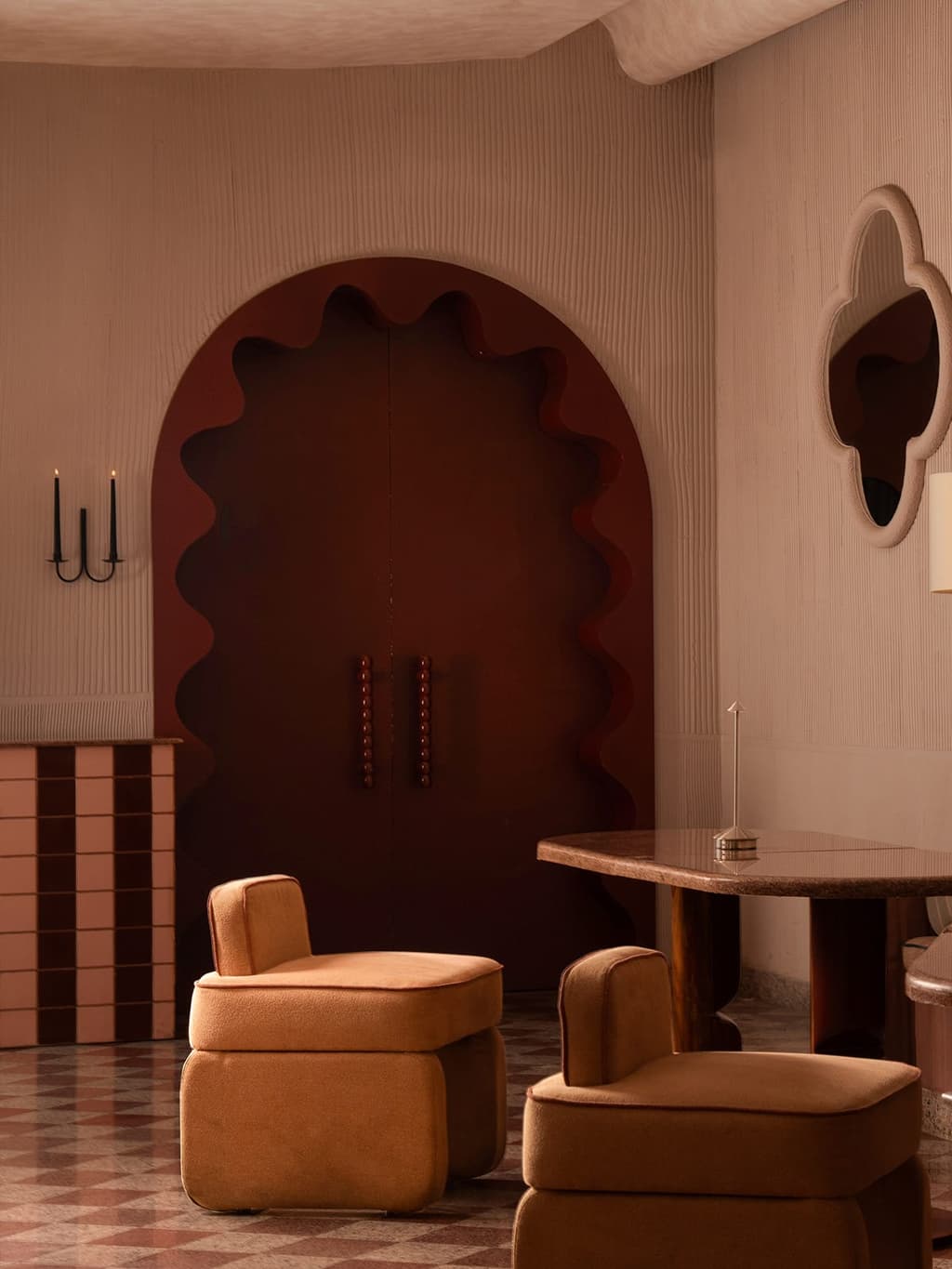
Jaipur’s 18th-century Jantar Mantar, home to the world’s largest stone sundial, provides the architectural and geographical starting point for Mirove Artisanal Kitchen by Pantone Collective. The reference is most striking at the entrance, where a 60-foot-wide curved concrete facade echoes the observatory’s monumental forms. Finished in a soft pink, the brutalist shell also nods to Jaipur’s identity as the Pink City. Inside, locally sourced granite floors, commissioned artworks, scalloped details, clover-shaped mirrors and custom canopies lend the restaurant a more tactile character. Arched openings, bespoke furniture and an external spiral staircase complete an interior that balances weight and whimsy.
Nakhra, Pune
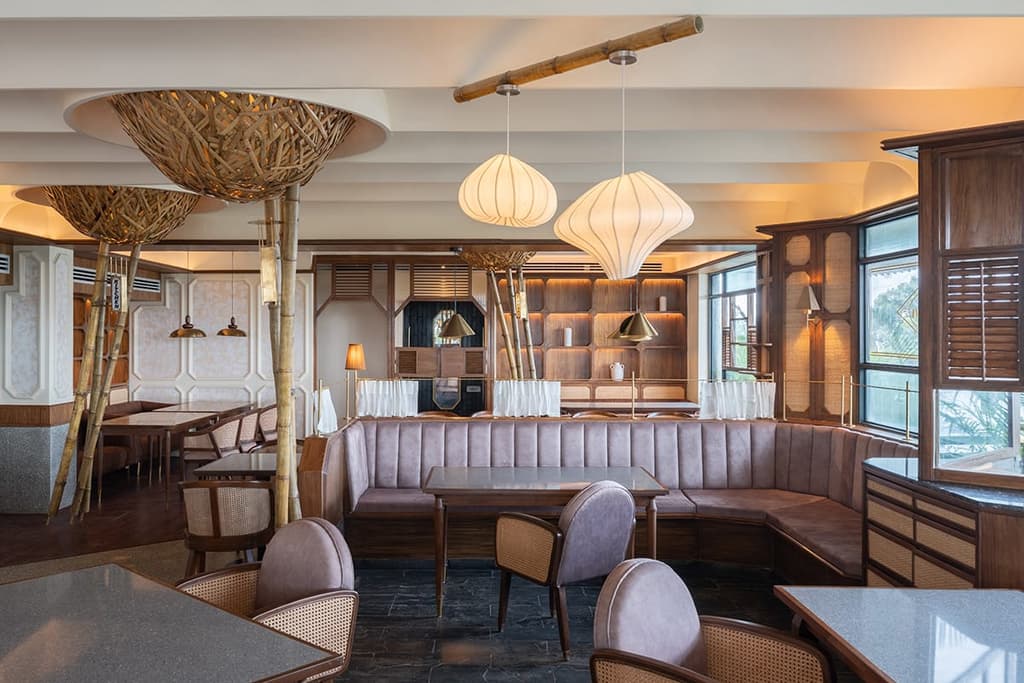
Maharashtra’s traditional wadas were timber and stone residences organised around a sequence of internal courtyards that brought light, air and communal life into the heart of the home. Otherworlds draws on this architectural language to reinterpret that warmth and openness at Nakhra with wooden balustrades, louvred windows and timber columns. Several courtyard-like dining areas offer distinct yet connected settings, furnished with relaxed rattan seating. Bamboo totems fitted with backlit brass lanterns introduce a sculptural glow, while grey IPS benches sit beneath woven bamboo canopies. Fluted glass panels, louvred timber screens and streamlined grey terrazzo flooring add a contemporary edge. Together, these elements create a residential atmosphere shaped for lingering conversations and unhurried meals.
Firenze, New Delhi
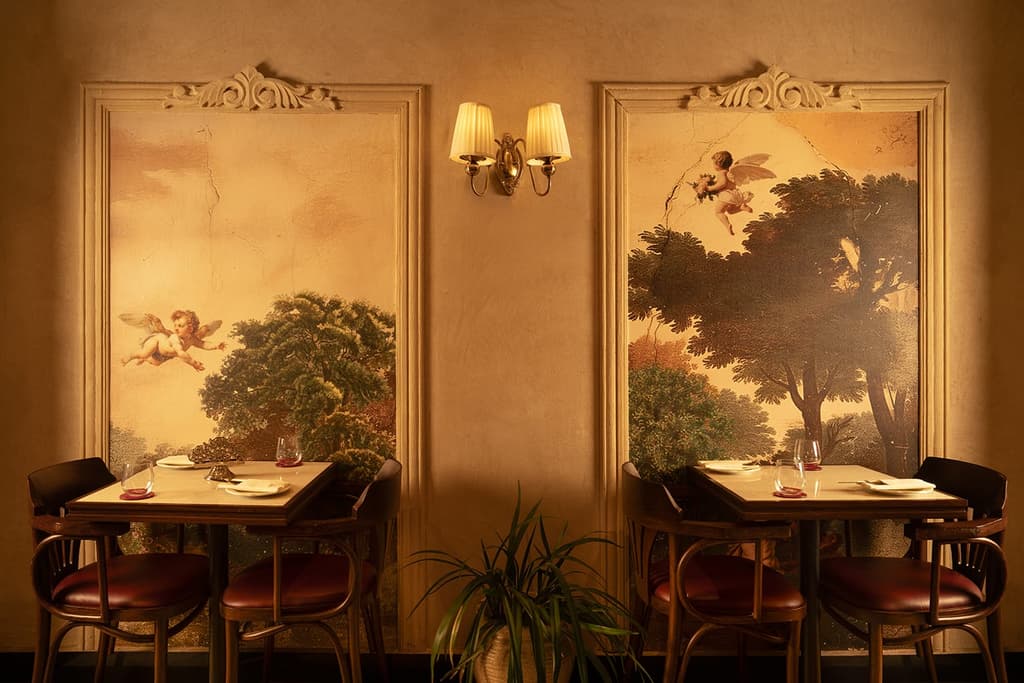
That Design Studio reinterprets Florentine design in New Delhi at this gelateria and café, conceived as an old Italian home. Spread across two levels, the interior draws on historic European trattorias rather than offering a literal recreation. Fresco-like walls, decorative mouldings, antique-style mirrors and richly textured finishes create a sense of age, while artwork and warm, atmospheric lighting deepen the residential mood. At its heart, a traditional pozzetti counter anchors the gelateria experience, complemented by stone mosaic floors laid in bespoke patterns. Narrow passageways and compact rooms lend the space an intimate rhythm.
Read next: London restaurants we loved in 2025
London restaurant Shan Shui Social takes you back to 1920s Shanghai
Related stories

Newsletter
Want news delivered to your inbox?