
High-fidelity sound marks out a new dining culture in London
Restaurants are stealing tricks from listening bars so customers linger longer

A steady wave of listening bars reshaped how we experience a drink. Now restaurants are catching up. Across London, restaurateurs are creating spaces built around vinyl and high-fidelity sound, where records are curated like wine lists and DJs set the tone for the evening.
Part bar, part restaurant, part listening room, these venues reflect a shift towards informal, flexible dining that is less time-bound, where sound systems are a defining feature of the space, as integral to the experience as the menu. ‘A great record can completely change the sense of a room,’ explains Nika Galkina, creative director of Sova, a recently opened restaurant and wine bar in Notting Hill. ‘People are becoming more interested in who selected the music, where it comes from and the stories behind it, much like they are with food and wine.’
We seem to be in the midst of an audio renaissance, with a renewed appreciation for sound quality, analogue systems and the tactile ritual of vinyl. ‘Can you tell the difference between two different red wines? You might be able to, but you might not be able to articulate it, the same is true of audio equipment.’ says artist and audio revolutionary Devon Turnbull who’s Ojas sound system has just been installed at Lunette, the new restaurant opening in September by Florence Knight at St. Clement, 180 The Thames.
Here are some restaurants leading the way.
Sova
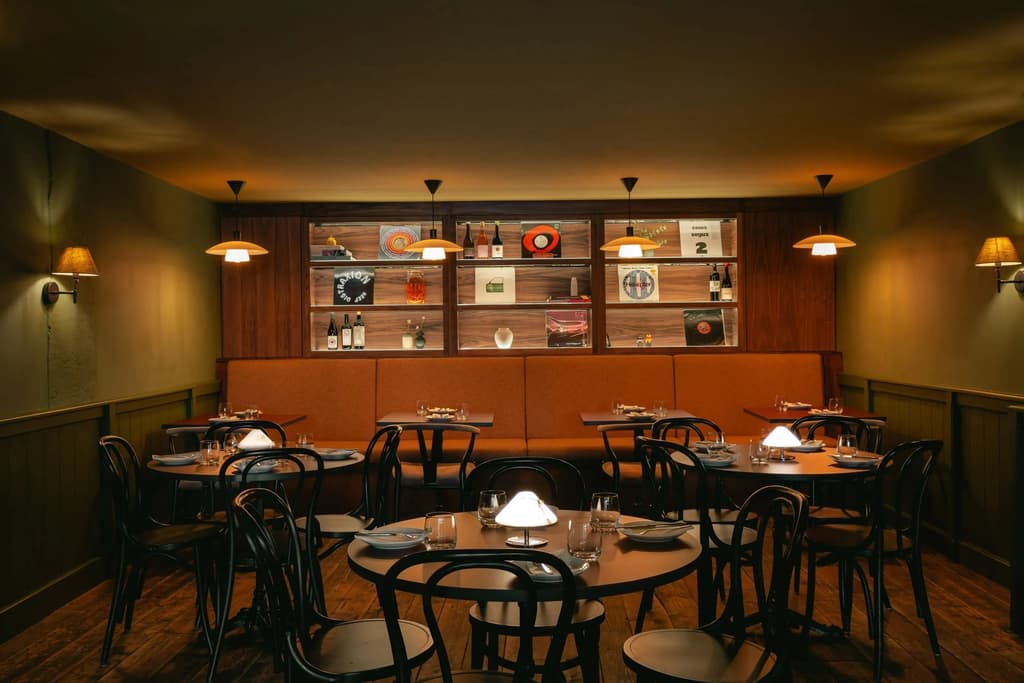
Newly opened in Notting Hill, Sova brings a focused mix of sound and flavour to the area. Vinyl underpins a space designed by AIYA Bureau in pared back muted tones, layered textures and natural materials. Records are played throughout the week, with guest DJs shaping the programme. The selection moves between electronic and contemporary sounds, with a collection partly curated alongside records store Rough Trade. Meanwhile, the wine list is low-intervention and biodynamic, with an emphasis on producers from Georgia, Armenia and Ukraine. A feature wall is lined with shelving supporting both bottles and records. The menu centres on shared plates drawing on Slavic flavours — Borodinsky bread, dill, horseradish — reinterpreted with a contemporary approach.
Hausu
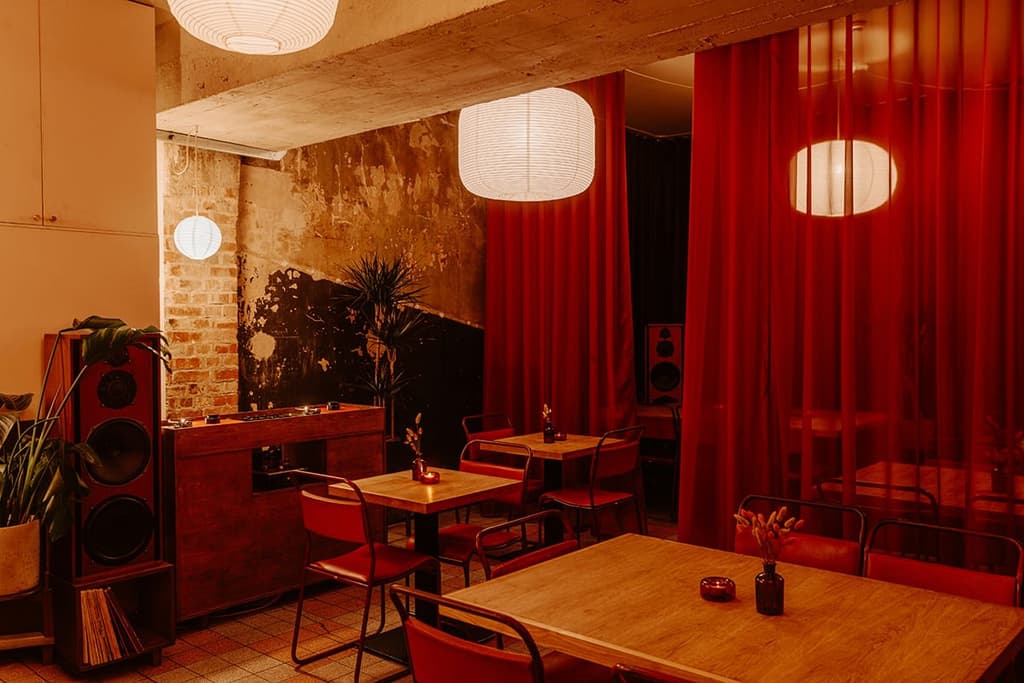
Named after the cult 1970s Japanese horror film, Hausu brings together high-energy cooking with an equally considered approach to sound. Led by chef Holly Middleton-Joseph, the menu moves fluidly between bold Asian flavours and more refined, European-leaning small plates. And sound is integral to the experience. Speakers are positioned high in the corners of the room, while the programme invites South London DJs to deliver curated vinyl sets spanning jazz, post-punk and beyond. Lighting is kept low throughout, giving the space a moody, intimate atmosphere. One of the three rooms, reserved for walk-ins, is defined by draped red curtains and low seating, giving it a distinctly cinematic feel.
Brilliant Corners
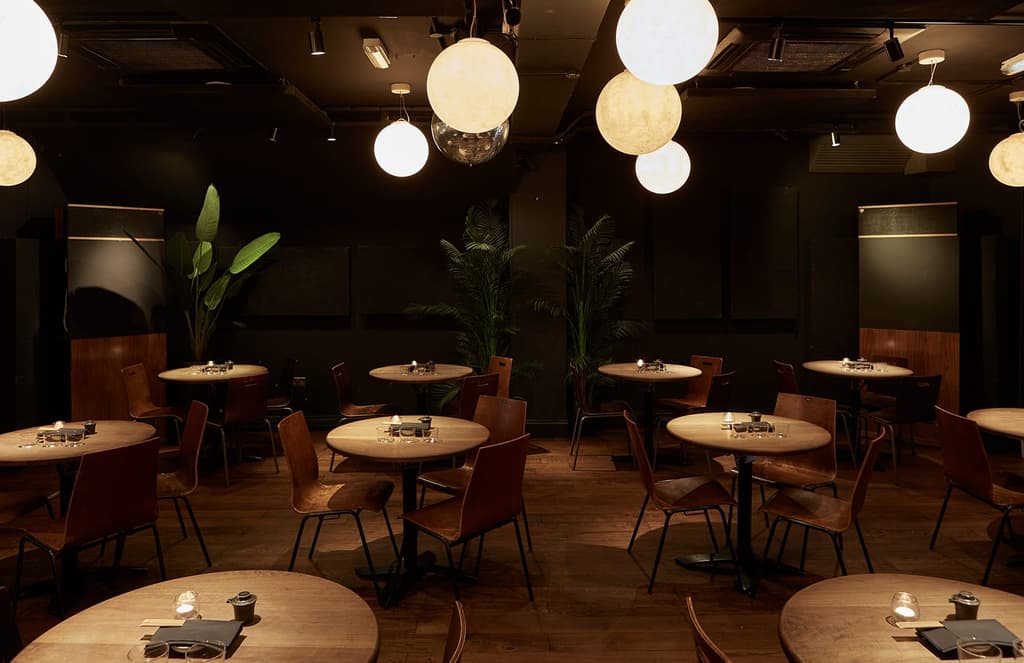
One of London’s defining listening-led restaurants, Brilliant Corners, founded by Amit Patel and Aneesh Patel in Dalston, takes a purist approach to sound. The sound system is fully analogue, with no digital processing. Modified Technics turntables feed into a mixer by Isonoe, while McIntosh amplifiers power vintage speakers placed in each corner of the room. The sound is complemented by wood tones throughout the interiors and dark walls. ‘The vision was always to keep the space simple and humble and not distract from the mission of the sound system,’ says Amit. ‘Lighting has played a big part in our identity, and [our globes] now feature in all of our projects. We wanted lighting that felt natural and did not detract from the music.’ The food follows an izakaya format — sushi, sashimi and seasonal dishes — alongside a focused selection of wine, sake and cocktails.
Jazu
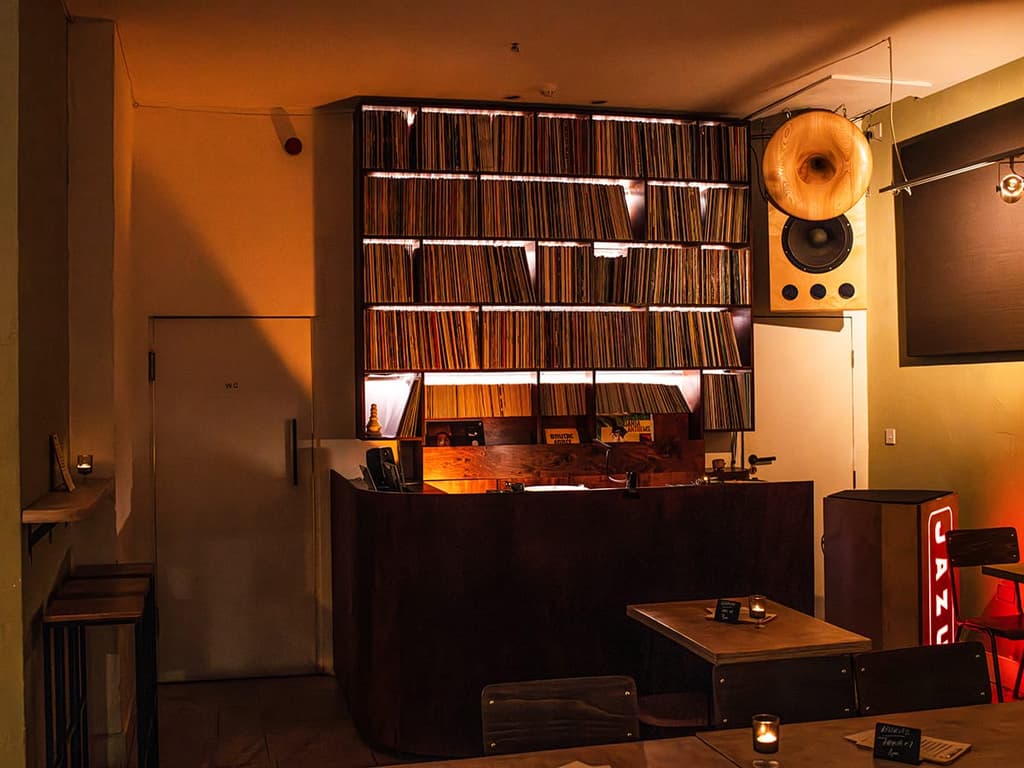
Jazu takes a more flexible, community-led approach to entertaining. The space hosts a rotating programme of chef residencies, meaning the food offering is in constant flux. As co-owner James Hanmer explains, ‘We change the kitchen operator every two to four weeks. This allows for cuisine styles from all the corners of the world to rapidly come in and out of the kitchen. We will often try to match the country’s food with the music.’ Crucially, that musical pairing is never incidental. It is always selected by a person — whether that’s one of the bar’s owners choosing an album to play, or an invited DJ. It is never automated. ‘The visual cue to see someone take time and care into the selection already makes you listen closer.’ The result is a dining experience that encourages a deeper engagement with sound as well as flavour. It ‘also allows you to engage with music you might not necessarily have thought you would have been into’.
Bambi
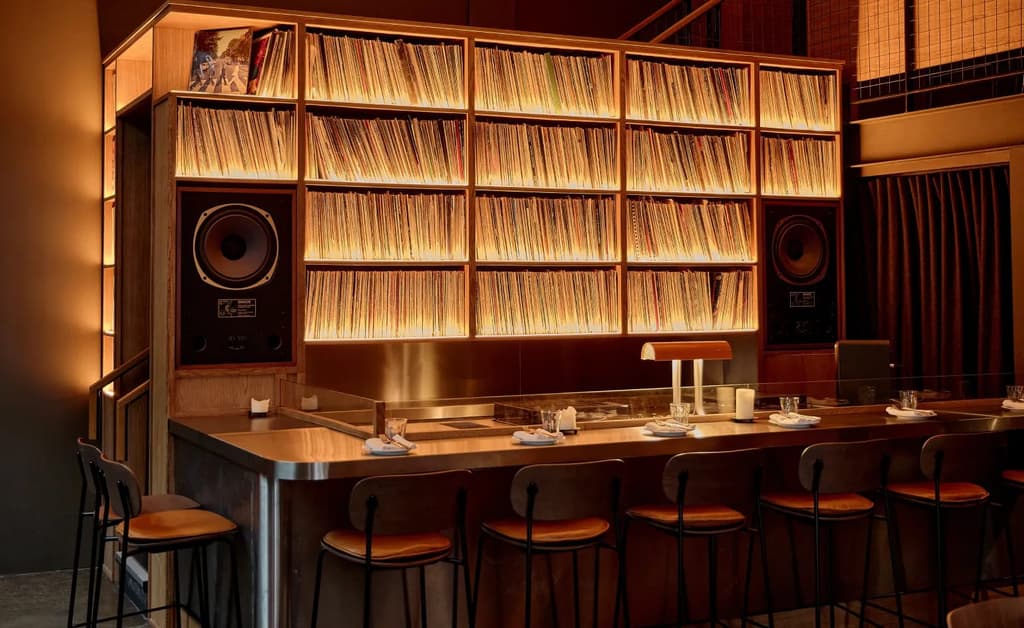
A London Fields neighbourhood hangout, Bambi has recently undergone a renovation that sharpens its focus on sound, embedding it more deliberately into the fabric of the space. The DJ booth is strictly analogue — two turntables and a rotary mixer, with no digital option — while resident DJs play exclusively on vinyl.
The interiors balance warmth with precision. Wood panelling runs throughout, creating a soft, enveloping palette that is subtly offset by stainless steel details catching and reflecting the light. The menu draws on Mediterranean cooking, threaded with influences from Mexico and Peru, while the drinks list leans towards low-intervention wines alongside a concise selection of classic cocktails.
Read next: Daft Recording Studios and hotel launch in the Belgian Ardennes
Sound and vision: four recording studios with finely tuned design
Related stories

Newsletter
Want news delivered to your inbox?