
The daybed is back, and it wants to sweep you off your feet
Our favourites are dramatic in a completely modern way

So you’ve bought yourself a daybed. Where do you put it? The office? The guest room? How about at the centre of the action, where you drink, gather and entertain? Daybeds are some of our most versatile furnishings, yet rarely do we make them work as hard as they ask to be worked.
Today’s covetable daybeds do not resemble your great-great-grandmother’s fainting couch, that stiff-backed Victorian relic that never saw actual melodrama but rather sat idly in a rarely visited parlour. It is a pivotal, sculptural point of interest — an icebreaker, dramatic in a completely modern way.
It takes some design nous to successfully feature daybeds in a communal scheme, and those who have it feature them conspicuously and decadently. You wouldn’t mistake them for sofas. They are rarely so hulking a presence, and the deep cushioned surface on a daybed makes the typical TV-watching pose awkward. Daybeds are not about awkward: they’re about lived-in comfort. Using one is about reclining. The tie is loosened, the shoes come off and the rest of the outfit submits.
When Ludwig Mies van der Rohe recalibrated the daybed in the 1920s with his Barcelona couch, it was with the intention of bringing an age-old framework into the 20th century using industrial materials fit for a king — quite literally the king and queen of Spain at the Barcelona Industrial Exposition. Jean Prouvé followed a few years later with his first metal daybeds, engineered with a clarity of form and purpose. Initially, because the times called for it, the rigorous frame, tufted mattress and cylindrical bolster were put to use in French university dormitories, until later iterations were adopted — some with a swivelling oak side table by Charlotte Perriand — and private customers took notice.
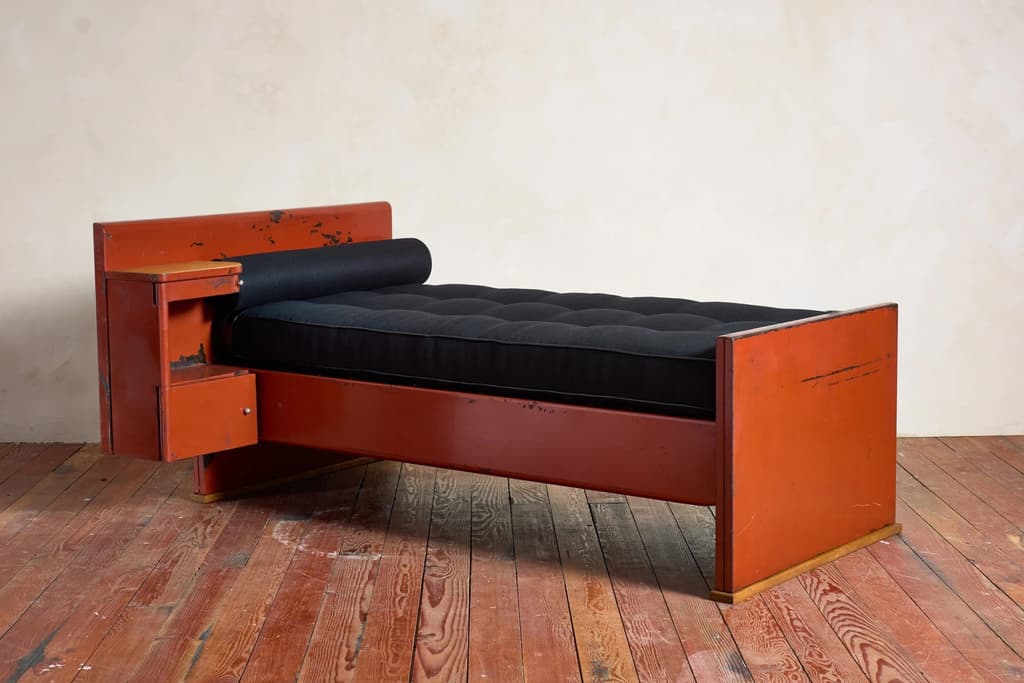
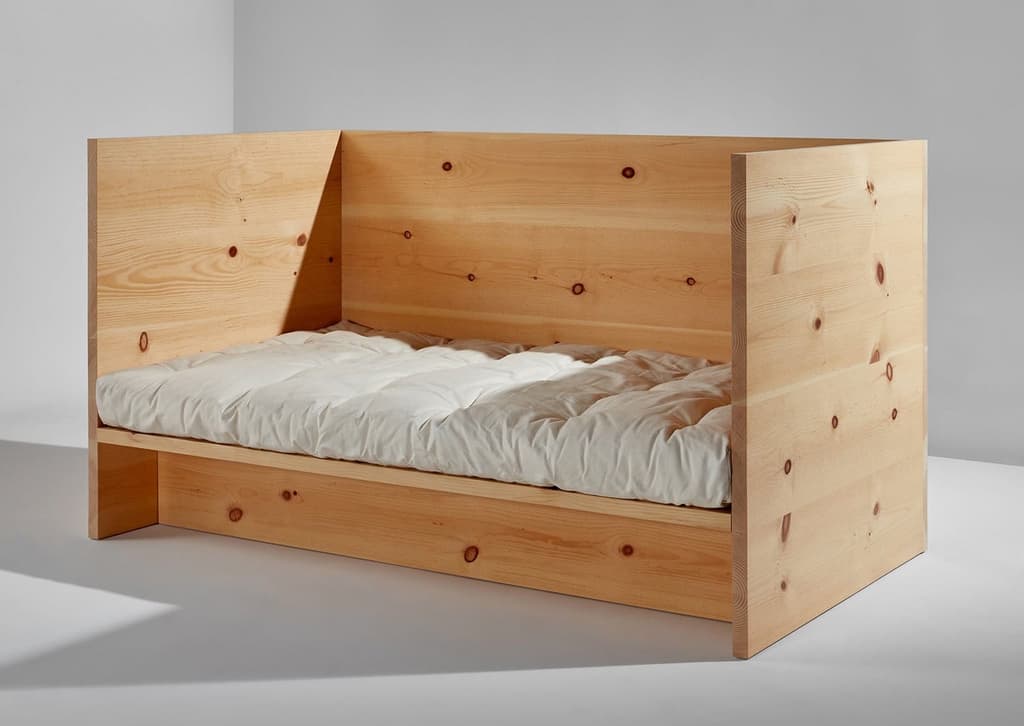
Donald Judd’s austere Daybed no.32 was a natural inheritor of that DNA, conceived in 1982 and occasionally spotted at auction. What these great designers created, however unwittingly, was the ultimate flexible furnishing — which explains why they resonate in contemporary spaces that perform various functions.
These models still speak to designers with their clean lines and tabula rasa quality — you can mitigate their stern construction with textural upholstery and cushions. The classic Prouvé daybed is reinterpreted by designers for whom no application is off limits.
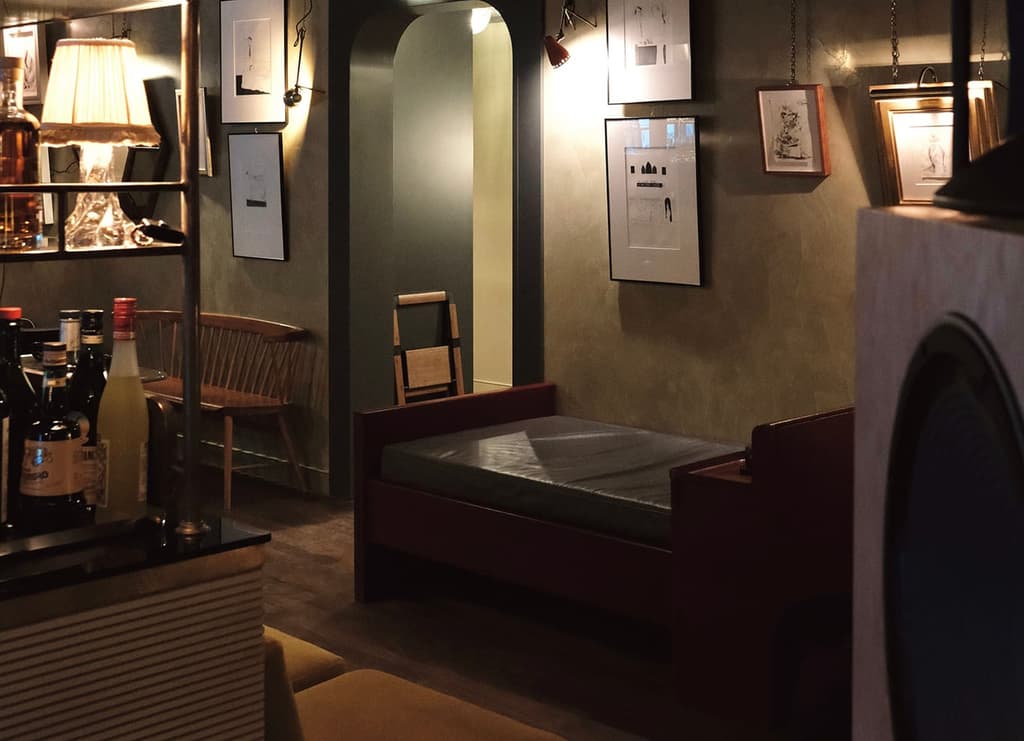
‘It’s really nice to use a piece of Prouvé in a place where it’s intentionally saying, “Please use me. Please sit down. Please hang out”,’ says Alex Eagle, one half of the design duo Eagle & Hodges, for whom daybeds by Donald Judd and Jean Prouvé are essential pieces. They’ve installed an Atelier Prouvé daybed in Bobbi’s Bar, a new late-night cocktail den at 180 The Thames, in the hopes that guests would, says Eagle, ‘sit, lounge, loll, do whatever they like.’ And guests do do whatever they like, from propping up their cocktails on the integrated ‘bedside’ table to going full horizontal, even falling asleep.
‘It wasn’t designed as a museum piece, or to be taken too seriously,’ says Eagle. ‘It’s a special piece in a place that’s meant to be social and sat on.’
That’s not to say a daybed isn’t worthy of a statement. While some use it as a sculptural room-divider or secrete it away in a corner, others design around it so that the daybed — and anyone using it — becomes the centrepiece of the room. Despite the space it inhabits, it seems miraculously to maximise space by creating its own lounge area.
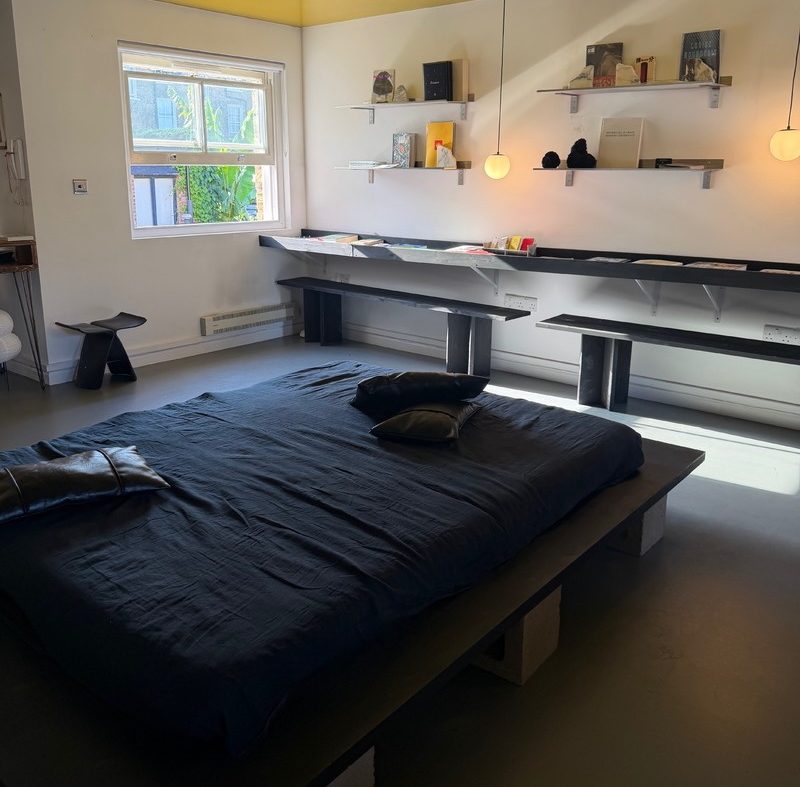
Studio Nocturne, a bookshop and ‘artistic laboratory’ in north London, takes its upstairs lounge space to a different level with a full-sized bespoke bed at its centre, covered in hand-dyed black linen and piled with come-hither leather pillows. ‘I’ve always fantasised about a daybed exactly like this, sitting in the middle of the room,’ says Studio Nocturne’s founder, Flora Gau. ‘I call it my sexy Donald Judd bed.’
It’s the first thing you see when you walk up the stairs, and customers have an anything-goes attitude to using it. ‘People rarely dare to use it when they come by during the day,’ says Gau, ‘but it’s the first seat taken once the lights go down at an event. I use it a lot too, mostly to read the books before selling them.’
As thoughtful brick and mortar destinations disappear and urban lifestyles speed up, a daybed seems loose, louche and delightfully subversive, uncompromising in its commitment to comfort and pleasure. It is honest in its intention, signalling a shift in how we treat communal spaces and how we present ourselves. Let’s hope to see more of them in our midst positing an easier way — a better way — of living in space.
Read next: Design alchemist Maria Pergay is more relevant now than ever
A Donald Judd aficionado sells up in Brooklyn
Related stories


Newsletter
Want news delivered to your inbox?