
Design alchemist Maria Pergay is more relevant now than ever
The furniture-maker brought antiquity to design and finessed stainless steel into precious metal
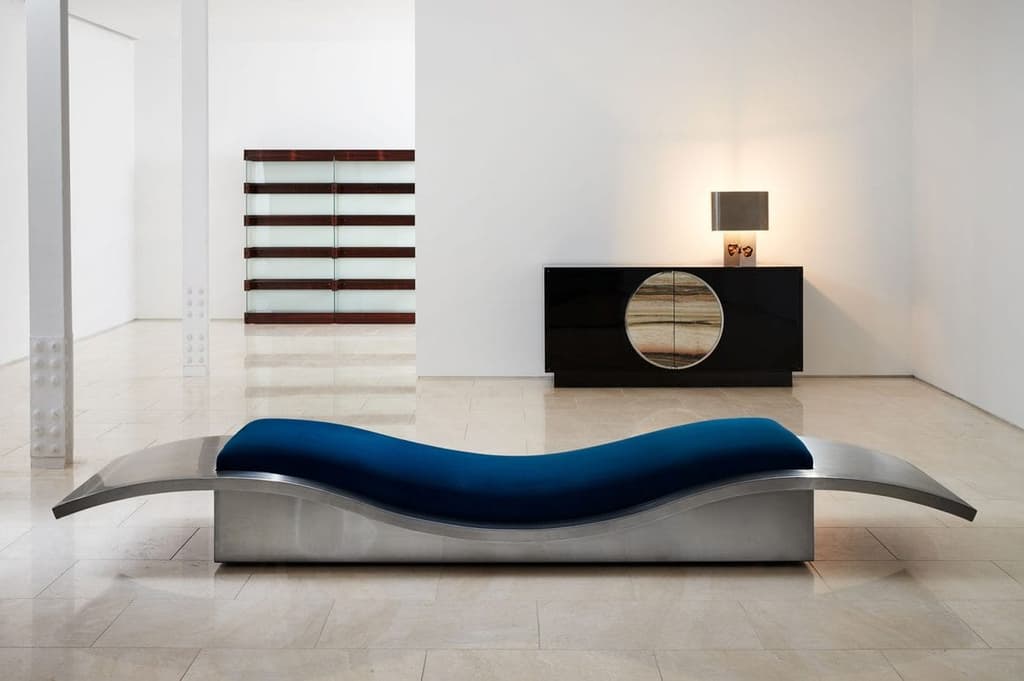
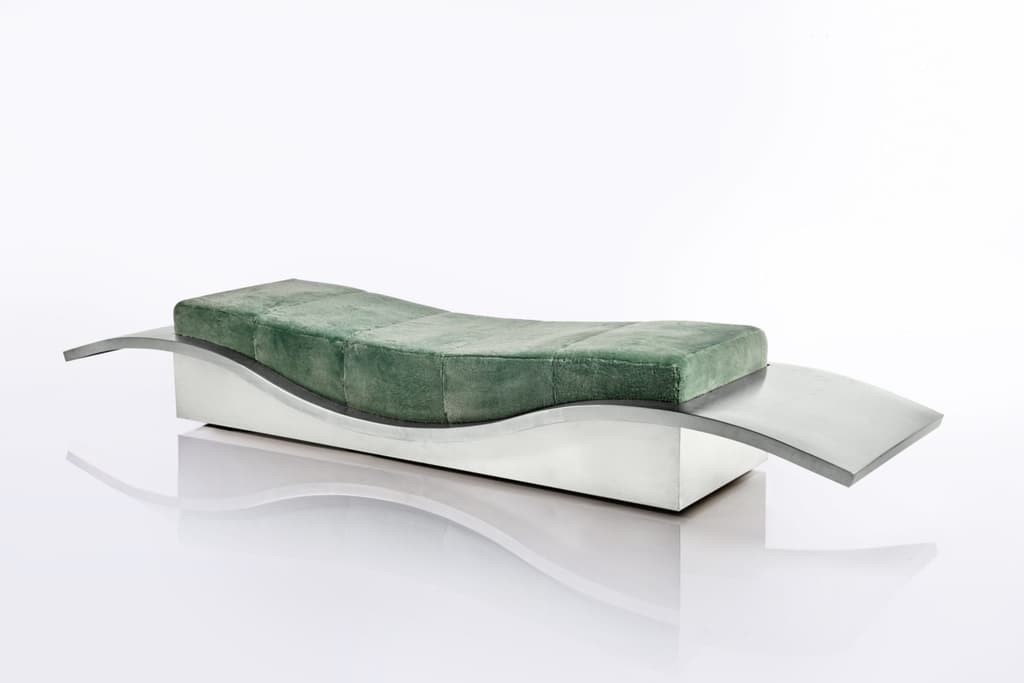
Everyone at The Spaces could agree that the Lit Tapis Volant — the Flying Carpet daybed designed by Maria Pergay in 1968 — was the highlight of our office interior. Not only a work of art in stainless steel, topped with a deep brown velvet mattress, it was also a place to rest and to think. You could experience an entire change of scene right there at the heart of the space, thanks to this single piece. Then, one sad day last winter it was gone, moved into another room on another floor.
It got us thinking about Pergay, this low-profile Parisian who could steal the show with an unexpected silhouette. Why don’t we hear about her as often as avant-garde contemporaries like Pierre Paulin, Gabriella Crespi, Joe Colombo? An émigré from Moldova who established herself as a silversmith in the 1950s, she worked just as hard. Dalí and Courrèges visited her shop in Place des Vosges; Christian Dior commissioned her silver jewellery boxes. And when she transferred her skills to furnishings in stainless steel, Pierre Cardin became a fervent collector (apparently she would picture Stalin — Russian for ‘steel’ — while beating the metal into shape).
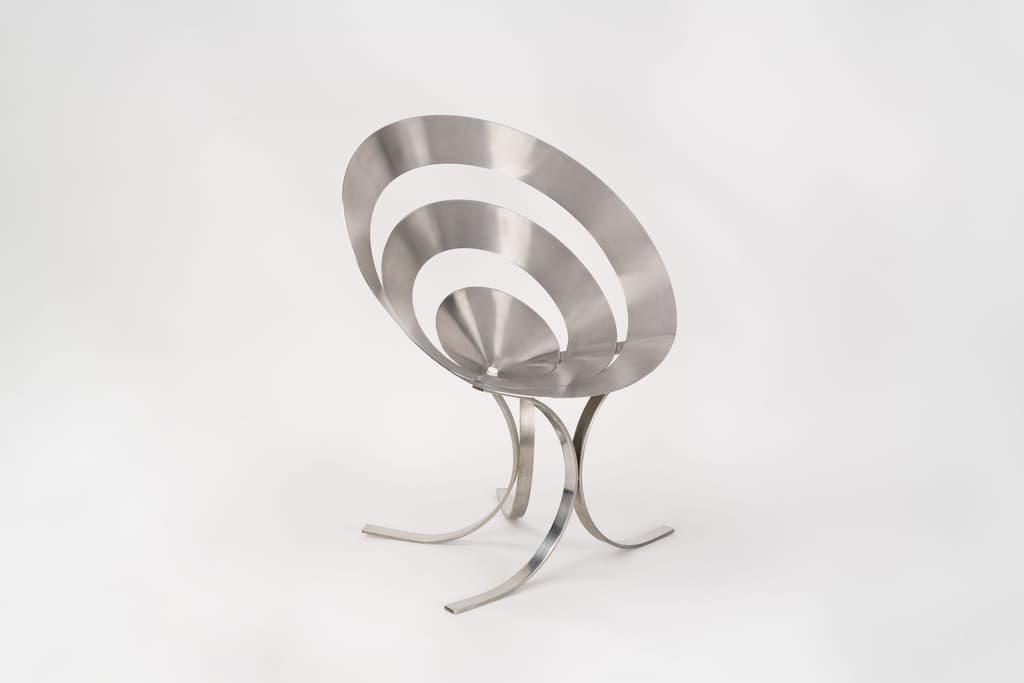
Yet Pergay eschewed publicity, choosing mainly to work for private clients. She stunned the industry with her Chaise Anneaux, or Ring Chair, yet produced only 50. She remained a best kept secret even after a revival in the 1990s, spurred by impassioned dealers like Demisch Danant, now the world’s foremost dealers of Pergay’s furniture. Only her death a few years ago sparked tributes on a par with her peers.
To find out more I contacted Stephane Danant, who, along with Suzanne Demisch, discovered Pergay’s collection in the early 2000s. In the service of writing a biography (yet unfinished), they tracked down the designer at her holiday home in Morocco and recorded their conversations, which they share online.
With stainless steel as aspirational today as ever, it’s hard to imagine a designer like Pergay slipping into obscurity. However, ‘back then there was no interest,’ says Danant. ‘We were the only ones trying to reach her. And she was kind of surprised by this sudden interest.’
Danant puts this down to Pergay’s lone wolf status — a mother of four with no formal training, attached to no design movement. ‘She never really belonged to the design mainstream,’ he says. ‘She’s always been a satellite.’ Other designers were more ‘fashionable’, he says, yet Pergay’s special quality came from her passion for antiquity and fine art. ‘Her Lit Tapis Volant obviously had Oriental influences, and she knew more about 18th-century Asian and Japanese art than anyone. I always appreciated that her work had a deeper meaning, because of all those historical influences.’
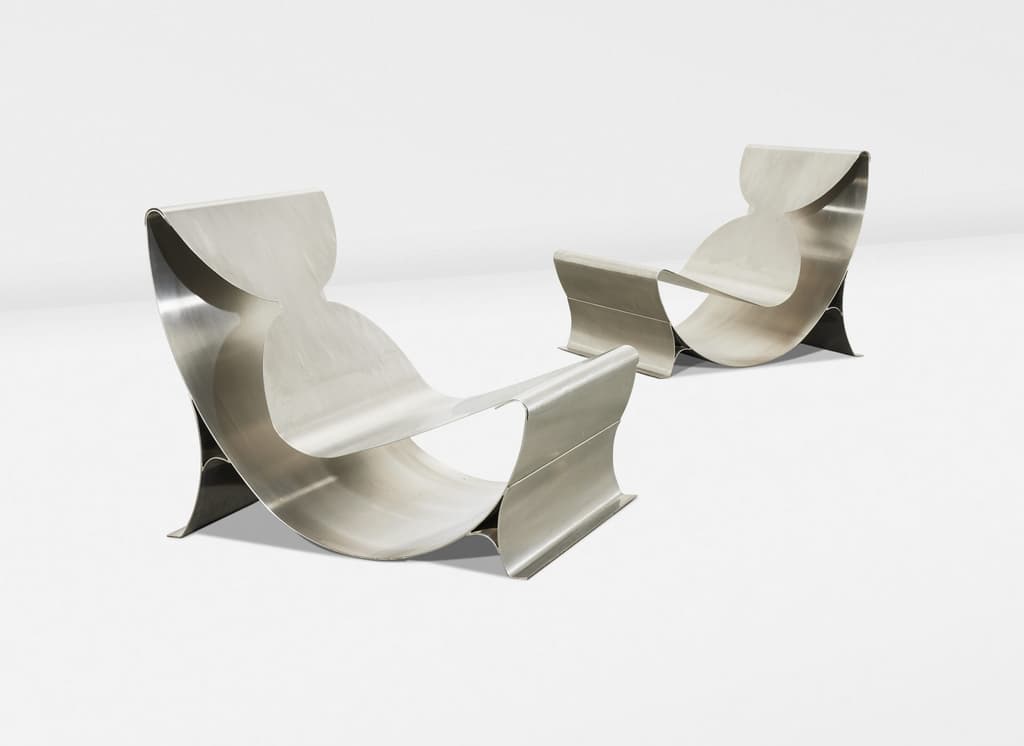
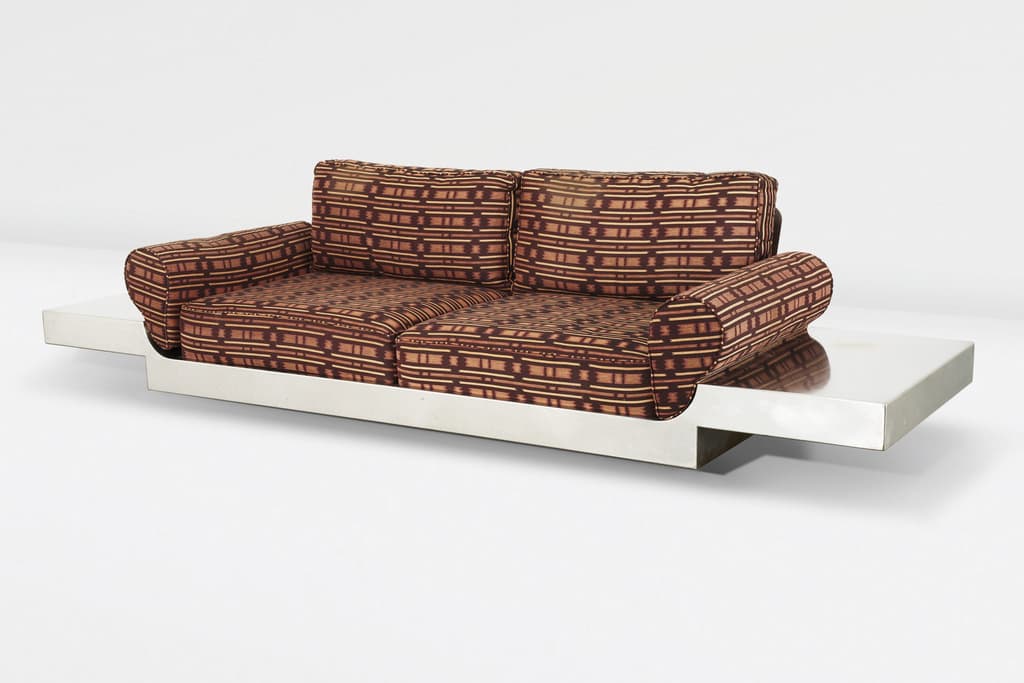
Possibly the only designer in the 1960s and ’70s working exclusively with steel, Pergay was able to make the industrial material look dynamic, supple and of a kind with heritage pieces. She saw something in steel that linked the baroque silverware of the past to the postmodern future. As she herself said, ‘It has authority, and it helps me not to make errors. But it also shines and glows; it hints at greater things.’
‘Her work integrated into very different environments,’ says Danant. ‘Her first furniture show in 1968 was filled with 17th-century Dutch paintings, 18th-century cabinets… Maria had this connection to the past, so her vocabulary comes from that. Other steel furniture can be beautiful but there’s nothing underneath — no under-layer of meaning.’
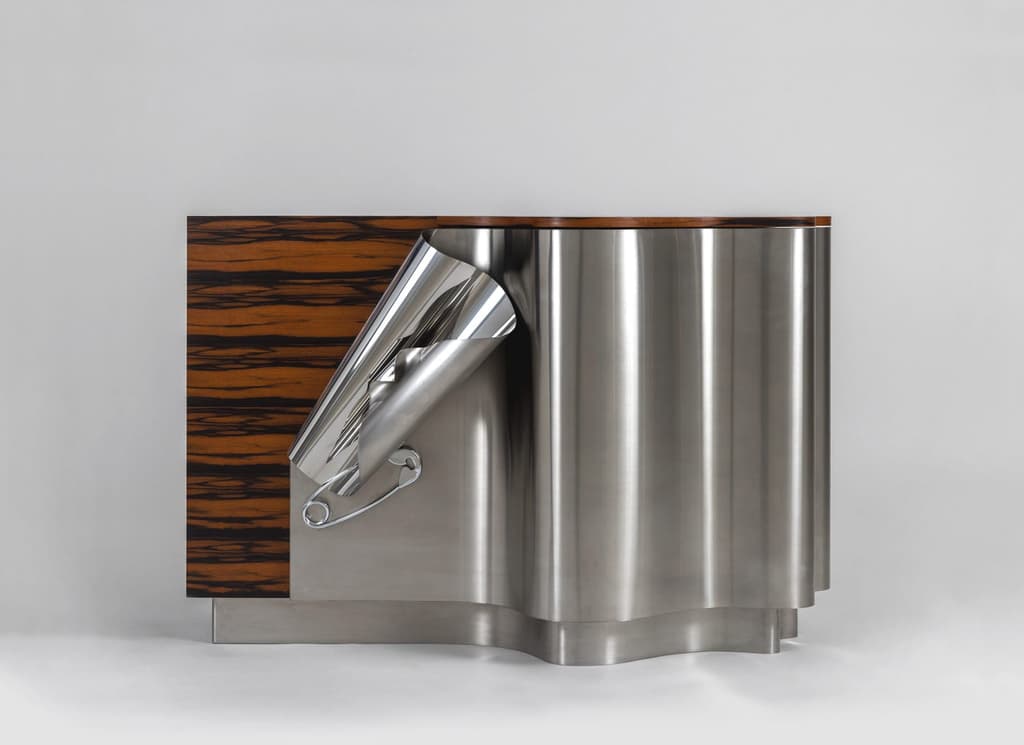
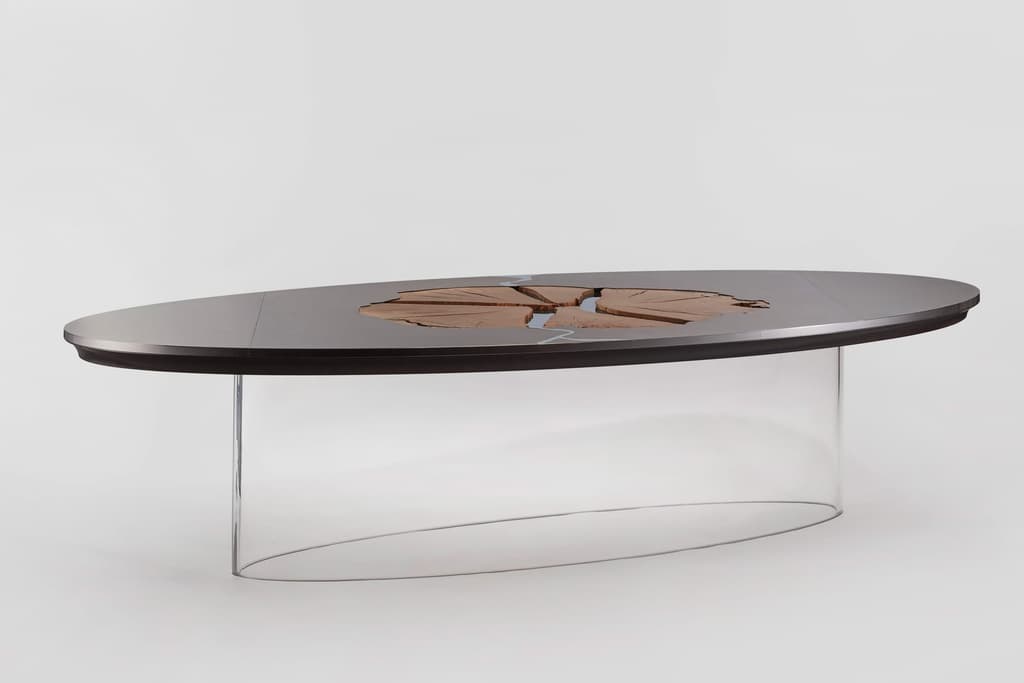
The relationship Pergay formed with Demisch and Danant inspired her to give furniture another try. ‘I had no idea what she was going to do,’ says Danant. ‘I was really surprised because it was so different — more baroque, more sculptural and mixed with exquisite woods.’ She began with the limited-edition Drape cabinet in 2005, a two-sided chest in stainless steel that ‘peels’ back to reveal an ebony macassar surface, then segued into a folding steel screen inlaid with six types of wood. A decade later came her lacquered Marie Antoinette table, embedded with a slice of black oak from a 300-year-old tree in the gardens of Versailles, felled by a storm in 1999. She procured enough of the wood for four tables but produced only three.
Pergay never shrugged off her outlier image. She was a fiercely conscientious worker, says Danant. ‘I was always impressed by how she created her ideas. She showed up at the factory with random drawings she’d made on small pieces of paper, and two months later you’d end up with an incredible piece of furniture.’ Yet she was also ‘like a Jewish mother’ — generous, funny, always cooking, committed to her family. She was moved to forge her Ring chair in 1967 after peeling an orange for her children.
Was she a reluctant design hero? Not exactly. ‘She was happy with all the exhibitions, the new clients — she enjoyed it,’ says Danant. ‘But she was more concerned with going to the workshop. She would always describe herself as a “maker of objects”, not a designer.’
Read next: Matt metallics: the new neutrals taking over contemporary spaces
Seven destinations where you can worship George Nakashima furniture in its element
Related stories


Newsletter
Want news delivered to your inbox?