Koyo Kouoh’s posthumous exhibition ‘In Minor Keys’ sets the tone at this year’s Biennale di Venezia, stirring ideas of grief, healing and beauty in times of tragedy. Meanwhile the rest of Venice is a spectacle. Beyond the Giardini and Arsenale pavilions, contemporary artists including Faiza Butt for Pakistan, Sara Shamma for Syria, Roberto Diago for Cuba and Lavar Munroe for the Bahamas are representing their nations. Dries Van Noten and Patrizia Sandretto Re Rebaudengo have launched spectacular, new cultural quarters — the former celebrating craftsmanship and the latter outdoor art. Elsewhere, shows in grand palazzos and historic churches provoke and inspire with striking takes on space, material, politics and identity. Here’s what not to miss.
Gabrielle Goliath: Elegy at Chiesa de Chiesa di Sant’Antonin, until 31 July
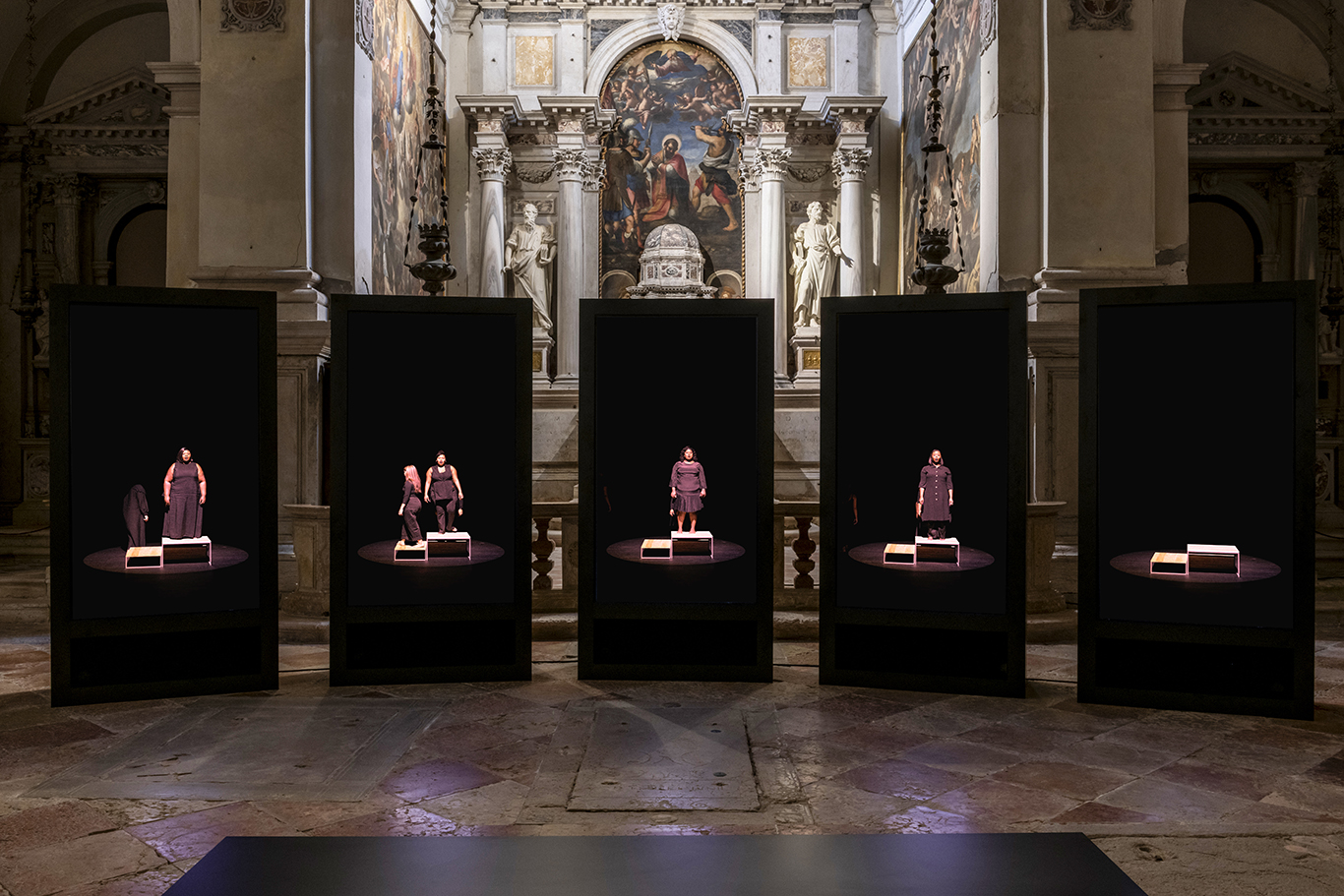
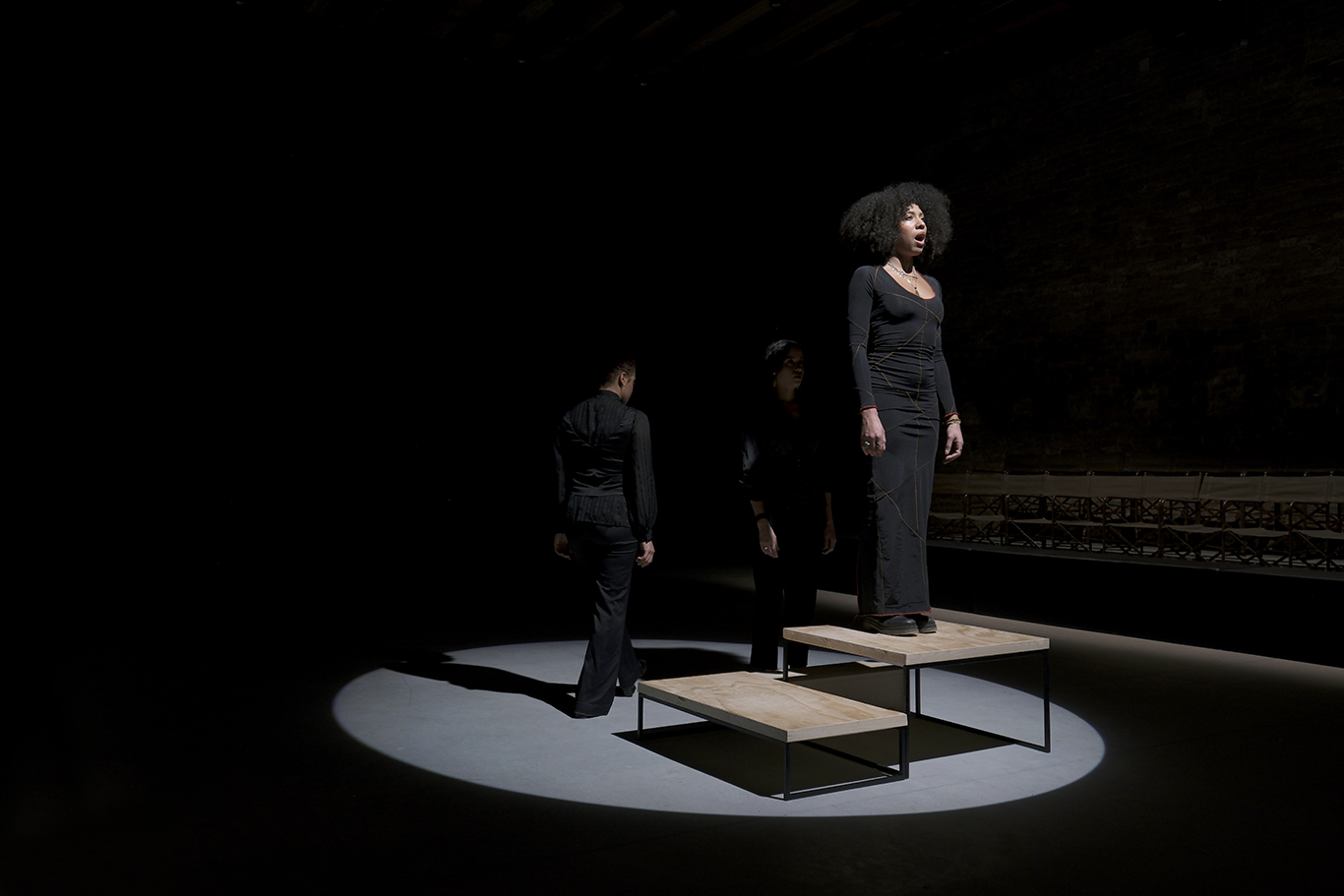
Staged by London cultural centre Ibraaz, Gabrielle Goliath’s video installation is a sonic act of mourning for victims of femicide and erasures of Indigenous people. The latest addition is an homage to Palestinian poet Hiba Abu Nada, killed by an Israeli airstrike in Gaza in 2023. Her screens present women singing a single operatic note, each taking turns to stand on an illuminated plinth. Yet on one screen the plinth remains empty, honouring Abu Nada’s absence. Golaith’s work also appears at Palazzo Contarini Polignac as part of PinchukArtCentre’s show Still Joy: From Ukraine Into the World.
Lee Ufan at San Marco Art Centre, until 22 November
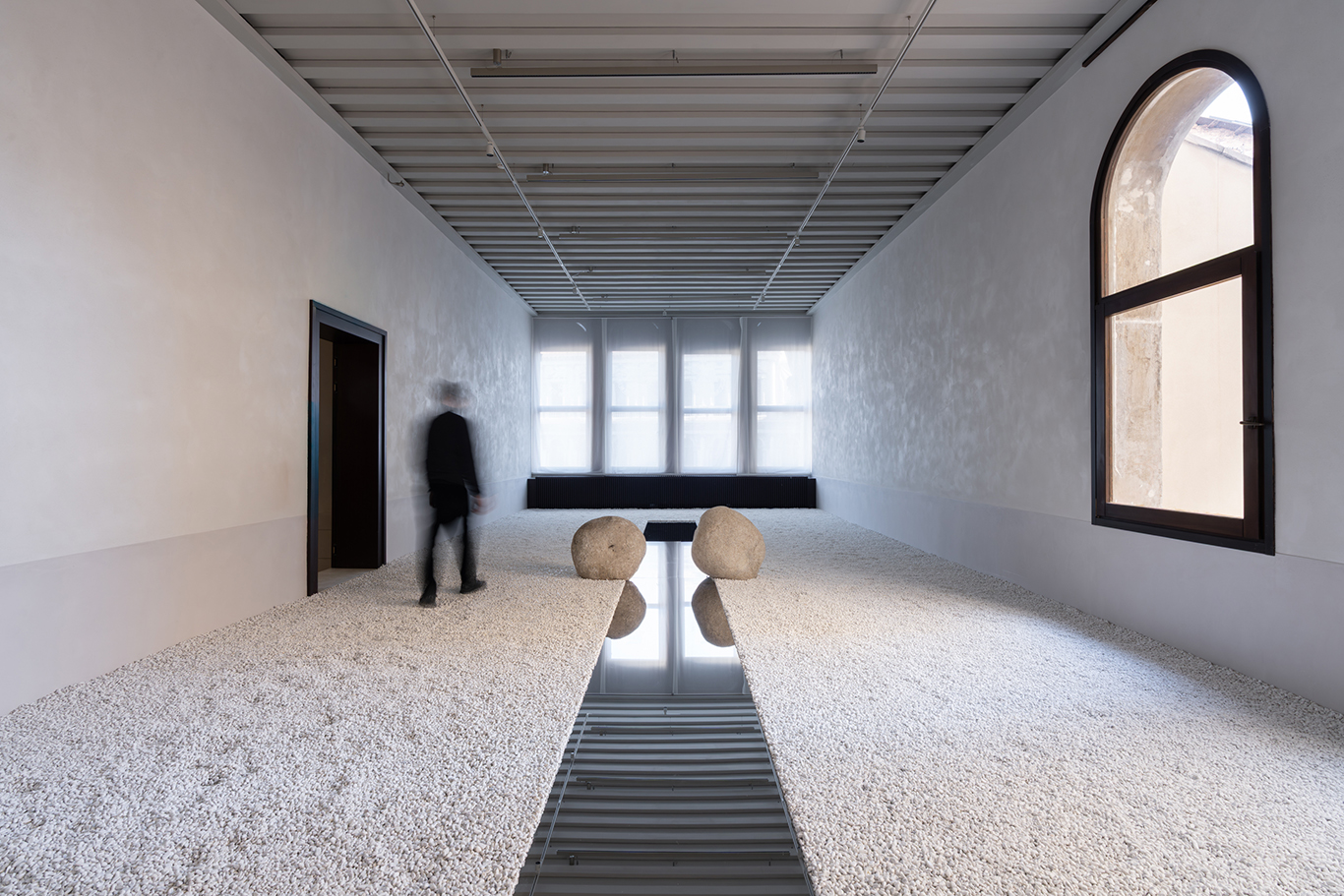
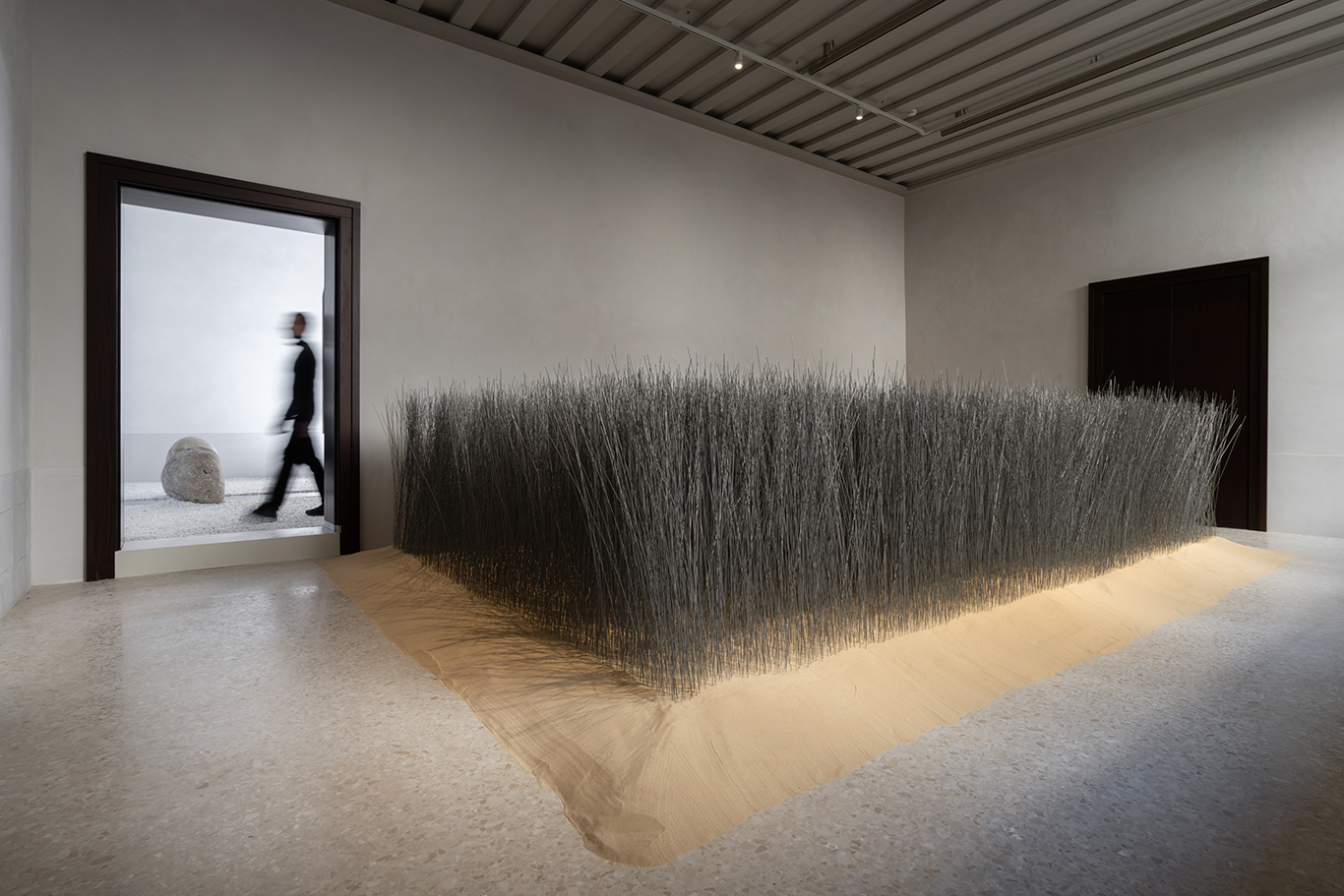
South Korean artist Lee Ufan is known for his contemplative minimalist paintings but also sculptures that embody his relational philosophies. This exhibition by Dia Art Foundation features various painting series, including Correspondence and Dialogue, which meditate on the directional energy of individual brushstrokes. Sculptural installations include Relatum, featuring a field of steel rods standing on a bed of sand, and the more recent Relatum—Infinity, which encourages viewers to walk a mirrored path onto a layer of pebbles that fills the rest of the room, experiencing the shift in texture and terrain.
Matthew Wong: Interiors at Palazzo Tiepolo Passi, until 1 November
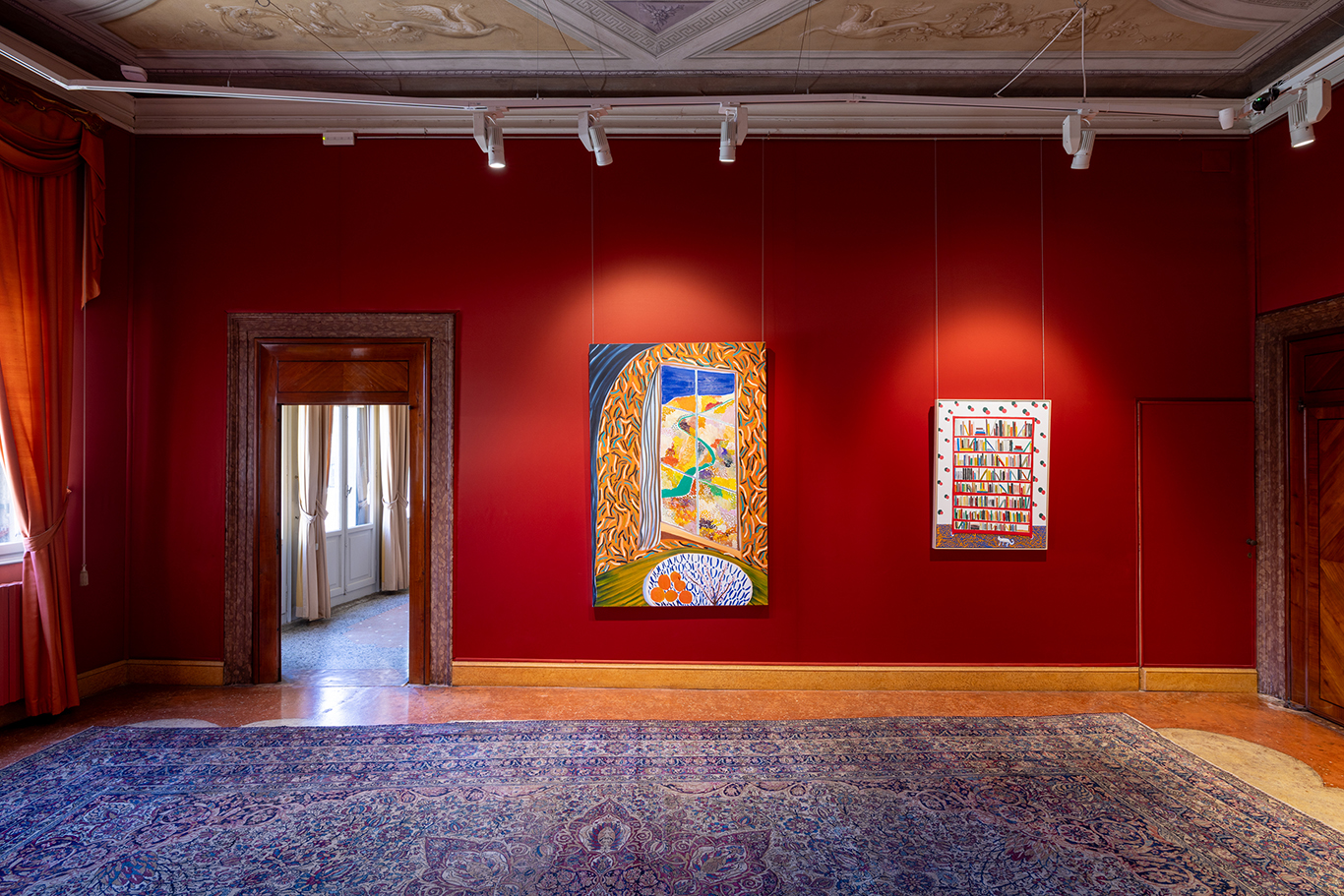
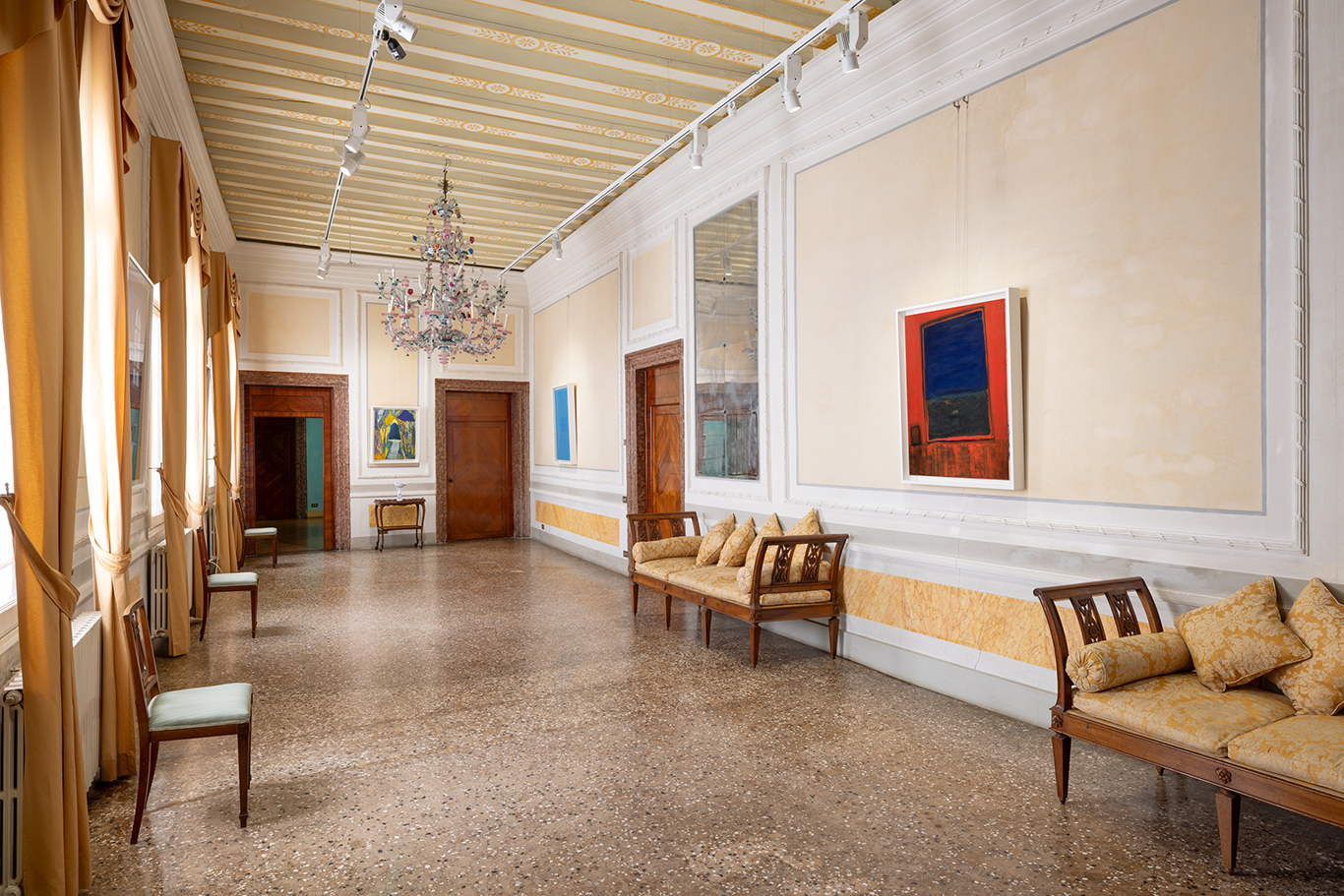
The foundation of the late Chinese-Canadian artist has placed 38 of his domestic paintings in a 15th-century Venetian palace. Some, in the style of still life, depict household objects; others show bodies navigating the space. Many feature doorways evoking states of transition, or windows looking outwards that emphasise the interiority of the home. Wong’s works are recognised for exuding the psychological dimensions of domestic scenes — these are spaces from home life but also of the mind, charged with ideas of solitude and longing.
Michael Armitage: The Promise of Change at Palazzo Grassi, until 10 January 2027
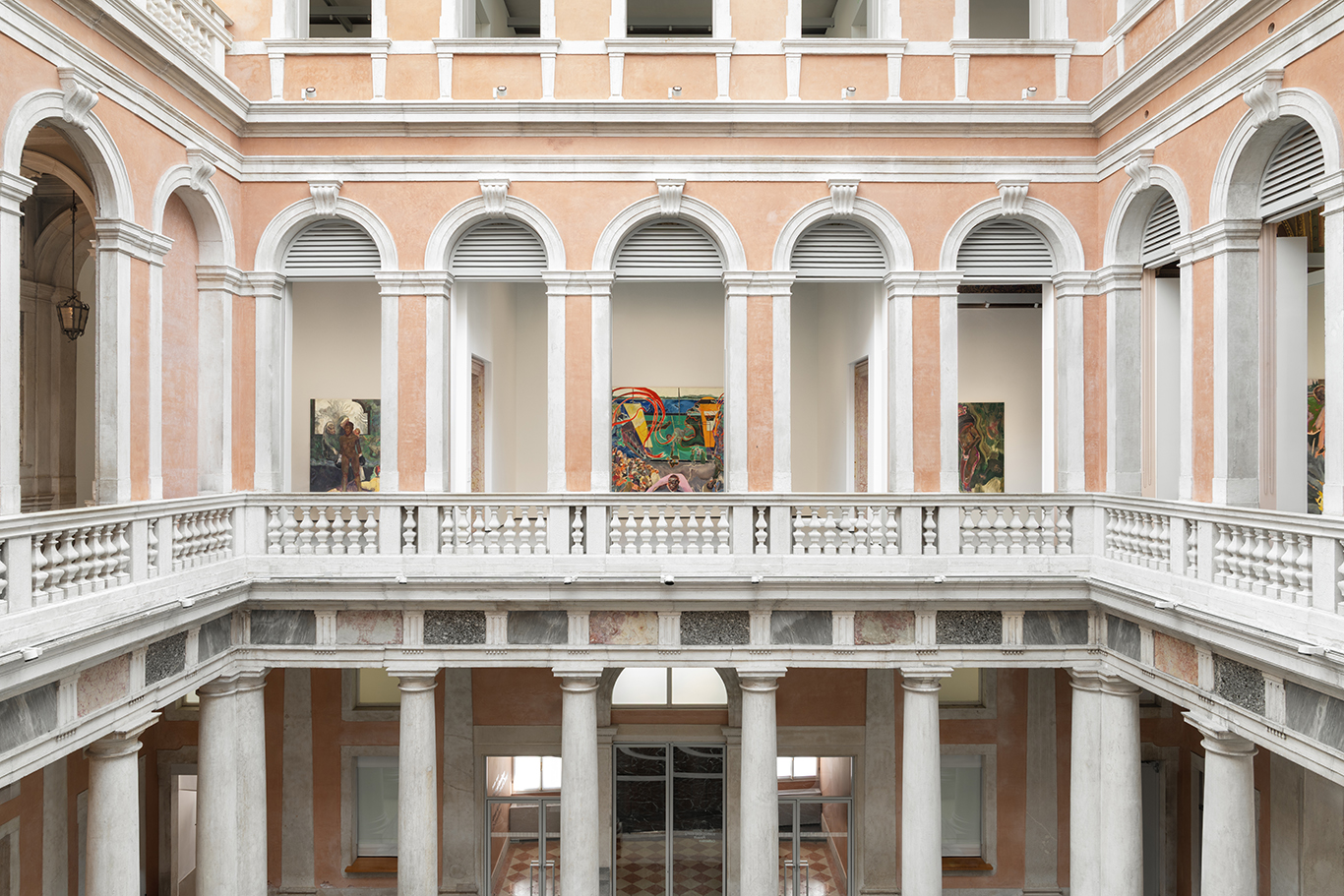
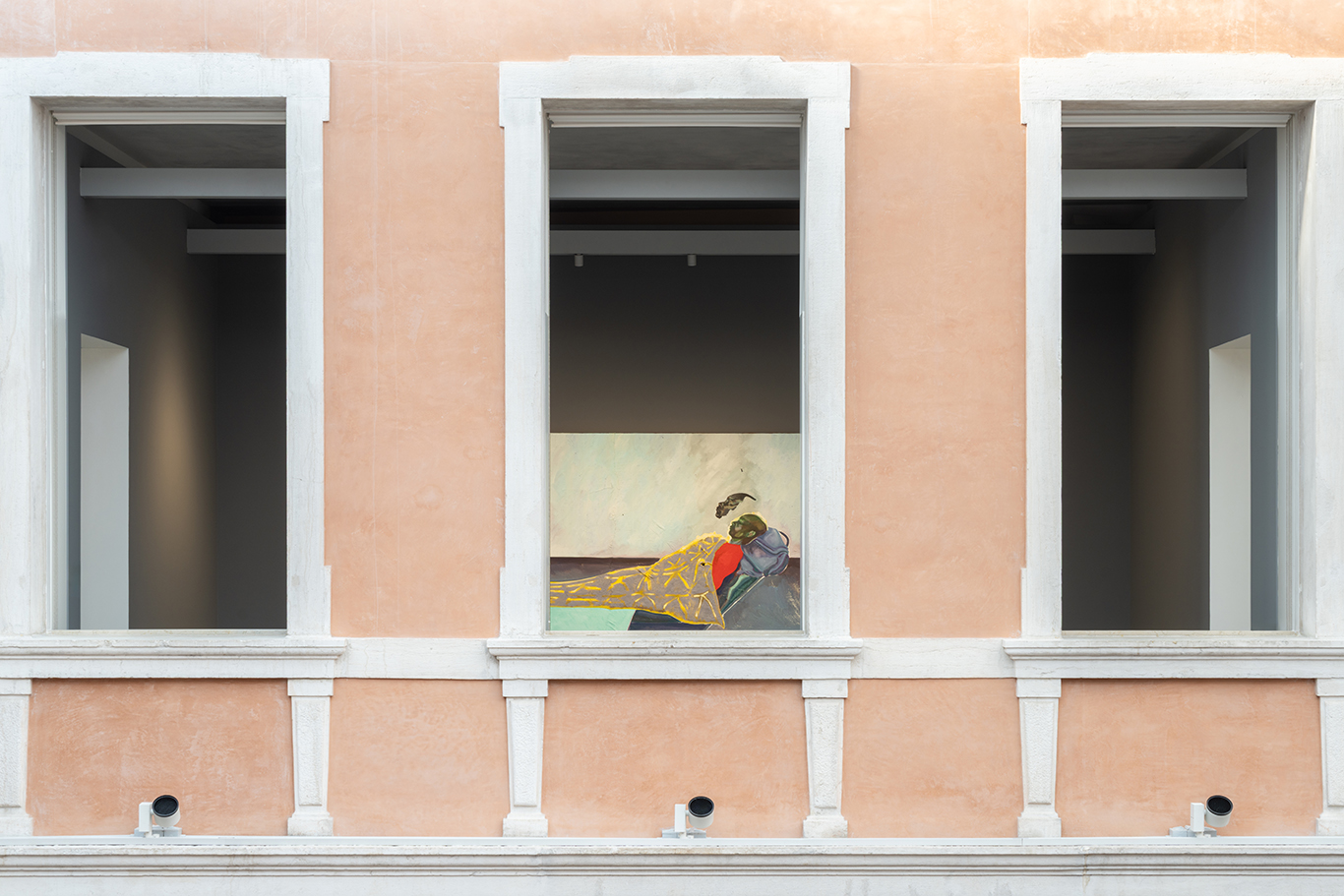
For over a decade, Kenyan-British painter Michael Armitage has eluded the Western canvas tradition with his paintings on barkcloth from Uganda and Indonesia. The material’s rough textures and natural irregularities allow the artist to apply the paint in a layered, expressive, sensuous style. The 45 paintings in Pinault Collection’s exhibition range in subject matter from the criminalisation of queer bodies in Uganda to depictions of public dissent in Kenya. One reimagines Greek myths from an African perspective while others depicts scenes of perilous journeys by migrants fleeing conflict zones.
Nalini Malani: Of Woman Born at Magazzini del Sale no5, until 22 November
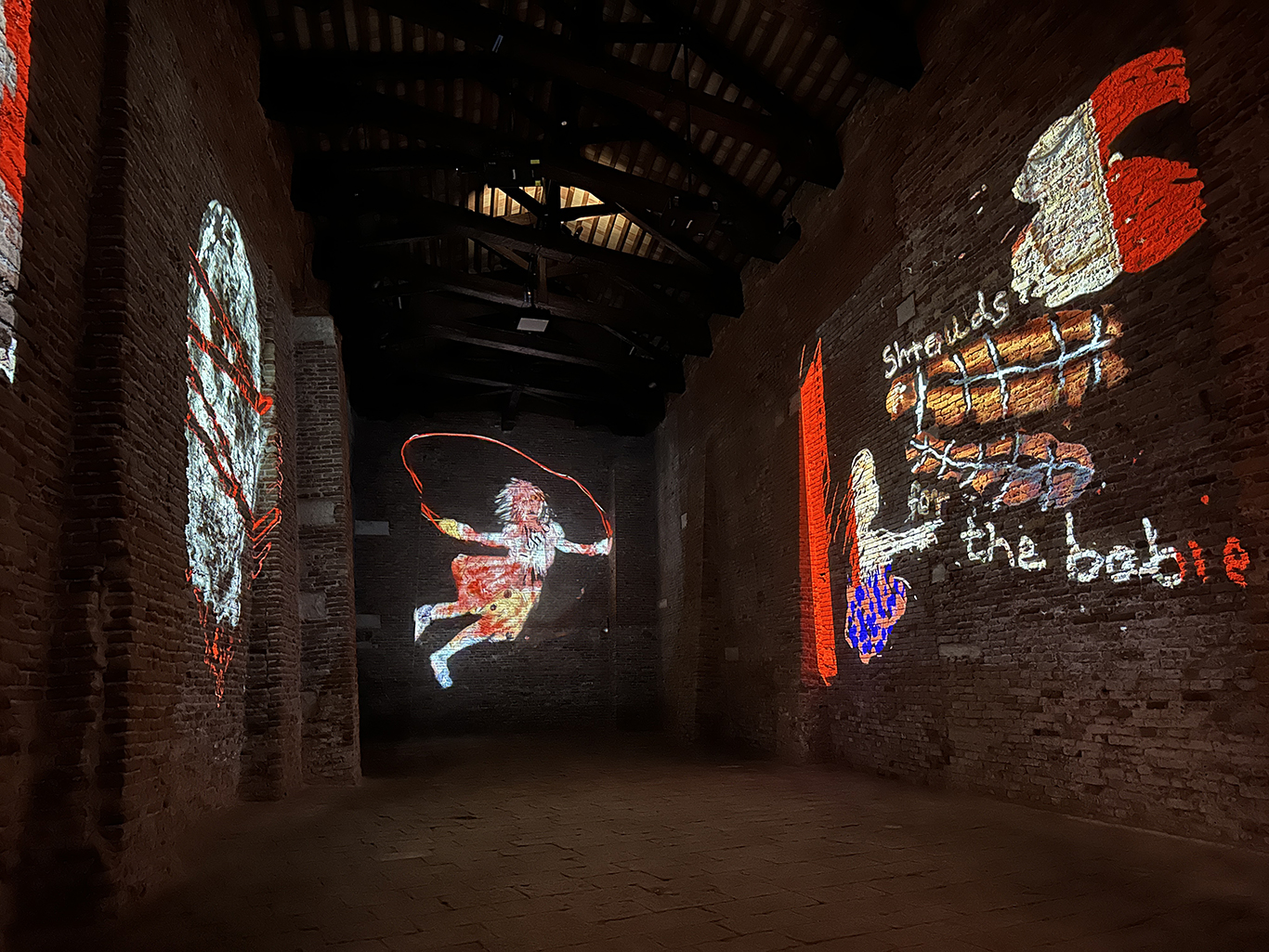
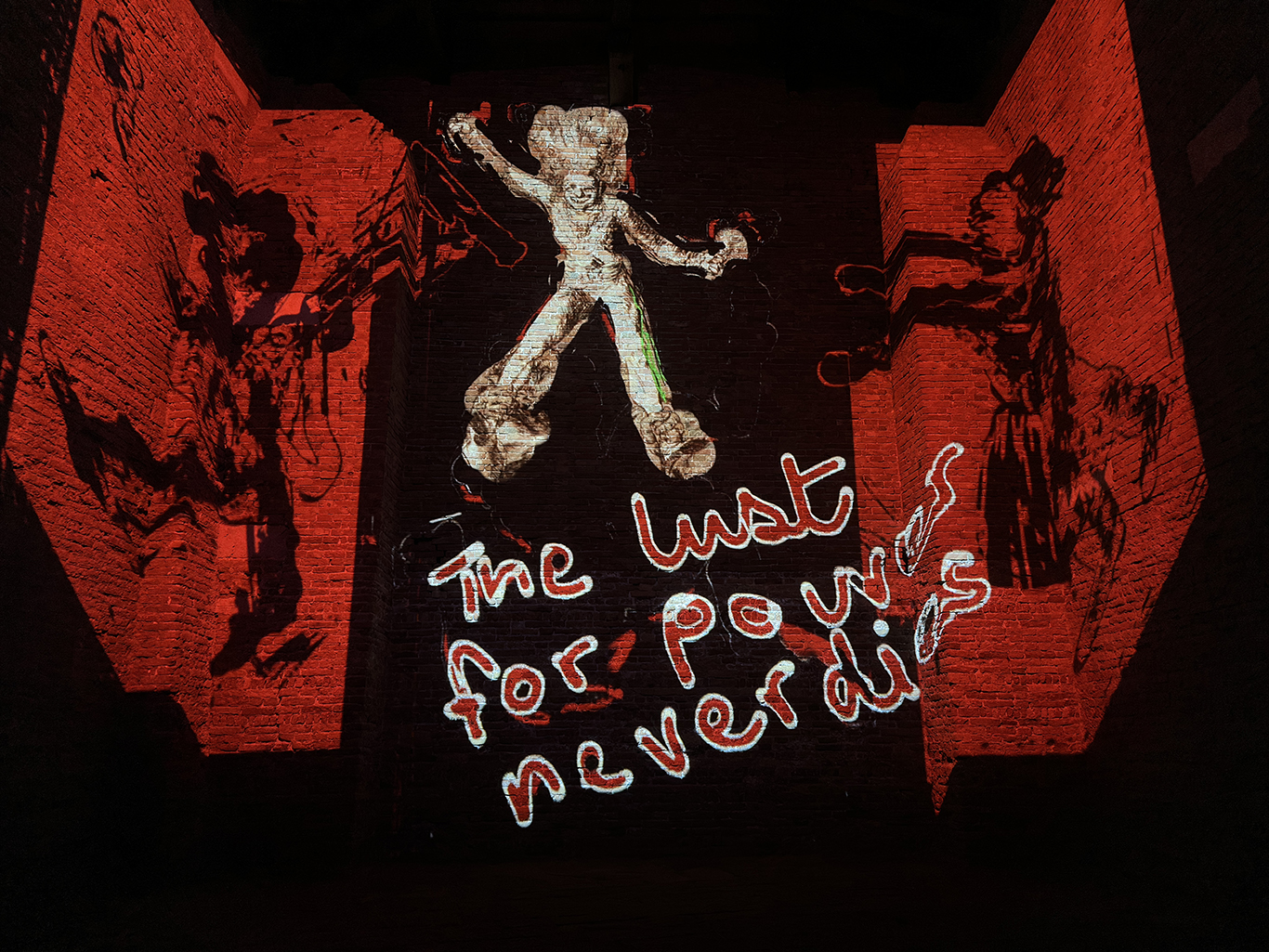
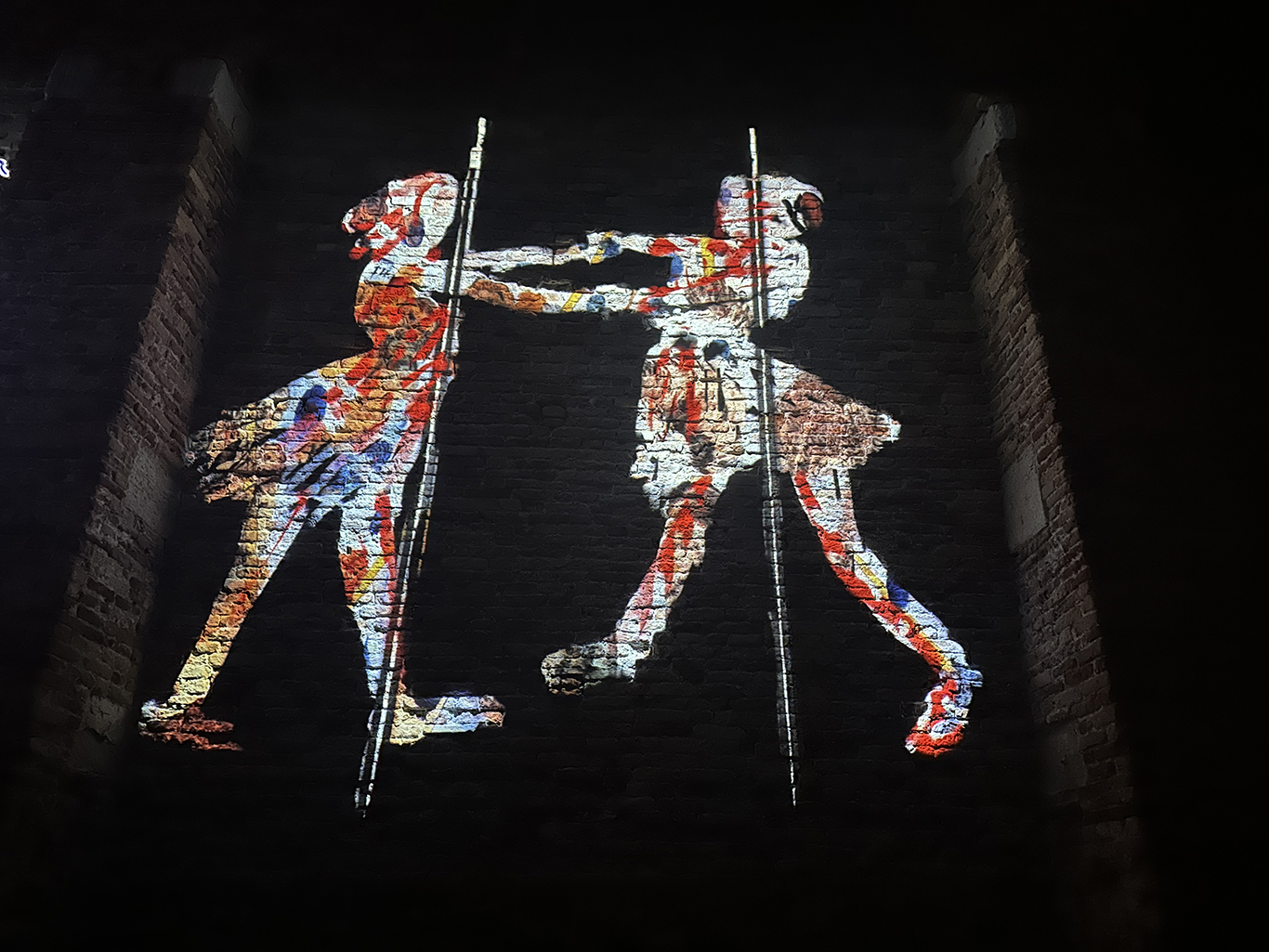
The Indian artist’s latest work considers how women bear the burden of patriarchal wars. Presented by Kiran Nadar Museum of Art, the installation is immersive and unsettling, featuring over 33,000 digitally animated drawings across the enormous brick walls of a darkened industrial chamber. The soundtrack patches together haunting songs and poetry readings, while the visceral metamorphosing images show anguished faces, mythological creatures and nightmarish scenes of violence. Look out for the girl with a skipping rope, a recurring motif in Malani’s work symbolising freedom and survival.
Natasha Tontey: The Phantom Combatants and the Metabolism of Disobedient Organs at Ateneo Veneto, until 25 October 2026
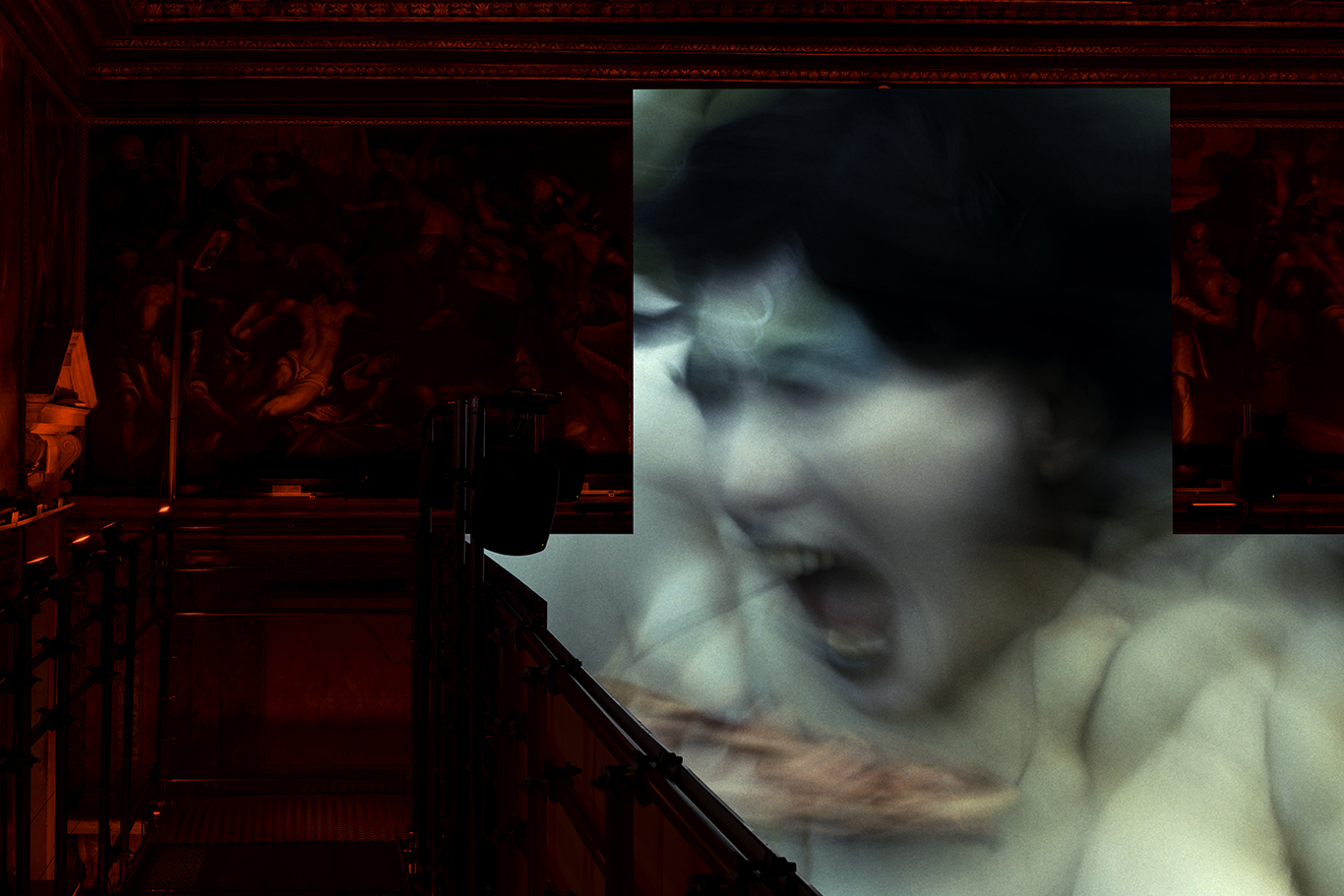
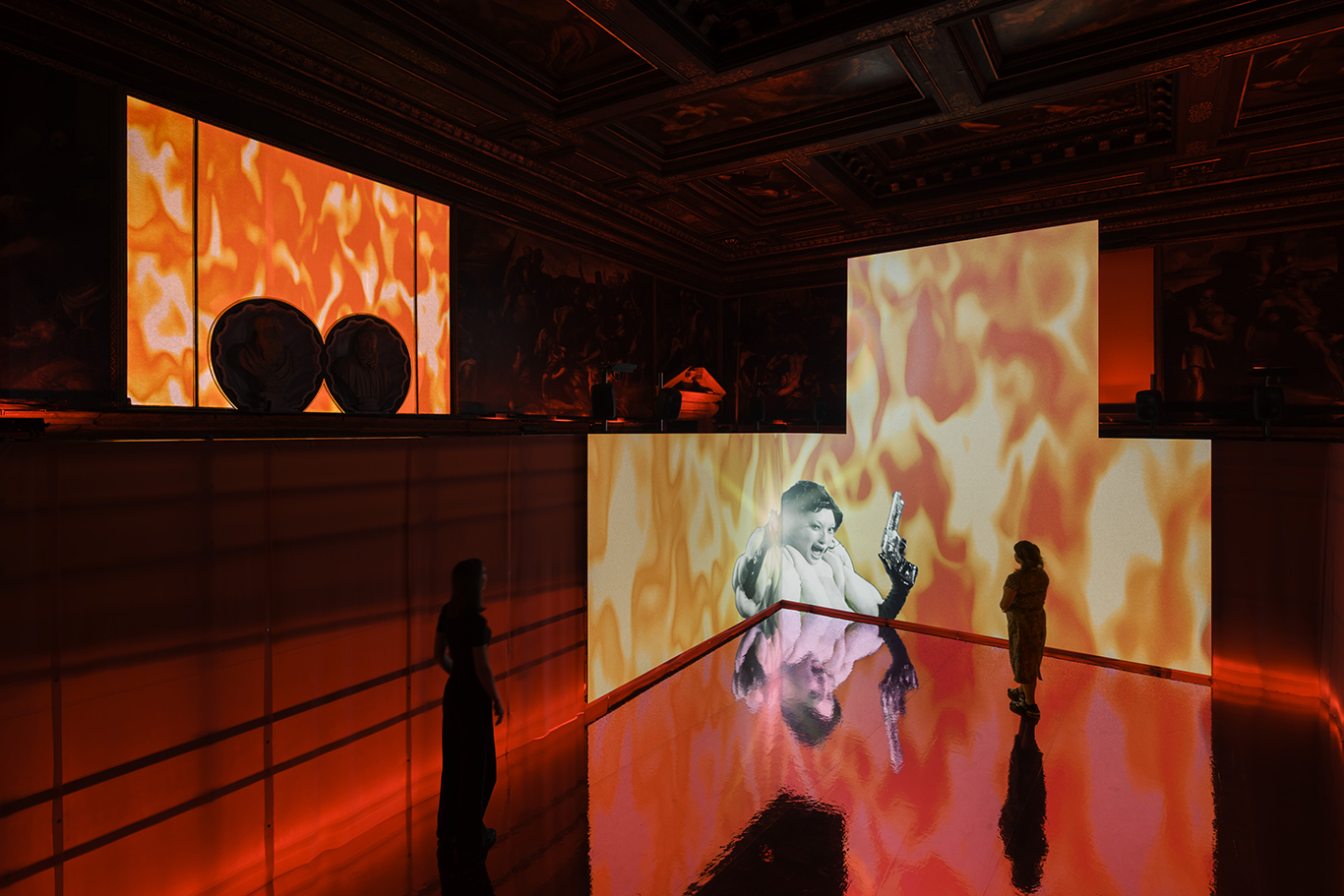
LAS Art Foundation and Amos Rex have teamed up to present a new commission by Indonesian artist Natasha Tontey, who draws from speculative fiction and Indigenous Minahasan storytelling for her stylised film. Viewing it involves navigating a structure of scaffolding to the screening room, where Tontey presents her interpretation of Len Karamoy, a female combatant who participated in Permesta rebellion in the 1950s, taking on the Indonesian government. Here she appears as a mutant who multiplies into a troop of warriors seeking justice. Tontey produced her sci-fi landscape using CGI, photogrammetry, thermal cameras and quantum ghost imaging.
Turandot: To the Daughters of the East at ACP-Palazzo Franchetti, until 22 November
Papaccio
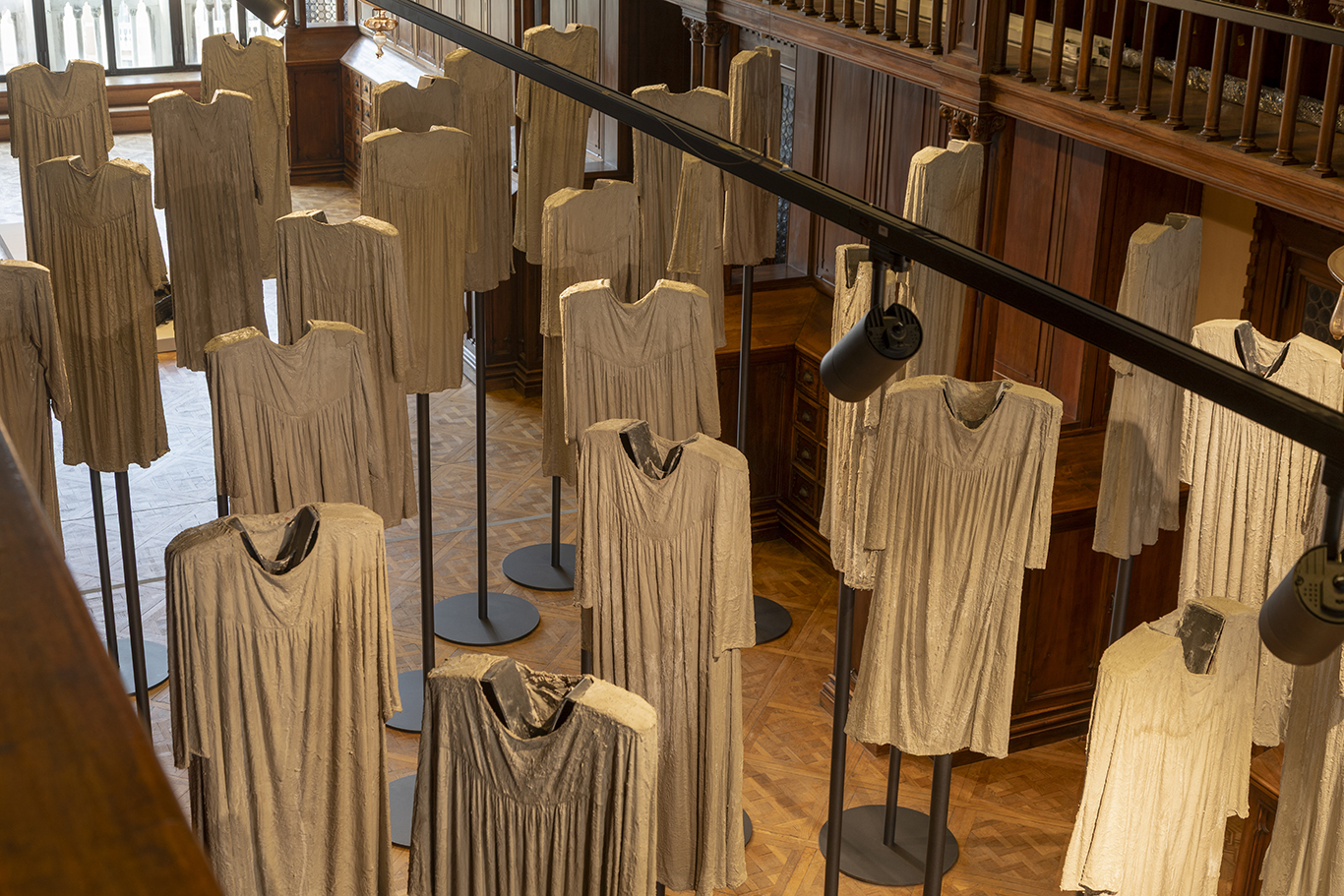
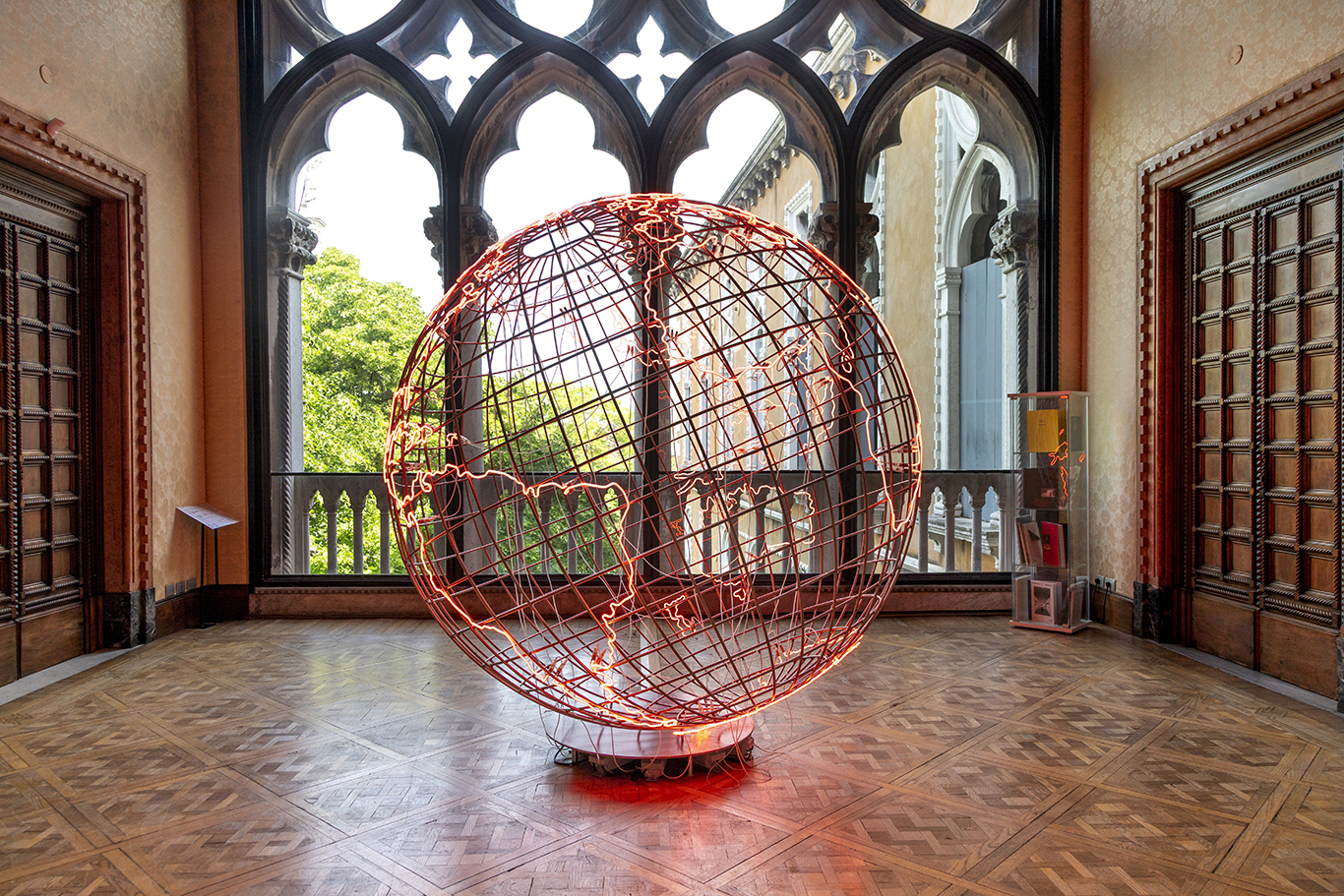
Parasol Unit’s gathering of 11 female artists from Central, West and South Asia takes inspiration from the mythical figure Turandot, whose story first appeared in 12th-century Persian literature. Visitors first encounter a neon-lit stainless steel globe by Palestinian-Lebanese artist Mona Hatoum before moving to Nazira Karimi’s installation of 40 white dresses. Wall-mounted textiles from Kazakhstan-born artist Madina Joldybek feature photographs of women breastfeeding, honouring female labour and matrilineal heritage. Meanwhile Iranian artist Afruz Amighi’s suspended geometric structure made of crystal, light and water is designed to evoke collective sorrow and remembrance.