
Reinventing the folding screen, artists have done some of their best work
It's a ultimate multipurpose, multi-genre piece for contemporary rooms

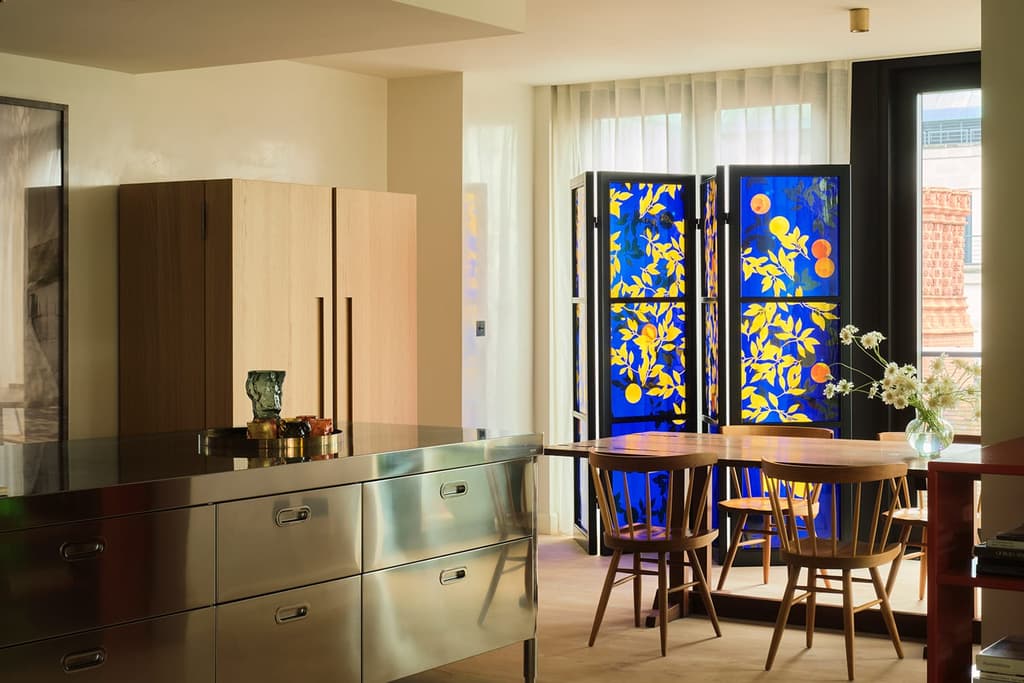
One of the most accomplished artists working in stained glass, Brian Clarke spent decades pushing the medium beyond its religious roots, reimagining it as something fluid, contemporary and alive. His freestanding stained-glass folding screens, designed nearly a decade ago, embody this approach. Created as a series of 25 designs in collaboration with the artists’ platform Heni, and exhibited in London and New York, they translate botanical and cosmological motifs into shifting fields of colour and light.
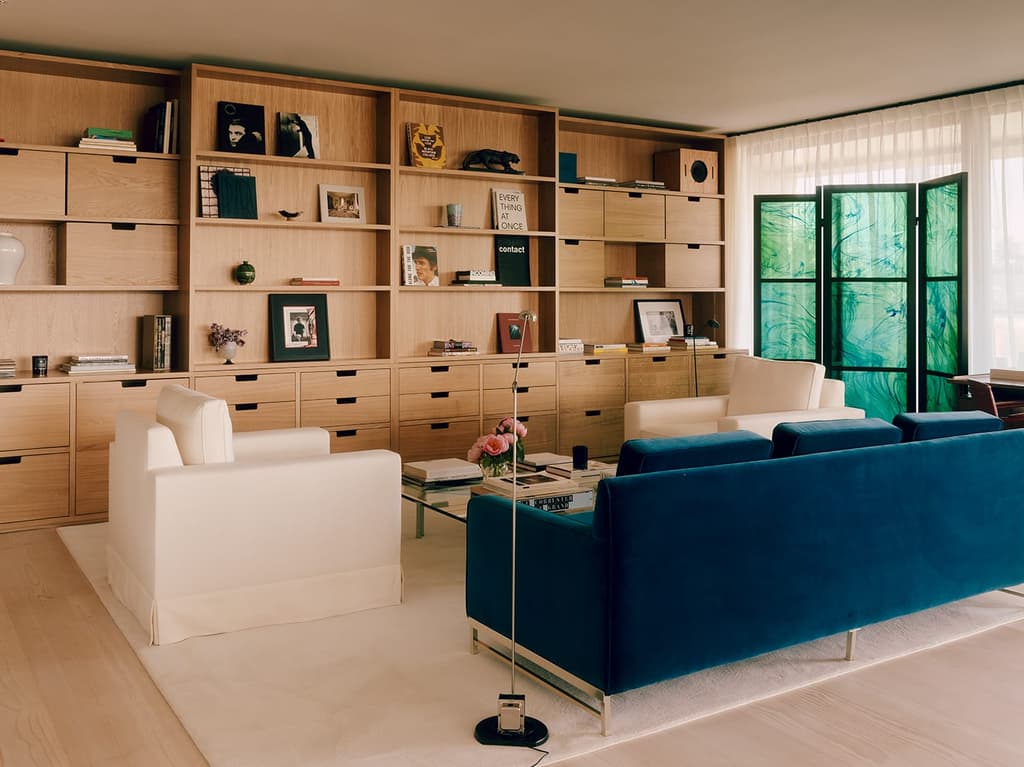
As light passes through the glass, it casts tones that move across walls, floors and bodies, so the work is never still but in constant flux. ‘The movement of colour will dance and climb over the landscape of your surroundings,’ said Clarke. ‘The experience actually travels around the room.’ Following the artist’s passing last July, these works feel all the more resonant — lasting expressions of a practice defined by light, movement and change.
This sense of movement pushes the standard room divider beyond form and function. These are not flat artworks but hovering presences, suspended somewhere between object and experience, material and light.
Clarke’s work sits within a long lineage. From the days of China’s Han dynasty, the screen was never purely functional. Early examples were carved from wood and decorated with mythological and religious imagery. By the Tang dynasty they had evolved into folding panels adorned with landscape painting, calligraphy and poetry — portable objects that introduced both decoration and division into interior space.
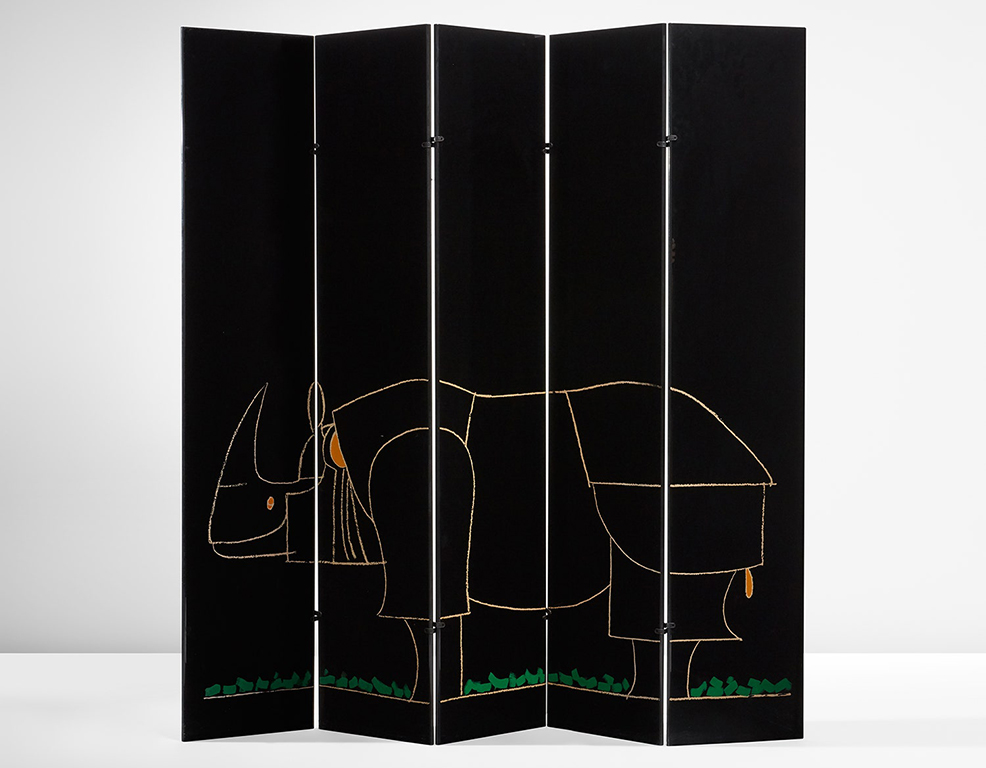
The 20th century saw in seismic changes for the screen. Alvar Aalto pioneered the sinuous version in vertical pine strips — a design that would be universally coveted and copied but not considered serious art. Vanessa Bell’s post-impressionist bathers have a place in London’s V&A Museum. French artist François-Xavier Lalanne, who normally sculpted surreal bronzes with his wife Claude, teamed up with designer Kazuhide Takahama in 1970 to reimagine the screen as a sculptural object, blurring the boundary between art and furniture with the witty Rhinocéros.
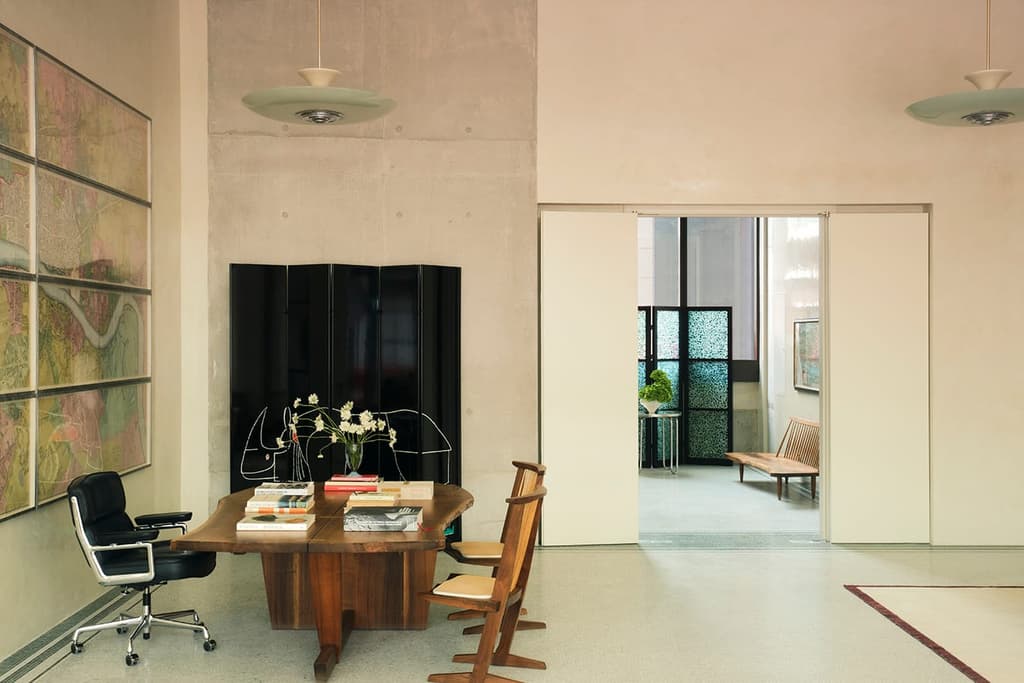
And the 2006 stainless-steel screen by Maria Pergay offered a different iteration by turning an industrial material into something fluid and reflective, its surface capturing and distorting its surroundings to suggest space as mutable and continually reshaped.
In 2023, a Fondazione Prada exhibition covering versions from the early Asians to Luc Tuymans and Carrie Mae Weems marked a resurgence in the art form. In open-plan interiors, designers increasingly use screens to create zones without enclosing space. Clarke’s works take this further — they do not simply divide but choreograph. They guide movement, create moments of pause and shift the atmosphere as light changes throughout the day.
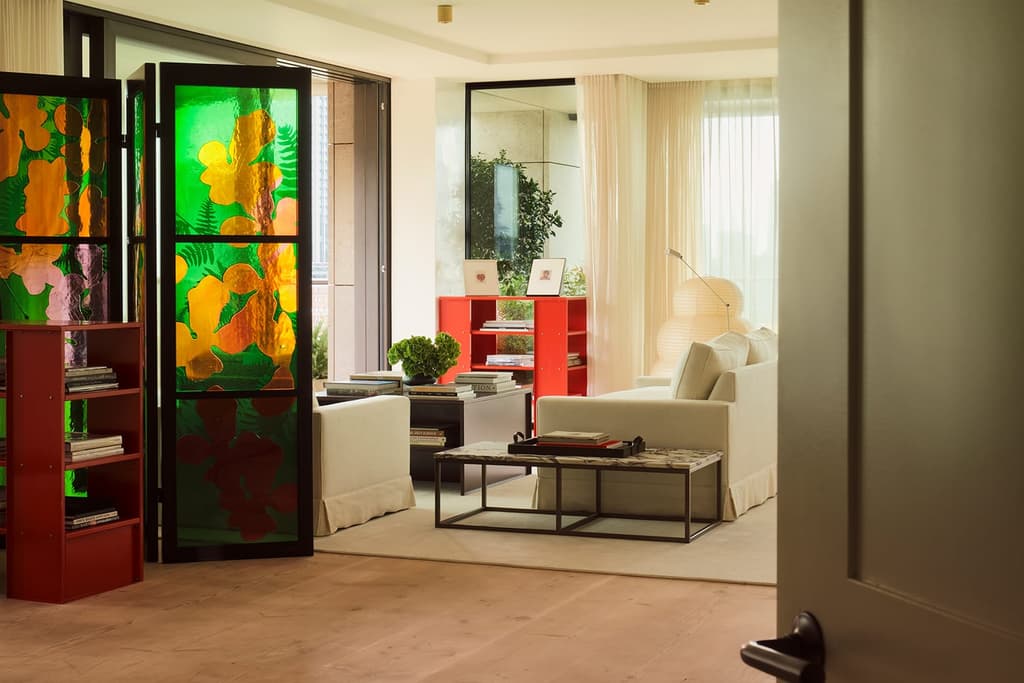
‘They act as a room divider while casting colour — a beautiful way of introducing light and texture into a space,’ says Alex Eagle, one half of design practice Eagle + Hodges, who incorporate Clarke’s stained-glass screens into their interiors. At the new hotel St Clement in London, they act not as barriers but as filters, shaping how light enters and how space is experienced. The effect is subtle but transformative — a bed partially revealed, a seating area gently enclosed, the Thames skyline reflected through shifting colours.
There is something inherently dramatic about a folding screen. It suggests concealment and revelation, intimacy and openness, reminding us that space is never static but always capable of change. In Clarke’s hands, this becomes something more profound. His screens are not simply objects, but experiences that unfold over time — works that hover, as he puts it, ‘between one world and another.’
Read next: Last bastion of London gentrification? The River Thames
Why we’re all splurging on area rugs right now
Related stories

Newsletter
Want news delivered to your inbox?