If you collect — or even just fantasise about collecting — vintage furniture, eventually you’ll happen upon a mystery. A design enigma. A piece that’s essentially ‘anon’ to those in the know. We’ve come across more than one such piece at our 180 Quarter HQ. Purchased by Alex Eagle of Eagle + Hodges for the apartments at 180 The Thames and the co-working space at 180 Strand, the dining tables, chairs and sideboards are some of the most talked-about in the entire complex, and the most popular to sit at.
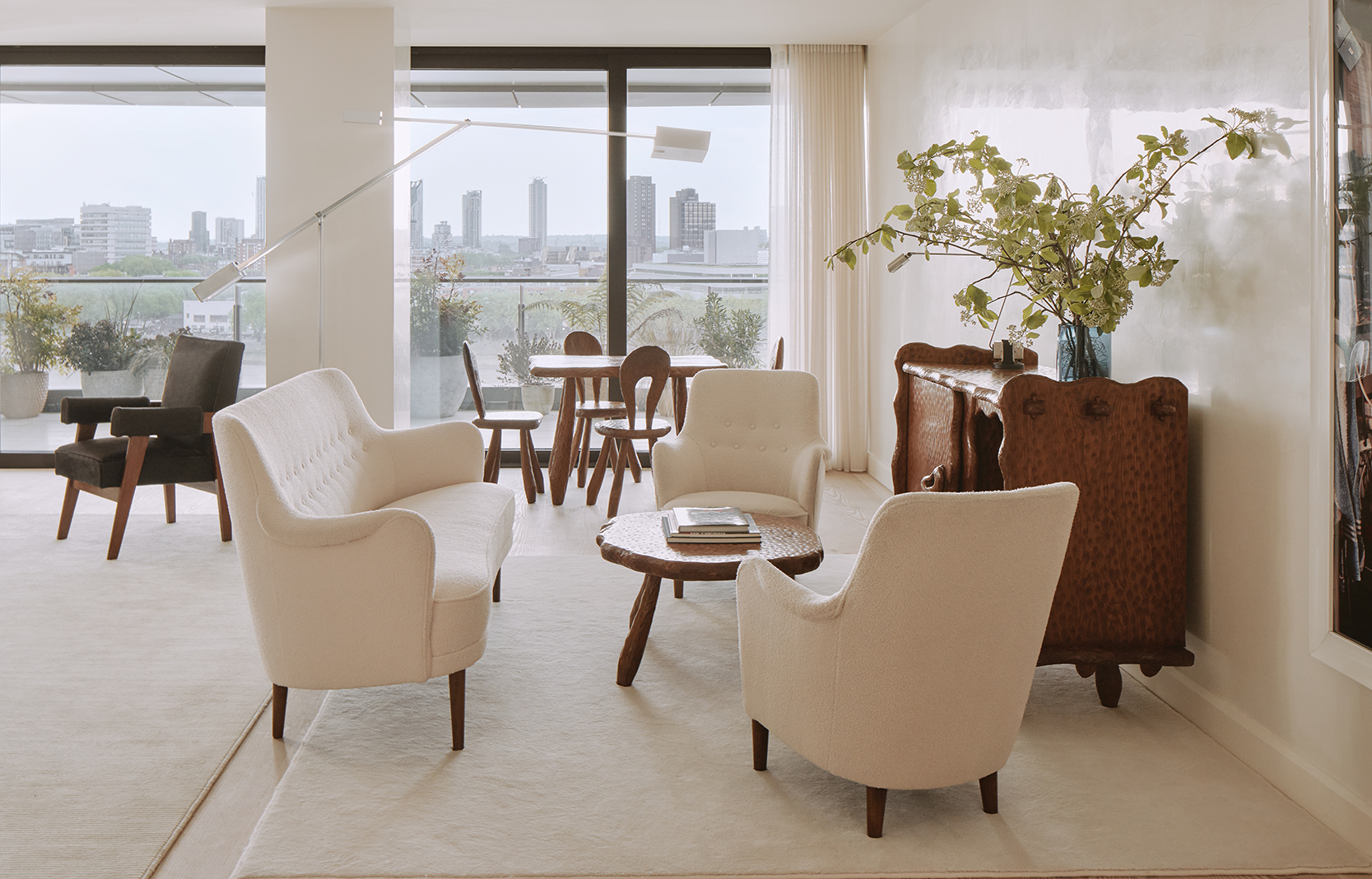
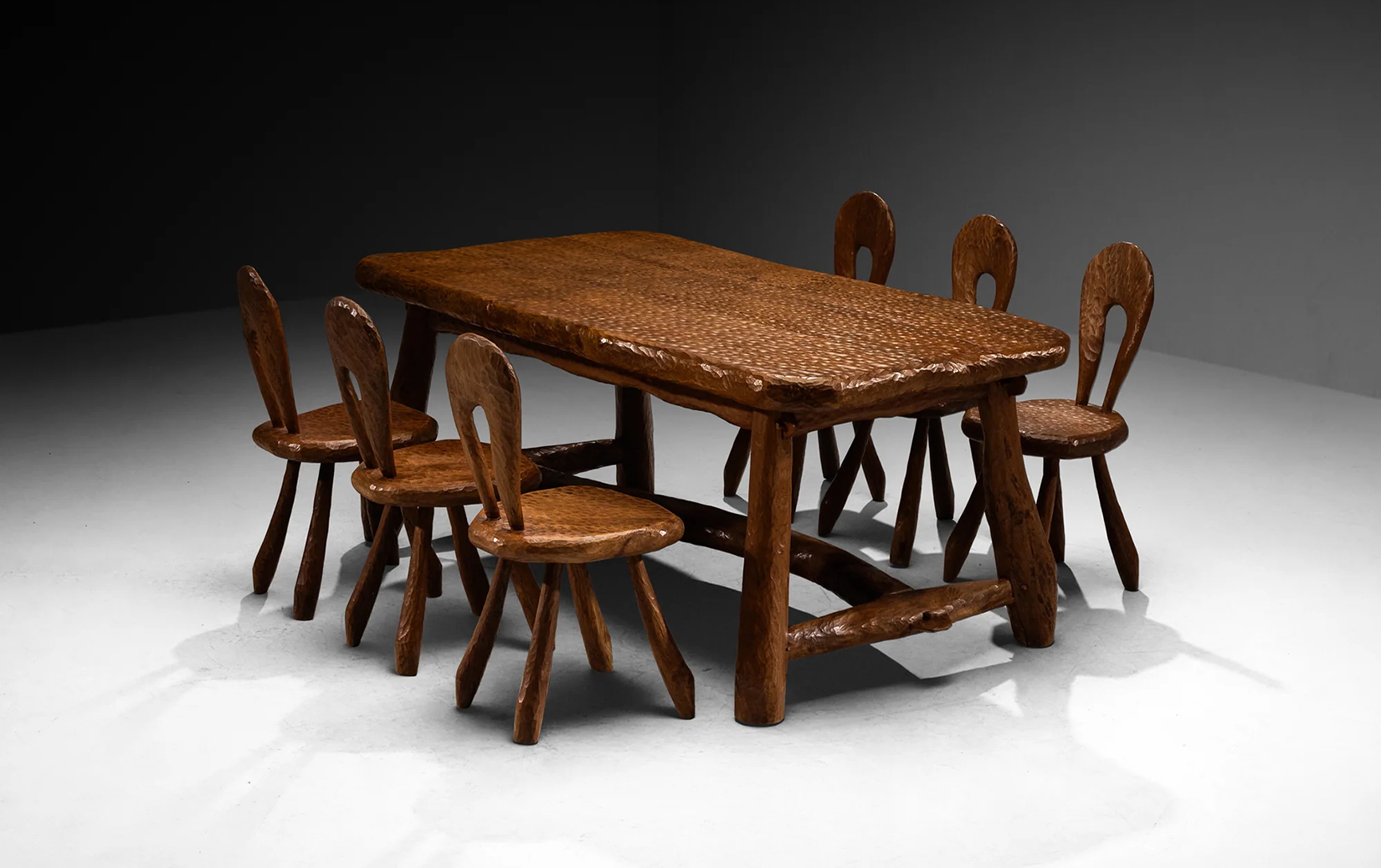
That nobody could tell us with any authority who designed them, or where, or when, is all the more bemusing considering how noteworthy they are. Carved from blocks of elm (or pine?) in organic, asymmetrical silhouettes, they’ve been worked over by a gauge, giving them a texture of fingerprint-sized dimples. Squint and they might have been shaped out of clay. Their fluid, irregular contours and crude hardware give them a primitive, almost two-dimensional quality suited to the background of a Flintstones cartoon (or, for the more civilised, a Paul Gauguin painting).
Some online research turned up similar pieces attributed to the French woodworker Alexandre Noll, who popularised a raw, natural, rather naive style in the early to mid 20th century. An autodidact, he worked just outside the Paris city limits, literally and figuratively. He shunned the fashionable industrial design of the day, instead convening with the natural world beyond his workshop in Fontenay-aux-Roses to fabricate tables, chairs and sideboards out of trees he chopped down himself. Noll’s elm, ebony and mahogany furnishings hearken back to the work of rustic French artisans, albeit artisans with great skill in carving and joinery. They mimic sculpture, carved from single blocks of wood with fissures and knots.
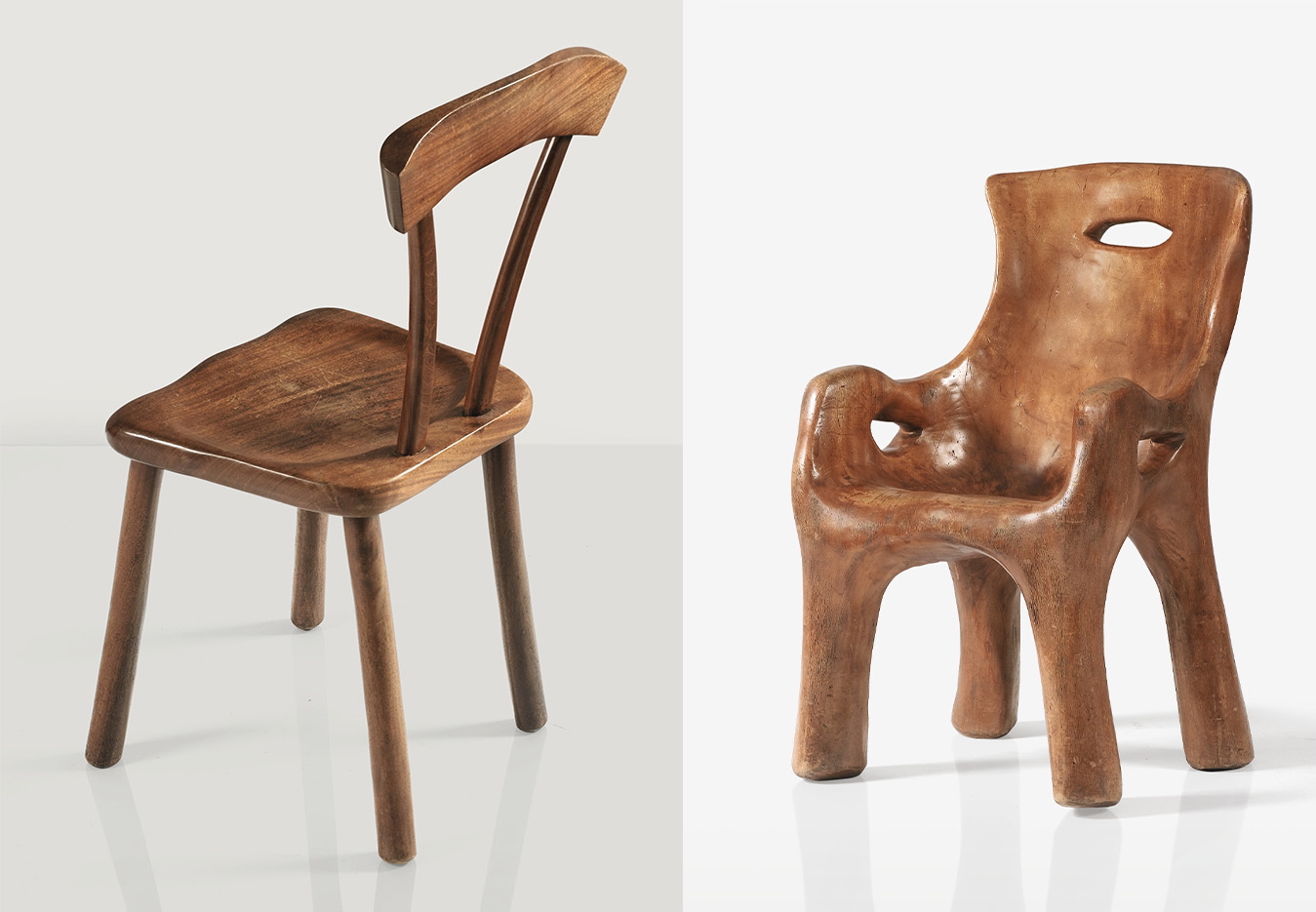
Noll’s work seemed dynamic, alive, like characters out of folklore. ‘Even felled, cut, the tree continues to live,’ he once said. The pieces at 180 Quarter speak his nature brute language, and even though they are not his work, they are perennially popular, not unlike the pieces by George Nakashima, a natural inheritor of this style, that stand nearby.
Similar chairs and sideboards of gauged, imperfect wood cycle through European galleries and auction houses like 1st Dibs, for many thousands of euros. The French interior designer Pierre Yovanovitch, whose work earns commendations from the highest levels of taste, keeps a full set of dining table and chairs in his own chateau in the south of France, where it looks at home among his curvaceous, era-straddling designs.
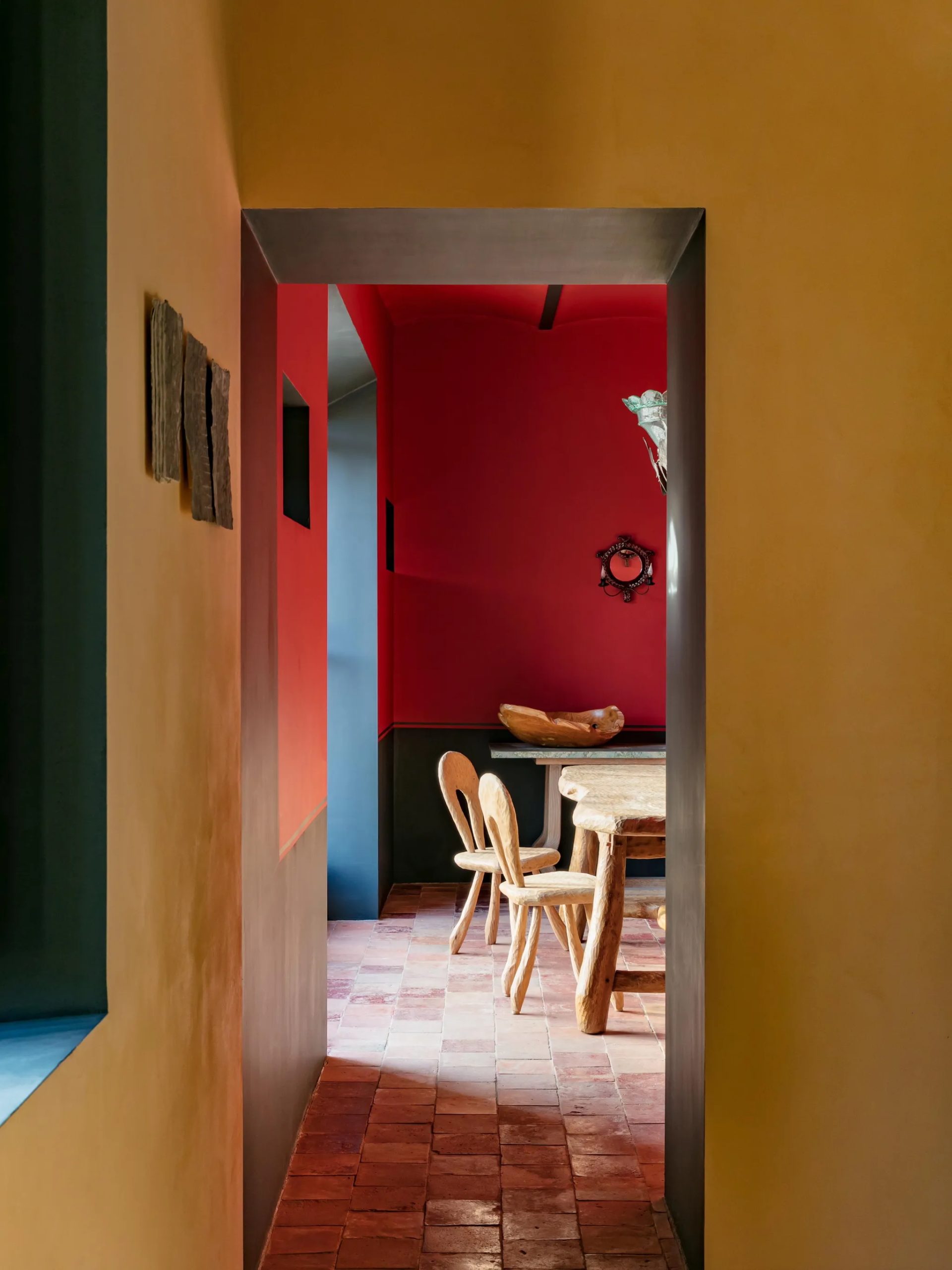
‘It’s always in very reputable interiors,’ says Maxime Fisher, a London-based curator and collector who acquired two sets of Noll-style chairs from New York and France and arranged them around a contemporary metal table. ‘They feel primitive and I love a mix of naive and minimalist design.’
For the past several years Fisher has run Alex Eagle’s Soho design studio and has regularly picked up similar pieces dating as far back as the 1940s. Paul Bert Serpette, in the Marché aux Puces de Saint-Ouen, usually has a few designs in the arcade. ‘Loads of dealers in Paris have had pieces,’ says Fisher, ‘and no one has ever had any information on them. They look different in age — the styles and colours of varnish vary — but you can just tell there has to be age to them. They’re not knocked up to look old.’
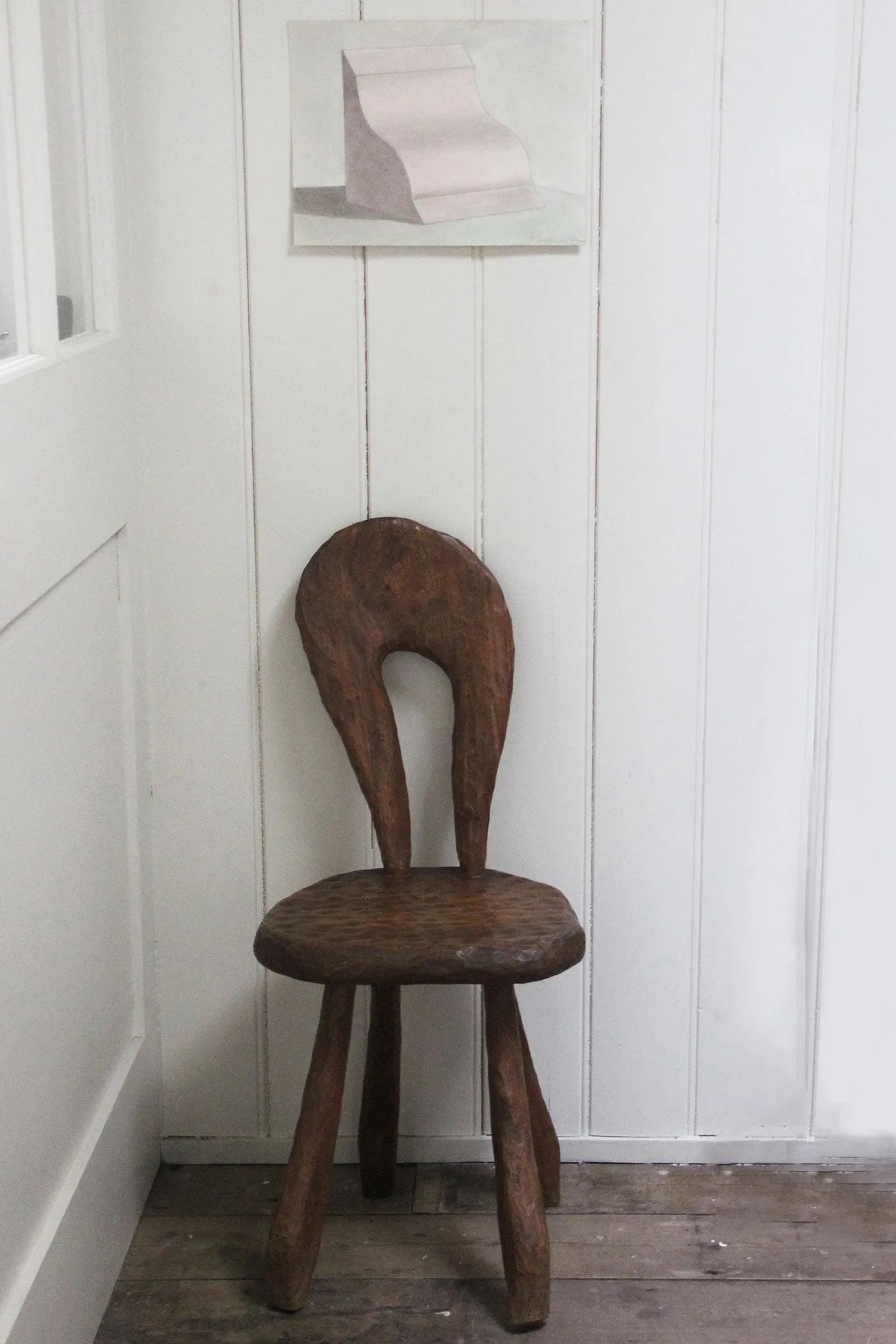
Recently Fisher tracked down a receipt for a round table and dimpled sideboard he purchased for 180. It attributes them to a small, defunct cabinetry workshop in Charente, Cognac, run by Michel Chevalier; their original proof of sale is dated 19 May 1967. But no information about Chevalier can be found online.
Through his website Beau-Traps Fisher sells carved-wood tableware by Noll and his daughter Odile, who continued her father’s woodworking tradition after his death in 1970. They do well. ‘It seems to speak to people,’ he says. ‘When mixed in with more contemporary or clean, minimalist pieces, it really shines.’
The curation of new designs alongside these old tactile works spotlights a moment when the height of glamour was primitive, before novelty became a burden to keep up with. It feels nice to bask in.