
Pub design is going back to basics
Carpets are back, along with normcore furniture and partition screens

Recently I had a bizarre experience walking into one of my neighbourhood pubs — one of the more fashionable neighbourhood pubs — shortly after a change in ownership. It was unrecognisable, yet weirdly still very recognisable. Small, round iron tables replaced the large wood sharing tables. Velvet stools lined the bar, antique beer merch sat atop doilies on the wall panelling — and there was wall-to-wall carpet replacing the bare hardwood floors.
The new iteration had none of that ‘bare-surface echo’ plaguing most stripped-back open-plan pubs. I asked the bartender if she knew the reason for the redesign and she suggested, simply, ‘Vibes?’ It made me wonder if the very specific aesthetic that saw in the gastropub age, the child-friendly revolution and the £10 pint had, perhaps, been played out.
In fact, in the years since the great British pub has been threatened with extinction, pubs have become more committed than ever to the visual language that’s served them well for centuries. That Brooklyn-ification of interiors was exciting in 2005 but whiffs of ‘monoculture’ to young people today. They’re voting with their feet to the authentic old-man pubs of our distant past.
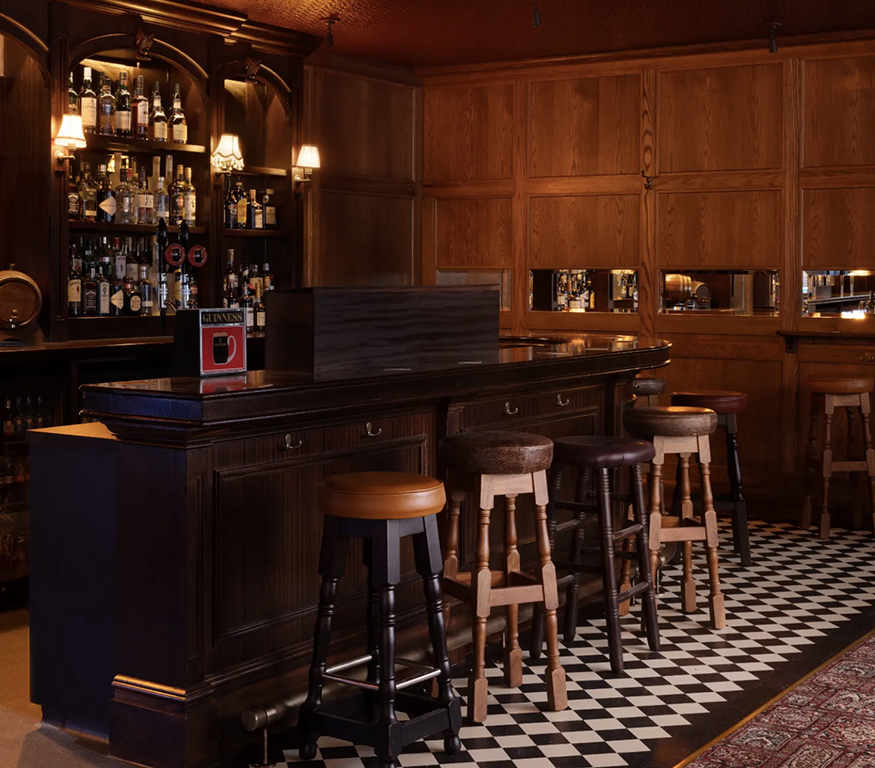
Take the most talked-about pub relaunch last year: the Devonshire in London, a Guinness-forward joint in Soho with flowers dripping down the façade, tufted-leather banquettes and new patterned carpeting. The place glows from its ornate textured ceiling to the etched mirrors and stipplite glass dividers. The new owners, a trio of veteran publicans and chefs, put on ember-grilled seafood and pour a top martini, but have eschewed the spare, minimalist interiors that informed a generation of gastropubs.
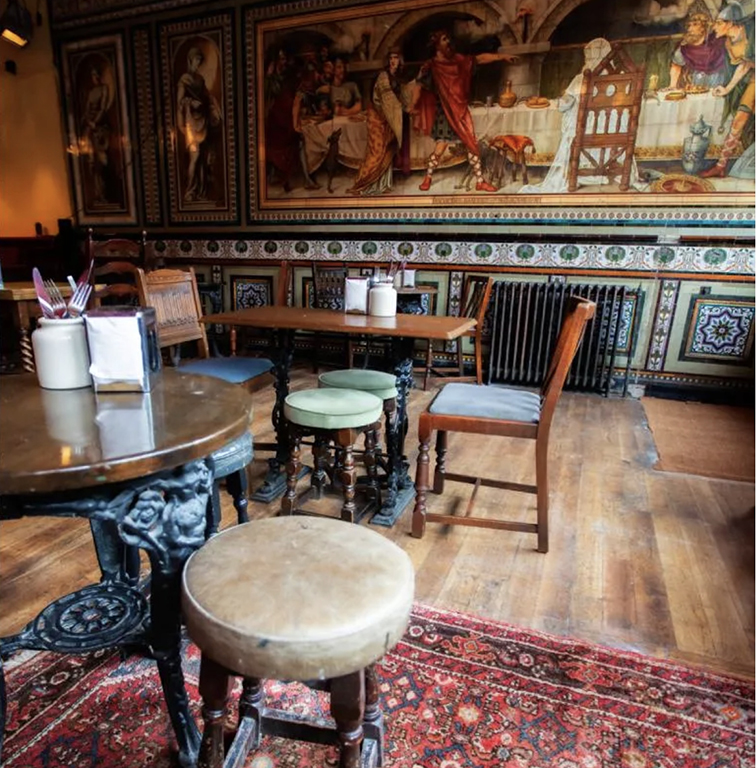
Also no slouch, the Macbeth in Hoxton underwent a refurb last year that restored its 1880s ‘ghost of Banquo’ mosaic mural, painted the vintage ceiling blood red and brought in a hand-built English oak bar. A new team — fresh from resurrecting the Plimsoll in Finsbury Park (another steadfast classic) — is doing the cooking.
The appreciation for an old boozer is real, even if new generations of pub-goers find boozing less of a priority than their parents. Perhaps because they’re drinking less and going home earlier, they’re more soberly conscious of quality-maxxing time with friends in a ‘real’ pub — ‘particularly an old Irish pub,’ says our resident editor Jasmine Jackson. ‘Irish pubs seem to hang on their uniqueness. The old memorabilia and art work, the dark wood… It doesn’t hurt that the Guinness is sold cheaper when the overhead takes less upkeep. ‘The Fuller gastropub with Aperol umbrellas is a no-no.’
The London-based organisation Campaign for Real Ale has recognised this design u-turn and is rewarding it. ‘The Boleyn Arms, winner of the Historic England Conservation Award in 2022, reinstated partitions, screens and fixed seating removed during alterations in the 1970s,’ says Andrew Davison, chair of CAMRA’s Pub Design Awards judging panel. The acid-etched glass for those partitions alone cost more than £35,000. ‘Pub designers are re-introducing traditional materials such wood panelling and flooring, and tiled surfaces using genuine or reproduction Victorian tiles.’
Recent CAMRA award-winners also include the 1850s Lord Southampton in Kentish Town, restored with original floor boards, panelling and hand-painted signs.
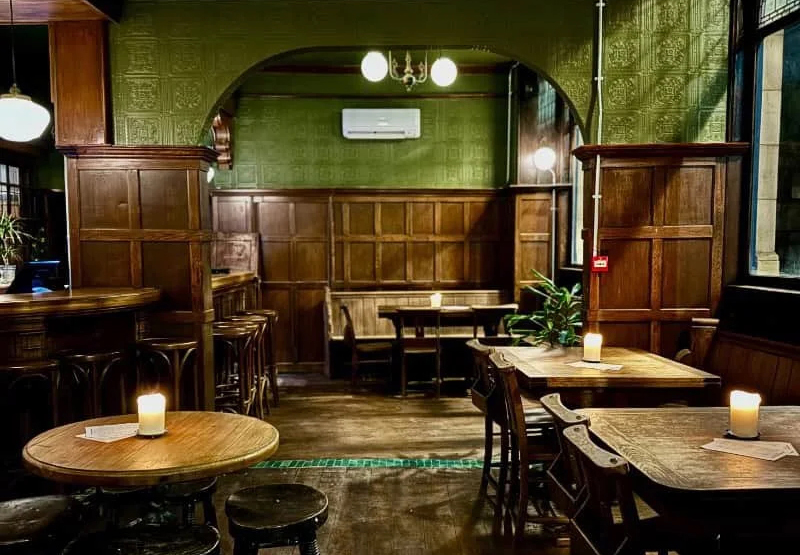
‘Pubs and bars converted from buildings previously used for other purposes are also picking up on these trends,’ says Davison. He namechecks the Blue Stoops in West Kensington, joint winner of the ‘Conversion to Pub Use’ Award this year. ‘[It] uses half-height partitions and glazed screens to break up the interior, whilst its most impressive feature is the bar counter, with its blue tiled front featuring the owner’s trademark. The Grand Assembly, in Marlow, started life as a featureless modern shop unit. The new interior has the feel of a traditional pub, with Victorian-style screening used to break it up into discrete areas.’
That the Grand Assembly is operated by the massive JD Wetherspoon corporation does not dim its popularity. There’s an understanding among even stylish types that Wetherspoons pubs are no longer spots at which to turn up one’s nose. Apart from affordable drinks and reliable service, the heritage decor is more in line with that so-called ‘vibe’. Often retrofitted into historic architecture, the most popular locations are known for their thematic custom carpets, conceived by in-house architects who also design the chandeliers and brass-rail bars. The fan site @wetherspoons_carpets Instagram has thousands of followers, as does @justpubcarpets.
Clicking through the Persian motifs, art-deco scallops, tartans and fruity still lifes, you can almost smell the pulling of the taps.
Read next: Refreshing the London pub
Pay homage at these eight artists’ homes, open to the public
Related stories


Newsletter
Want news delivered to your inbox?