
In east London, true vintage-lovers shop the archives
Better than mini-museums, fashion archives stock seminal designer garments you can touch, try and buy

Once confined to museum basements, where garments could only be handled with specialist gloves under close supervision, archives are no longer solely spaces of preservation. In east London especially, a growing number of fashion repositories have emerged, encouraging a deeper, more tactile engagement with the pieces. And in many cases you can try them on and take them home — prices may be higher than straight-up vintage fashion, but each garment comes with a story.
The precision of the curation also leads to sleek, considered interiors complemented by books and art. These spaces reflect a broader rejection of trend-driven consumption in retail. Martina Esposito of M1 Lab, an east London-based archive, describes this movement as ‘a need to reconnect with history, context and meaning and to look at clothing through culture and memory rather than trend or consumption’. Archive culture signals a turn toward the analogue — a step away from the relentless pace of consumption and a return to history and cultural depth. ‘Archival spaces offer something slower and more considered,’ says Esposito. ‘In these spaces, garments are valued not only for how they look, or for their relevance in a specific moment, but for what they represent.’ Below is a list of fashion archives that reflect this sensibility: accessible spaces for lovers of designer fashion.
Mondō

This Shoreditch archive and showroom defines itself through garments that ‘fundamentally challenge conventional ideas of silhouette, construction and the role of clothing’. Specialising in designers such as Ann Demeulemeester, Rick Owens and Issey Miyake, it subverts the approach of the traditional vintage showroom. Each piece is selected for its design significance rather than its age. As the co-founder, who calls herself Lin, notes, ‘While “vintage” simply describes clothing from the past, an archive focuses on pieces that represent important moments in a designer’s practice and in fashion history.’ Here, curation is driven by narrative and the material histories that garments carry.
The space itself reflects this sensibility. Sleek and highly stylised, with interiors by Unso Design, it mirrors the collection’s monochrome palette. A single central table and chair anchor the room, complemented by steel side tables displaying accessories. The space echoes the ethos of the collection, suggesting how clothing can extend into a broader design philosophy.
M1 Lab

The archive at this nondescript vintage shop on the edge of Bow ranges from utilitarian designs by Armani and Cavalli to a strong focus on Japanese designers like Comme des Garçons and Yohji Yamamoto. The collection is defined by its research-led approach, in which each piece is selected not only for its commercial value but for its identity, context and meaning.
This emphasis on history and research extends to the space itself. Walls are lined with evocative imagery — Martin Parr–esque photographs capturing cultural moments, from coastal Italian life to 1950s Americana. In contrast to more traditional archives, the space feels intimate, minimal and inviting. Like many contemporary archives, M1 Lab maintains a strong digital presence, expanding its reach beyond industry insiders. As Esposito notes, ‘It has given wider visibility to pieces, references and collections that were once mostly accessible to people within the industry… This exposure has opened archive culture to a broader audience.’
Blue Mountain School
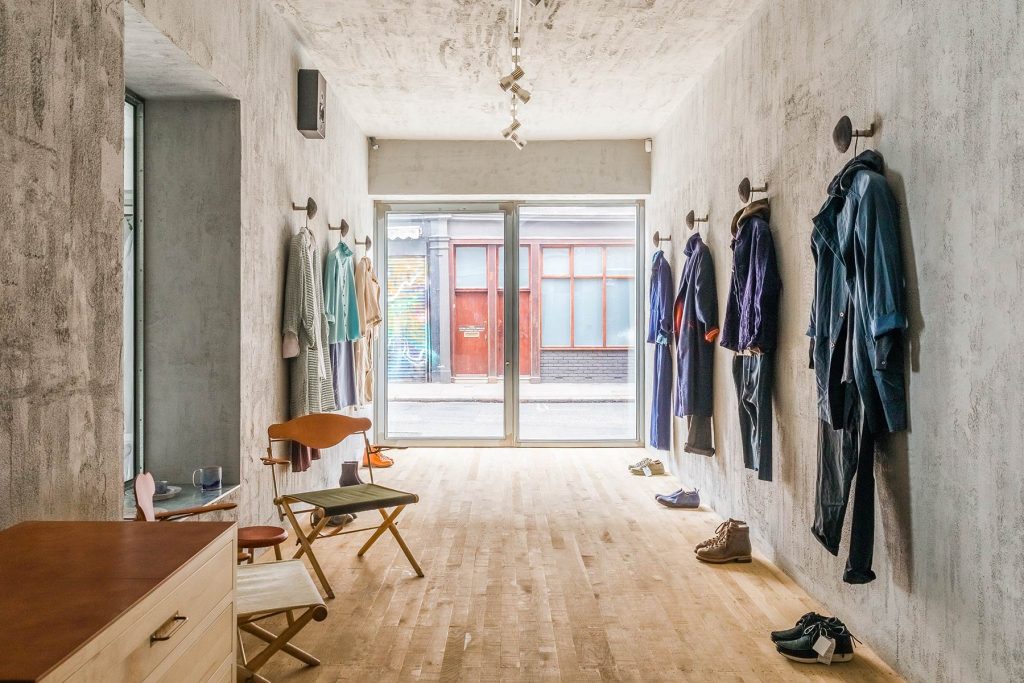
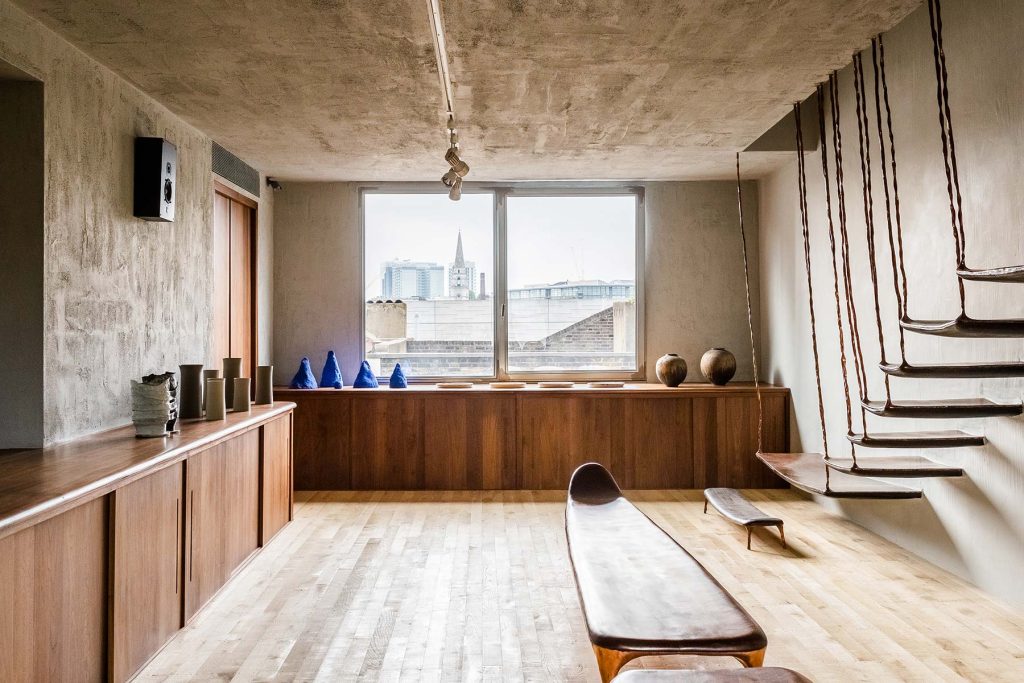
Hailed for its interdisciplinary approach to art and design, Blue Mountain’s Shoreditch space brings together fashion, music and food across six floors. On the lower level is Hostem, a quiet, considered archive where garments, furniture and ceramics coexist and retail is reimagined as something slower — not centred on a single item but embedded within a broader ecosystem of collaborators. The collection includes work by designers such as Amy Revier, known for her coats, handwoven from plant and animal fibres sourced in Japan, and Geoffrey B Small, recognised for his meticulous hand-tailoring. These garments are shown alongside footwear by Paul Hardness and home decor by makers Valentin Loellmann and Steve Harrison. Together, these elements form a collection grounded in material integrity and process.
Files London

Based on Netil Lane in London Fields, Files draws on runway and historical pieces, with a collection of designers like Jean Paul Gaultier, Maison Margiela and Armani. It has become an iconic destination not only for the fashion curation but for its spare, gallery-style store design. Monolithic display tables topped with archival fashion catalogues sit on concrete floors against stark white walls, creating a sharp, minimal interior that mirrors the fashion showcase. The selection of ceramic stoneware, a graphic foil, is placed in dialogue with the clothing and design.
Read next: At a Shanghai boutique, fashion is secondary to the experience
Plan C Frame: a Milan concept store by an A-list fashion family
Related stories


Newsletter
Want news delivered to your inbox?