In 1920s Europe, home plumbing and running water had become standard for most urban households and public swimming pools went from being centres of hygiene to temples of leisure. Their social potential was a source of interest to city planners and architects, who were awakening to a novel geometric style called art deco. The design movement drew influences from cubism, Tutankhamun’s tomb and streamlined cruise liners and was the ideal showcase for the pool’s new social potential.
With many nearing their centenaries, art deco swimming pools from Paris to Helsinki are experiencing a new wave of interest, just as swimming seems to be enjoying a renaissance in many European cities. This may reflect the rise in wellbeing trends, sauna culture and a growing interest in sensory experiences that disconnect us from technology. ‘Copenhagen’s old public baths are probably more popular than ever,’ says Dan Cornelius, founding partner of Cornelius Vöge, who recently restored the city’s Fredriksberg municipal pool.
For Cornelius, restoring heritage is a deeply human endeavour that connects people over time. ‘The impact of restoration goes deeper into our common memories and identity to uncover something forgotten, almost like a hidden treasure.’ Here are a few of the most memorable.
Fredriksberg Municipal Pool, Copenhagen
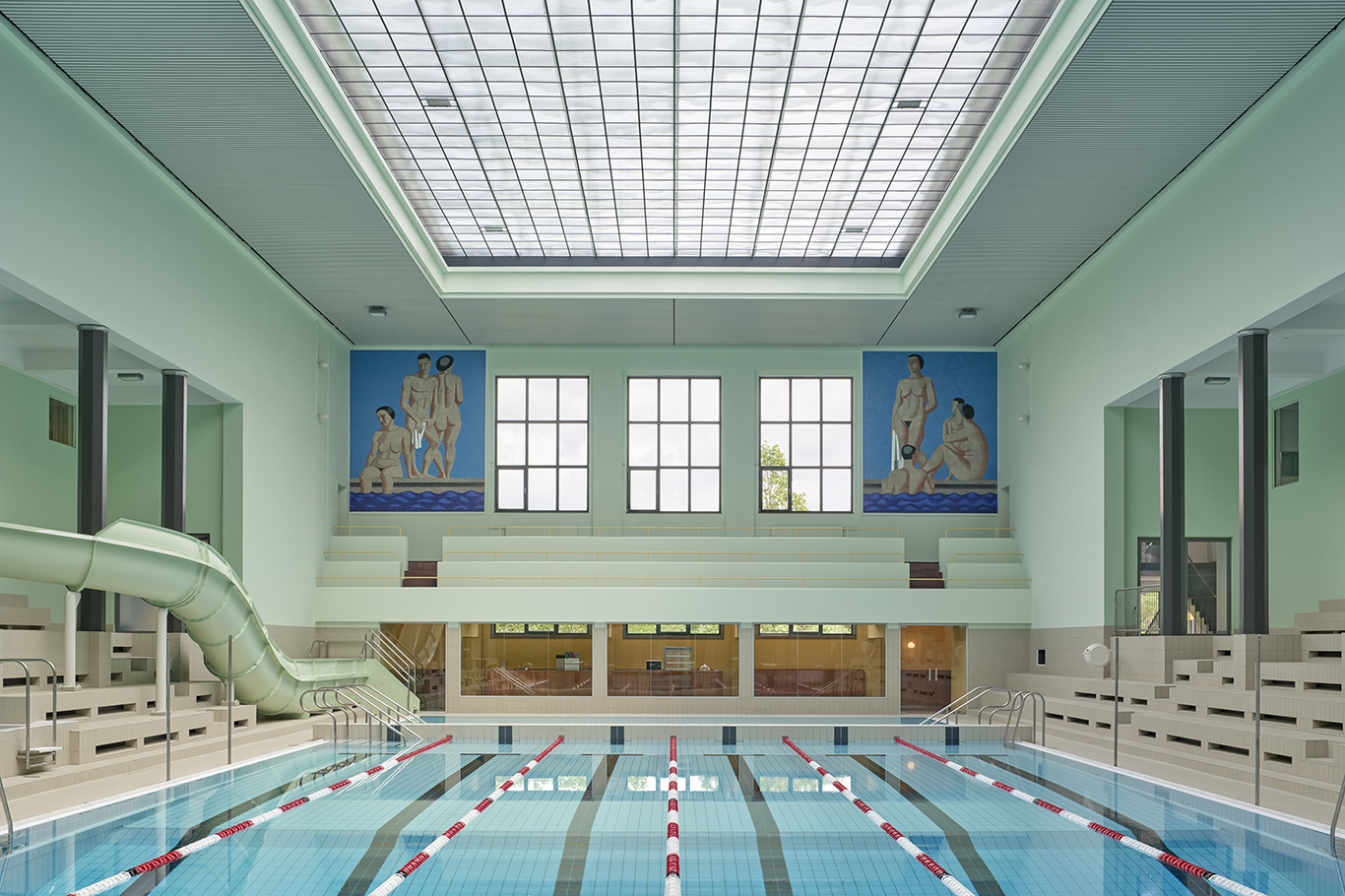
Designed by architect ASK Lauritzen and inaugurated in 1934, this neighbourhood pool in Copenhagen is renowned for its cubist wall mosaics by Vilhelm Lundstrøm illustrating nude bathers. During the renovation between 2021 and 2024 by Cornelius Vöge, Dan Cornelius studied the artist’s original sketches and worked alongside a colour archaeologist and mosaic conservator to restore the original colour scheme. There were some challenges in consolidating the new plastic slide into the heritage atmosphere and safely isolating the cafe behind a glass wall, yet the ‘artistic scenography of wellbeing and art’ has been returned to a more authentic experience that’s embraced by locals.
Piscines Molitor and Pontoise, Paris
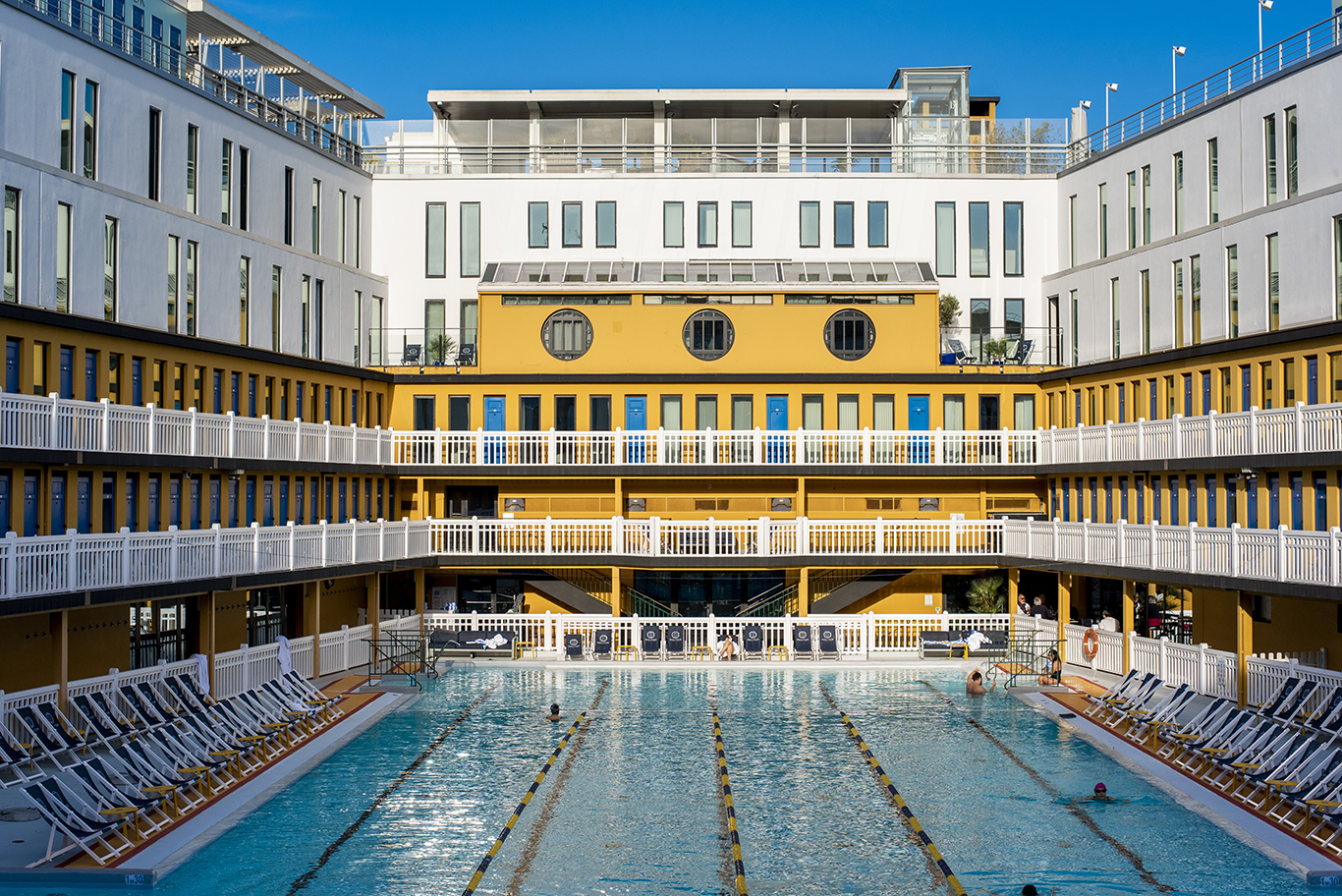
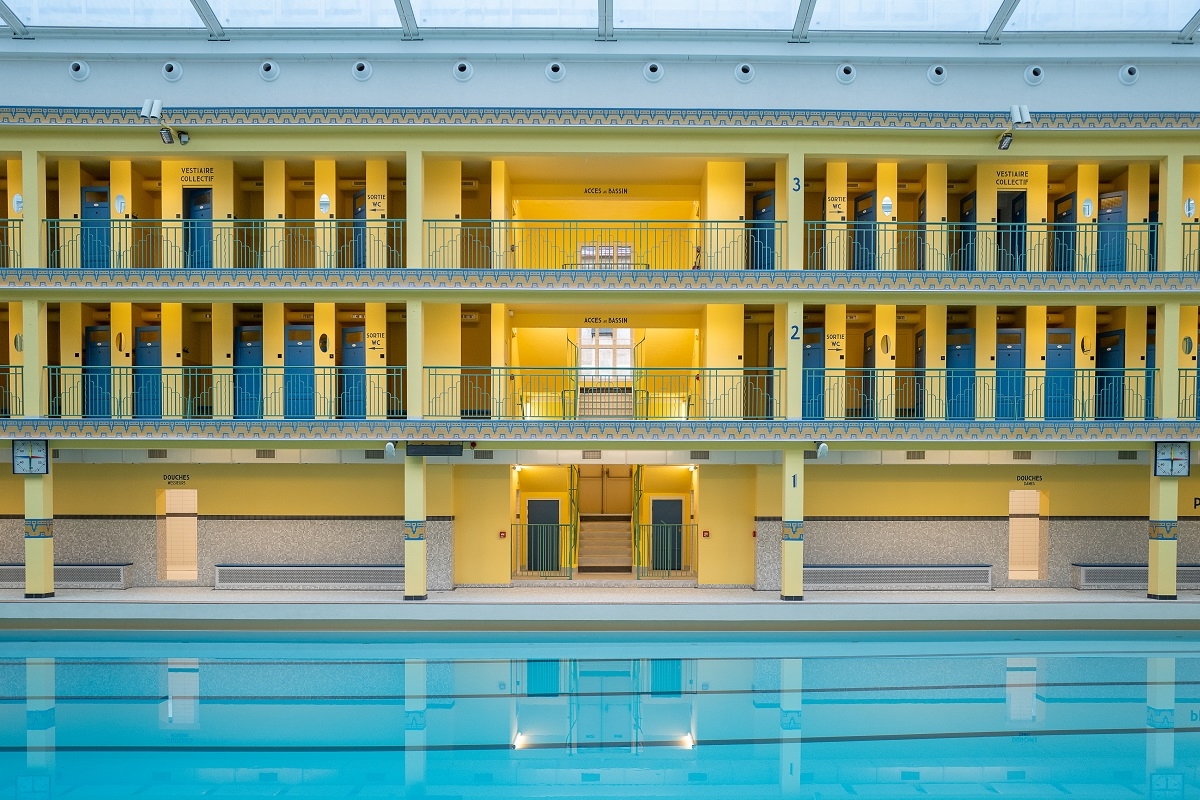
Designed as an avant-garde urban cruise liner by architect Lucien Pollet in 1929, Molitor boasted huge indoor and outdoor swimming pools, rhythmically lined with blue cabins. Yet from the 1970s it slowly fell into decline before closing in 1989. After being reoccupied by graffiti artists, it was demolished in 2011 with only its historic rotunda spared. In 2014, four architecture studios worked to recover original deco elements and rebuild it identically according to Pollet’s plans, adding a contemporary hotel extension.
In the 5th arrondissement, one can also visit Pollet’s 1923 Piscine Pontoise, whose original mosaics and friezes were painstakingly restored in 2023 by Pierre Marchand Architectes. After relining the 33m basin, Marchand and his team reinstated the original paint colours of the peripheral cabins and railings, hand-painted signage in authentic deco fonts and added swaths of thermal glass to the original vaulted ceiling.
Yrjönkatu Swimming Hall, Helsinki
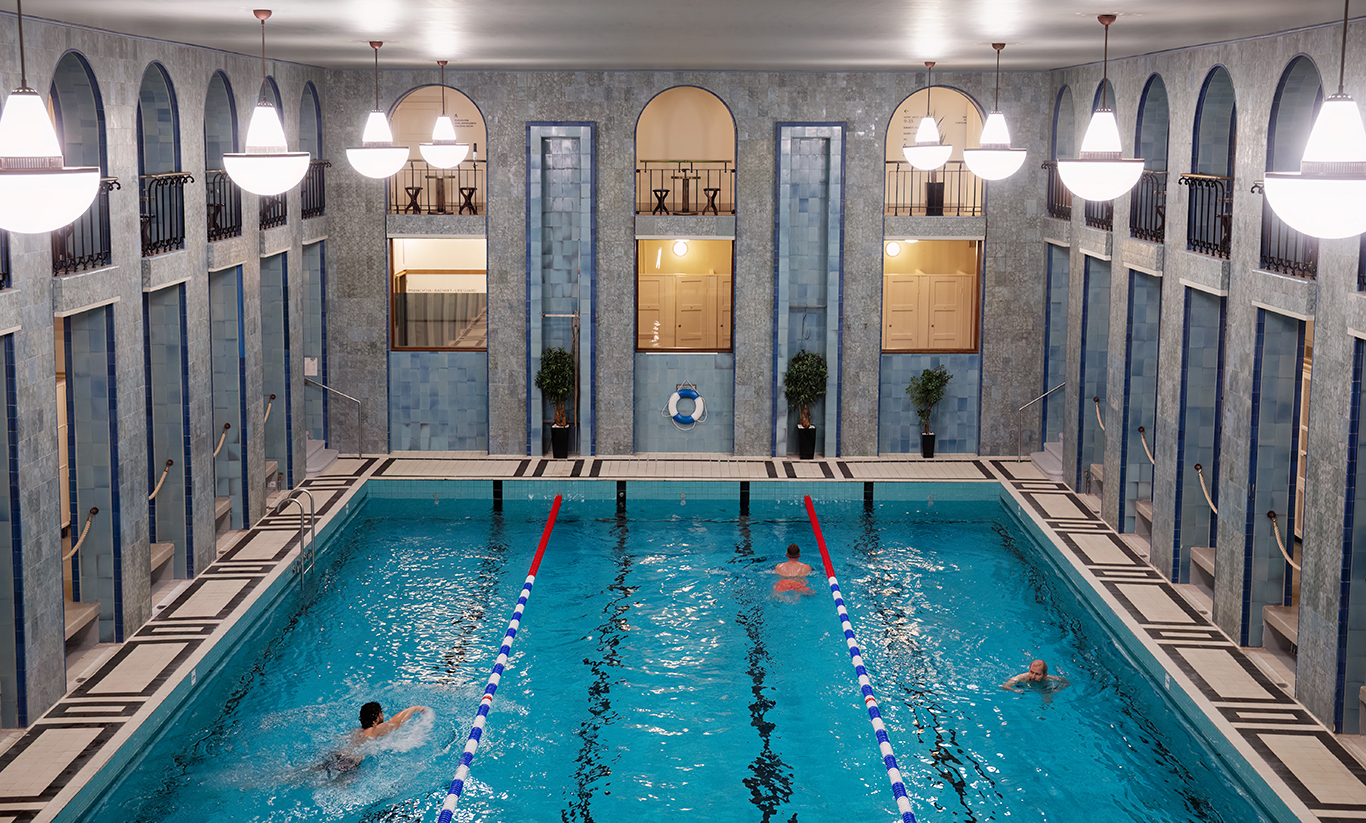
Helsinki’s first indoor swimming hall opened in 1928, offering locals year-round bathing as an alternative to the seaside health resorts developed from the 19th century. Innovatively located inside a city-centre block, the Väinö Vähäkallio-designed pool fused Nordic classicism with art deco across two levels; there’s an exercise pool on the ground floor and a spa upstairs with smaller pool and saunas. Through the 1930s, visitors could have their shoes shined, clothes pressed and hair styled at the facility. A restoration led by the municipality and completed in 2026 welcomed some design evolutions, such as photographic art by Noora Sandgren at the entrance. Yet the old tradition of nude swimming still continues today.
Tarlair Tidal Pool, Scotland
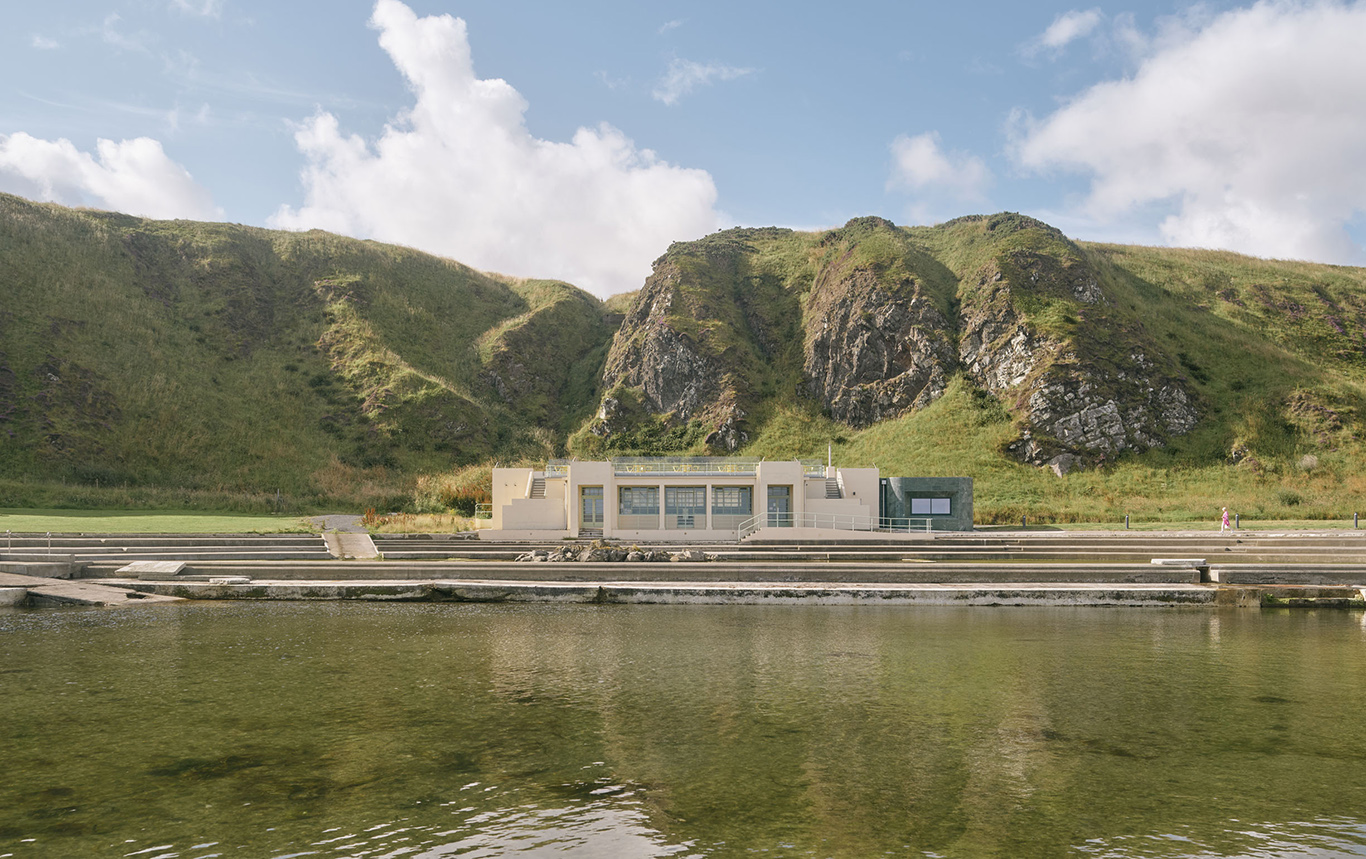
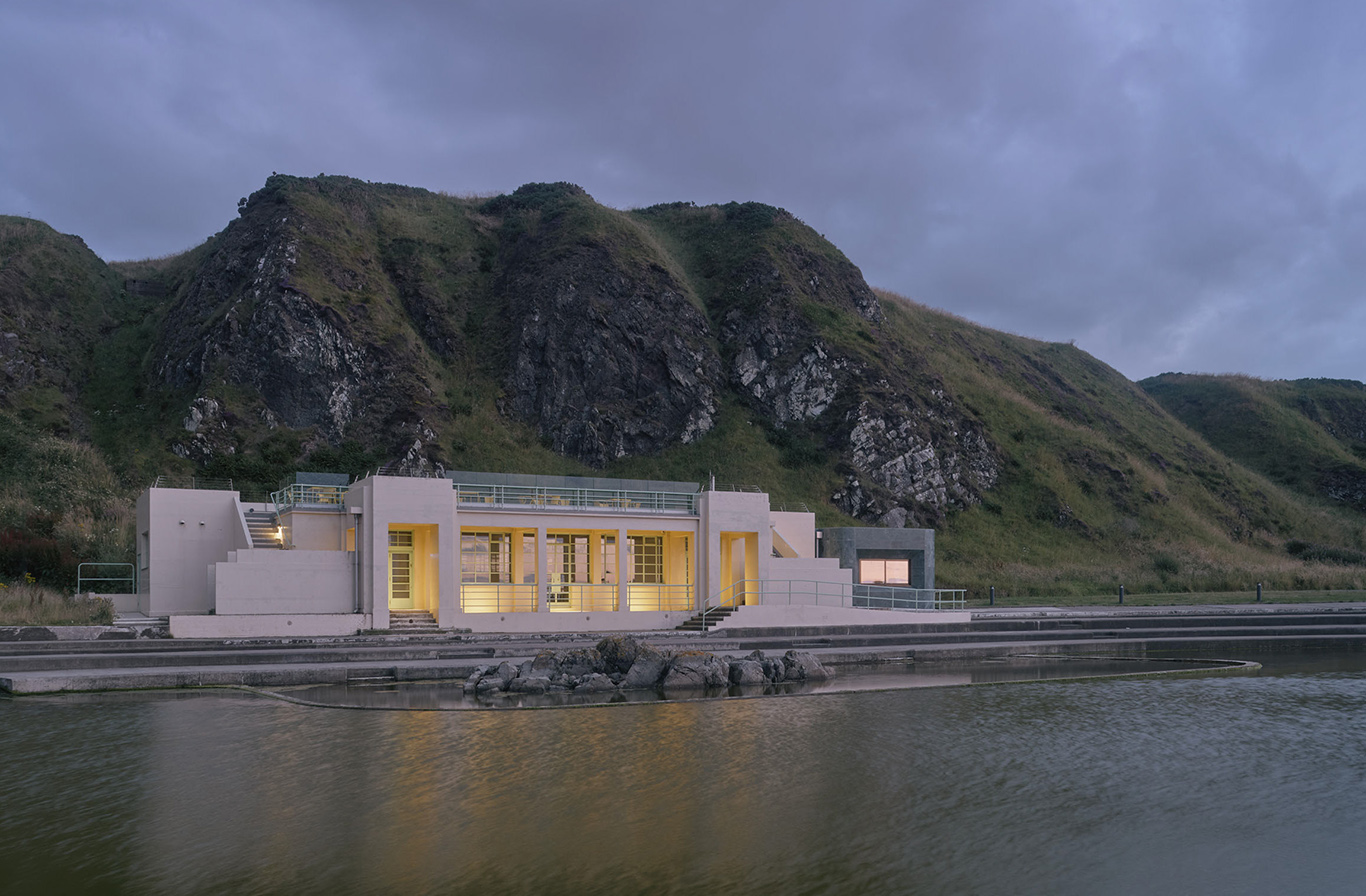
On the rocky Aberdeenshire coastline just outside Macduff, this triple tidal pool was built between 1931 and 1934 alongside a cream-coloured art deco tea pavilion with peppermint metalwork designed by John C Miller. The popular weekend spot slowly declined after an indoor heated pool opened nearby, eventually closing in 1995. Over the past 10 years, community fundraising by the Save Tarlair group drove its gradual restoration. From 2021, the salt-weathered tea pavilion was repaired and insulated by London-based architects Studio Octopi, who also added a salt-proof green Italian marble extension with a big circular window. The new cafe and community event space have extended the pool’s season, and since 2025 the swimming and paddling pools have been undergoing restoration. There are plans for hot showers and kayak clubs in the works.