This September, the setting has played an increasingly important role in the spectacle of Fashion Week, with designers looking beyond traditional runways to historic landmarks, art institutions, retail spaces, gardens and repurposed industrial buildings. These spaces have become vital to the way collections are presented and experienced. Some houses were restrained with their sets and let the existing architecture of the space be the focal point while others transformed their surroundings entirely, turning gardens into theatres and galleries into runways. Here are a few that caught our eye over the past month.
Burberry, Chelsea College of Arts, London


Burberry returned to Chelsea College of Arts, reviving its longstanding relationship with the London institution — the brand has previously staged three shows at the venue, beginning with its 2010 womenswear show. Inside, guests sat on rows of irregularly arranged wooden stools and benches, each carved and marked with Burberry’s signature check. The warmth of the wood contrasted with the stark white backdrop, while a heavy wooden door provided a striking architectural focal point through which models entered the runway. ‘The set design is deliberately exposing,’ said the Burberry notes, explaining that the restraint allowed the clothes to feel ‘human rather than perfect – soulful and tactile.’
Francesca Lake, 180 Studios, London
View this post on Instagram
For her London Fashion Week debut, Francesca Lake transformed the basement of 180 the Strand into a stage for Wake The Town, a collection inspired by the processions and wakes of her Jamaican heritage. The presentation embraced the raw, subterranean character of 180’s NEWGEN show space, allowing the architecture to frame the collection. Deep maroon tones created an almost gothic atmosphere. A wooden door in the shape of a church steeple further transformed the space, marking it an entrance to a place of worship and reinforcing the collection’s connection to ceremony and ritual. Suspended fabrics made the atmosphere feel whimsical and dreamlike.
Against this backdrop, models appeared in head-to-toe lace, structured tailoring and a striking pearl-covered bodice. Harsh lighting heightened the contrast between the expressive garments and the industrial surroundings, creating a setting that felt theatrical, ceremonial and otherworldly.
Dior, Tuileries Garden, Paris
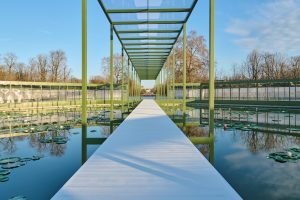
The runway was transported outdoors for Dior’s SS27 show. Jonathan Anderson staged his spectacle over the basin in Paris’s Tuileries Garden, where trees emerged from the water while mist swirled around the models. The natural elements connected closely with the collection’s emphasis on lightness and movement. Rather than functioning as a decorative backdrop, the water, trees and mist helped establish the whimsical feminine language of the show. The result was a particularly Parisian form of scenography: temporary, theatrical and placed within the charming surrounds.
Michael Kors, MoMA Sculpture Garden, New York
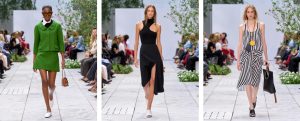
Michael Kors chose one of New York’s most recognisable cultural spaces for his September show, presenting the collection within MoMA’s Sculpture Garden. The artwork became part of the show, with his collection drawing inspiration from museum standbys Carmen Herrera, Alexander Calder and Ellsworth Kelly. By placing the clothes within a landscape already populated by significant works of art, Kors created a dialogue between fashion, sculpture and architecture. He also demonstrated the value of site-specific fashion shows; the setting can provide layers of meaning that a purpose-built runway simply cannot.
Gucci, Milan
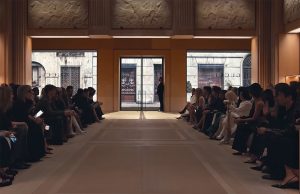
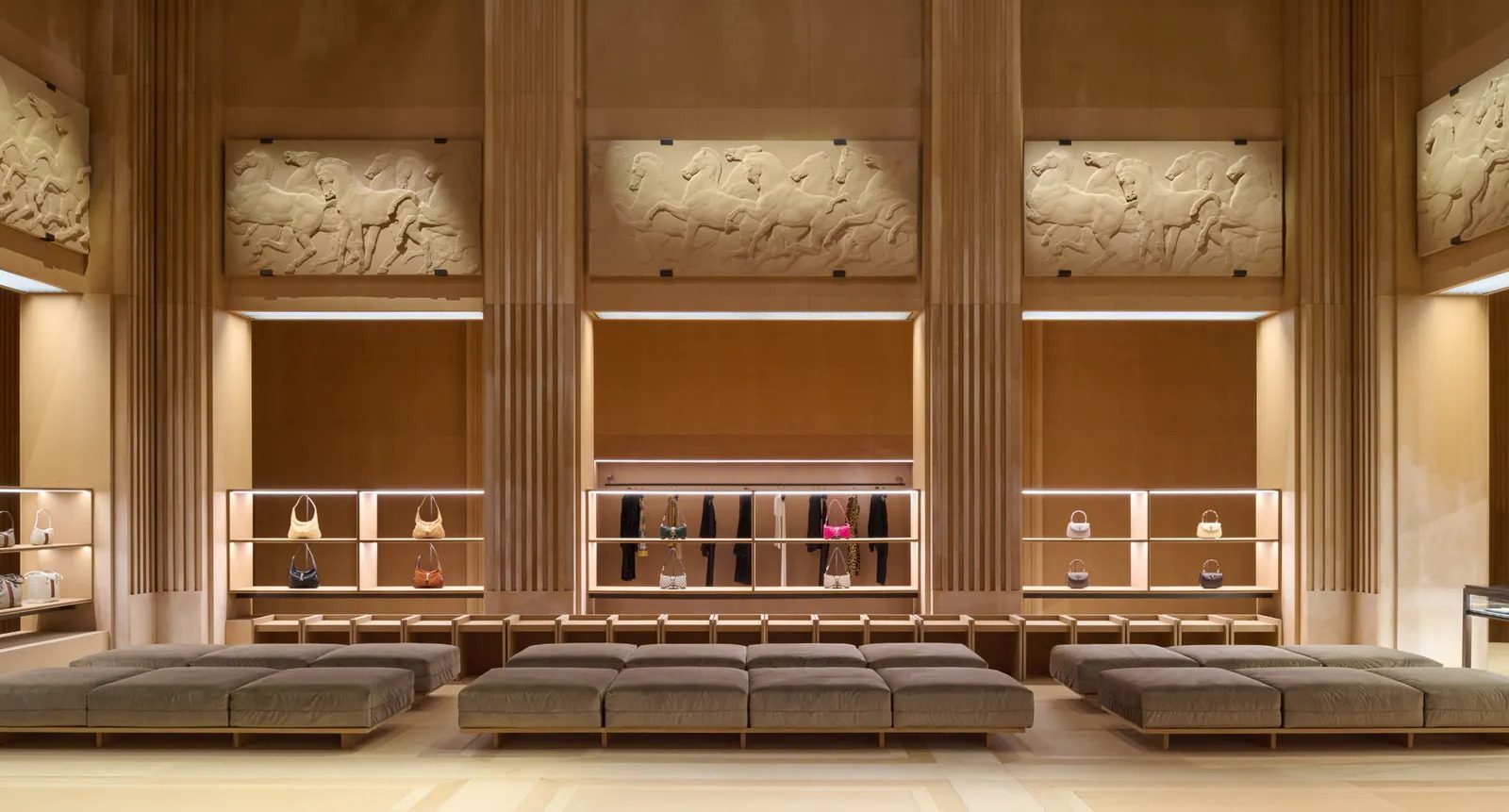
A full-scale replica of an imagined Gucci flagship provided the backdrop for Demna’s SS27 Gucci runway. Conceived as a preview of the brand’s future retail spaces, the set featured marble columns, display cases, clothing racks and Greco Roman-inspired sculptures for a space that was part boutique, part museum, part catwalk. The effect was deliberately convincing, with some guests initially mistaking the space for a real Gucci store. Demna made retail itself the scenography, offering a glimpse into his vision for Gucci’s future while drawing on the house’s Italian heritage through its classical architectural references.
Vogue World: Milano, Galleria Vittorio Emanuele II, Milan
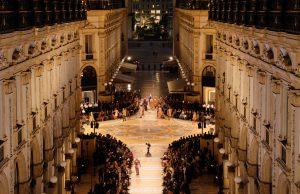
The architecture was already spectacular enough at Vogue World: Milano. The event took over the Galleria Vittorio Emanuele II, where the neo-Renaissance architecture, glass roof and ornate interiors formed the backdrop of the programme of fashion and performance. The event brought together fashion, opera and craftsmanship within the arcade and the Galleria became simultaneously a runway, theatre and public space. The history and grandeur of the space set the tone.