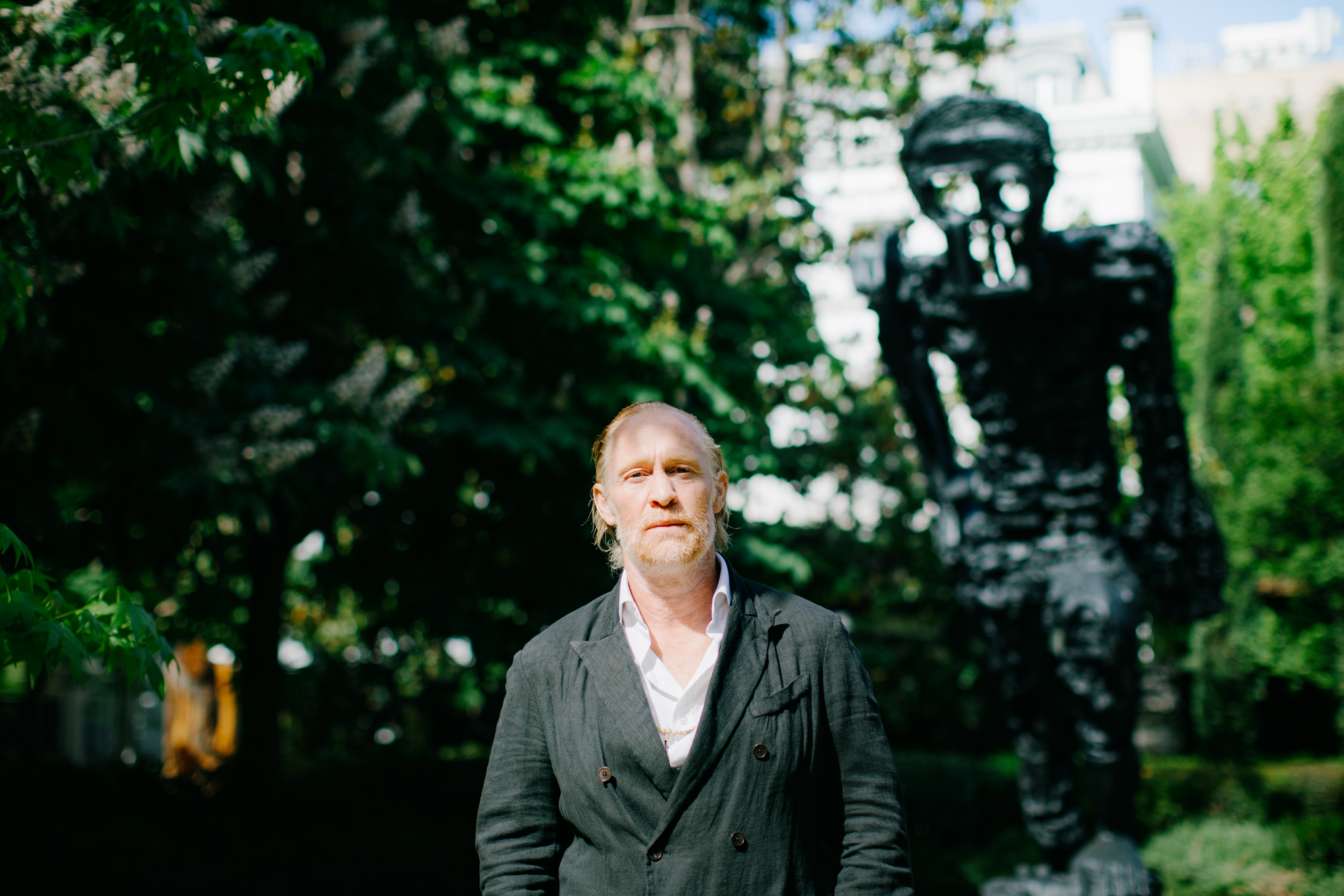
In mid-morning, when the sun climbs over Banca March Garden in Madrid’s genteel enclave of Salamanca, it seeps through the wide eye holes and gaping maw of Thomas Houseago’s Large Walking Figure I, throwing shadows across the pond that surrounds it. Then a cloud will hover, you’ll get some distance and suddenly the five-metre bronze, shaped into a menacing, animalistic stance shows a flicker of vulnerability, as if the creature feels uncomfortable in its chunky musculature. The placement, at the centre of a pond like a grotesque anti-David, can read as catastrophic or as classical.
‘It allows for the sculpture to speak from every angle, so it can breathe,’ says Brussels-based curator Anne Pontégnie, who brought Houseago’s work to this secret garden as part of Banca March’s centenary celebrations.
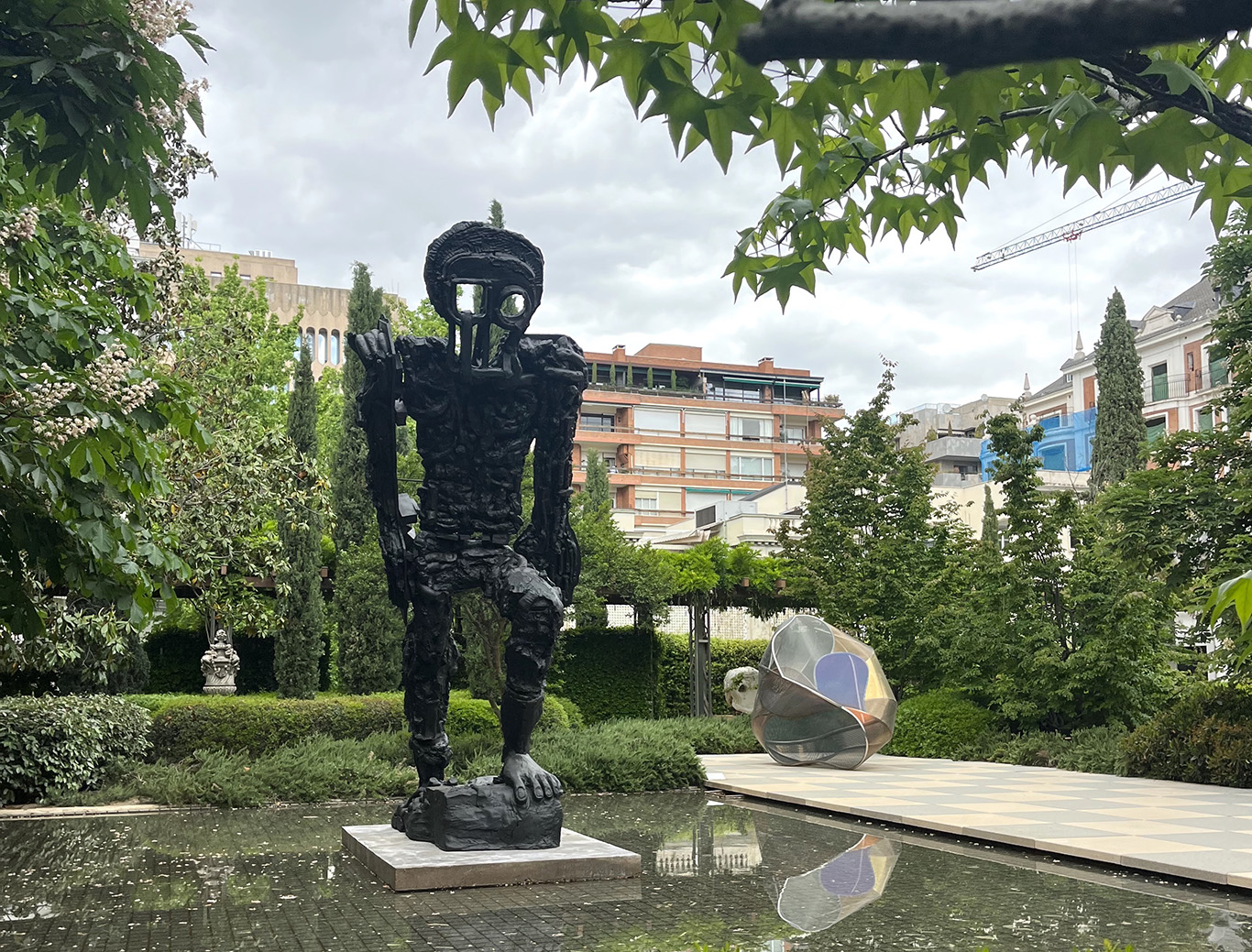
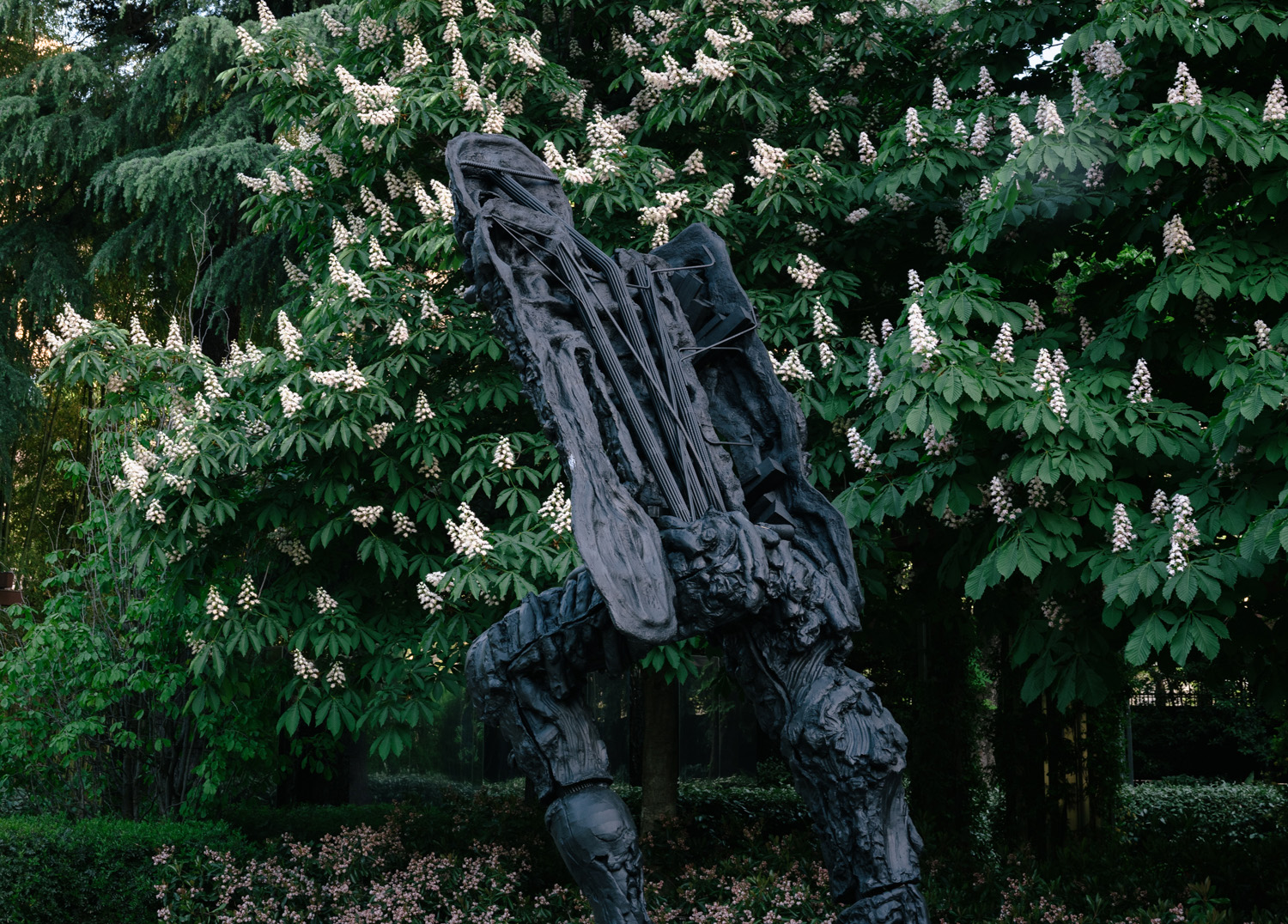
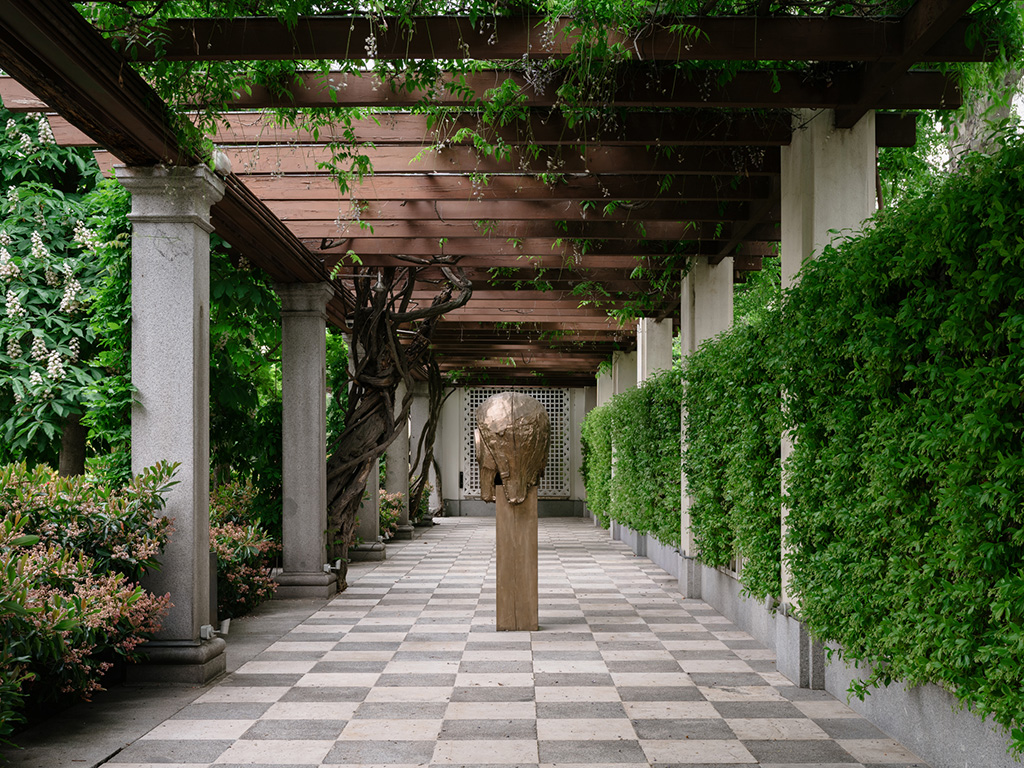
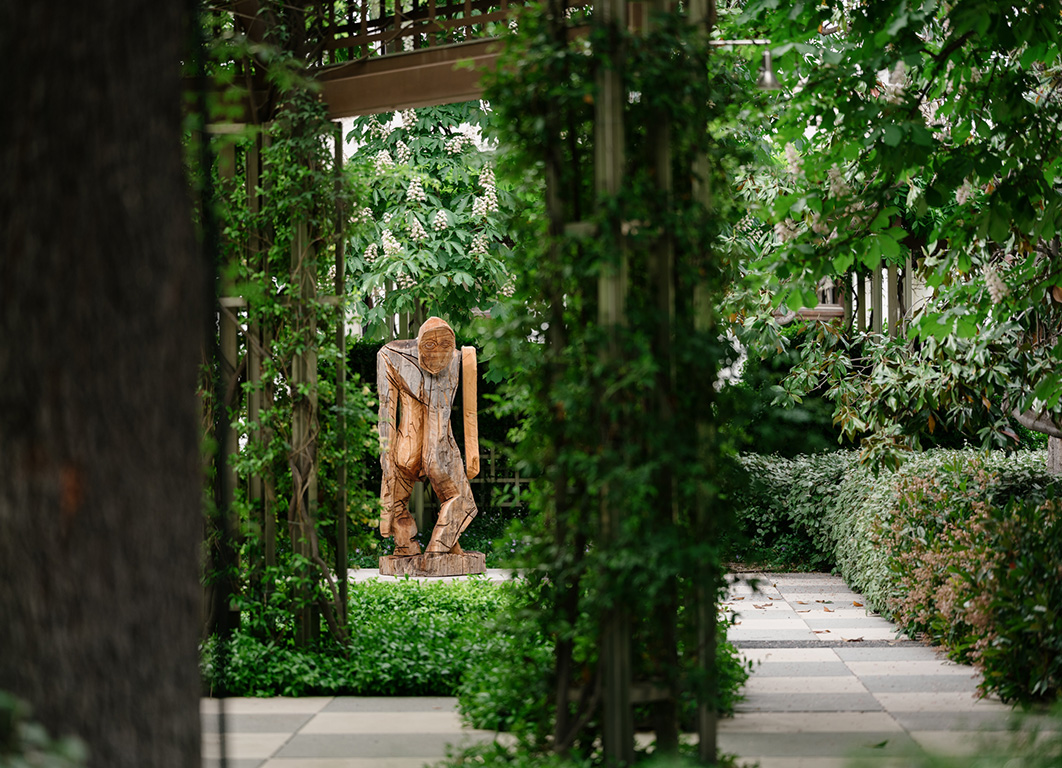
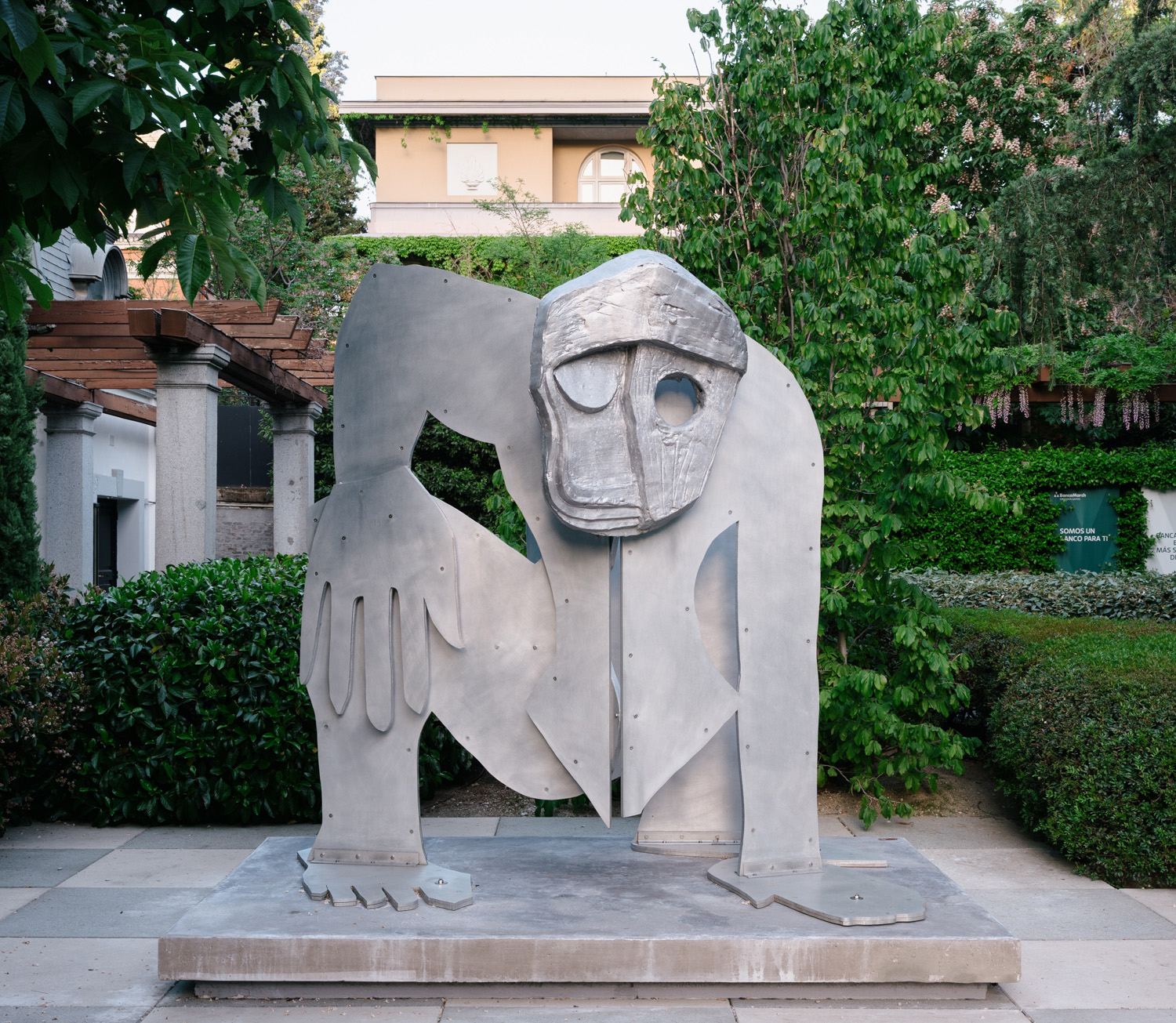
The exhibition of seven sculptures marks a special moment for the Madrid public, who get access to this gated oasis for only the second time in its existence behind the March manor. Open through October, it displays Houseago’s primitive figures in all mediums — bronze, plaster, metal, a fallen tree trunk — and, as Pontégnie said, from all angles, even through open cavities to the innards.
It is also, clearly, a special moment for the LA-based British artist, who has found a patron in the latest generation of March banking heirs, not unlike Donatello and the Medicis. Houseago has been candid in the media about his recovery arc after a childhood of abuse. And seeing his lumbering, twisted sculptures here, wrenched and pummelled into being with thumb prints left as evidence, are an emotional testament to his redemption. They show, says Houseago, ‘what it’s like to be in my body sometimes. We all experience this in some shape or form. I’m very interested in the parts that we don’t talk about, the animal qualities in ourselves.’ This access, he says, is what makes us human.
‘I was created by violence.’ But seeing the work in this idyll, he says, ‘allowed me to remember that it’s possible for artists to have, every now and again, these blessed moments.’
Showing in Spain for the first time, the artist has come full circle. Leeds in the 1980s was not, by his measure, a hotbed for artists, but as a teen Houseago says he noticed Goya’s haunting Black Paintings in a book. When, at 16, he joined some friends on a city break in Madrid, he queued outside the Prado Museum to inspect them in person. ‘When I first saw them,’ he says, ‘it was like oxygen for me.’
Pontégnie reckons Spain is a natural home for Houseago’s sculptures. ‘Formally and existentially,’ she says, ‘they answer to art history from Goya to Picasso and Juan Gris.’ Like those predecessors, Houseago has been exorcising trauma from a certain kind of war.
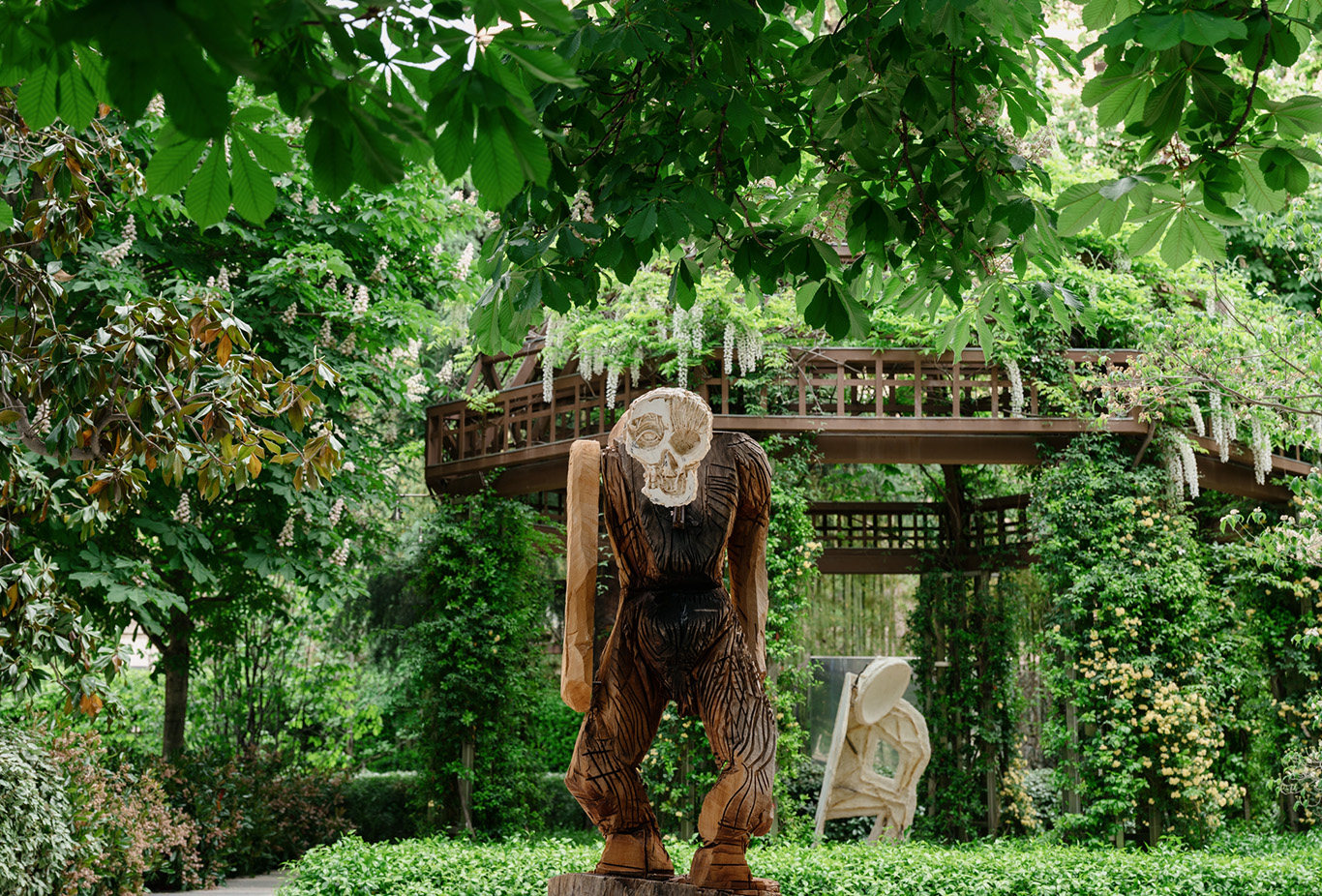
Part of Houseago’s recovery has been brutal honesty — he tends these days to wear his emotions on his sleeve. Hence his confession to have been ’embarrassed, even a little ashamed’, of this show. ‘When people tell me they’re scary, I say, “I know — some of these sculptures scare me.”‘ Yet another trip to the Prado, nearly four decades after his first, helped neutralise those feelings. It helped him see the similarities between the disturbing faces in Goya and in his own work, framed here as it is by branches and trellises.
He says his dream was that Large Walking Figure and its teetering, disjointed siblings would end up in a garden. It’s all part of his healing process: to show these ‘ugly sculptures that make the world a more beautiful place’.