
The rise of the 'foodscape' and our appetite for edible aesthetics
Creative chefs are elevating fine ingredients into the province of fine art
We have arrived at an age in which every dish served at a restaurant — at least a certain calibre of restaurant — will be photographed. The camera eats first. This is the baseline many chefs are starting from. The more moreish a plate appears, the more likely it will multiply on Instagram. People perceive and appreciate food in a manner that is multisensory, and the tablescape, or foodscape, is as important as the food.
But is that such a bad thing? Studies conducted by psychologists for years have confirmed that a well-designed plate will enhance the appreciation of the food on it. Colour, balance and artful whimsy, and not only aroma and taste, lead to great expectations, better reviews and the conventional wisdom that we eat with our eyes first.
Trying to please the aesthetes and the foodies (not to mention the cynics) in equal measure isn't exactly a recipe for success. Yet a few chefs make it work using techniques from visual art and communication and using the natural colours and textures of fresh ingredients to their advantage. And they don't sacrifice taste to the cult of social media.
‘The presentation is simply the part of the dish that reaches you first,’ says Eyal Levit, a Finnish chef who has built a reputation across Europe for conceptual party food that is just as memorable its flavour as for the creativity behind it. ‘The enjoyment should start before the first bite. The colours and smells tell you what’s coming down the road.’
Eyal and his wife Veera Levit cofounded Supper Tale as a roving supper club but were swiftly coopted by brands who align with their aesthetic, like Longchamp and the designer Eero Aarnio. They've also been chosen to run private dinners with museum-calibre presentation at Alvar Aalto's former home and atelier in Helsinki — an effort to promote Nordic dishes to an epicurean crowd. They pay special attention to the dining environment, understanding the specific ways in which the furniture and design affect the enjoyment of food.
For a summer event hosted by Aarnio and Finnish fashion brand Vain — an event they knew would be well photographed — they created a fashionable, monochrome tablescape of 3D shapes infused with unexpectedly light, summery flavours from fresh citrus and peach.
From the start, the goal was not to make food that was too good to eat, but to make good, exactingly prepared food with a backstory that started conversations. ‘We want people to talk a bit — why this ingredient? Why this style? What’s the inspiration?' says Eyal. 'Then we want them to take a bite and destroy it.' The conversation flows, they say, only if the taste lives up to the look.
It helps if the food is appealingly distinctive from the get-go. ‘I’m drawn to ingredients with a character of their own,’ says Florence Knight, chef of the minimalist bistro Lunette on the 11th floor of 180 The Thames in London. ‘The translucency of fruit, the sculptural form of a root vegetable, the delicacy of a leaf...’ Often, she says, the most interesting ingredients aren’t conventionally beautiful. It's the tension that interests her, between strength and fragility, ugliness and beauty. ‘It’s something I respond to instinctively.' Her menu so closely adheres to this philosophy, she's eliminated the bread course entirely.
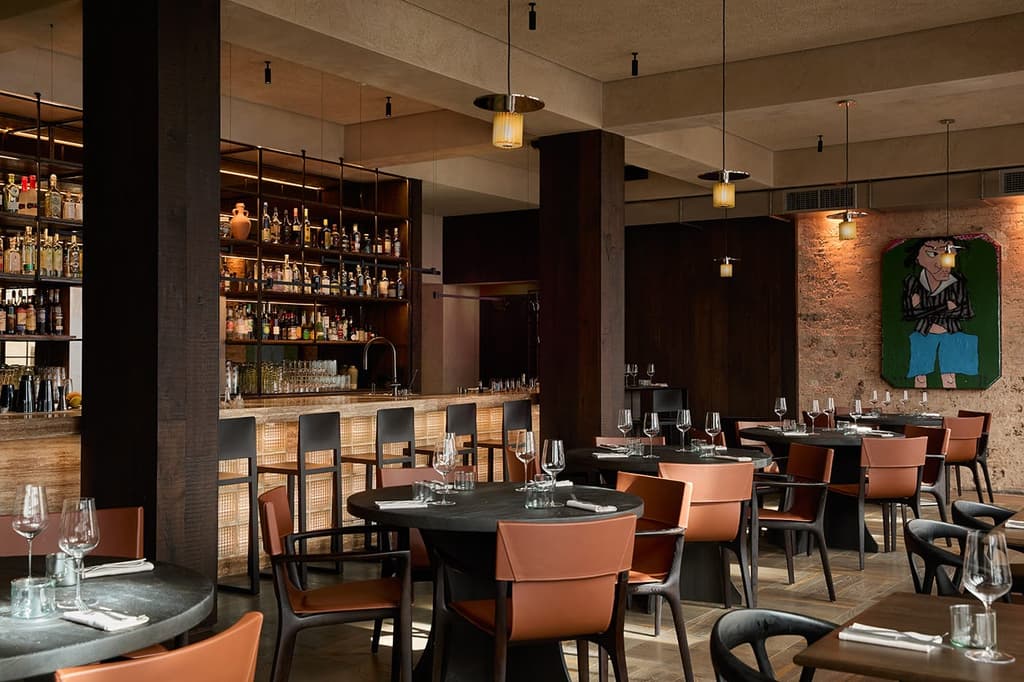
Knight agrees that desire can affect a diner's enjoyment, taking a moment to visually savour the art the chef has brought to the plate. And, like the Levits, she brings interior design into her aesthetic, having slipped into a space filled with brushed steel, natural woods and porcelain whites by Alex Eagle and Sophie Hodges of Eagle + Hodges.
‘Food needs to be desirable,’ she says. ‘I want there to be a sense of anticipation, something that draws you towards it. A dish needs to have life, and ultimately the pleasure has to come from eating it.’
‘Food should invite intrigue and make you want to investigate through every sense,’ says Charlotte Forsyth, who runs the food-styling and events agency Hands with partner Sofie Thompson. She says they try to consider smell, touch and taste in everything they make, sometimes erring on the side of realism with hunks of generously buttered bread and hearty patés, other times styling platters to look photo shoot-ready — like the family of spun-sugar croquembouche towers at an event in London for the jewellery brand Mejuri.
That tablescape followed all the right ingredients for success: balance, symmetry, texture and a deliciously neutral background for highlighting the jewellery on show.
‘If it looks appealing, then naturally you will find it compelling to eat,’ says Forsyth. ‘That said… our favourites dishes are the most simple, those which amplify the natural beauty of the ingredients, rather than anything overly manipulated.'
A perfect example? 'A plate of English radishes, butter and sea salt.’
Read next: High-fidelity sound marks out a new dining culture in London
These London breakfast options were approved by your cab driver
Related stories


Newsletter
Want news delivered to your inbox?