
The V&A is courting next-gen museum-goers with its sharply dressed new home
The latest landmark on London's East Bank offers moments of joy
That property mantra ‘location location location’ was entirely upended when city planners began their mission to transform the dowdy, distant, unpopular brownfield outside Stratford station into a cultural Mecca. Coaxing the dance theatre Sadlers Wells, the London College of Fashion, Abba Voyage and West Ham into the former Olympic Park became a masterclass in placemaking and introduced new possibilities to thousands of people moving east.
East Bank isn’t a great name for the district that contains the big hitters, but it has presence. And the angular V&A East, which opens this weekend nearly a year after its lauded Storehouse launched across the park, brings added cachet to the landmarks overlooking the Lea River. A satellite of the 19th-century Victoria & Albert museum in South Kensington, which contains treasures as varied as royal tiaras, Canova marbles and Japanese handbags, it was designed over more than 10 years by Irish architects Sheila O’Donnell and John Tuomey, who drew inspiration from a Cristóbal Balenciaga garment in the South Ken collection.
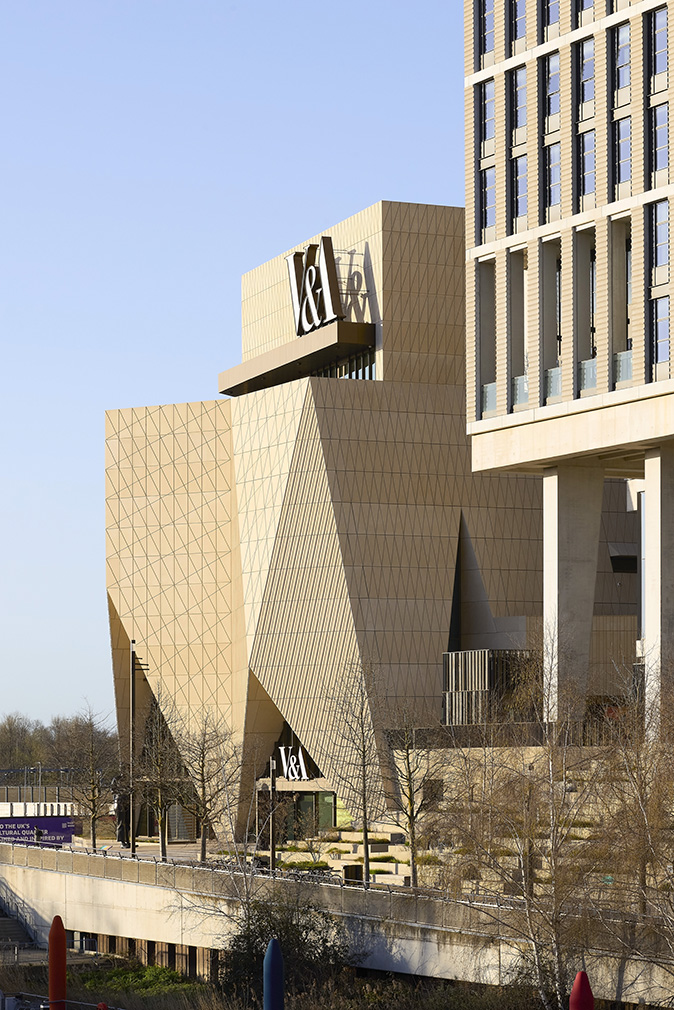

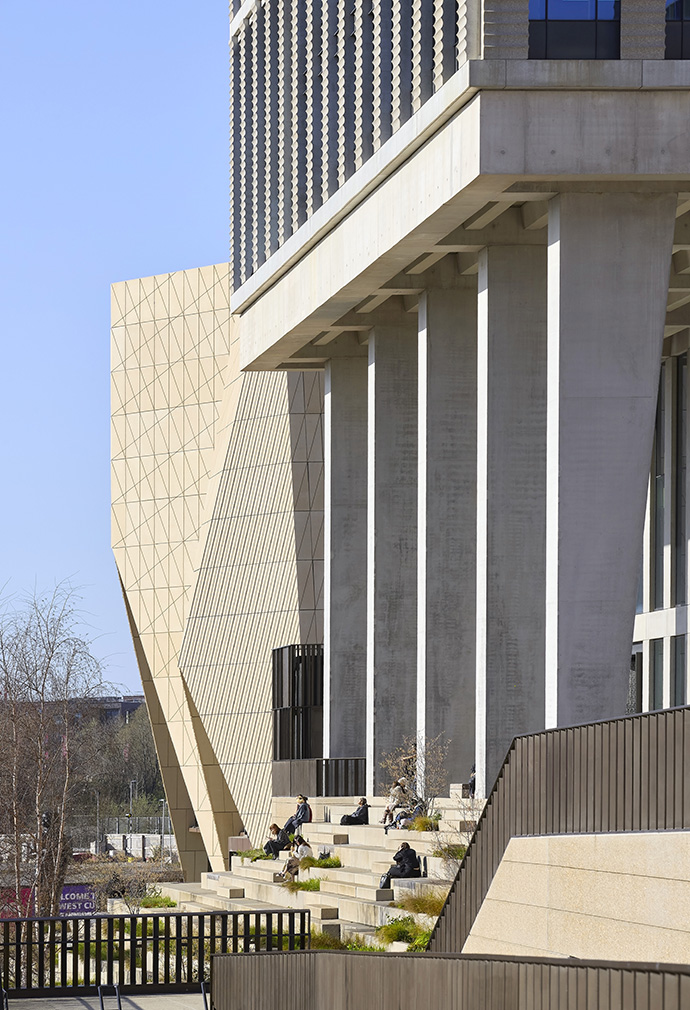
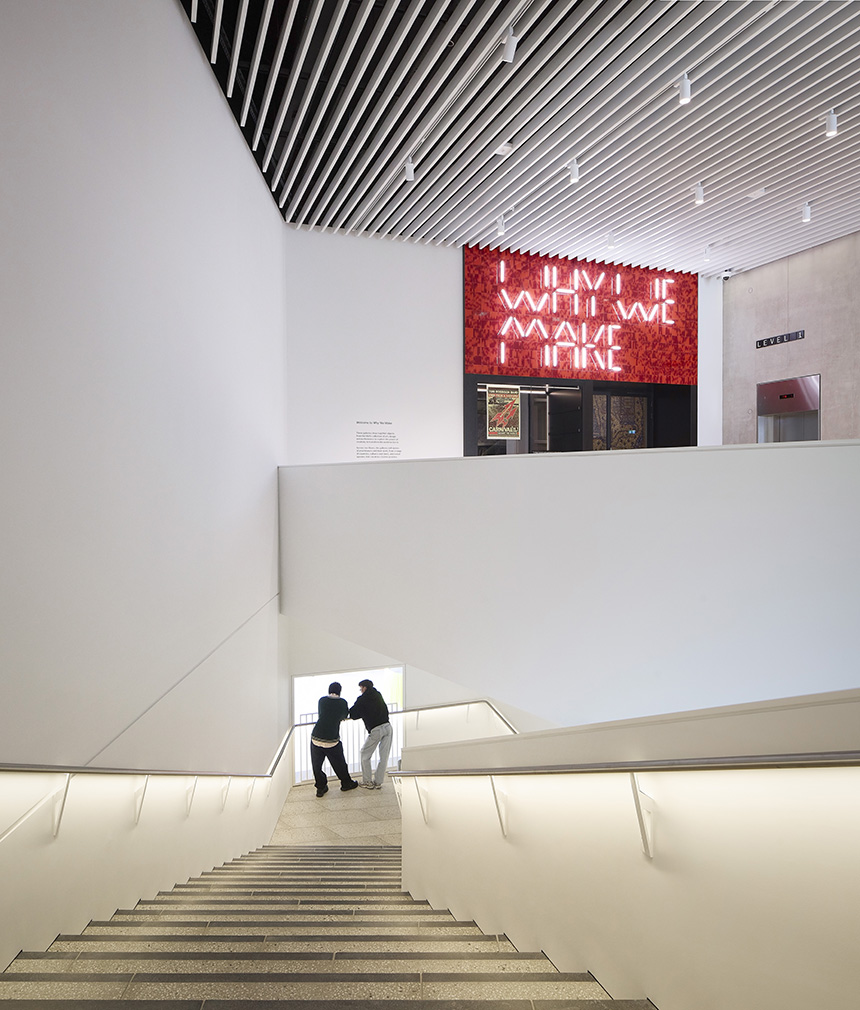
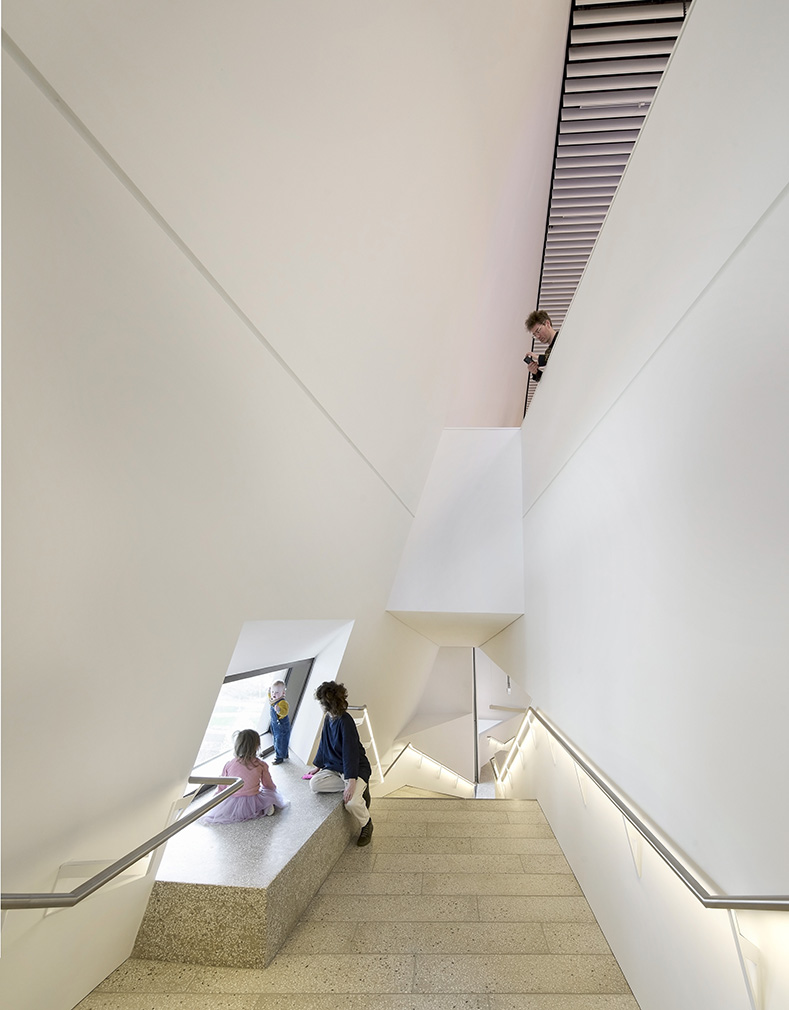
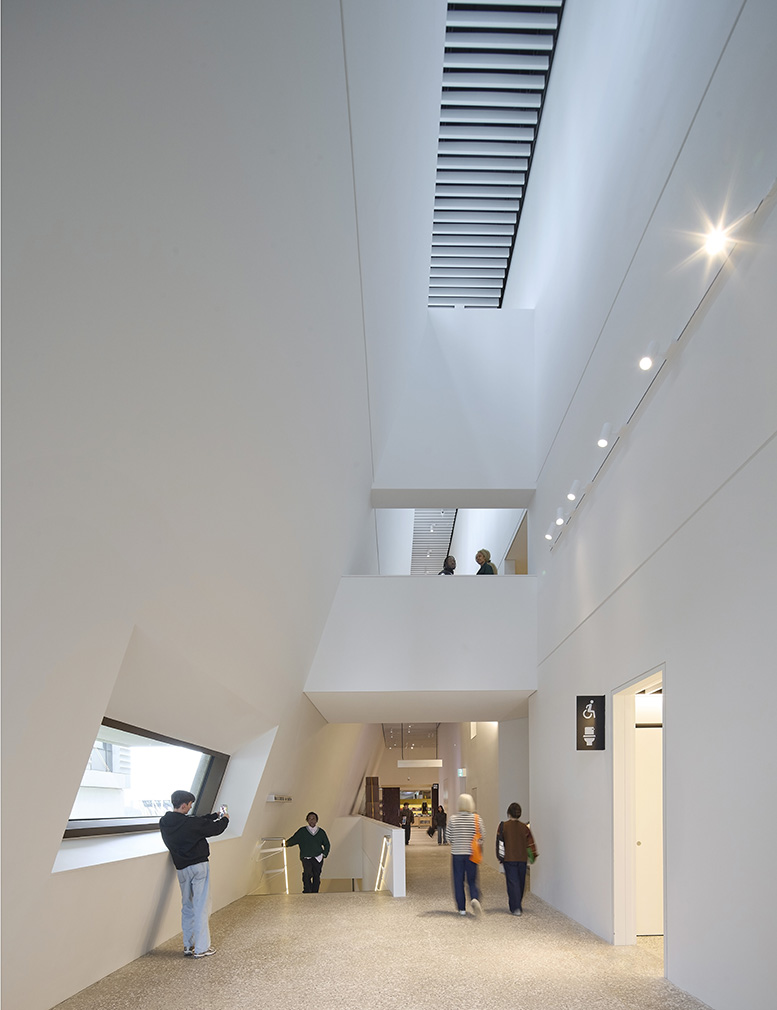
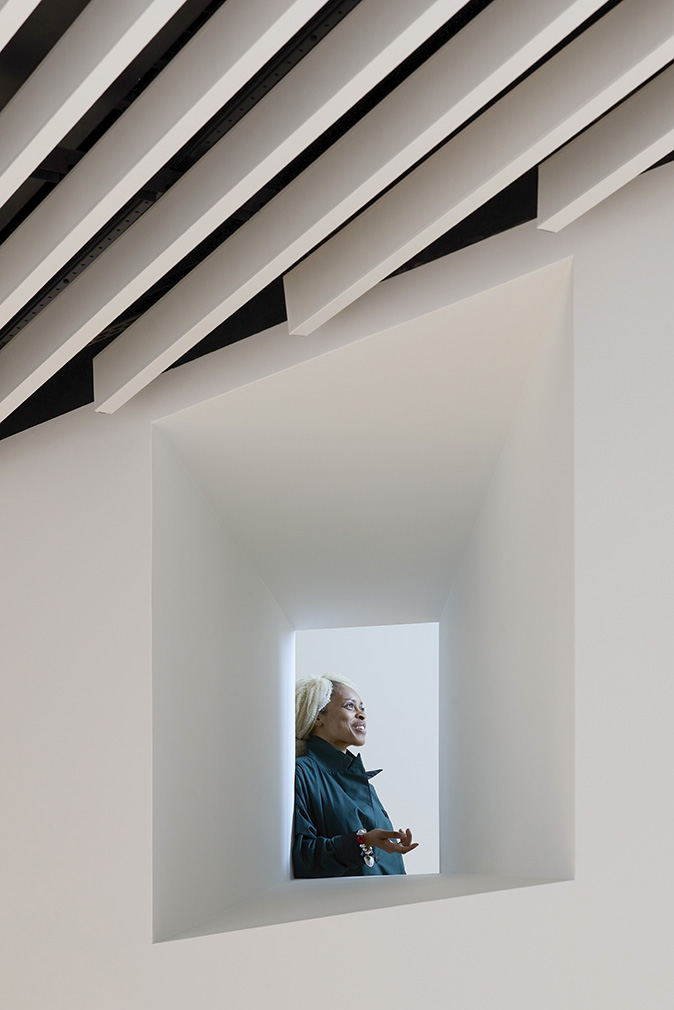
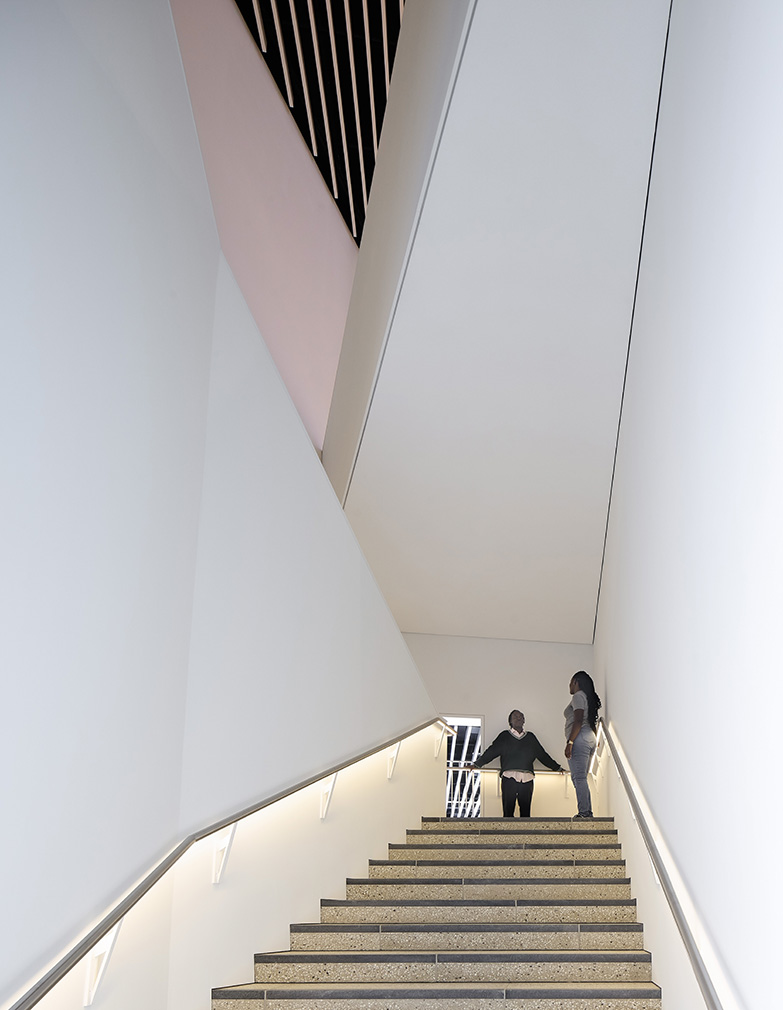
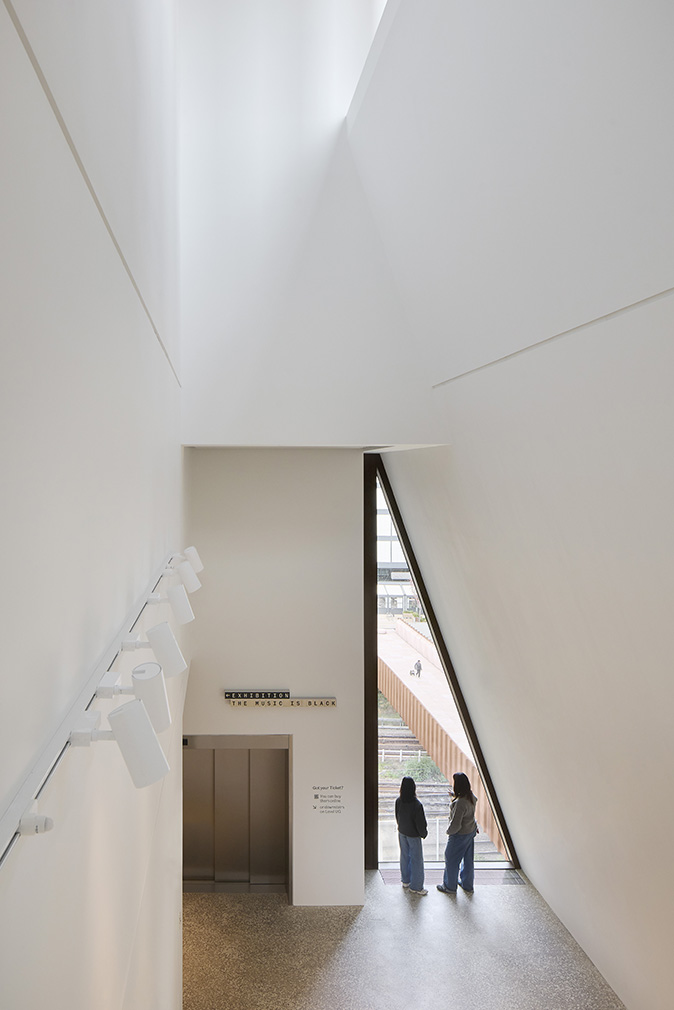
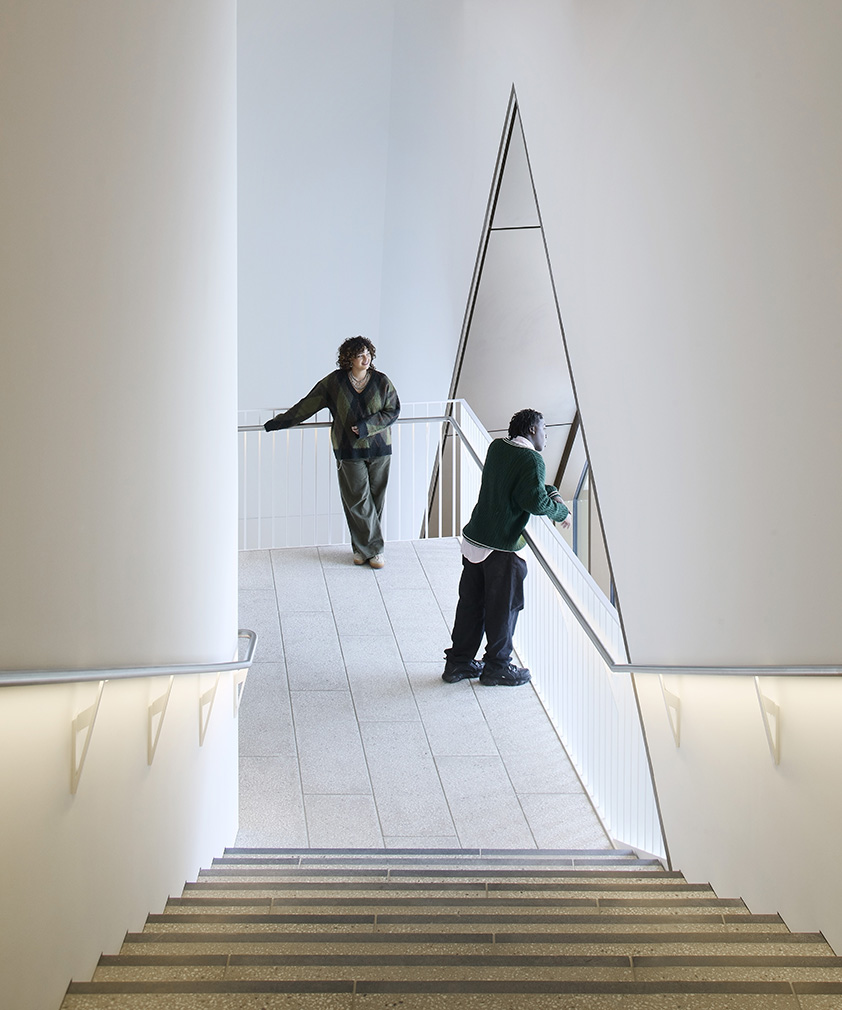
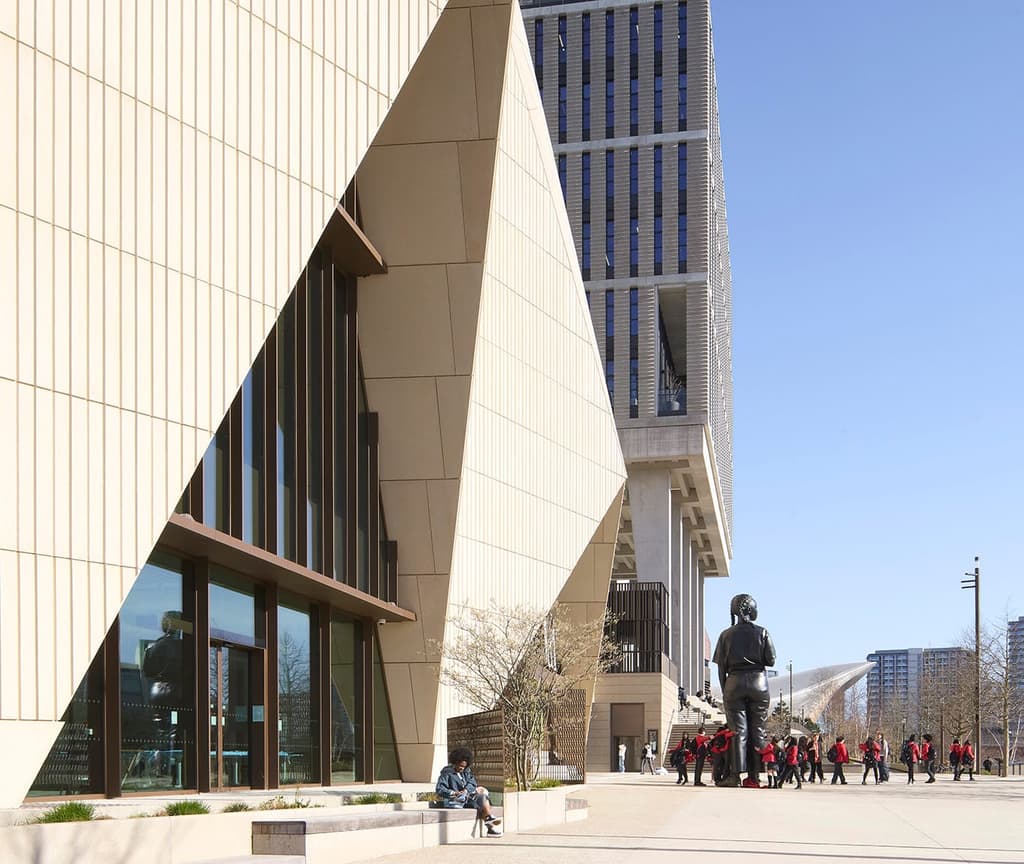
They embarked on their design as a paean to ‘making’, in the V&A’s applied art tradition. The exterior is pleated like a stiff overskirt, sewn together from 479 precast-concrete panels in the shape of Vs and As, integrated with the steel structure. The blocks were ‘cooked’ with the building’s footprint embedded, so they wrap around the folds, eliminating the need for mitred corners. ‘The thickness gives the building a physical, human presence,’ says Tuomey.
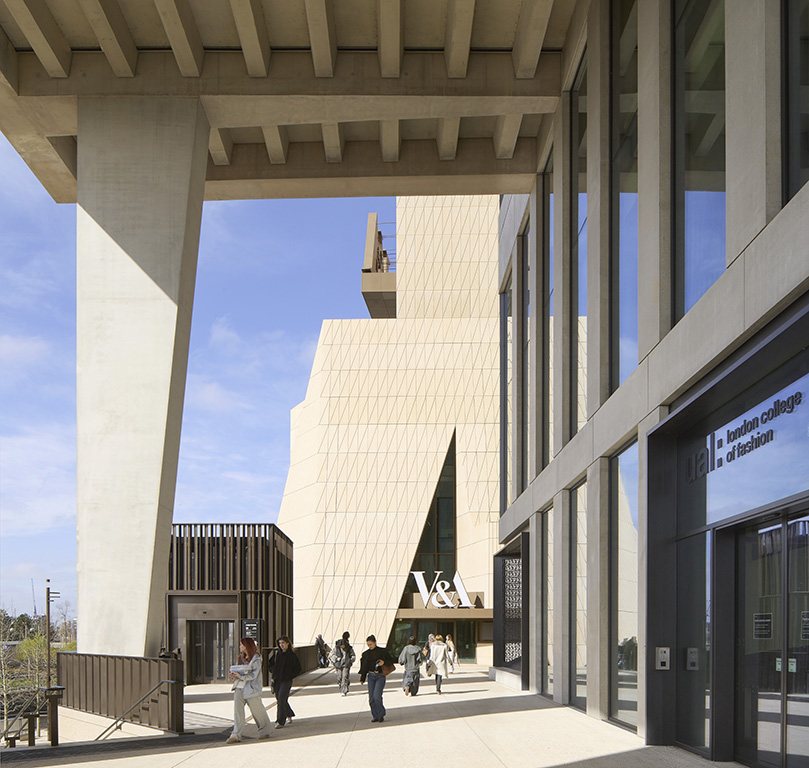
Asked to avoid picture windows, the architects lifted the ‘fabric’ of the lower walls to reveal A-shaped glazing — Tuomey describes the facade as ‘lifting like an eyelid, as if the building had just woken up’. The pointed glass rises high enough that visitors on the first two floors can see some distance through Stratford. ‘The openings have depth,’ he says. ‘They make a solid building feel more open.’
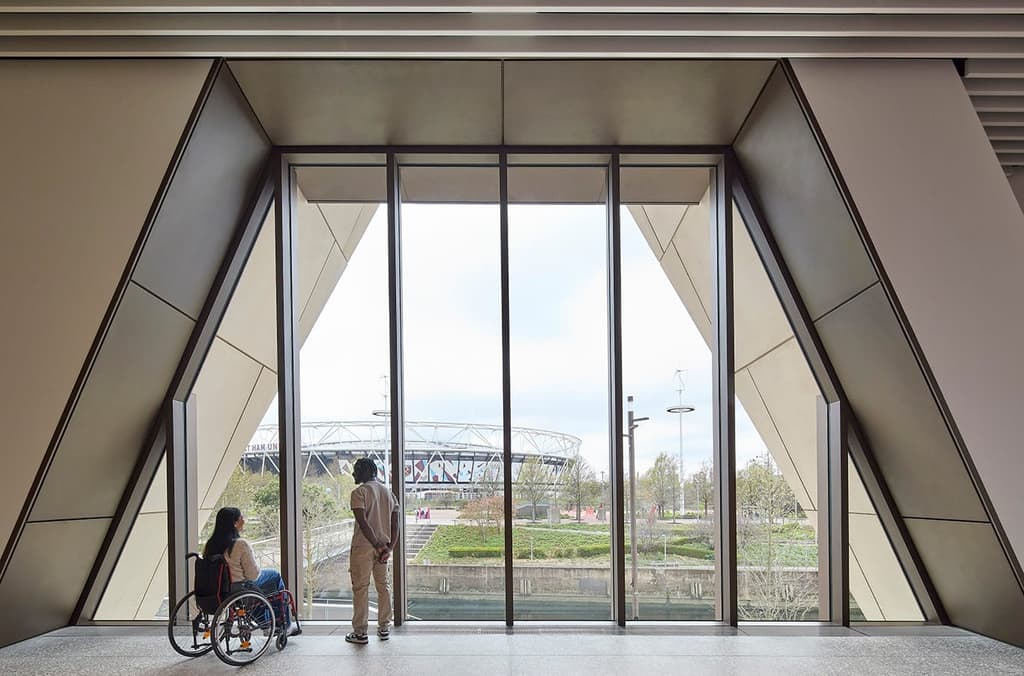
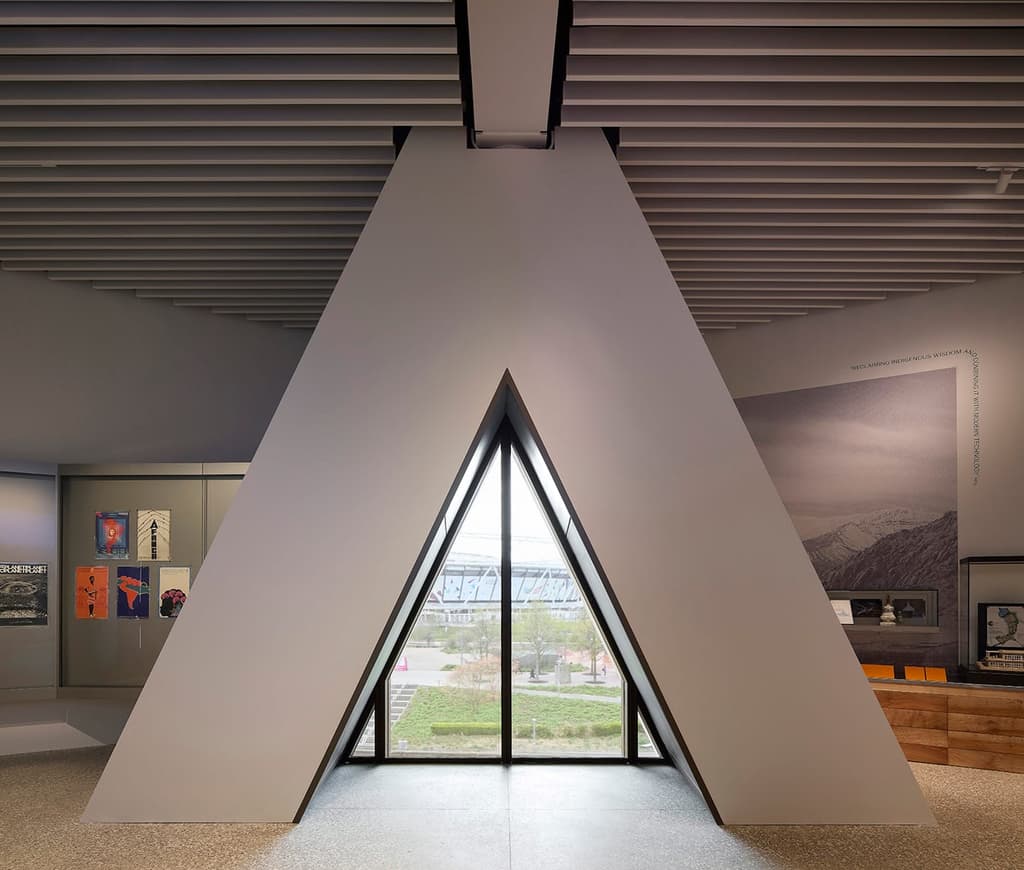
Necessities like loos and lifts (only three, alas) are contained in the core — ‘a stabilising element that allows rest of the building to be free,’ says O’Donnell. She and her partner hired small family operations to design details like handrails and geometric puzzle-piece floor tiles. ‘It is really interesting craft, appropriate on a building that’s a design museum.’
The exhibition spaces share an impressive scale and scope. At the waterfront entrance — one of two triangular ‘barrier-free welcomes’ into the museum — is Thomas J Price’s 18-foot A Place Beyond sculpture, featuring a young woman with her mobile phone (a relic in the making, perhaps?). The main floor permanent gallery is connected to the foyer by a wall of glass, so it can be seen even from outdoors. In it are historic tapestries, and richly detailed garments going back hundreds of years — like the 18th-century Indian talismanic jacket inked with the entire Koran — placed alongside contemporary pieces with shared context. Leigh Bowery costumes and Jamie Hawkesworth’s photos from the Preston bus station root it in the present. Such was the mandate of director Gus Casely-Hayford — ‘to reinterpret the museum’s collection for future audiences, with a lens on younger practitioners.’ (Themes like gender and sustainability were focus-grouped with young, local consultants.)
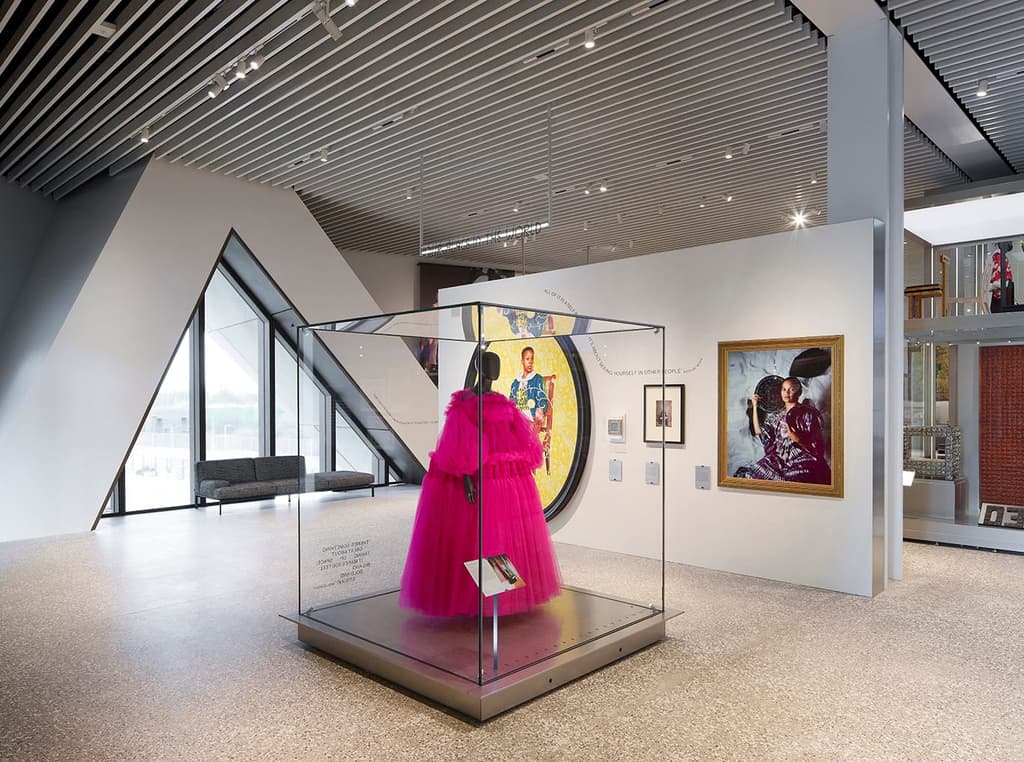
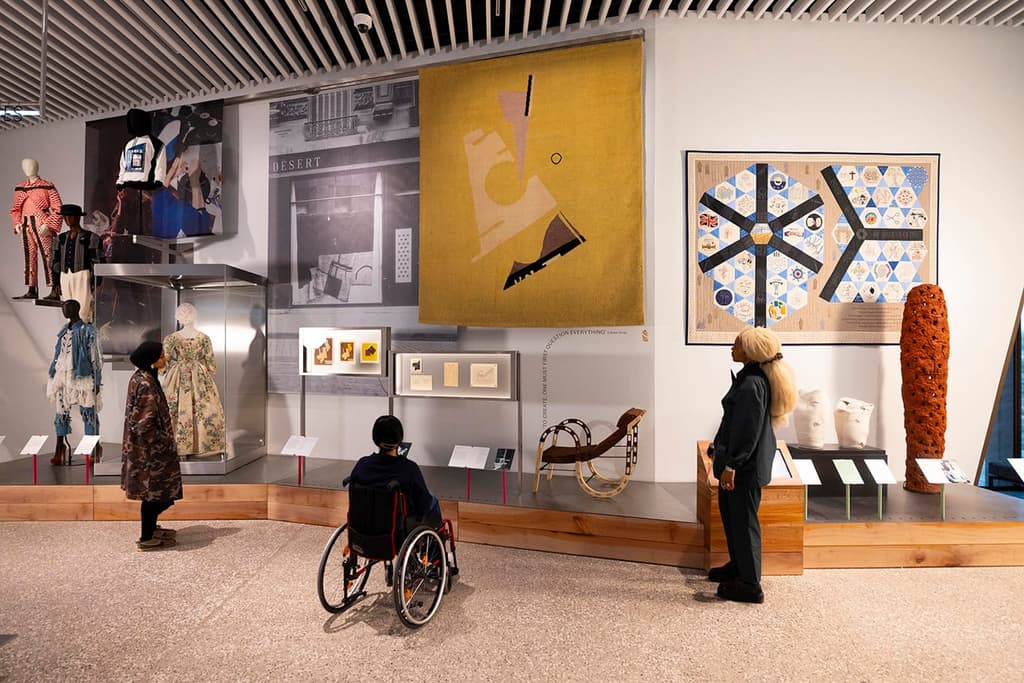
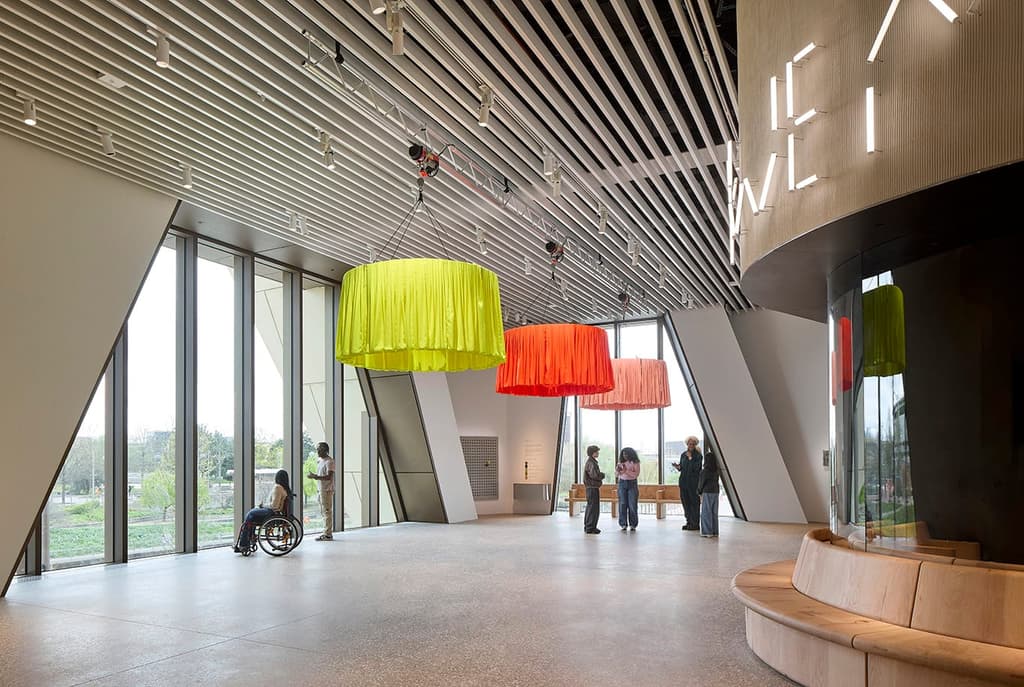
There’s not a lot of stuff. In fact there may not be enough. The all-white foyer, coated in terrazzo and museum paint, features Laura Wilson’s cleverly dynamic ceiling pendants. In one corner upstairs is a still life of a chair and stereo rendered in unexpected materials. But unlike at South Ken there are no Dale Chihuly chandeliers or Trajan’s Column to captivate until you reach the third-floor public terrace for the skyline view. Project director Jen McLachlan promises walls and corners will be populated with curated objects, not just the fun departures-board signage. For now, the stairs lead past toilets and gift shops; the ‘monumental’ temporary gallery is hidden around a tight corner by the freight elevator.
One climactic moment comes on the first floor landing, where a peek-a-boo balcony overlooks the action in the foyer. ‘This is the place to be, like when people hang out in the kitchen at parties,’ says Tuomey. McLachlan calls it a ‘space to dwell’. I prefer the entry-level terrace, which continues uninterrupted all the way to the BBC Music Studios downriver. It may do more to attract young people from the adjacent neighbourhoods, and bring a youthful element to the proceedings.
Read next: V&A museum unveils its new Storehouse: an all-access area in East London
Shipshape: The V&A Dundee is an ode to Scottish craftsmanship
Related stories


Newsletter
Want news delivered to your inbox?