Spaces designed for meditation are rarely about decoration. Instead, they focus on reduction — stripping architecture back to its essential elements. What connects these projects is not a shared aesthetic but a similar approach. Each uses a limited range of materials — concrete, stone, wood and light — and places emphasis on proportion, acoustics and spatial control. By reducing visual and sensory distractions, they create the conditions for stillness to emerge.
Ochill Meditation Room by Ochill, Kyoto, Japan
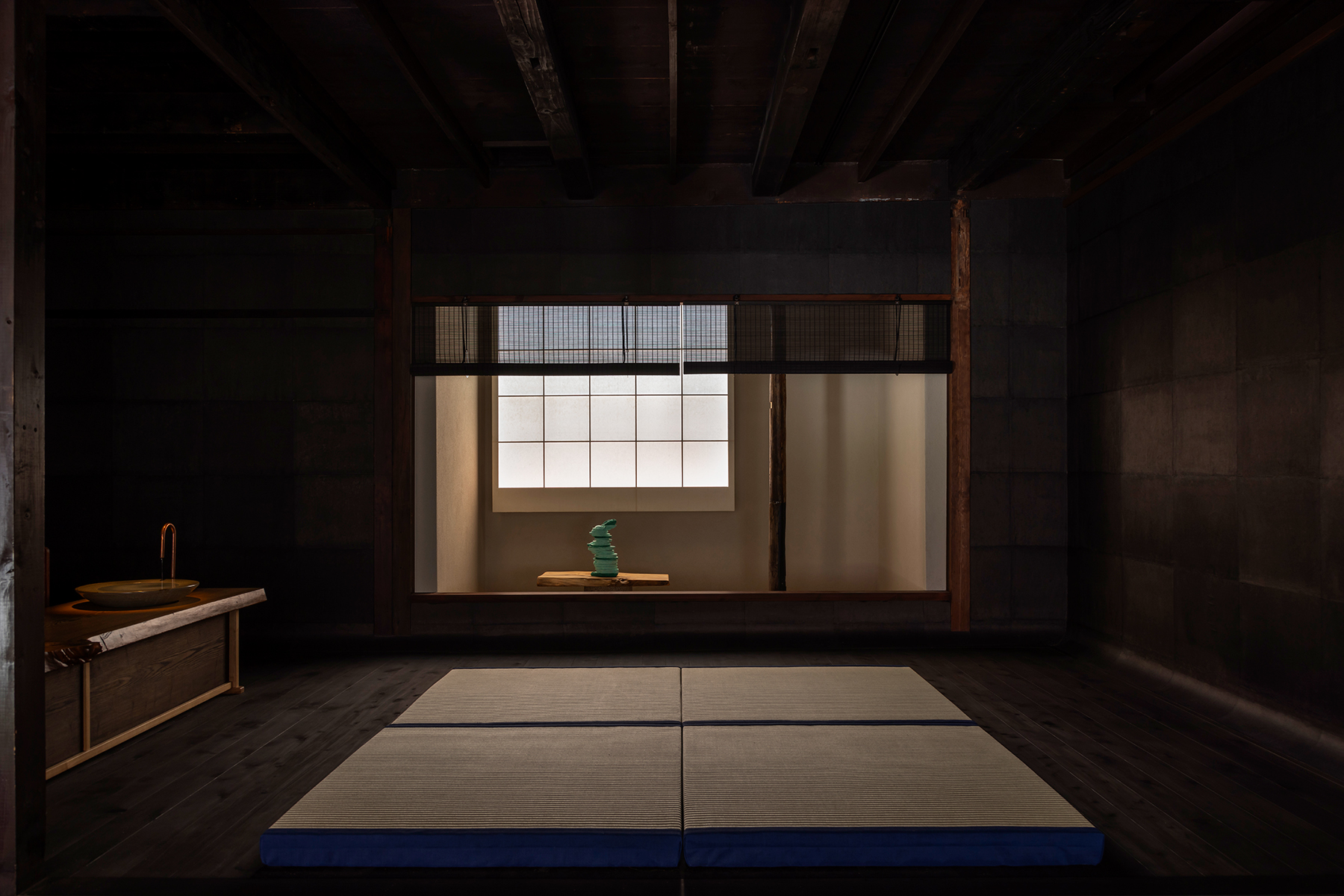
In Kyoto, the art collective Ochill is exploring contemporary approaches to meditation with the concept of ‘well-down’, emphasising a state of ease with oneself rather than striving for improvement. Its meditation room reflects this philosophy through the dissipation of time. Light filters softly through washi paper, offering only the faintest suggestion of passing hours. ‘The space is designed with various devices to dissolve any sense of time,’ says Ochill’s Wataru Kiruta. While often described as modern, the space draws almost entirely on historical references. ‘What is not at all new can, paradoxically, appear most new,’ Wataru says, positioning the project as a quiet continuation of Japan’s long tradition of meditative environments.
San Museum by Tadao Ando, Wonju, South Korea
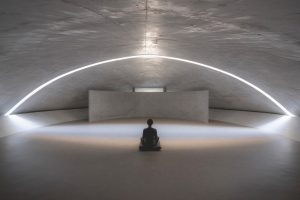
The meditation hall at San Museum reflects Tadao Ando’s characteristic restraint. A concrete dome is punctured by an opening that allows natural light to enter throughout the day. As the light shifts, it subtly alters the atmosphere of the space. The curved form amplifies sound, encouraging almost total silence. There is no ornament, no distraction. Instead, the architecture choreographs light itself. The result is a space that encourages stillness and introspection.
The Rothko Chapel by Philip Johnson, Howard Barnstone and Eugene Aubry, Houston, USA
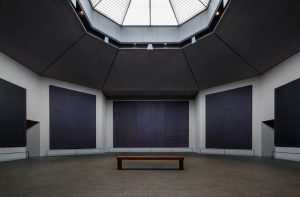
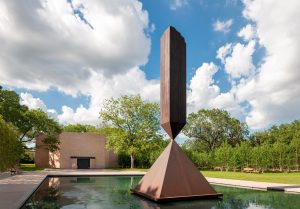
A different model is offered by the Rothko Chapel, one shaped as much by art as by structure. Commissioned by the de Menil family of art collectors, Mark Rothko collaborated with a suite of architects during its development, working with Philip Johnson, Howard Barnstone and Eugene Aubry before the windowless octagonal structure was finalised. Ultimately completed after the artist’s death, the chapel is lined with 14 large-scale Rothko paintings, drawn from his late period when his palette shifted toward darker, muted tones. Natural light enters through a central skylight and is carefully diffused to maintain a consistent, subdued atmosphere. The space is intentionally minimal, with no fixed religious symbolism. Designed for quiet reflection, it relies on scale, proportion and Rothko’s paintings to create an environment for sustained introspection.
Bruder Klaus Field Chapel by Peter Zumthor, Mechernich, Germany
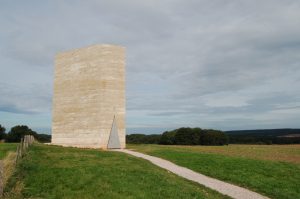
This idea of reduction, using darkness and minimal light to dissolve perception, runs through many contemporary meditation spaces. At Bruder Klaus Field Chapel, Peter Zumthor has created an experience that feels almost primal. The exterior is a solid concrete tower while the interior was formed by burning away a structure of tree trunks used during construction. This process left behind charred, textured walls. Light enters through a small oculus, scattering across the interior. The result is a space that limits external distraction and directs attention inward.
Therme Vals by Peter Zumthor, Vals, Switzerland
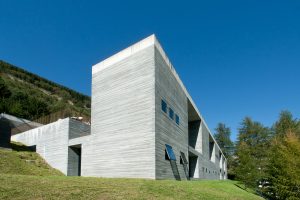
Elsewhere, meditation is embedded in landscape and ritual. Therme Vals, a thermal spa built into the Alpine hillside, is organised as a sequence of interconnected stone rooms that visitors move through gradually. Light, water and temperature are used to shape the experience. The structure is built from 60,000 layers of locally sourced quartzite, designed almost as an extension of the surrounding mountains. Acoustics are muted and movement is intentionally slow. Though not explicitly a meditation space, it has a controlled atmosphere and carefully framed views that encourage a heightened sense of awareness.