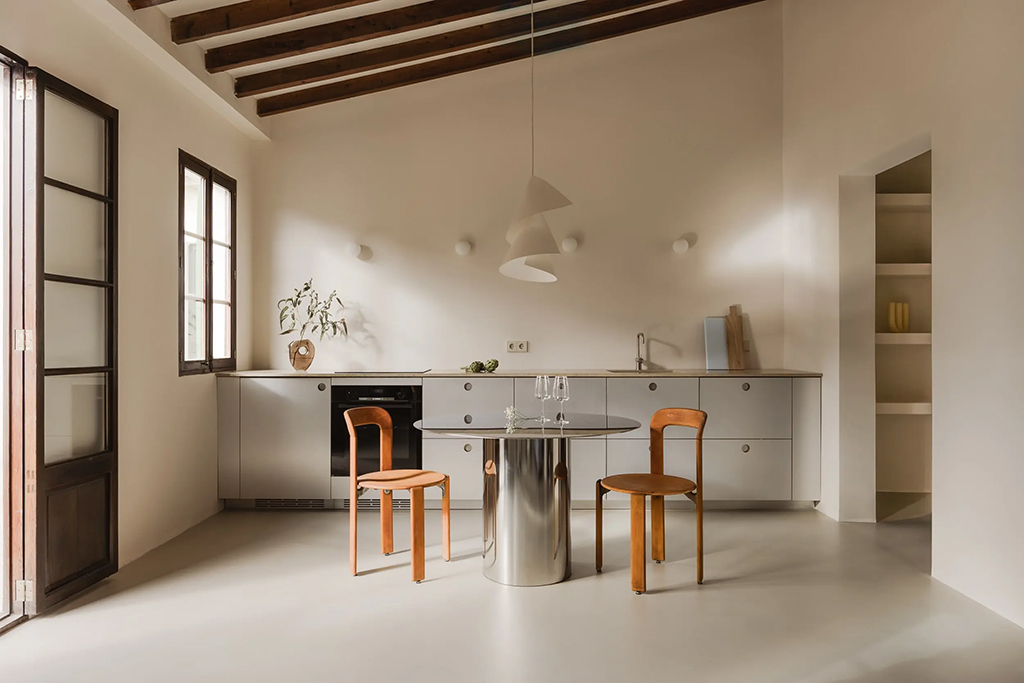
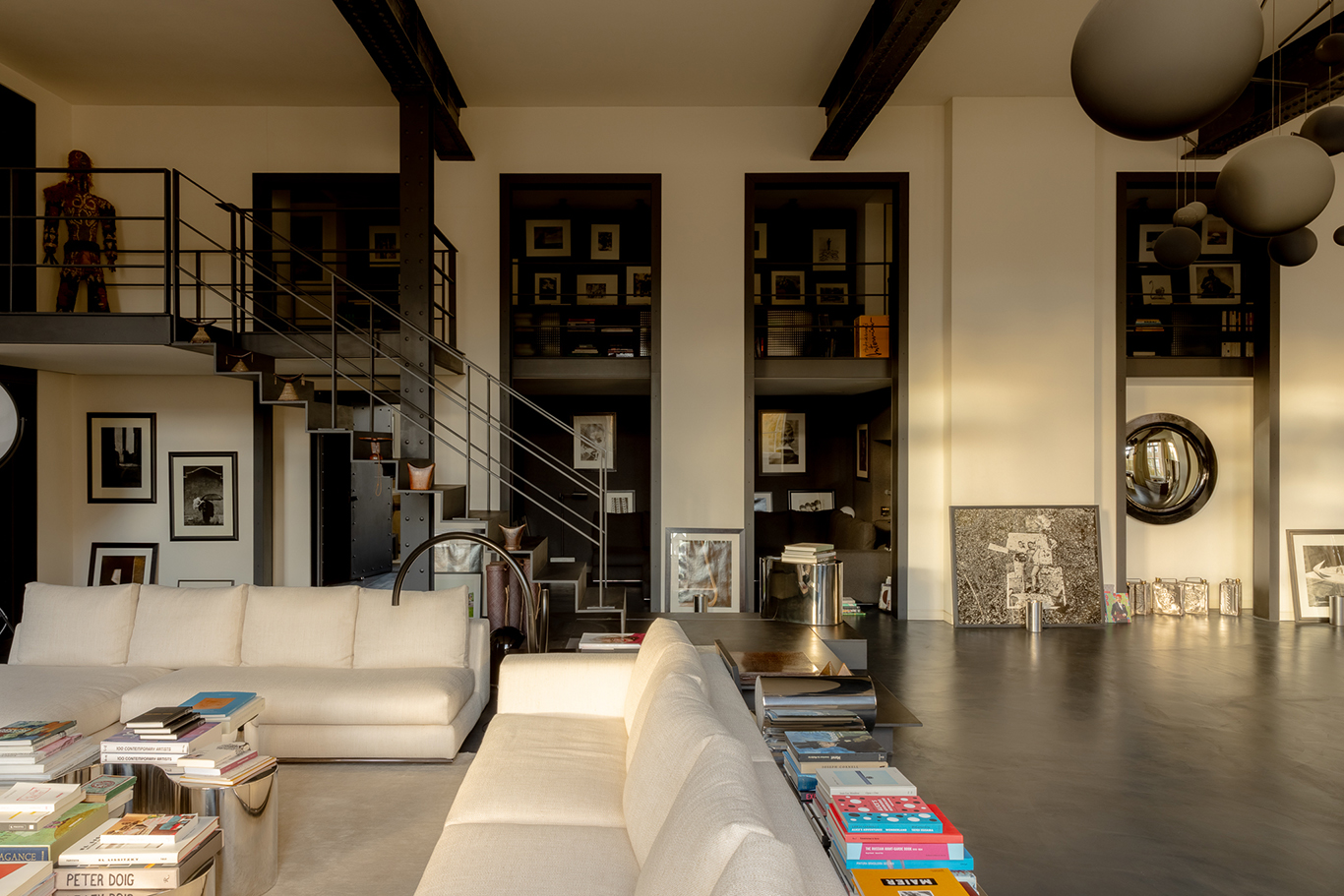
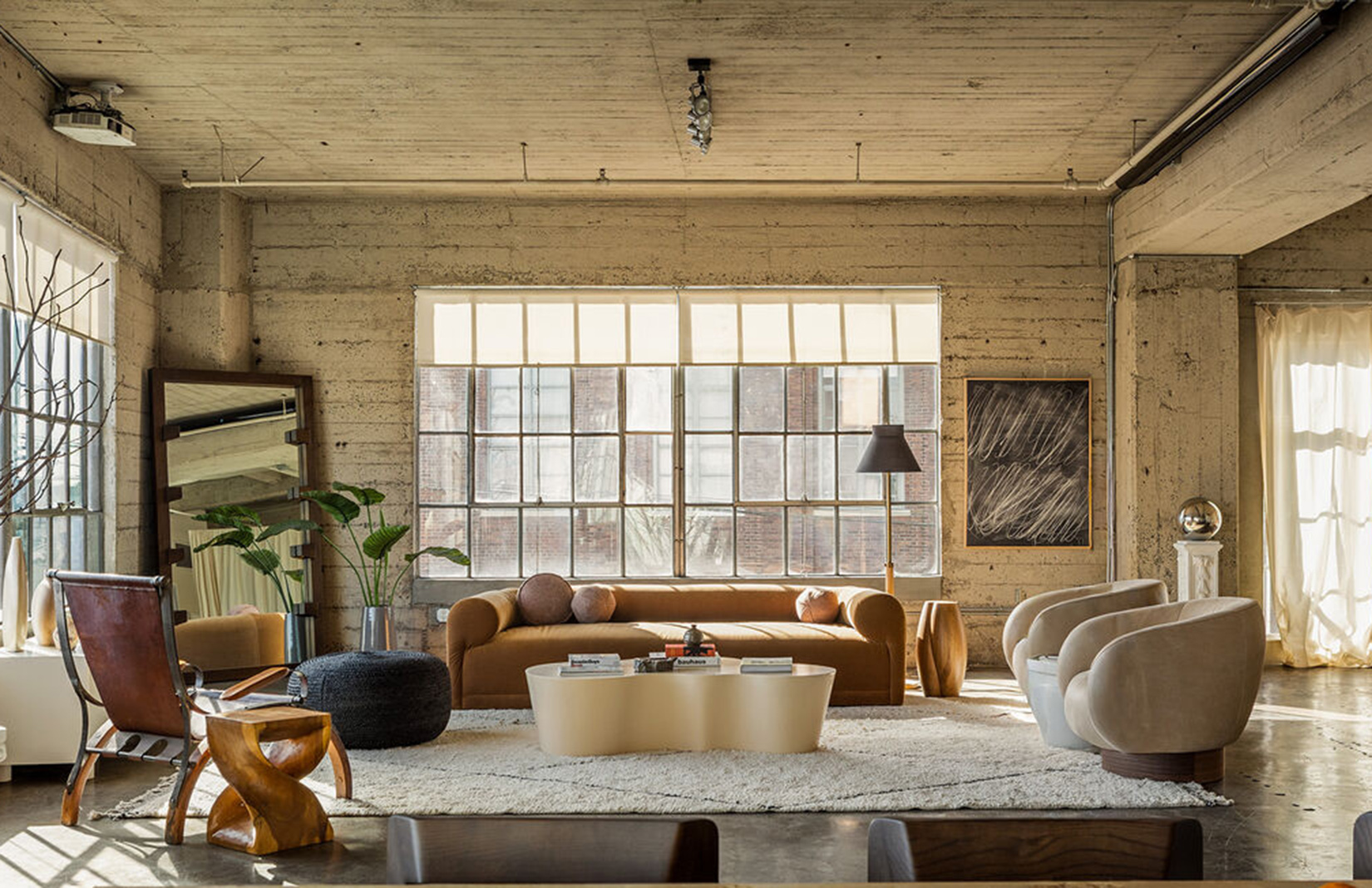
Art can play a powerful role in creating spaces that exude individuality. The right piece can knit a room together, highlight eye-catching focal points and bring a depth of personality. Getting it right can be as simple as picking something you love.
‘Art is decoration for your interior – it doesn’t have to be this pompous, intellectual thing,’ says Stephanie Crosland-Goss, a former Tate curator. Her subscription service Interrupted Art allows members to hire pieces for 10 weeks at a time to determine which work best in their home. ‘It can just be something beautiful that you look at and think, “I love that.”‘
The trick is knowing how to turn that passion into a powerful interior design tool. We caught up with five artists who reveal their top tips for doing just that.
Build from the colour up
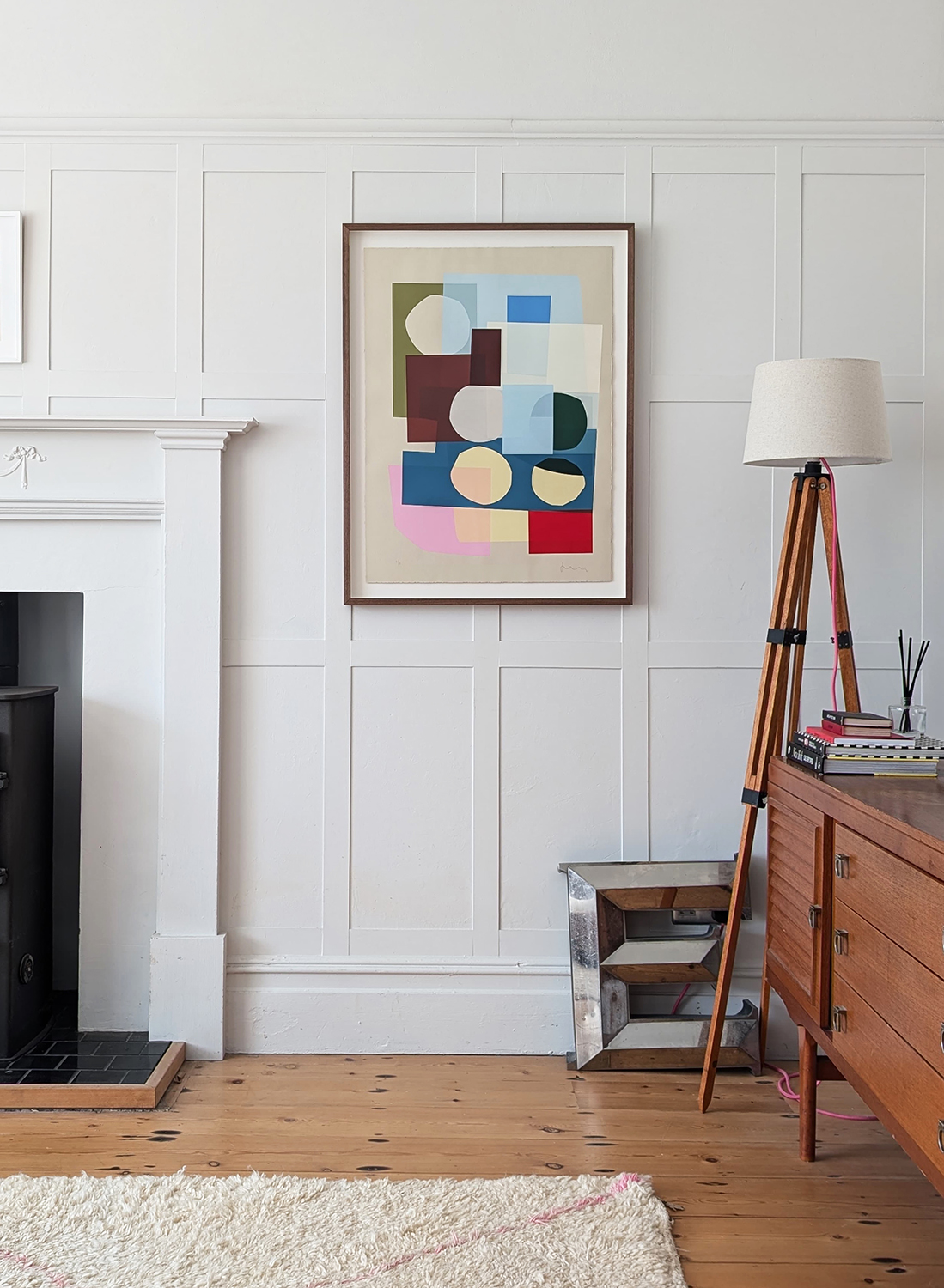
Jonathan Lawes, a silkscreen printer who specialises in bold abstractions, suggests working with art and colour right from the start of an interior design project. ‘People often think of artwork as the last piece of the puzzle,’ he says, ‘but it can be just as easily the starting point. If you have a piece of art you love, you already have a colour palette, mood and story to build from.’ This doesn’t mean going for a heavy-handed colour wash, he adds. It’s about lifting a shade and weaving that into the space. ‘Even the smallest echoes of colour can keep the eye engaged and make the room feel more alive.’
Embrace texture
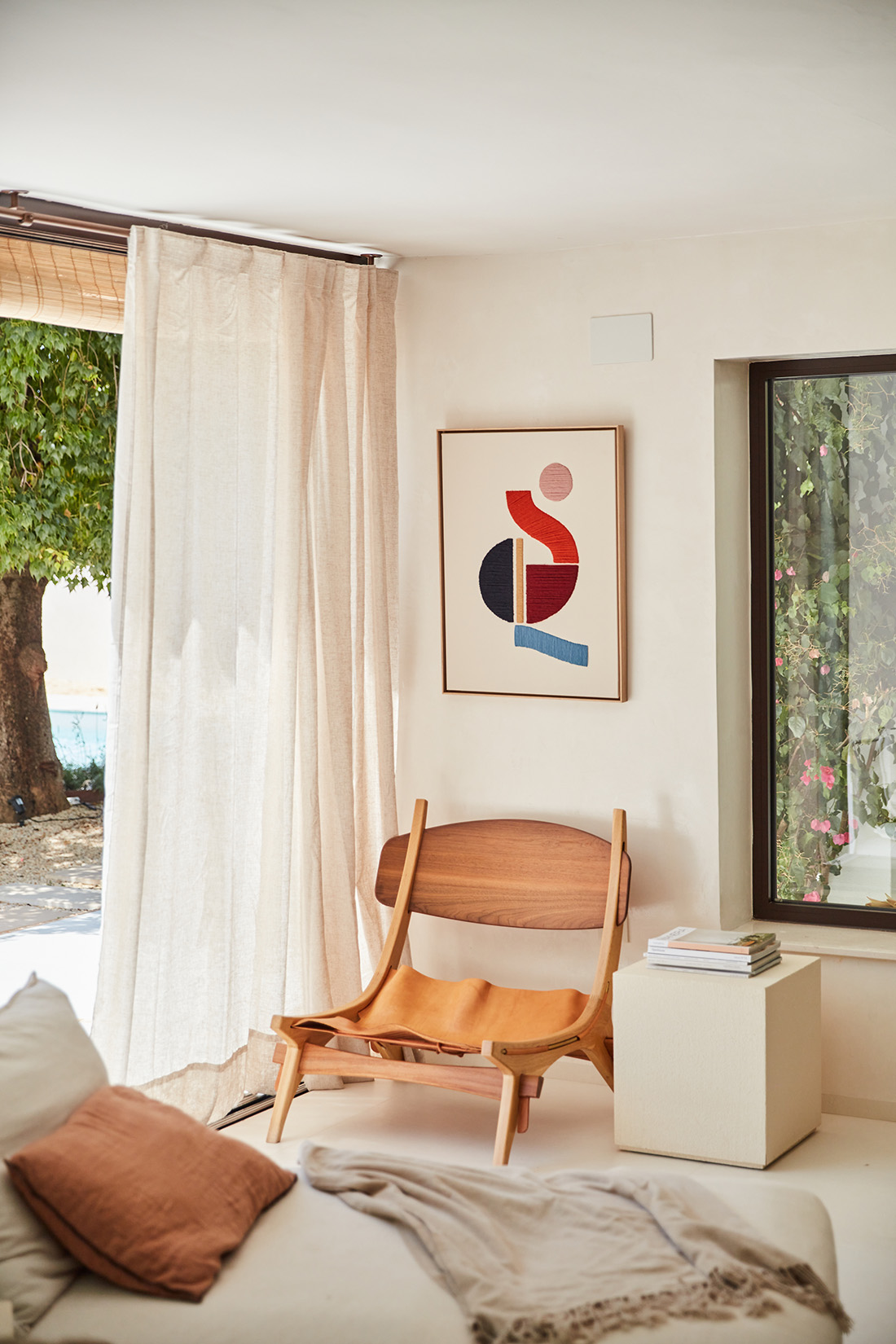
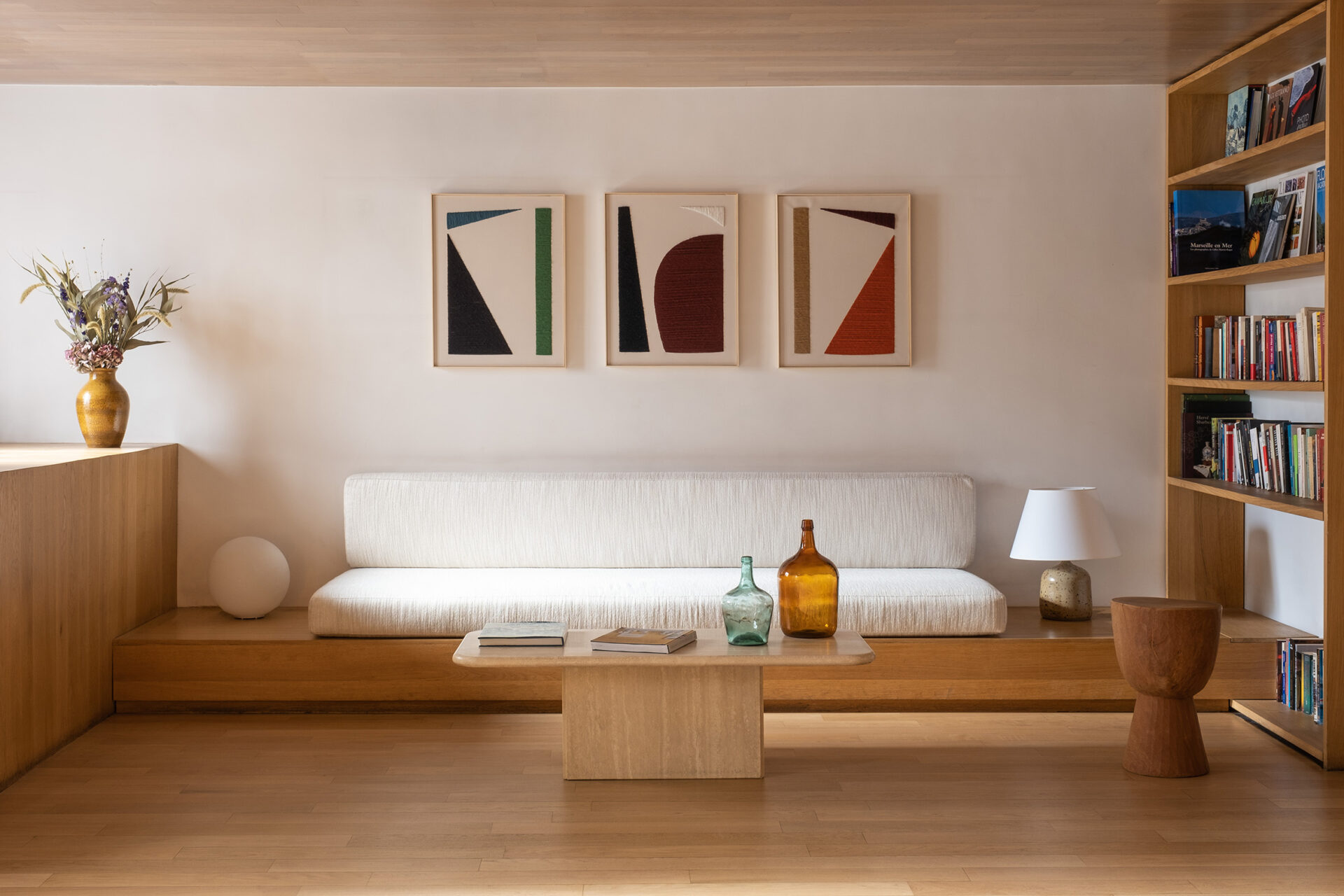
To bring a feeling of cosy restraint to a space, look for art that showcases an array of textures. ‘The softness of wool on canvas brings warmth and can shape the atmosphere of an interior,’ says Seville-based fibre artist Laura Vargas Llanas, known for her intricate hand-embroidered canvases. Each one is crafted using artisanal weaving techniques and natural, ethically sourced yarns, including merino and alpaca wool, cotton and jute. She believes her pieces work best in environments that ‘honour the intimacy of handmade work’ and where contemporary craft is woven into the fabric of the wider setting.
Take a photo opportunity
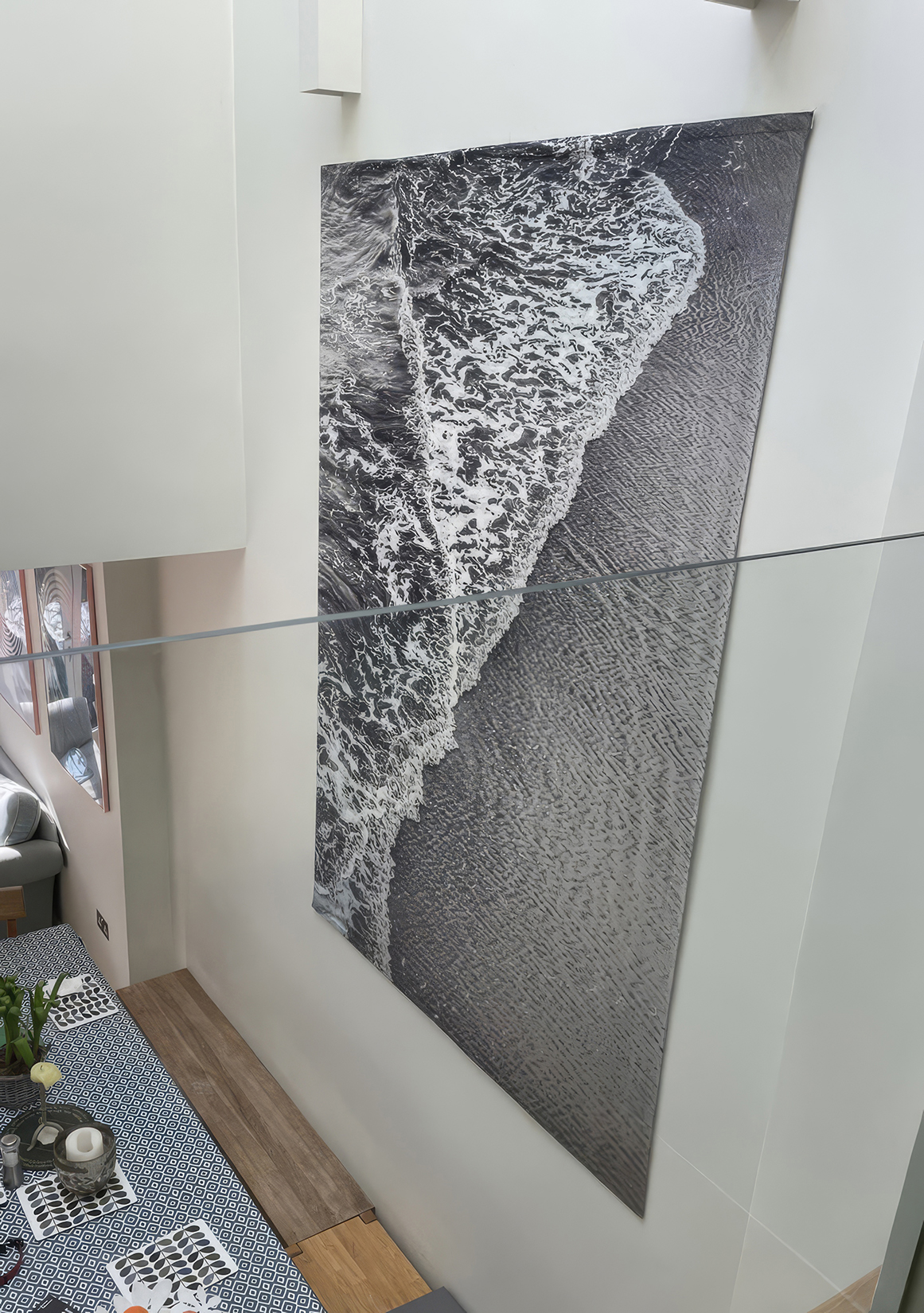
Photography isn’t merely an artform. It’s a snapshot in time. As such, it can be an incredibly grounding, life-affirming addition to a space — particularly when that photograph offers a fresh perspective. This is what US-born photographer Steve Gallagher hopes to achieve with his finely detailed seascapes and floral portraits. By homing in on the most intricate details — capturing everything from ‘the dramatic immediacy of the mutable moods of the seas’ to ‘the stillness and delicacy of single blooms as they reveal their intricate and fragile natures’ — he believes photography can completely shift how a space feels. When looking to incorporate a photograph into an interior, consider different angles and subject matter, and what feelings they draw out. ‘Photography creates a focal point in a room, drawing people in and changing the energy,’ he says. ‘It invites viewers to pause, and notice details they might otherwise overlook. In interiors, this slowing down creates balance, offering a moment of calm and reflection amid the pace of daily life.’
Commission a memory
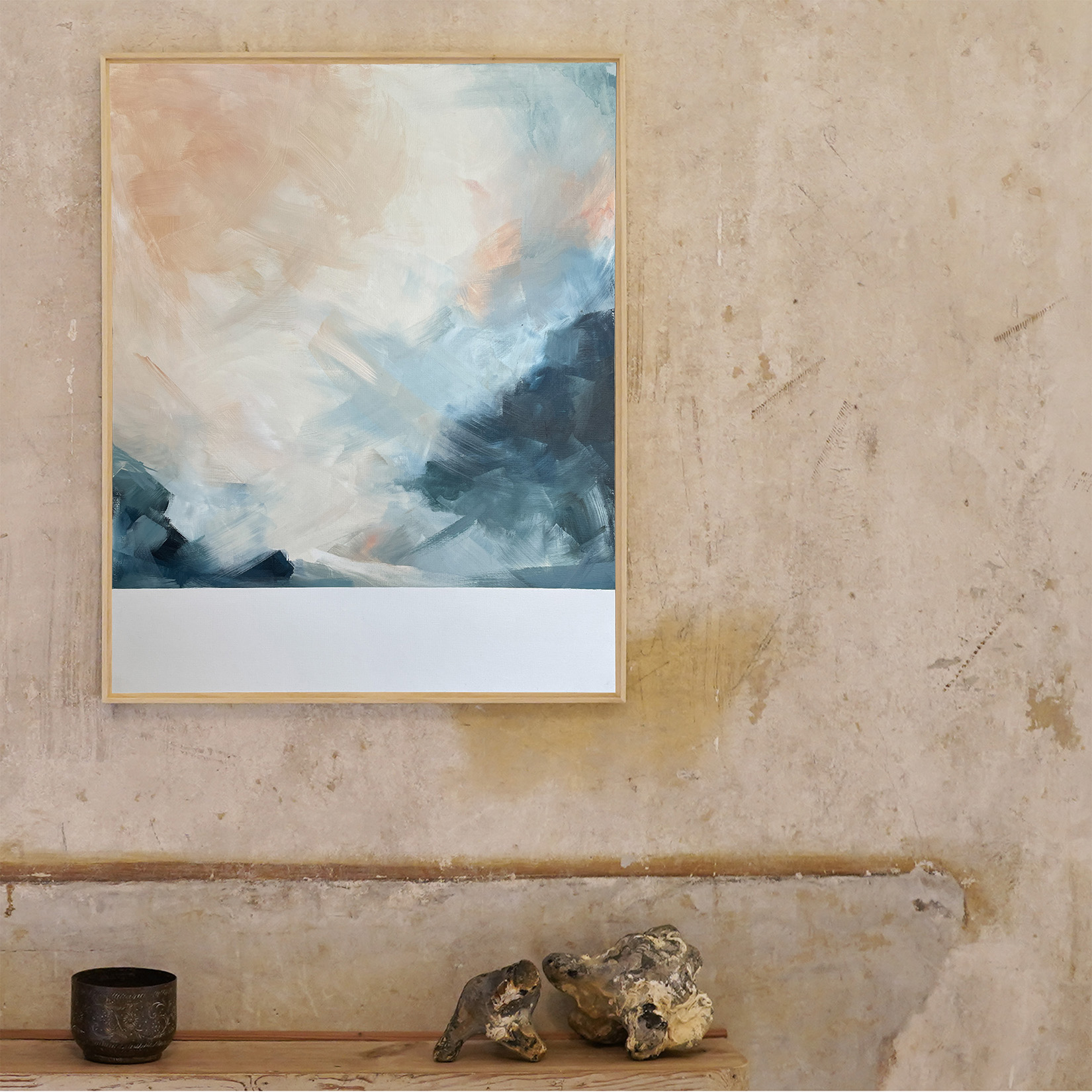
Art that speaks to us on a personal level can spark deep, meaningful connections. Specially commissioned art can foster even closer connections between the work and its owner. It becomes an anchor both in terms of determining size, style and colour, and by drawing out emotion and memory. ‘My clients often commission larger pieces which evoke specific memories for them like a place, a moment or just to tie in with existing work they treasure,’ says Kirsty Tanner, an artist inspired by the sky’s changing light and movement. On a practical level, she says, individually commissioned work can ensure a perfect fit. ‘I work very closely with clients to understand their interior design choices, colours, materials and textures so I can look at how to build some of this colour, tone and composition into the work.’
Mix it up with metallics
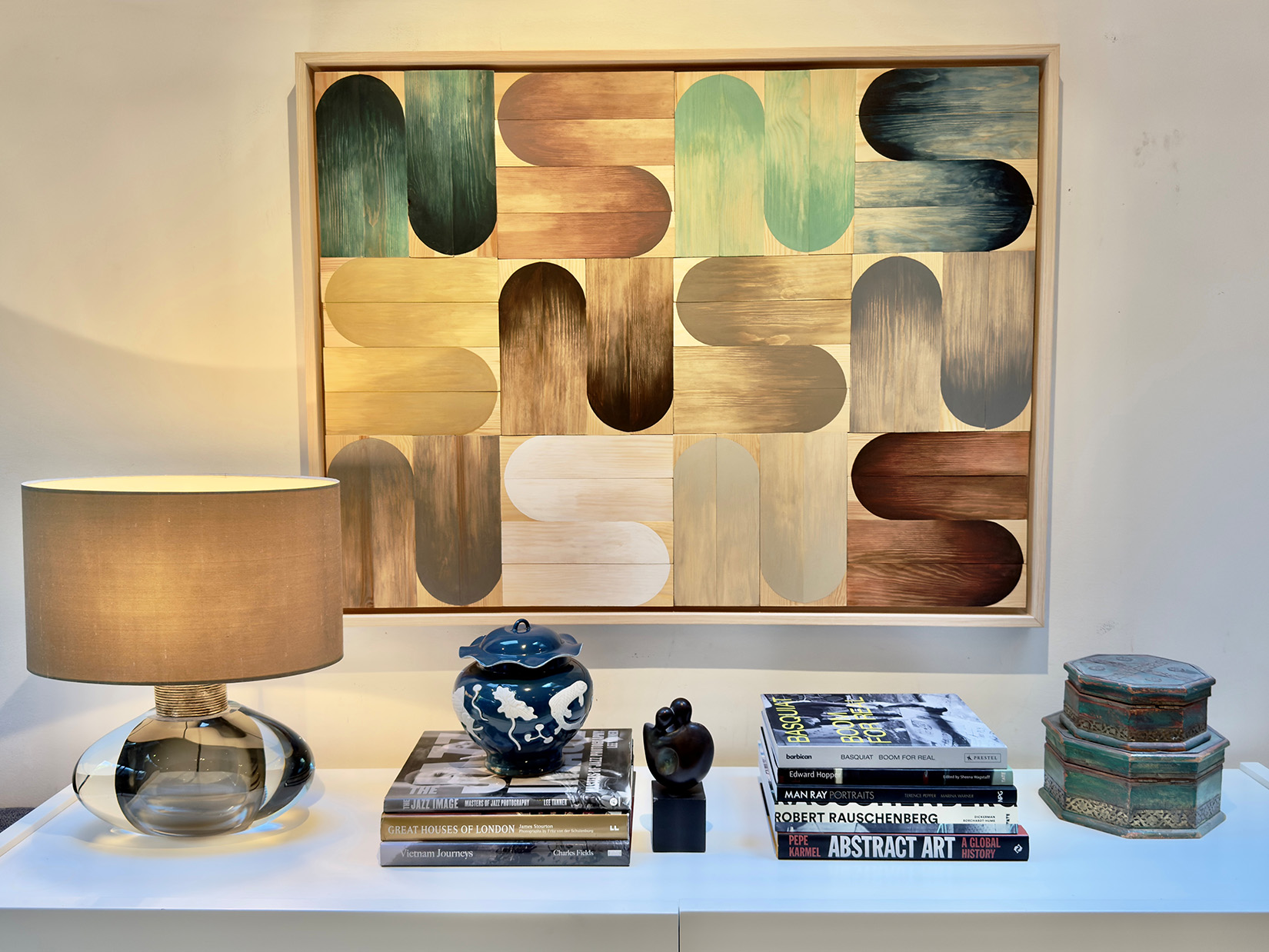
As an interior design tool, metallics work incredibly hard: reflecting light, catching the eye and instantly warming or cooling a space. ‘Neutral interiors infused with metallic energy stand out for their timeless allure and transformative potential,’ says artist and former interior designer Linda Khatri. ‘I have developed a unique painting process by layering paint and metallic pigments over wood in multiple layers. When light hits the metallic surface, the result is not static. It is alive and creates an ever-shifting response to the changing light conditions throughout the day.’ A powerful moment occurs when she positions a piece to reflect and refract light in conversation with the interior. ‘When a work is in direct proximity to a mirrored coffee table or hanging mirror, the reflection further develops the metallic.’