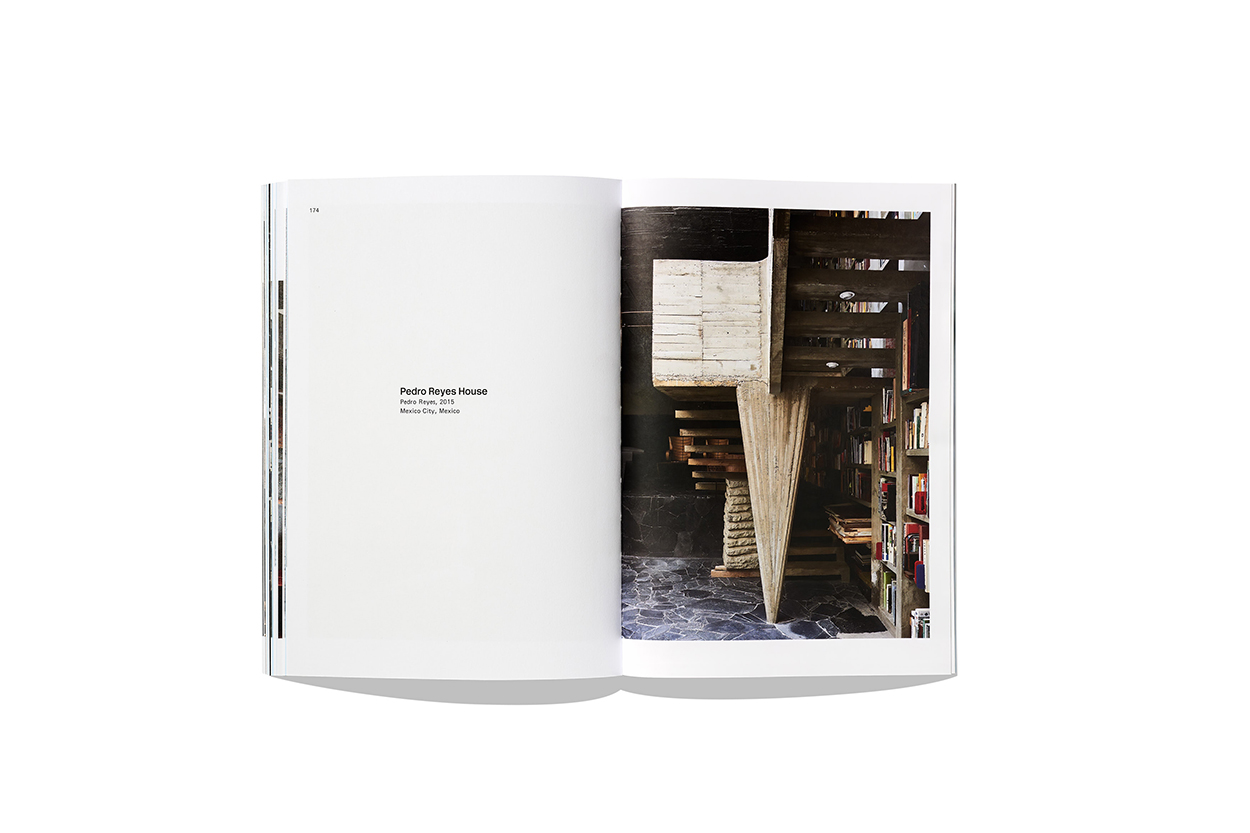
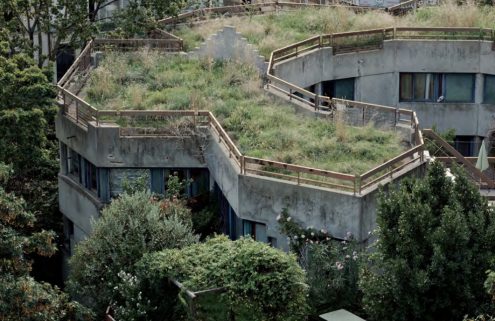
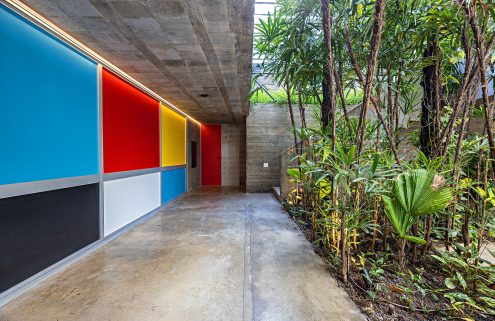
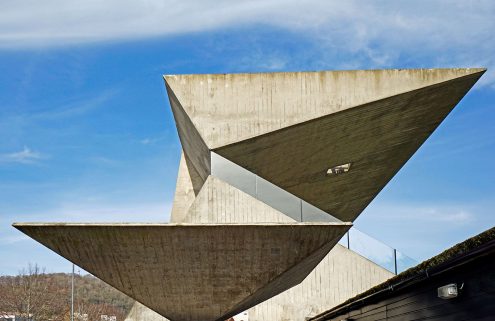
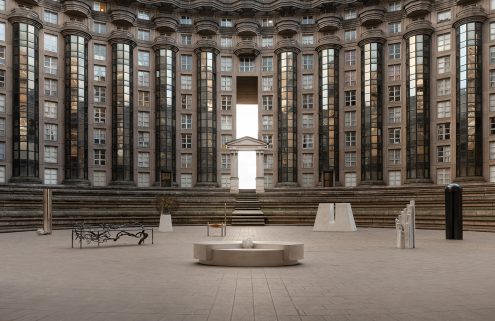
Brutalist buildings carve up urban airspace and tower over us, casting cadenced shadows on the pavement. They often seem inhumane and dominant. Yet the inner lives of these beasts offer a wholly different experience, as Brutalist Interiors, a new book of photography and essays edited by journalist Derek Lamberton, explores. Up close, concrete becomes softer, warmer, even delicate through its sculptural quality. Tactically used as a tool for expression since the mid-20th century, it seems to hold a unique power over us.
In one essay, art critic Blake Gopnik recalls his experience as a child living in Habitat 67, a Montreal housing complex constructed of 354 prefabricated concrete cuboids that he describes as ‘giant’s toy blocks’. The interior wasn’t homely but rather a ‘jungle gym’ of ‘cognitive jolts’: a perilous staircase, a narrow mezzanine and window frames that extended to the floor, encouraging ‘fears and fantasies of tumbling through the glass’. Yet it made an impression on him: ‘It established an aesthetic standard that all other art has had to live up to in my life ever since,’ he writes.
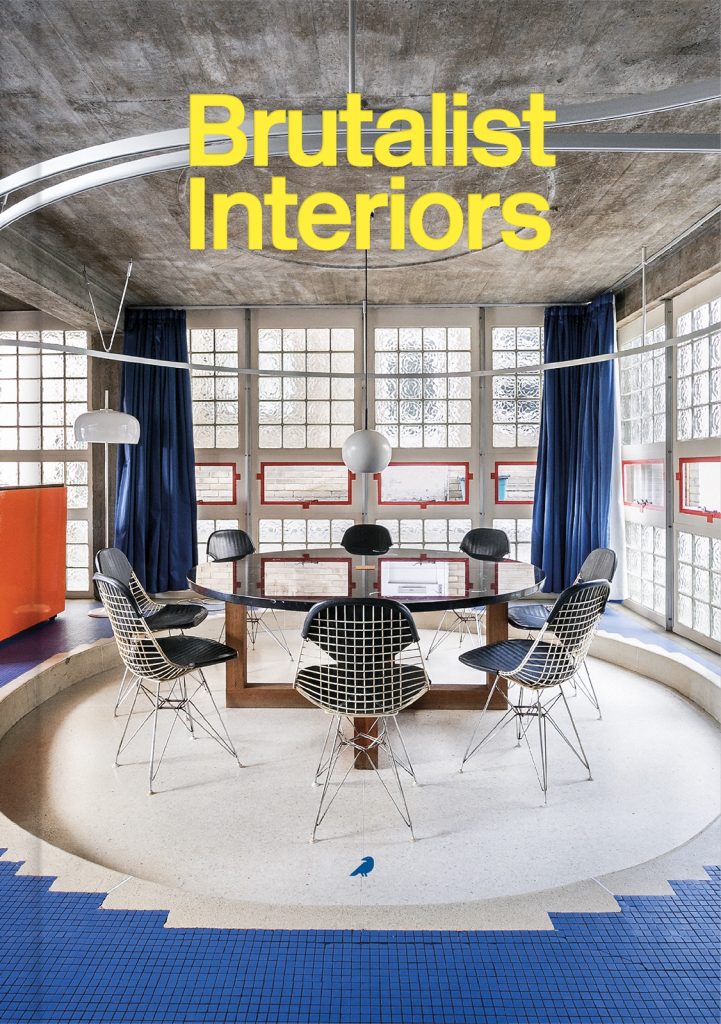
Book cover. Image courtesy Blue Crow Media. ot
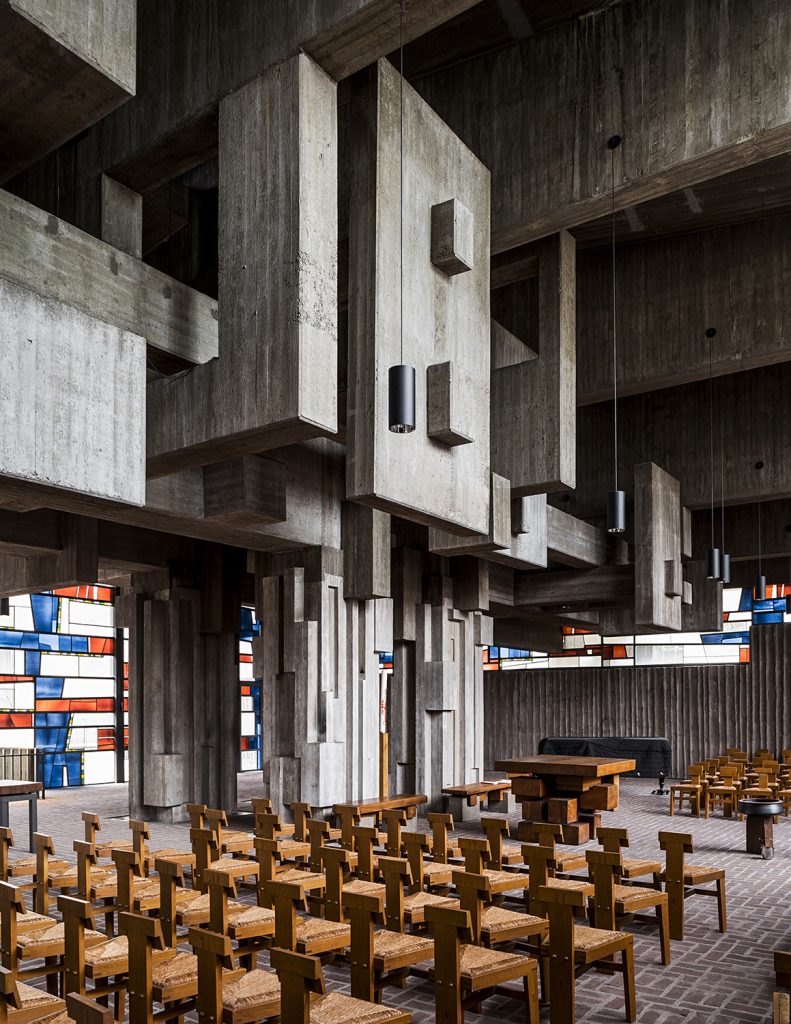
Johannes XXIII Church, Heinz Buchmann and Josef Ritus, 1968, Cologne, Germany. Photography: Stefano Perego.
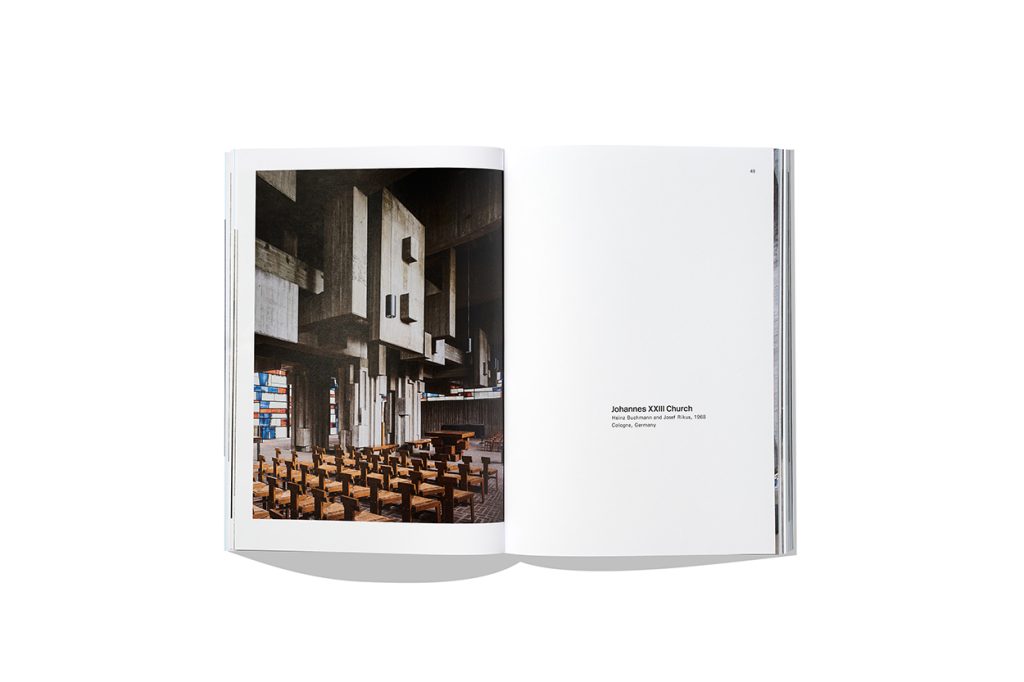
Image courtesy Blue Crow Media.
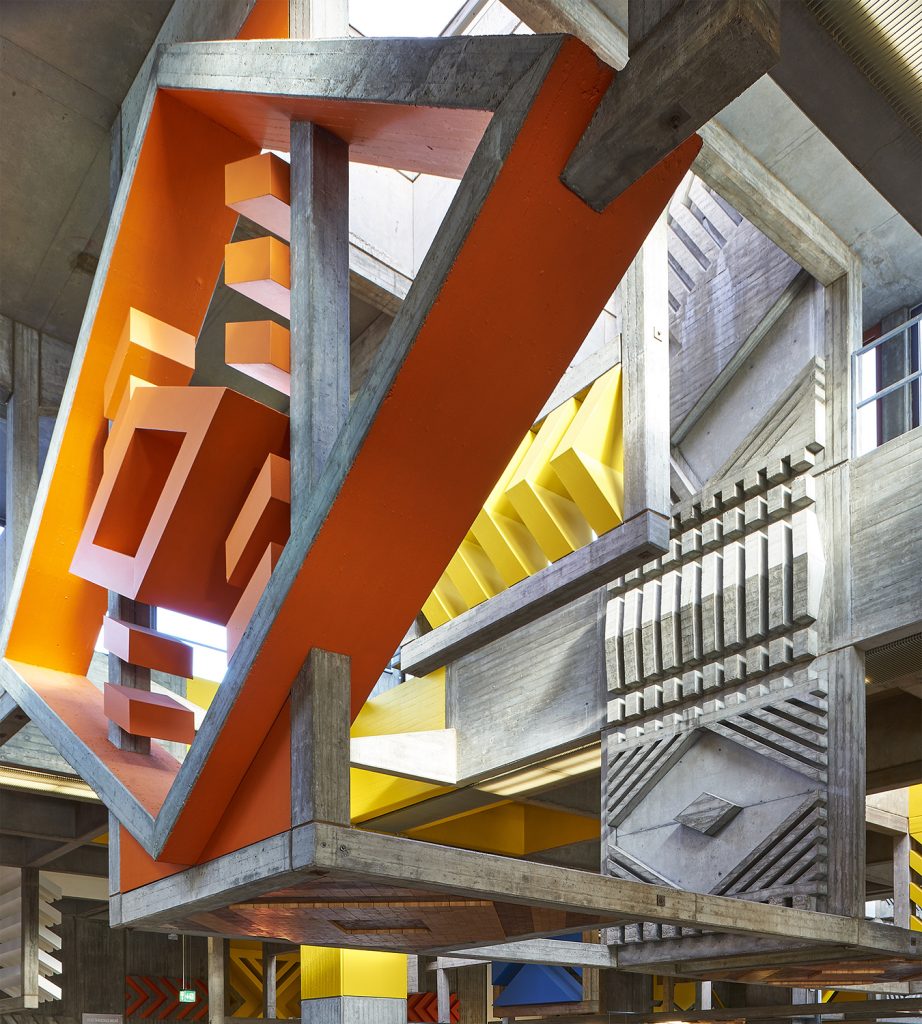
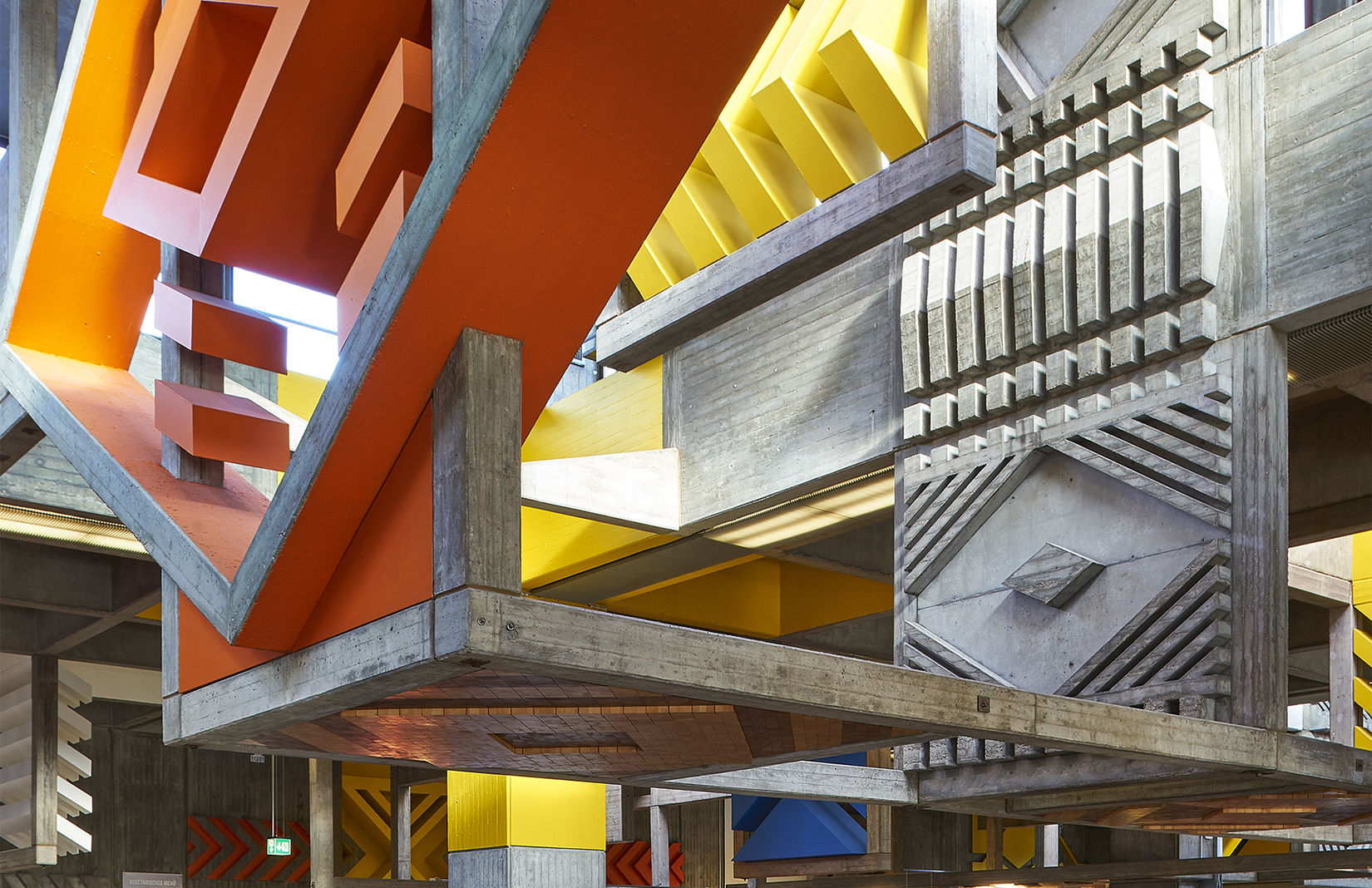
Cafeteria, Saarland University, Walter Schrempf and Otto Herbert Hajek, 1963–70, Saarbrücken, Germany. Photography: Marco Kany.
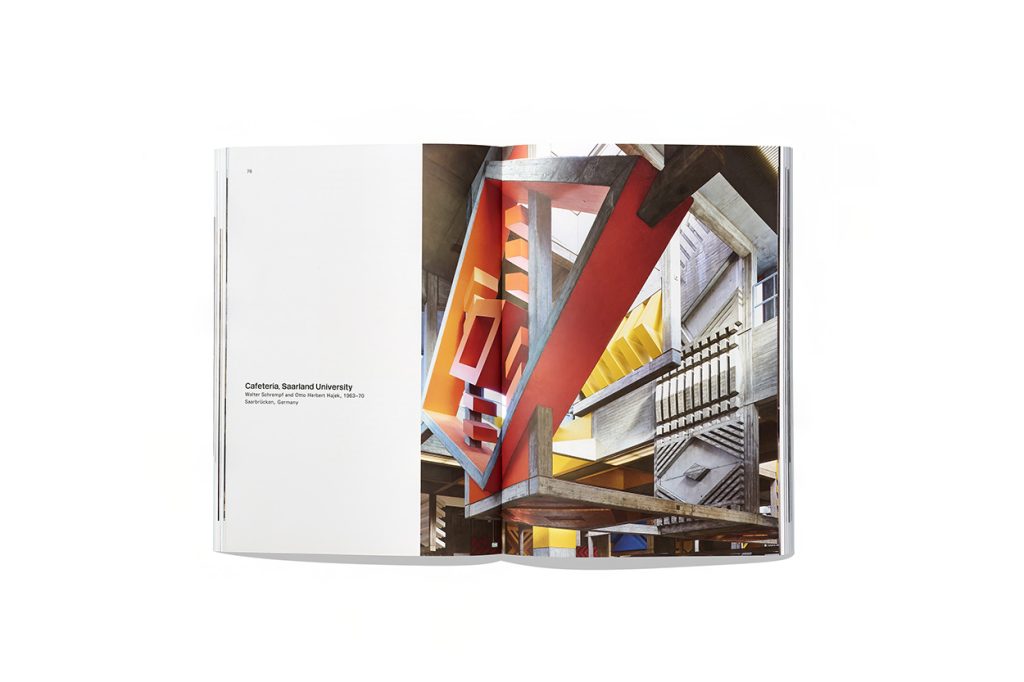
Image courtesy Blue Crow Media.
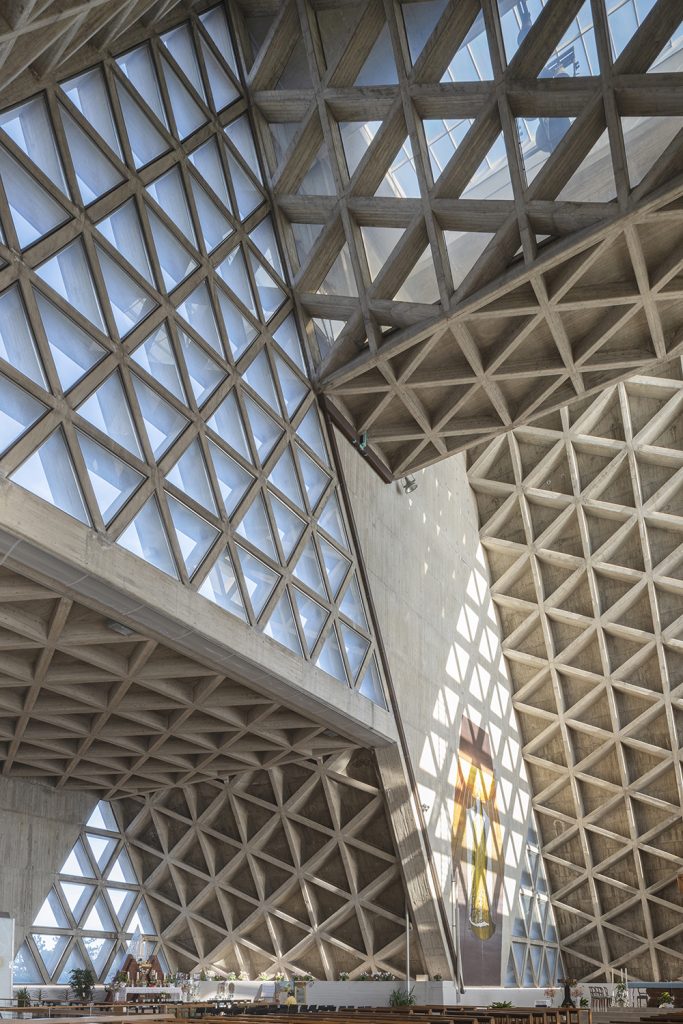
Temple of Monte Grisa, Antonio Guacci, Sergio Musmeci, 1965, Trieste, Italy. Photography: Roberto Conte.
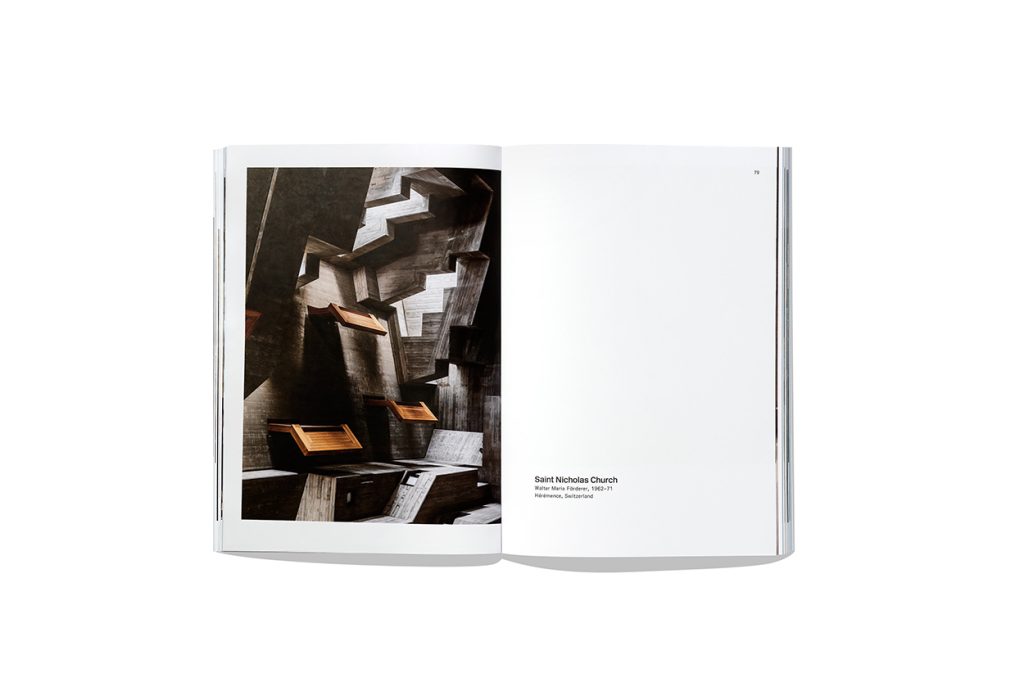
Image courtesy Blue Crow Media.
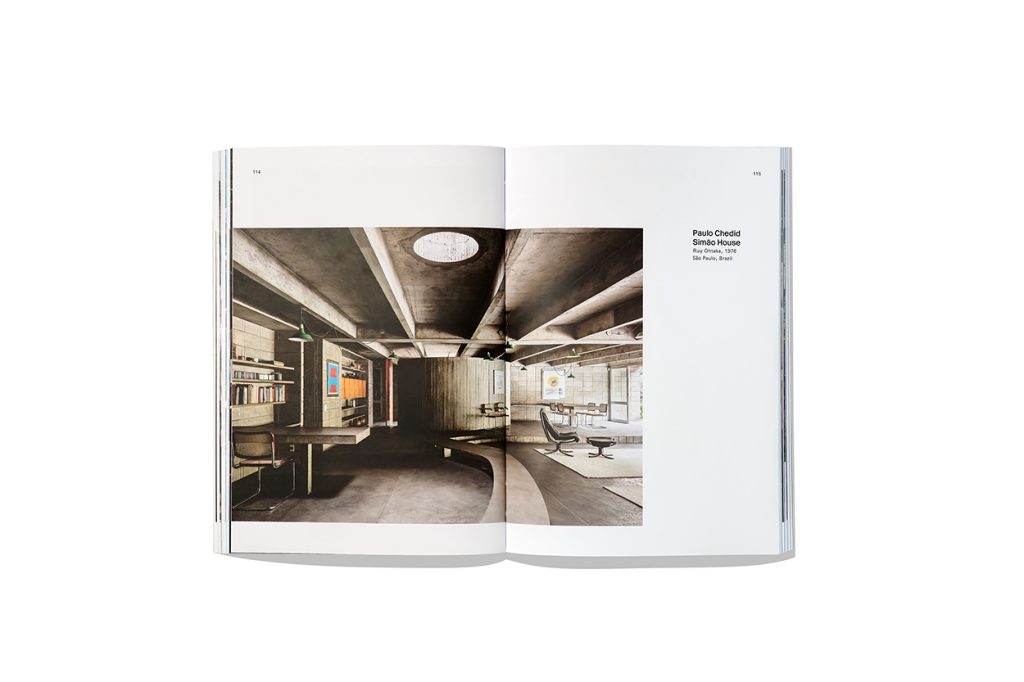
Image courtesy Blue Crow Media.
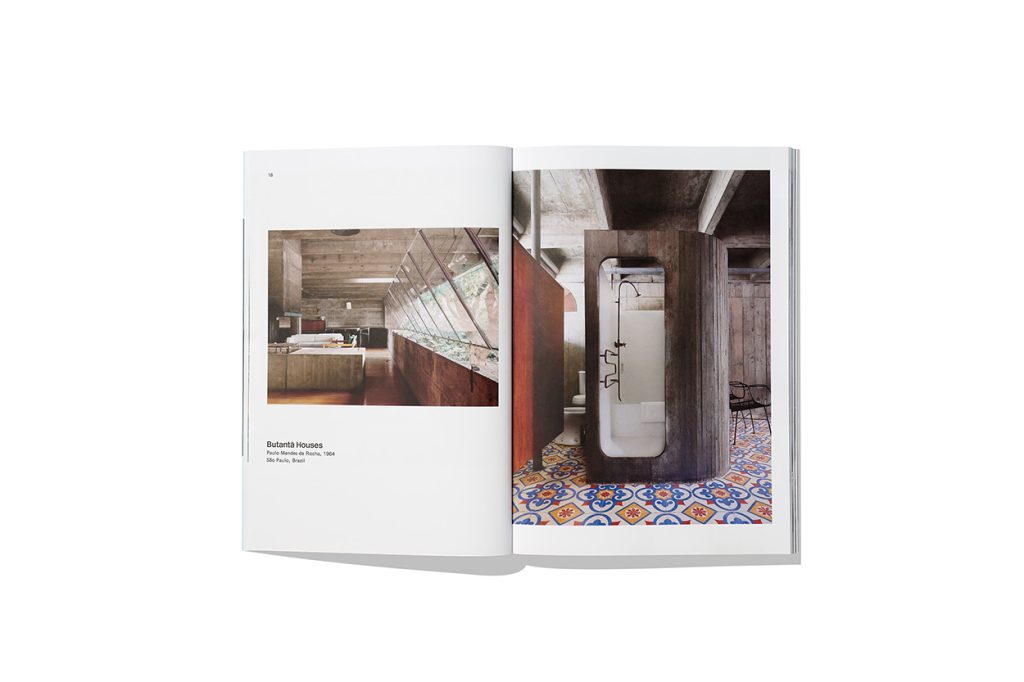
Image courtesy Blue Crow Media.
Leafing through the epic photography, many interiors send the imagination into overdrive as we picture the effect of these dense, weighty, dynamic atmospheres on daily life: dining in the exposed-concrete, glass blocks and blue tiles of Housden House, or showering in a board-marked concrete cell at Paulo Mendes da Rocha’s Butantã House. Contrary to its oppressive reputation, these brutalist interiors come off as human, inviting — magnanimous rather than megalomaniacal.
While few of us will experience the intensity of life in a brutalist home, many urban transit projects from the ’60s and ’70s provide access. Concrete was not only durable and easy to manipulate, when designed with artistry it captured the revolutionary spirit of infrastructure that liberated society. Writer and photographer Deane Madsen revisits architect Harry Weese’s ‘precise, immaculate and colossal’ design for the Washington DC Metro, which began opening in the 1970s. Its vaulted concrete and hexagonal quarry tiles also influenced Lamberton, a fellow Washingtonian who in his introduction describes childhood memories of ‘somber platforms’ and ‘endless escalators’.
There’s real rhythm in Lamberton’s curation; the geometries in Brutalist Interiors conjure exciting machine-like movement amplified by light and shadow. The rise of brutalism coincided with the Space Race and the advent of lasers, satellites and video games. Science and technology were exploding and brutalism captured that moment — best seen in the invincible bulk of Toronto’s Ontario Science Centre, the shifting perspectives of Paul Rudolph‘s Elion-Hitchings Building and the layered dimensionality of the Faculty of Philosophy in Novi Sad.
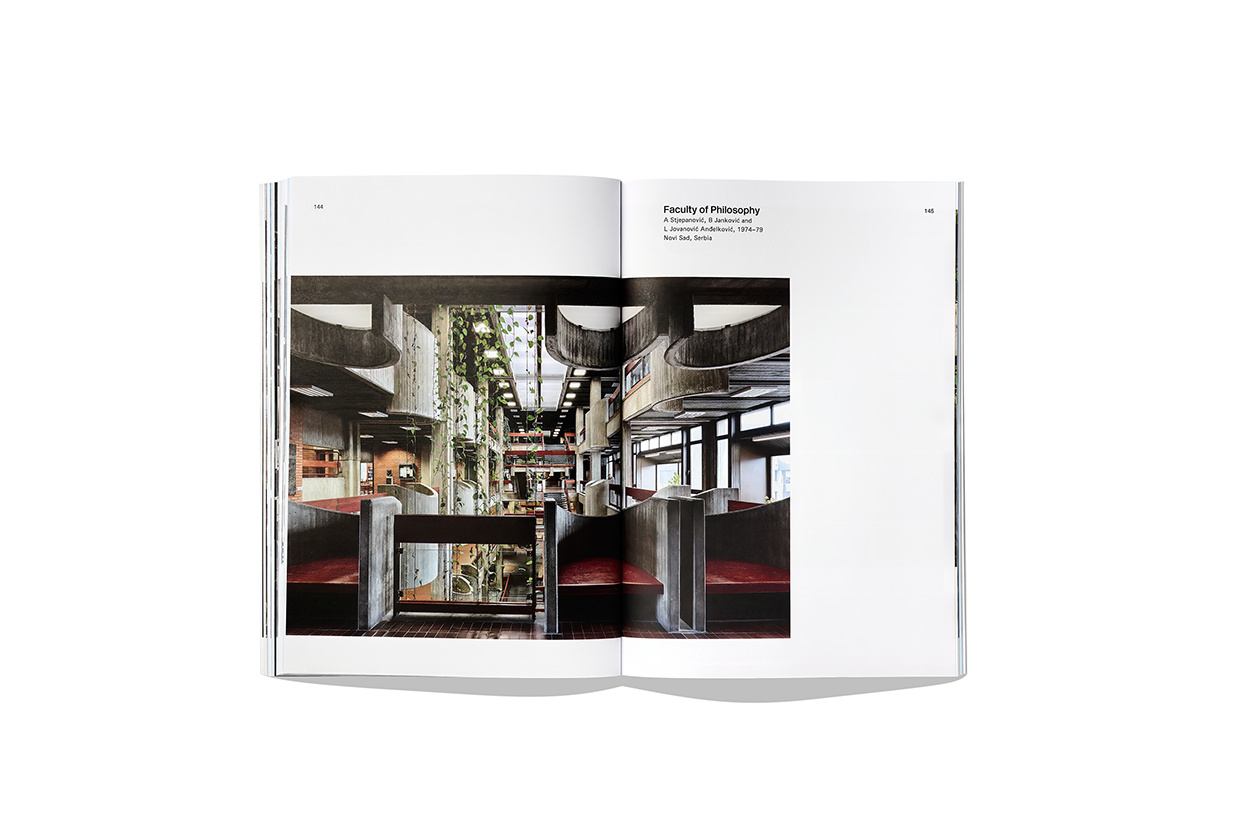
The style is often political, as architect Ljubica Slavković explores in her essay on Belgrade’s imposing Sava Centre. A site for film festivals and television broadcasts, it became a political rebranding project for Socialist Yugoslavia, ‘an act of power… appearing to be shaped by grand tectonic shifts’. Yet the interiors expressed soul in the deep rubber floors and leather sofas; comfort in the wood and textiles; atmosphere in the deep blues, oranges and greens – a hybrid living room and city plaza. ‘Its interior was crafted with one thing in mind, to create a sense of belonging.’
There are examples of 21st-century ‘neobrutalism’ as well. Architectural historian Felix Torkar describes how the term relates not only to its material context but also its process-led construction, seen in ‘renovation projects that strip down existing structures to their bones’.
He cites the refurbishment of Paris’s Palais de Tokyo, which exposed its core, leaving an appealing shell for contemporary exhibitions, more relevant to today’s curators. ‘As an architecture of raw exposed materials, highlighting structure, tectonics and low tech solutions, reducing carbon footprints and invoking a spirit of honesty in construction,’ he says, ‘[neobrutalism] will be topical for a long time to come.’
Brutalist Interiors, published by Blue Crow Media, is out on 4 September 2025.