Practical luxury at its finest, bespoke joinery can quietly anchor a room. A one-off commission where form and function collide has the power to solve myriad design issues. The most successful examples of high-end joinery serve a clear purpose, from a multi-functional piece to a made-to-measure storage solution in an awkward alcove. We spoke to five interiors experts who rely on this elegant, understated craft to elevate spaces with decorative utility.
Island paradise
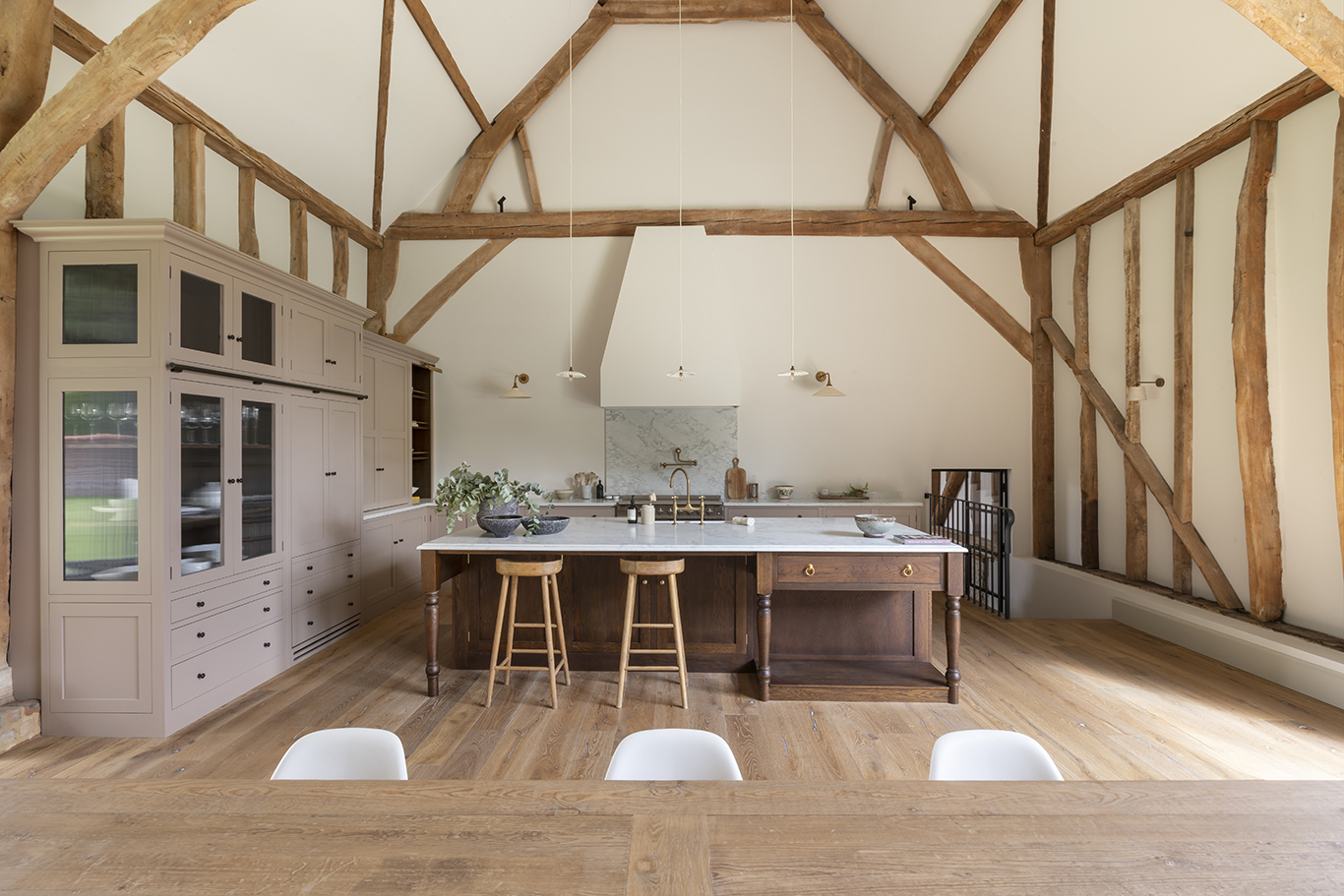
Clever kitchen joinery in an 1880s barn conversion in rural Buckinghamshire brings heritage character to a modern space. A three-metre island designed to read as a freestanding antique showcases traditional details including turned legs, brass hardware and a rounded worktop edge. ‘Dark-stained oak introduces a richness…echoing the warmth of the original oak beams,’ says Tori Young, creative lead at interior design practice HollandGreen. In sharp but effective contrast with the more modern surrounding cabinetry, the central island is a nod to the building’s history. It works, says Young, because joinery ‘should feel as though it has always belonged’.
Surface to air
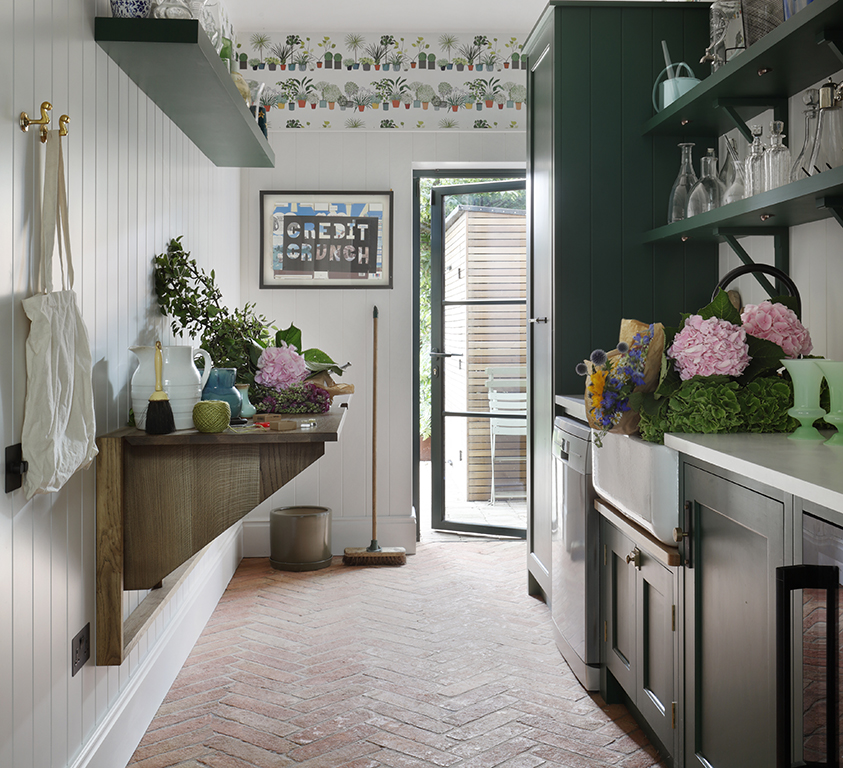
Bespoke joinery at its most resourceful, a solid-wood fold-town table in a narrow pantry provides valuable space — but only when required. Once a traditional servant’s kitchen, the pantry and ‘flower room’ in this Chiswick home has a hatch into the dining room and is often used for entertaining overflow. ‘The table offers additional serving space when plating up, while folding away neatly to keep the room feeling open when not in use,’ says Sophie Pringle, creative director of Pringle & Pringle, the interior design practice behind the project. ‘As the pantry was too narrow for a double-sided workspace, this solution allows the client to have a clear, generous surface for flower arranging or entertaining.’
Upstairs, downstairs
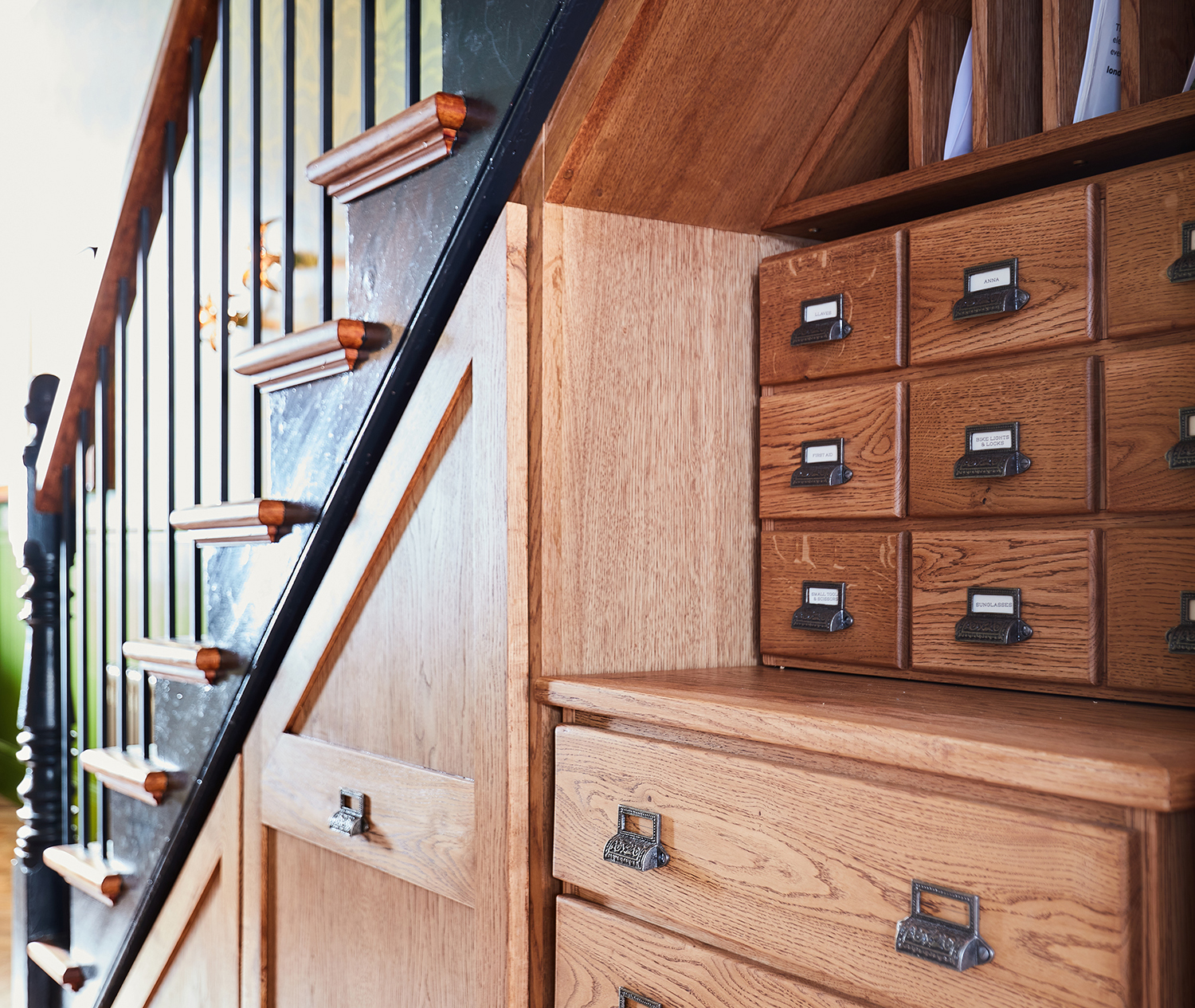
Old school reigns at this home in Queen’s Park, where made-to-measure cabinetry takes on a raw, traditional quality. The under-stairs storage unit, complete with vintage office-style pigeonholes, is a prime example of working within a challenging space to create lived-in charm and period character that complements the home. ‘The joinery in our house was a collaborative effort with our joiner, Ed Davenport,’ says Anna Burles, co-founder of interiors and branding studio Run For The Hills. ‘We designed it and he built it. The pigeonholes and little drawers have been so useful — for batteries, first aid, small tools, sunglasses. Having so many means there’s always a place for those things. And little name tags make it easy to change what’s inside.’
Divide and display
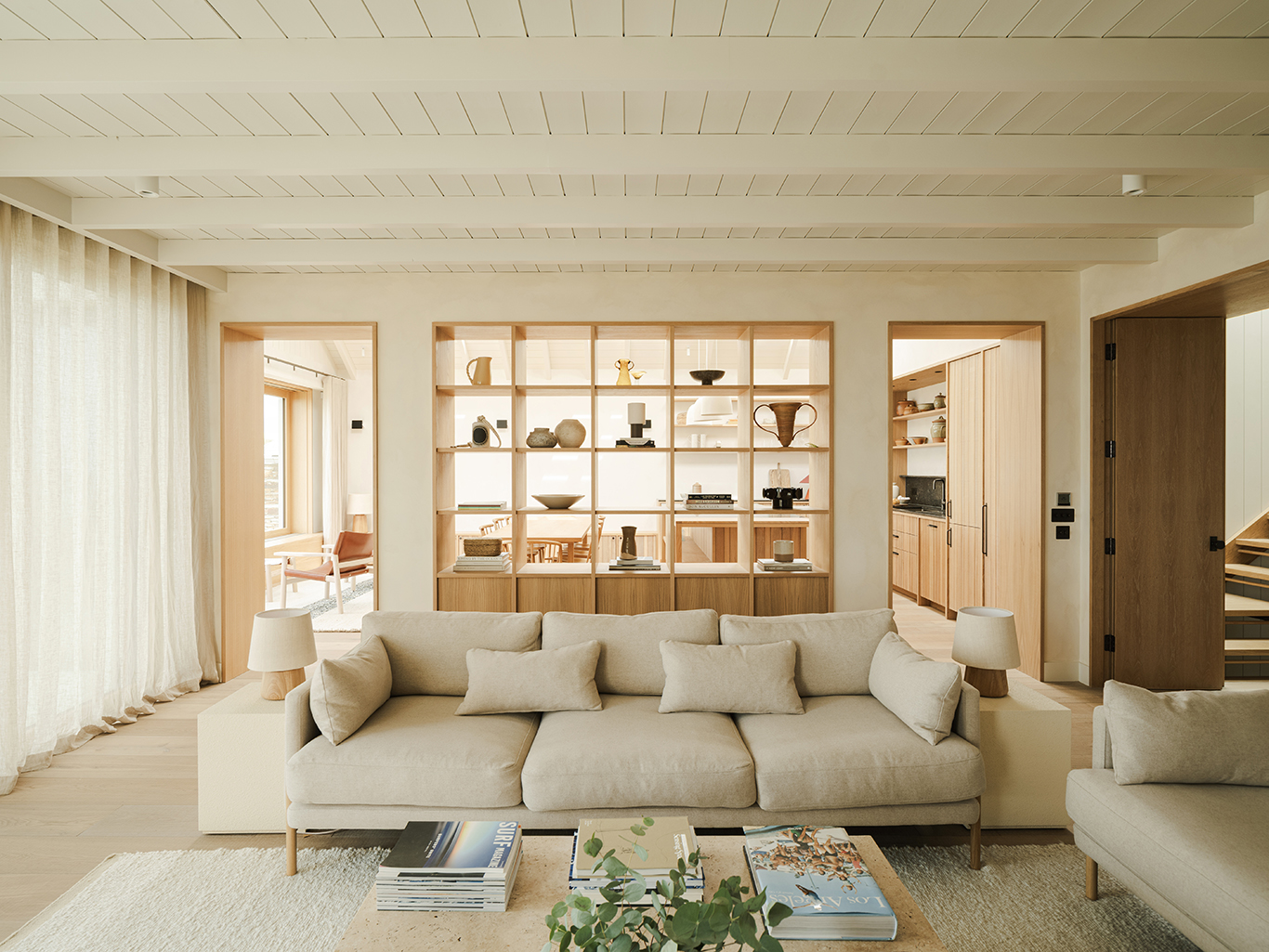
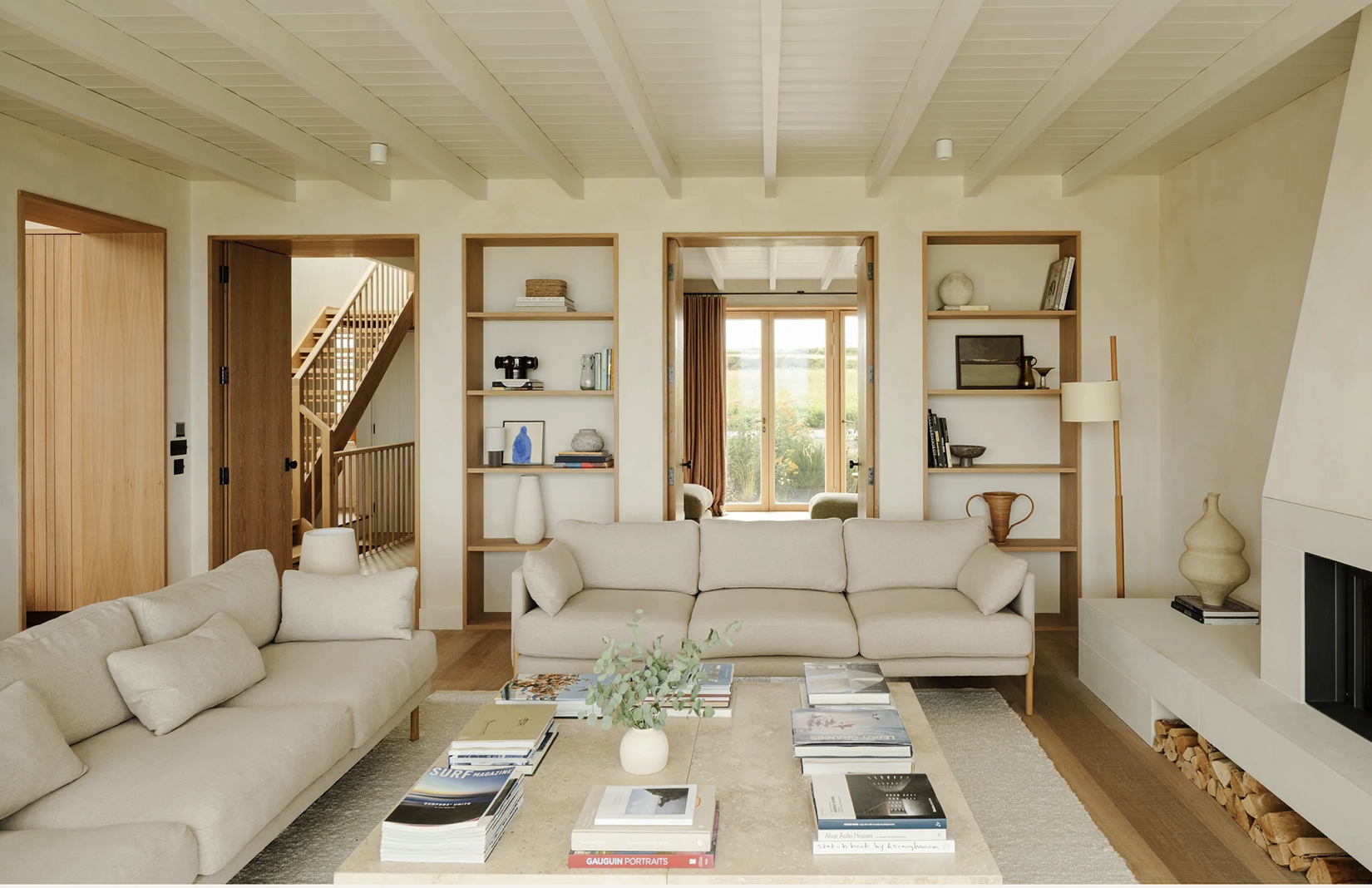
So much more than an ornamental addition, a bespoke shelving unit elevates this Cornish home to new design heights. A show-stopping architectural feature, it provides storage, display and subtle spatial definition in one gesture. Notting Hill architecture practice De Rosee Sa had it crafted in timber tones to mirror the light and materials of the surrounding coastal landscape, demonstrating how joinery can contribute both to the atmosphere and function of a space. The unit gently zones the living area without interrupting light or sightlines, ‘doubling as both a display and a divider’, says senior project architect George Yallop. The result is a space that feels bright yet intimate, allowing the sea views to remain the focal point of the room.
Panel and paint
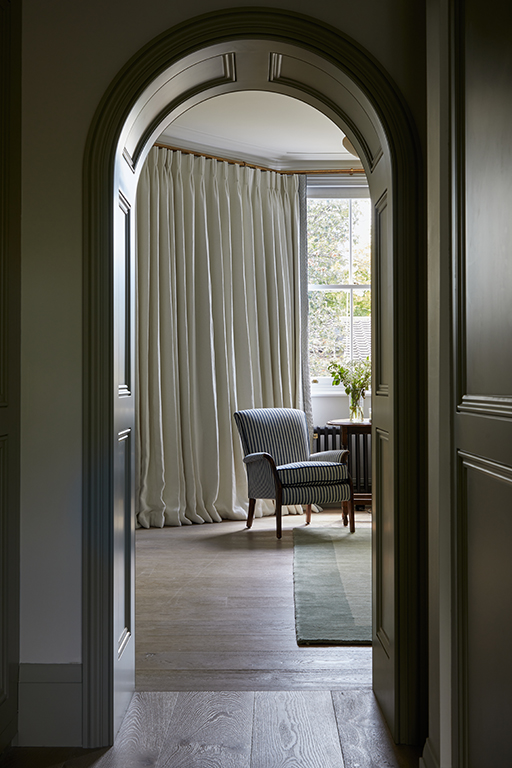
The curved door opening at this Streatham home is deeper than most as it runs beneath the stairwell and disguises an air conditioning unit. Bespoke joinery here is used not only to cover up an unattractive feature but to link a suite of rooms. The master bedroom, dressing room and en suite are also tied together courtesy of the sage-green palette. ‘This was intended to meet the client’s request for a tranquil and calm escape within these areas of the home,’ says Bari Jerauld, founder of interior design studio Blank Slate. As for the style? ‘I wanted to incorporate traditional architectural details throughout the home, which led to the choice of a shaker-style door with beading along the inner frame to mirror elements found in other spaces.’