Pavilions have long sparked civic dialogue as a gesture of public architecture, but this new retreat resonates far beyond its structure. Designed by the conservation and creative arts initiative Aranyani with with Colombian-Cypriot architects T__M.space, ‘Sacred Nature’ is now accepting visitors at its location in Delhi’s 16th-century Sunder Nursery. A spiralling vessel for ecological restoration and environmental philanthropy, the temporary space is opening just in time to coincide with India Art Fair 2026, and it has a lot to say about colonial ideas of nature.
‘When I founded Aranyani in 2024, I did so with one clear intention — to begin a de-colonial school of nature,’ says Tara Lal, a conservation scientist. She took the name of her enterprise from the Rigveda, a text nearly 3,000 years old featuring the forest goddess Aranyani. ‘That we have forgotten her, and what she represents, speaks volumes about the moment we inhabit,’ she says.
Lal’s pavilion is the inaugural commission from her new Aranyani Pavilion project, planned to pop up each year like a ‘Serpentine in Delhi’. It takes its cues from India’s hallowed groves, landscapes Lal has walked and studied up close, from Degrai Oran near Jaisalmer to the Mawphlang Sacred Forest in Meghalaya. These spaces were all victims of colonisation, and only the forests that survived are considered sacred. ‘These forests were revered because they were inseparable from everyday life,’ she explains. ‘They offered water, medicine, shade, story and spirit. And in many regions, even as vast tracts of land were destroyed during the colonial period, certain groves endured for one simple reason: the indigenous people chose to protect them.’

Photography: Lokesh Dang, courtesy of Aranyani.
Photography: Lokesh Dang, courtesy of Aranyani.
Photography: Lokesh Dang, courtesy of Aranyani.
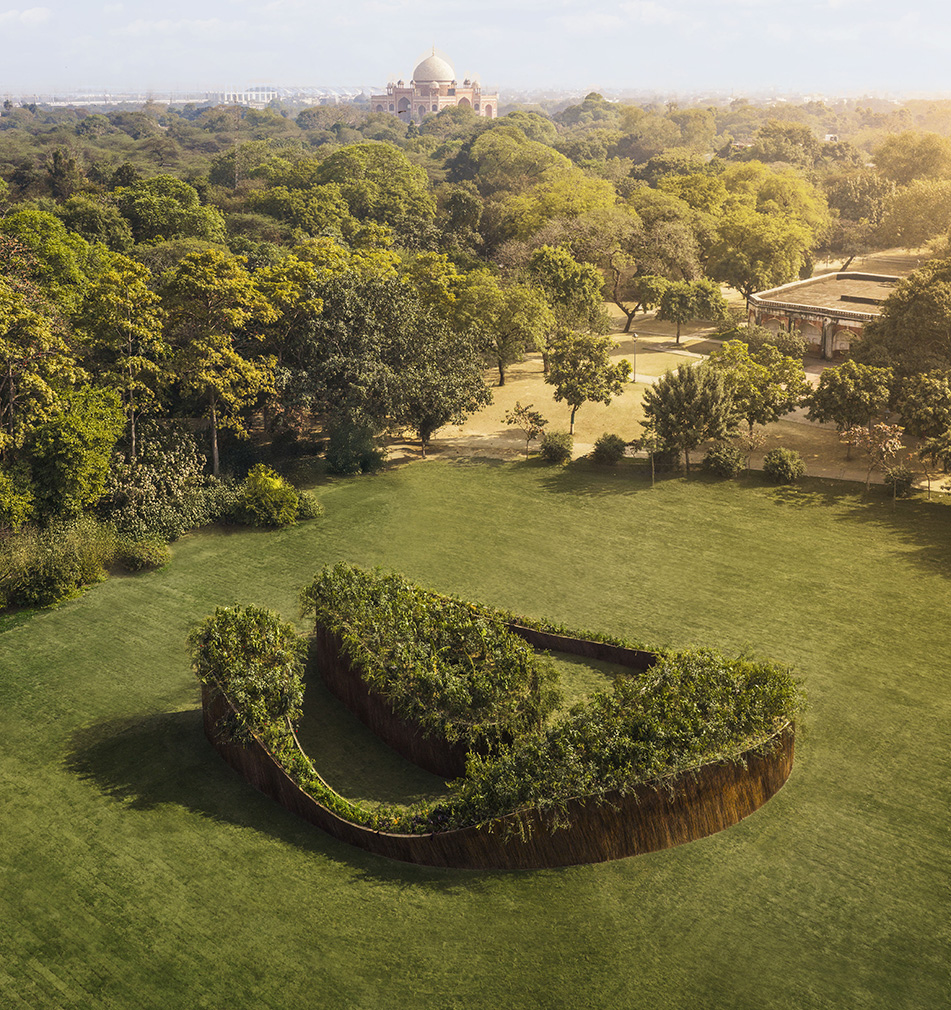
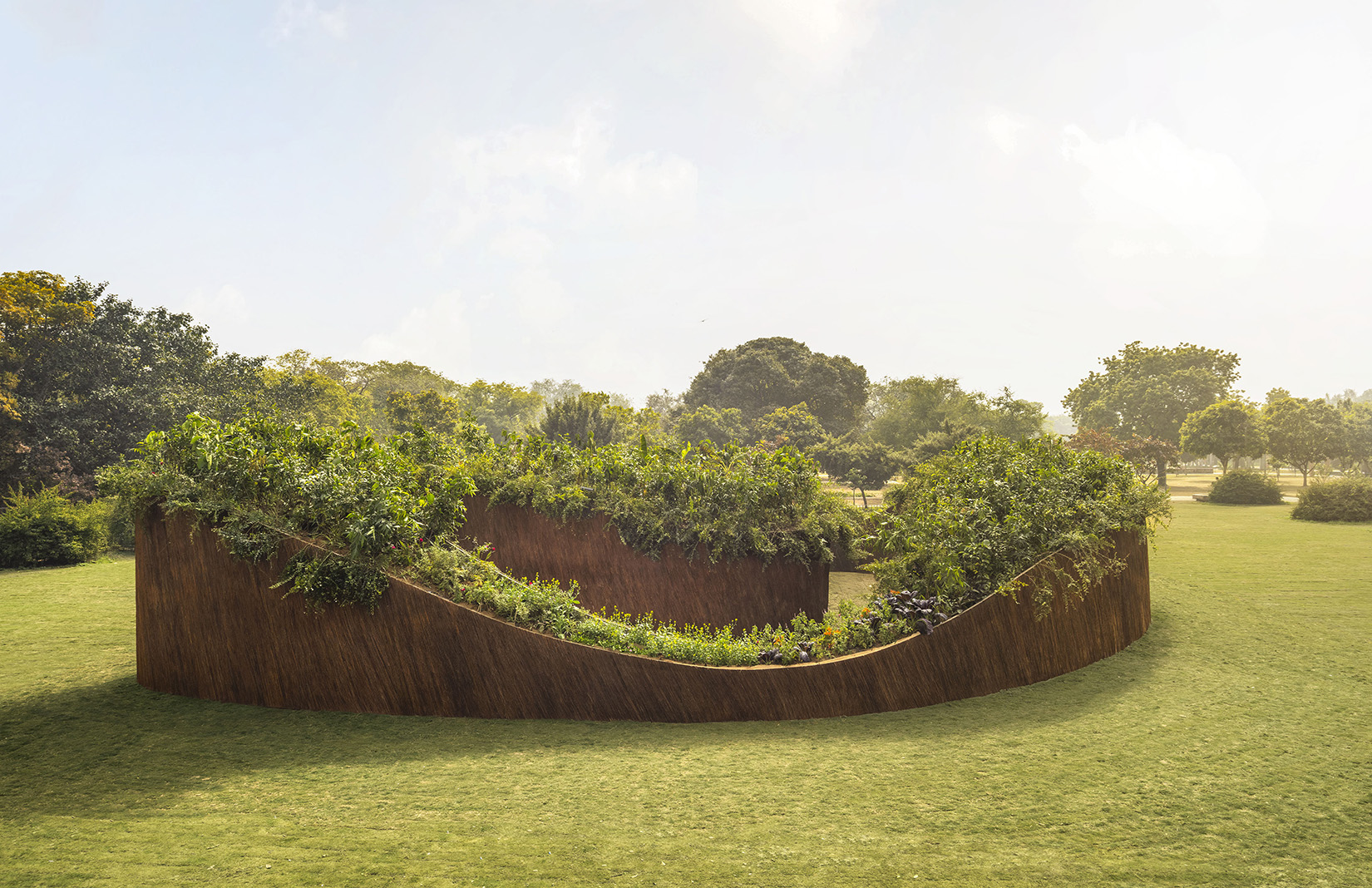
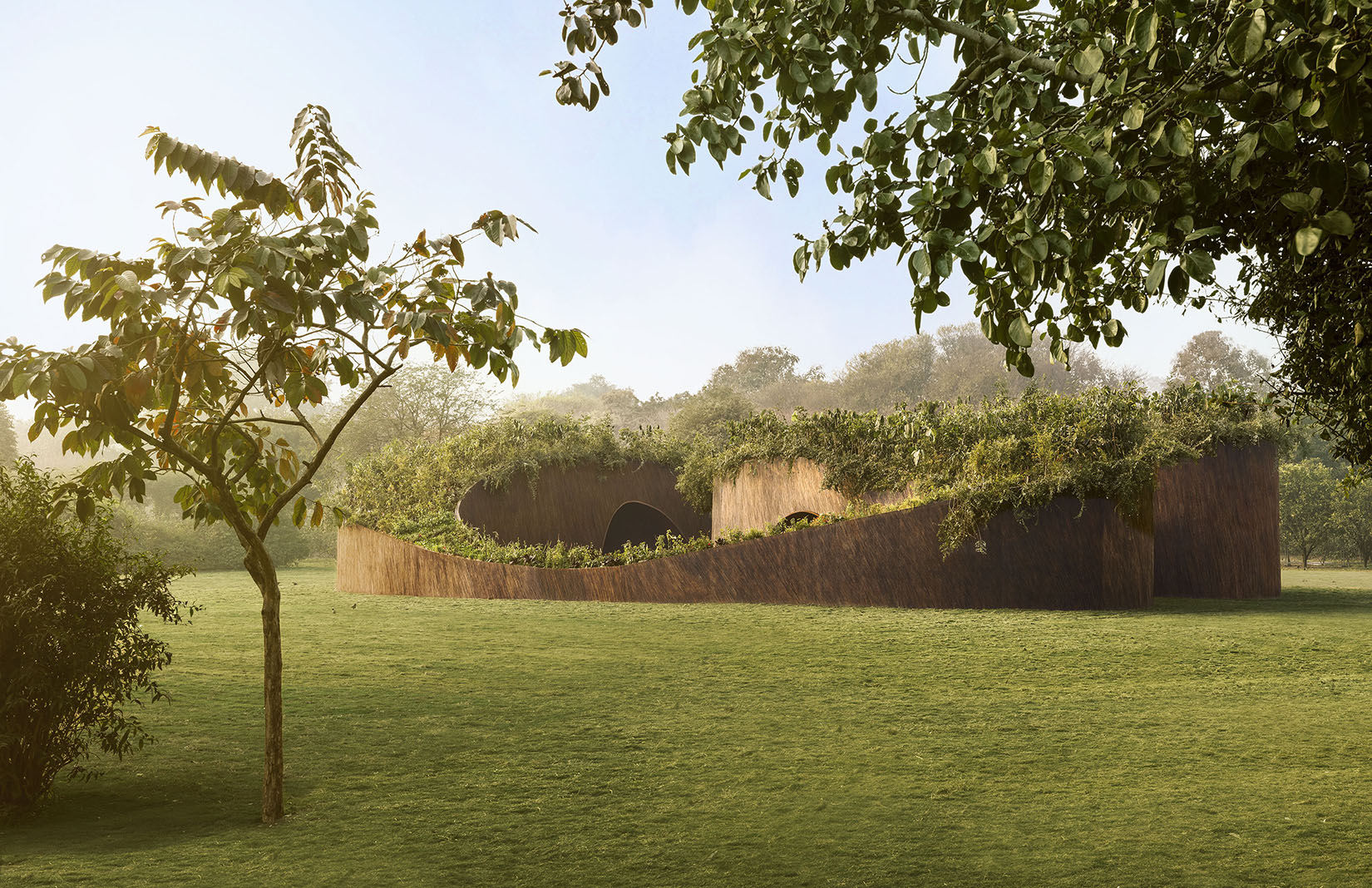
The Aranyani Pavilion in Delhi. Photography: Lokesh Dang, courtesy of Aranyani.
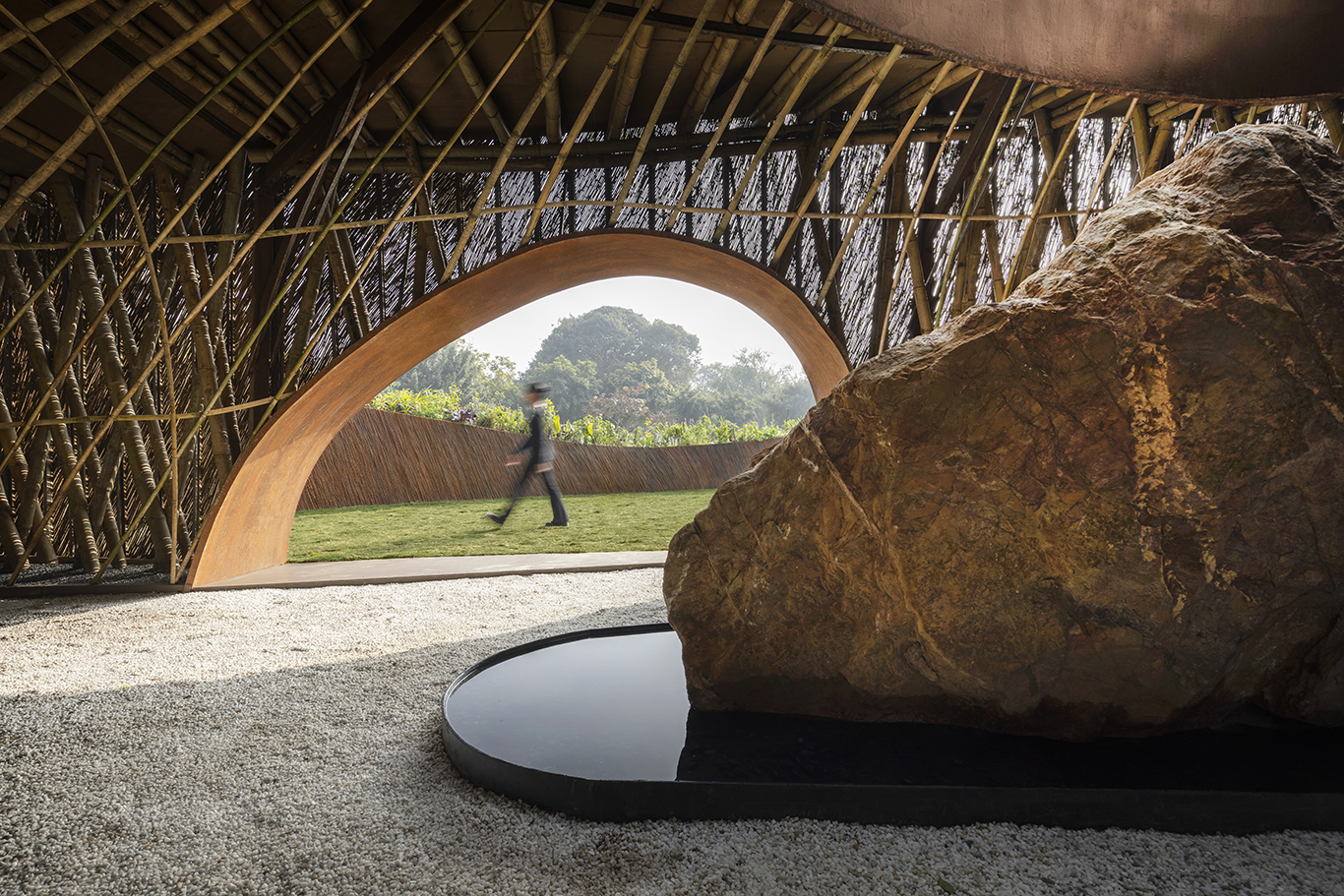
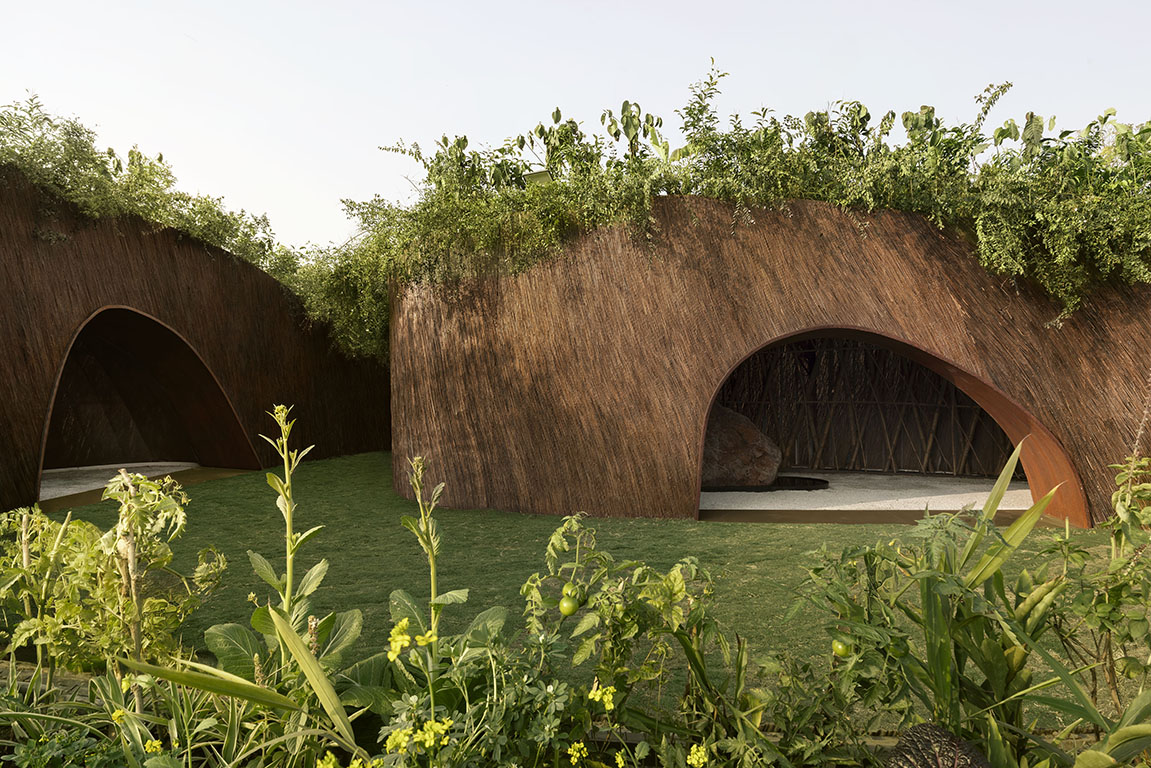
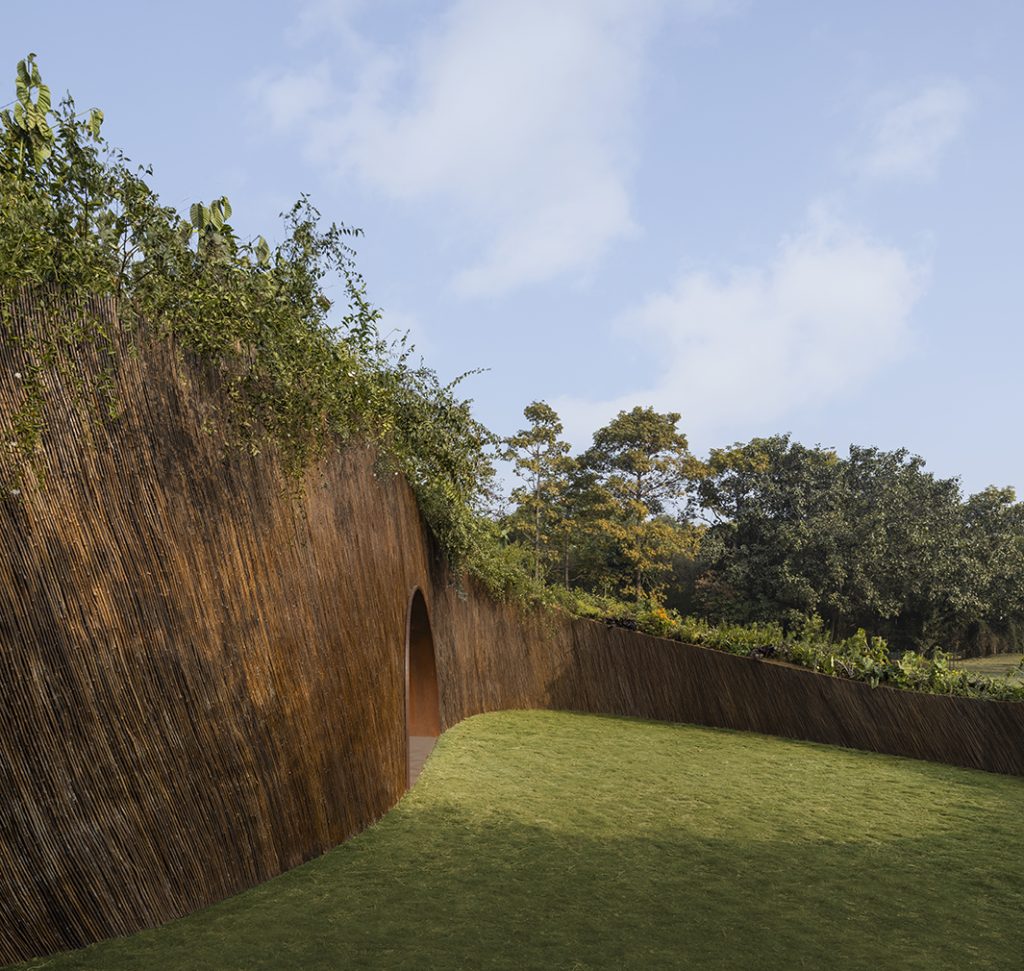
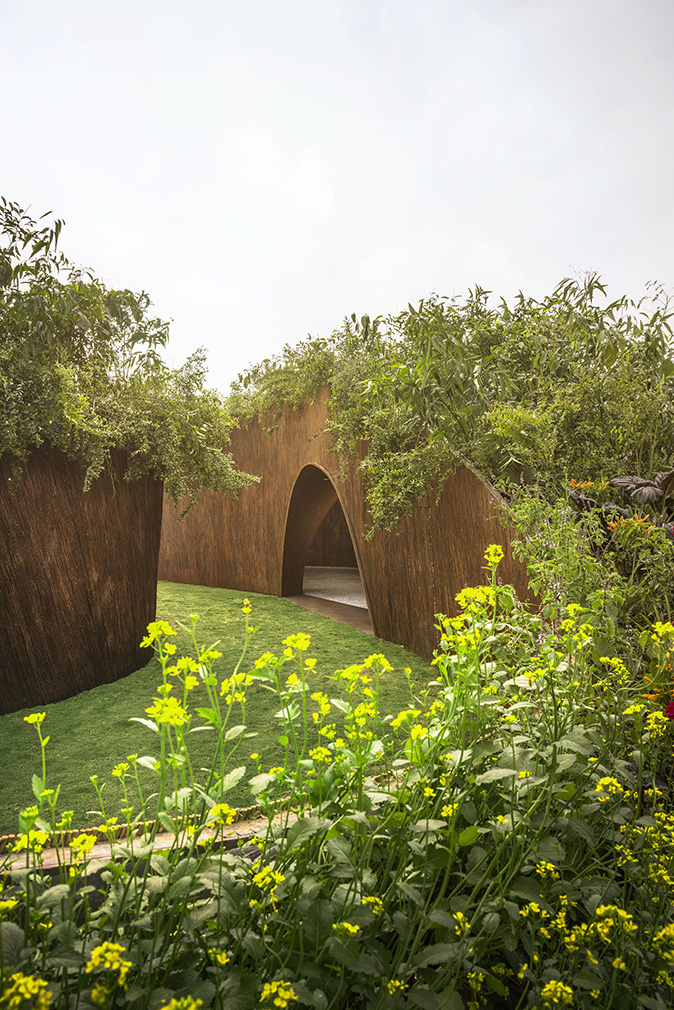
The pavilion’s structure was fashioned from bamboo and upcycled lantana camara. ‘This plant was brought as an ornamental shrub under colonial rule, and is now among the most aggressive, invasive species across many forests. The same material that chokes landscapes becomes the frame that holds something else.’ Lal has woven through a canopy of more than 40 varieties of native and naturalised plants, held in dialogue with the invasive. At the centre sits a shrine anchored by a 5.5ft soapstone monolith.
The form was developed through digital craft by Tanil Raif and Mario Serrano Puche of T__M.space, who employed visual coding to test and refine its spiralling geometry. ‘We adjusted pitch, thickness and density to choreograph a slow, inward-moving path,’ they explain, ‘allowing the spiral to thicken at intervals, forming intimate pockets of space.’ Computational studies were also used to understand how the structure would receive sunlight, shaping patterns of light, shade and planting as part of the spatial experience. Once the geometry was resolved, the project returned decisively to the physical realm.
True to its spirit, the pavilion will have a considered afterlife. At the end of its 16-day run at Sunder Nursery, it will be permanently re-homed at the Rajkumari Ratnavati Girls’ School in Jaisalmer as an open-air ecological learning centre. Its living canopy will be redistributed into community-led initiatives across Delhi, including Gardens of Hope and Swechha’s urban forest restoration work. ‘Eventually, I hope people leave with a deeper appreciation for nature,’ says Lal, ‘and I hope the pavilion becomes a beginning for a growing gathering of like-minded people – artists, historians, scientists, architects, gardeners, neighbours… who walk out thinking, We can care for it differently.’