Warm, natural, sustainable. As far as building materials go, timber has a lot to offer. One thing it doesn’t always boast, however, is the impression of movement. Where metallic, stone and even brick rely on light reflection, irregular finishes and uneven surfaces to create flowing, undulating qualities, timber’s linear, repetitive grain means it can sometimes fall flat.
The clever use of wooden slats is one way to overcome this. When arranged with varying spacing and angles, they have the power to create curves, flow and a visual tempo not traditionally associated with timber. The ultimate optical illusion, wooden planks and fins have become increasingly popular over the past years across residential kitchens, corporate office entrance halls, even external facades. Here are five ways they can be successfully and strikingly deployed — and one glimpse into the complex, ornate future of timber plank placement.
Sticks and stones
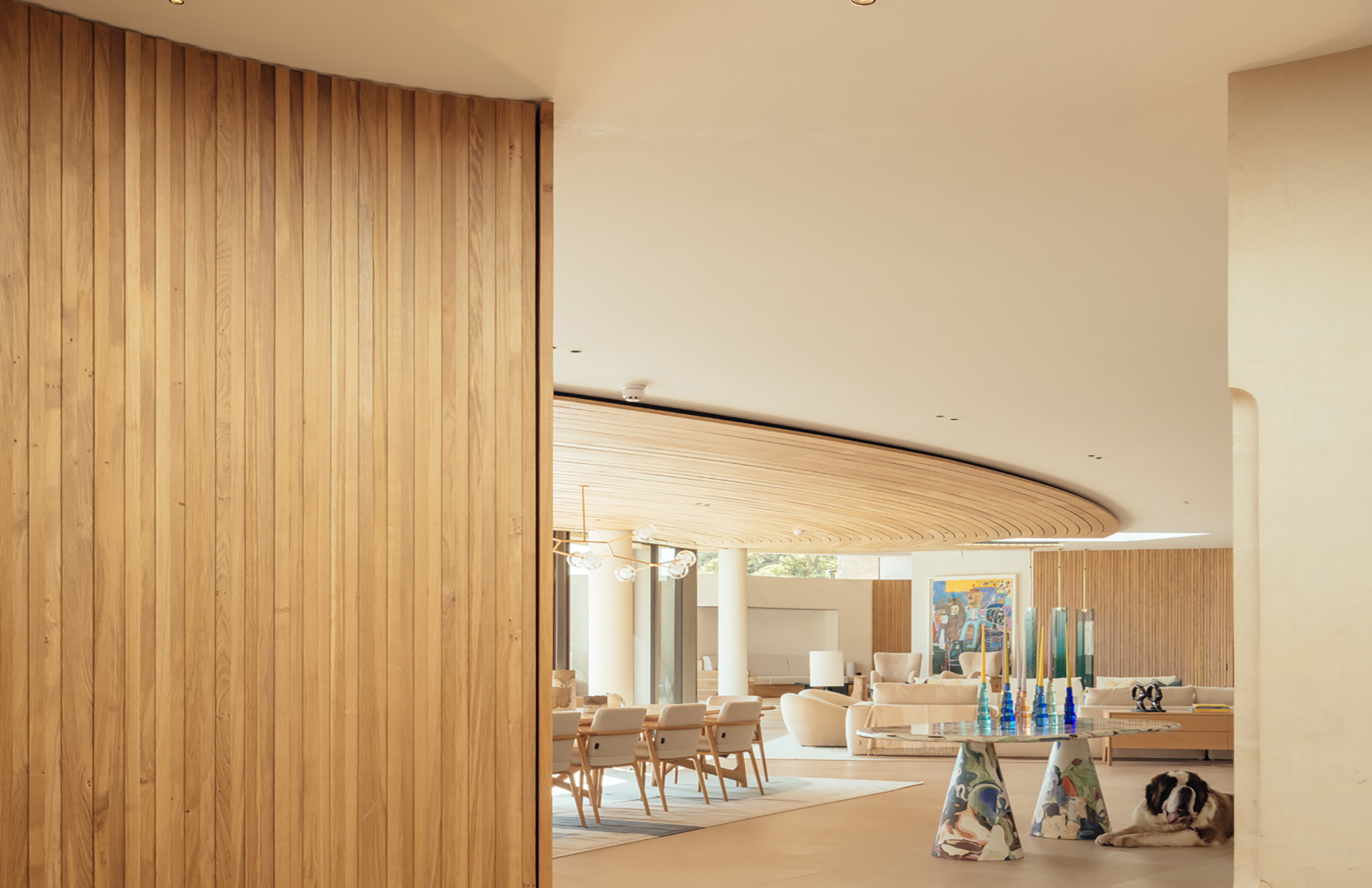
At a contemporary country house in the Cotswolds, timber slats have been used extensively both inside and out to, quite literally, link the old and the new. The restoration connects an original 19th-century Cotswold-stone threshing barn to a modern 10,000sqft wing with a central ‘link’ clad with vertical timber. Bold and architecturally arresting, the neutral palette complements the historic stone so as not to detract from the original barn.
Wood planks are artfully positioned throughout the interior as well, creating curved room partitions, screens and a dramatic ceiling feature. ‘It was a very early ambition to create a rising, sweeping ceiling inspired by the contours of the hillside,’ says Ben Twells, founder of SOTA Design, the practice behind the scheme. ‘Visually it extends from inside to outside connecting internal and external spaces.’ Given the expansive ceiling, he says, painted plaster would have resulted in a ‘sanitised’ feel. The oak ceiling, and the use of timber slats internally and externally, is ‘a triumph’ – in terms of aesthetic atmosphere and technical achievement.
Hidden gems
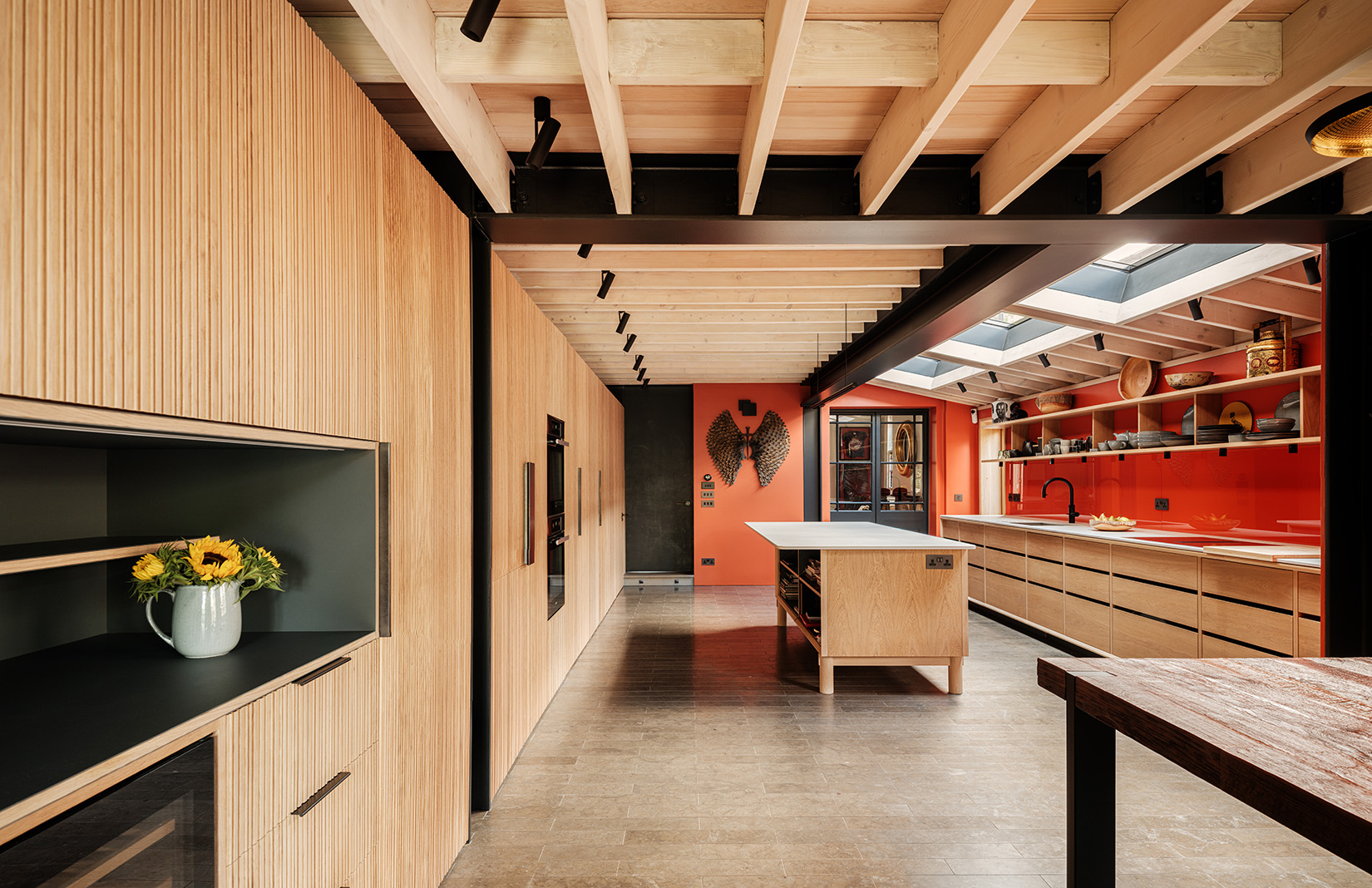
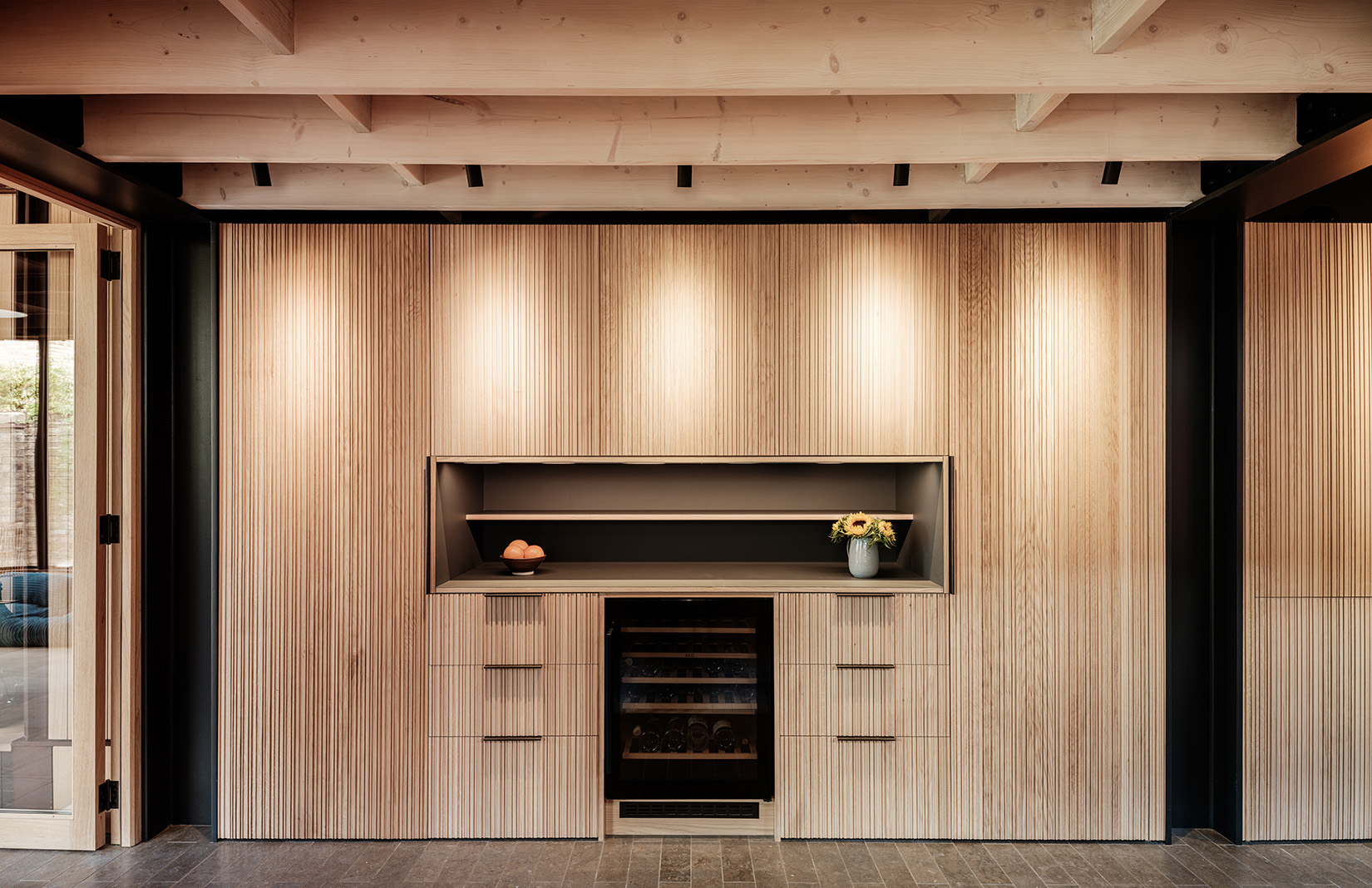
What’s not to love about a hidden storage wall and surprise opening into a secret gallery? An extension replacing an old conservatory at a South London Edwardian terrace has achieved just that — and wooden planks are the stars of the show. A timber and expressed-steel open plan kitchen and dining area with a wall of vertical wooden slats is impressive in its own right. But it’s also a treasure trove of storage.
‘It is as though the wall is made of secret doors,’ says Laura Carrara-Cagni, founding director of architectural practice Cagni Williams. ‘Made by textured oak panelling, each door opens into something different, from fridges to a pantry and a technical room. It’s like an advent calendar to keep clutter away and organised.’ The storage and service wall is ‘a brilliant solution to a messy problem,’ says the client. ‘There are lots of design features in our new home, but there is no doubt the glowing oak wall is one of the most useful and elegant.’ More timber planks have been used to create shutters linking the dining room to a gallery space.
Welcoming committee
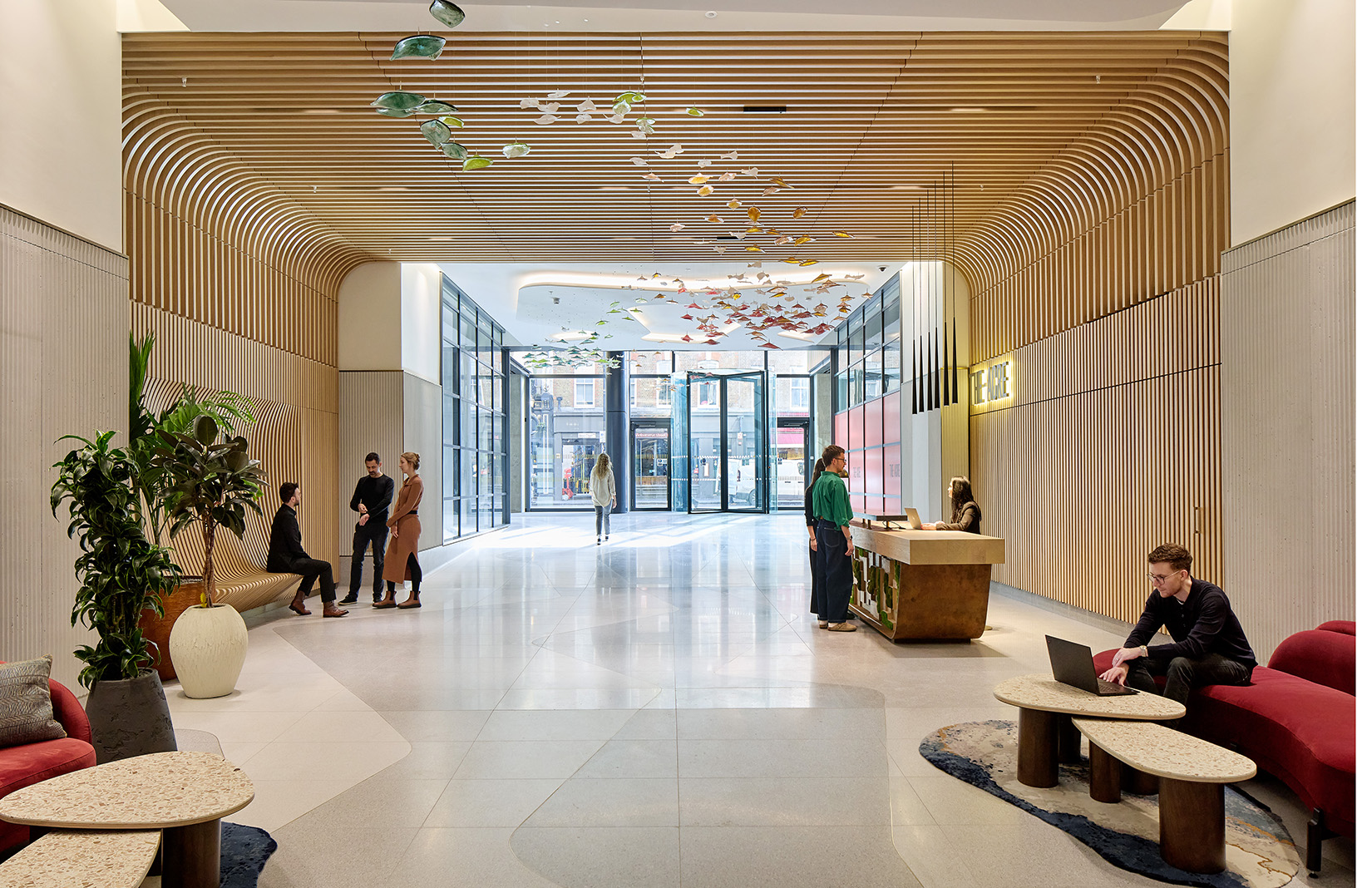
Wood slats bring heart, soul and a nifty seating area to the central atrium of a London office redevelopment. Breathing life into The Acre, a landmark commercial building in Covent Garden dating back to the 1970s, the wood finish not only injects warmth and texture into a large corporate space, but offers lessons on how the material can be used for function as well as form. ‘The slatted panels introduce rhythm and playfulness,’ says Valeria Segovia, design director at Gensler. ‘Wood, as a material, is both linear and fluid.’ The use of planks and slats, she says, allows the material to ‘express structure and create gentle curves evoking familiarity and warmth.’
Balancing out the structure’s brutalist form, the wood has been strategically applied in areas where visitors congregate, flowing seamlessly from ceiling to wall to seating. This, says Segovia, unifies the building’s spatial elements and creates an environment that ‘encourages touch and interaction’.
Waste not
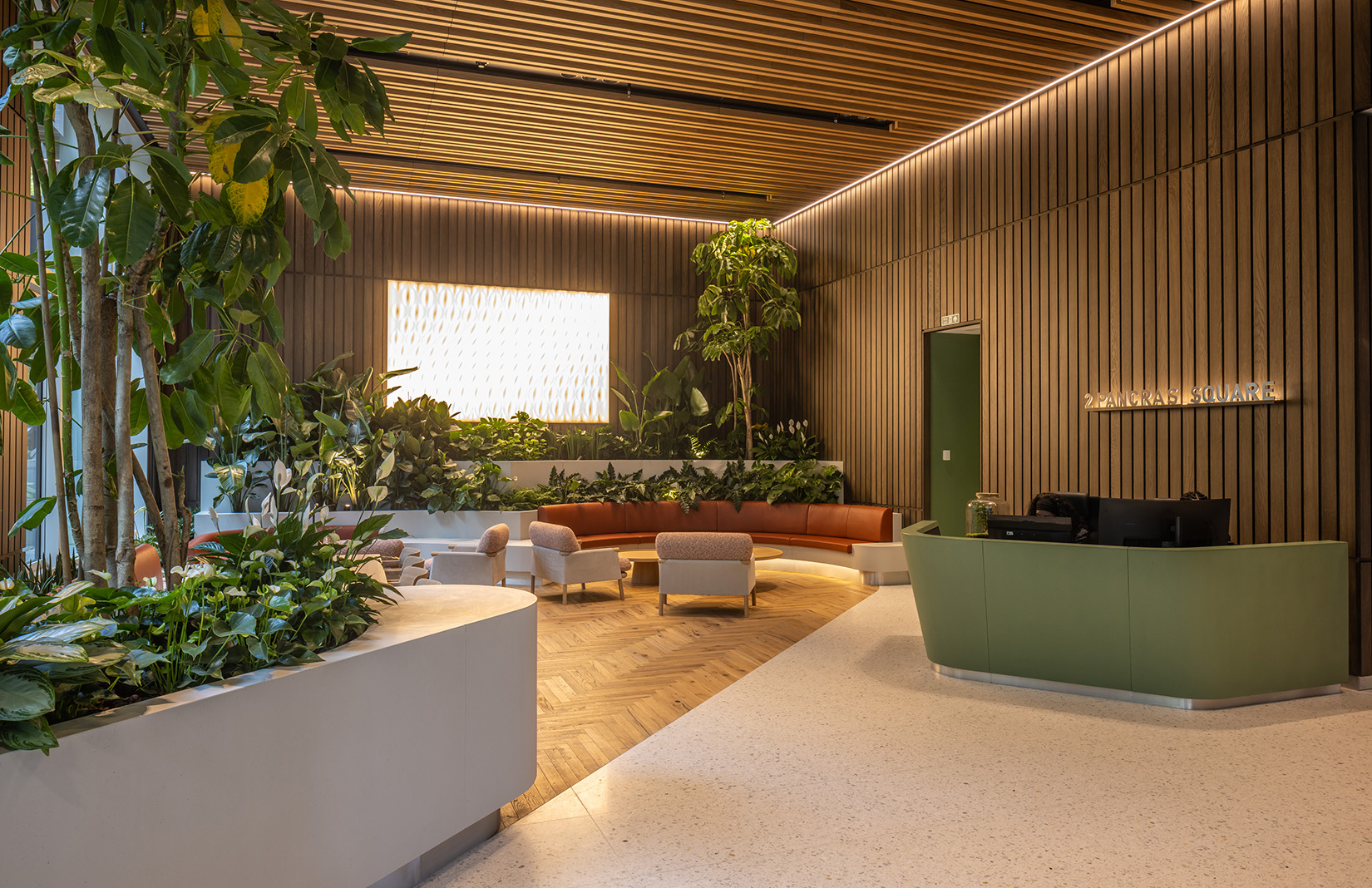
The wood panelling at 2 St Pancras Square, at the core of the 67-acre King’s Cross redevelopment, isn’t new. That’s precisely what makes it so interesting. Part of the block’s recent renovation, the existing slats were taken down, re-stained and applied with veneer to give them a modern lift — testaments to longevity and a prime example of how a space can be reinvigorated using original features.
It’s all part of the developer’s commitment to a circular economy. ‘During the renovation,’ says Henry Shearer, head of office and investment at the King’s Cross Group, ‘we wanted to reuse as much of the material from the original reception fit-out as possible. By reusing and treating the wood panelling, a modern, high-quality finish was achieved while recycling 95% of the original wall lining’.
Divide and conquer
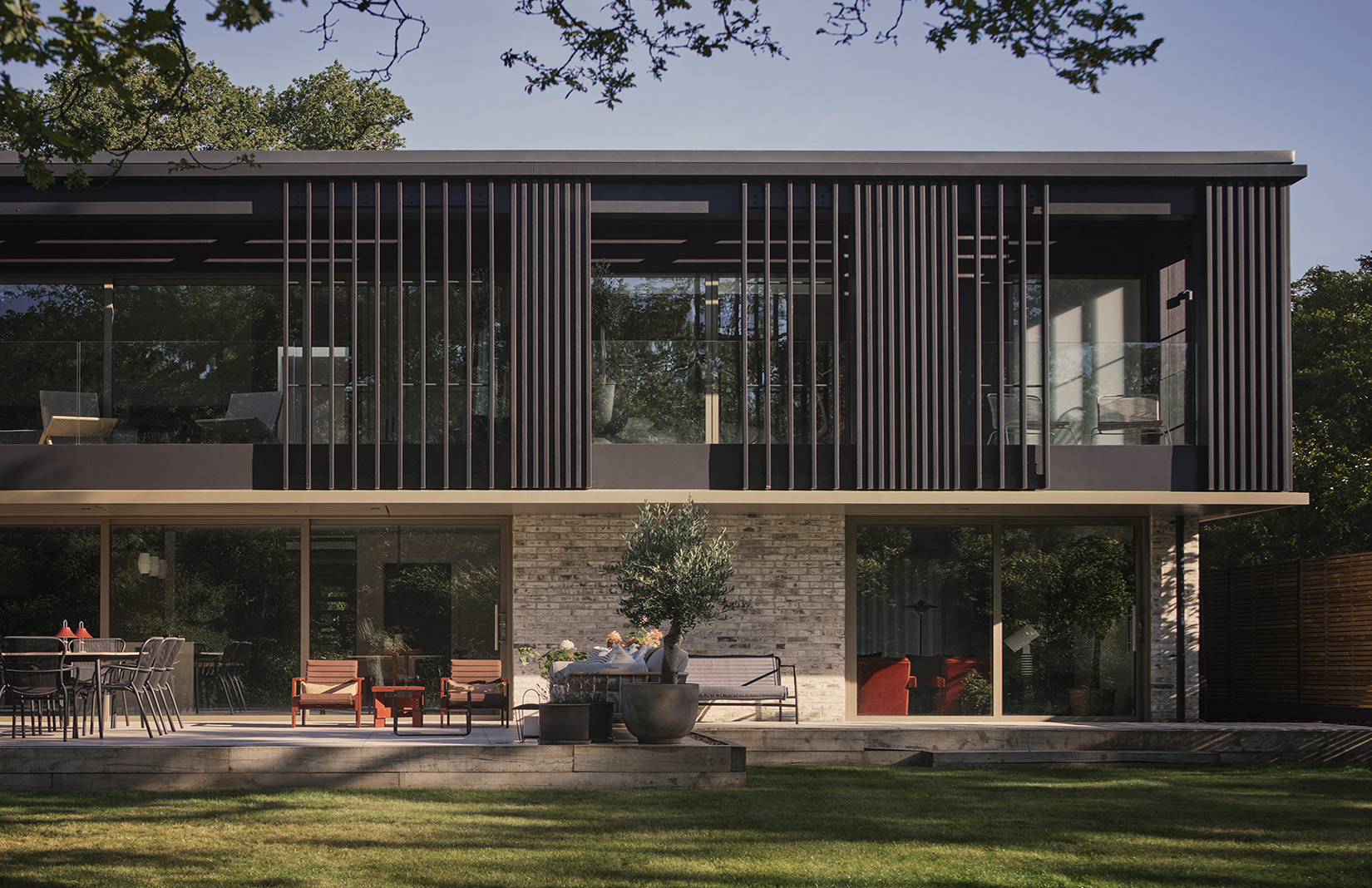
Carefully positioned timber planks and fins can effectively divide rooms. And the absence of a solid wall in favour of staggered partitions allows space for light and shadow. Architectural design studio Echlin has done just that in an Oxfordshire home, working alongside NCA Architecture.
Staining the exterior planks black adds drama and brings movement to the property, with light bouncing off the external fins. Inside, slats are used to subdivide spaces and create zones while retaining the feeling of an open space, says Samuel Pye, creative director at Echlin. ‘It’s an evolved form of broken-plan living. We use [slats] everywhere from facades to bathrooms. They help control sightlines between rooms, either allowing glimpses of spaces inviting you to explore further, or textually demarcating a separate room within a zone — such as a study or a space for focused work.’ The practice, he adds, uses wooden slats and fins in pretty much every project.
Wood, could, should
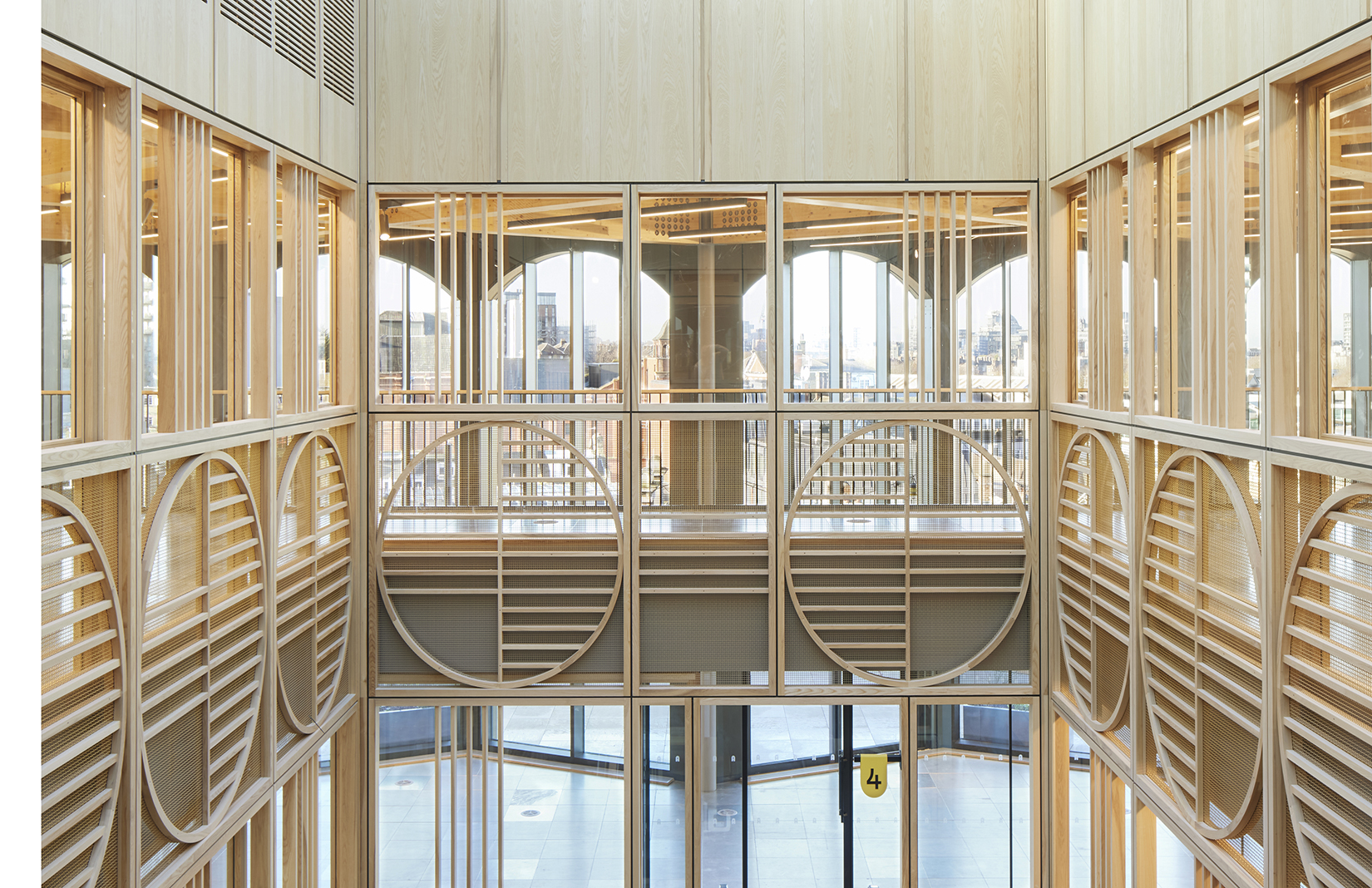
The timber-wrapped core and intricate slat-work at a recently completed Arding & Hobbs development – a rejuvenated 1884 shopping centre in Clapham – is a sight to behold. Stiff + Trevillion’s unique motifs repeat throughout the W.RE building. The balustrade around the escalators is one of the most complex and significant uses of wood slats throughout the scheme.