Celebrities, sports heroes and fashion icons made it famous in the midcentury. Ernest Hemingway and Slim Aarons captured its buzz. And now the Olympic Games kick off on 6 February in Cortina d’Ampezzo, glamorous symbol of Dolomites dolce vita. If you’re planning to hit the slopes this year, we’ve got you covered. If you’re not, here’s what you’ll be missing.
Where to stay
Hotel Ancora
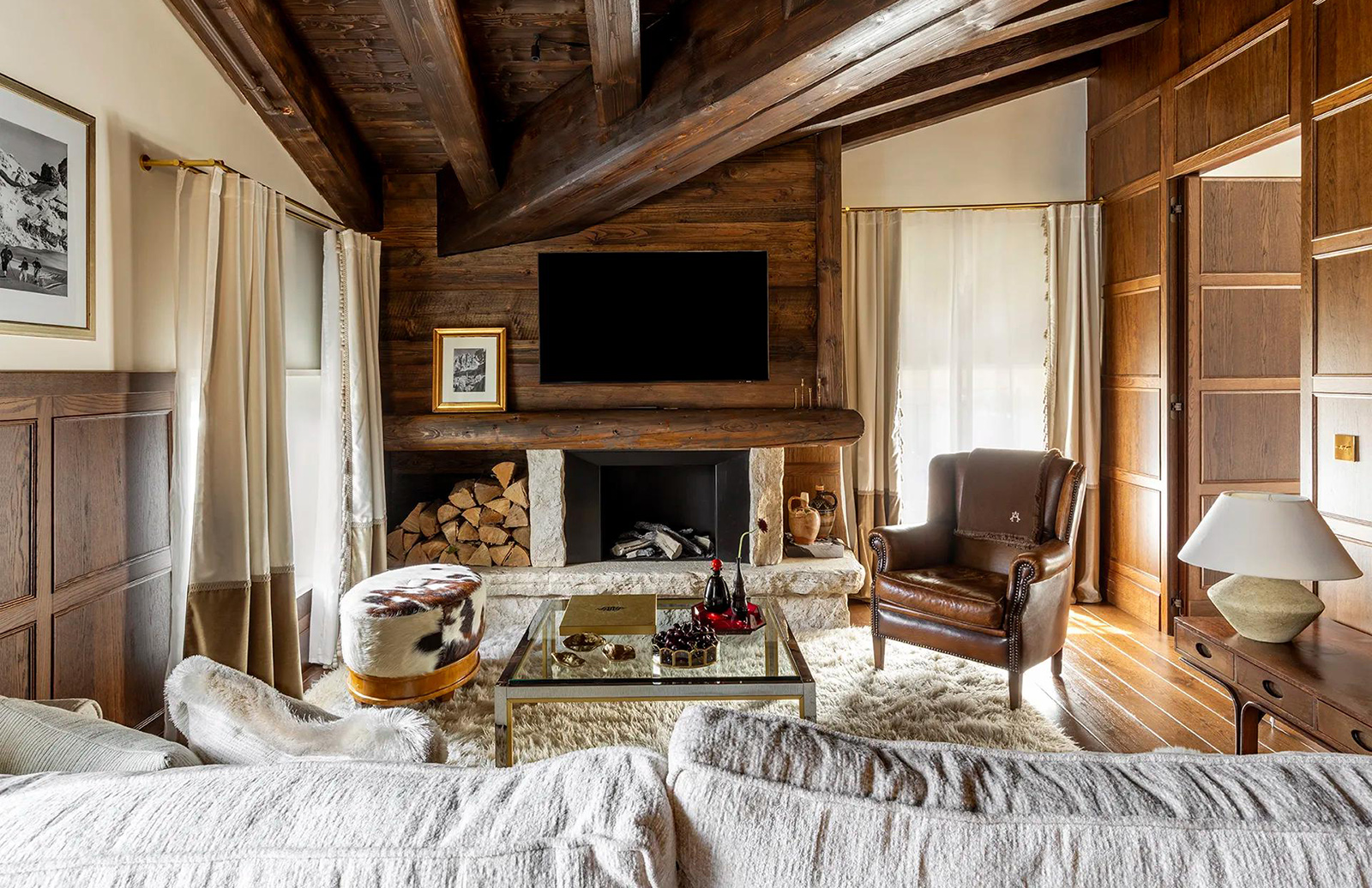
A Cortina landmark for almost 200 years, Ancora recently reopened on the central avenue Corso Italia following a revamp with fashion pedigree. Its 35 rooms, dating to 1826, have been brought back to life by Diesel founder Renzo Rosso (also president of Maison Margiela, Marni, Viktor & Rolf and Jil Sander) and former Soho House design director Vicky Charles of Charles & Co. The interiors pay homage to the town’s alpine heritage, amped up with modern touches. Natural materials like local wood and stone create a calming foundation and anchor the warm, earthy palette. Meanwhile, custom headboards and centrepiece seating look as if they’ve always been there.
Hotel de la Poste
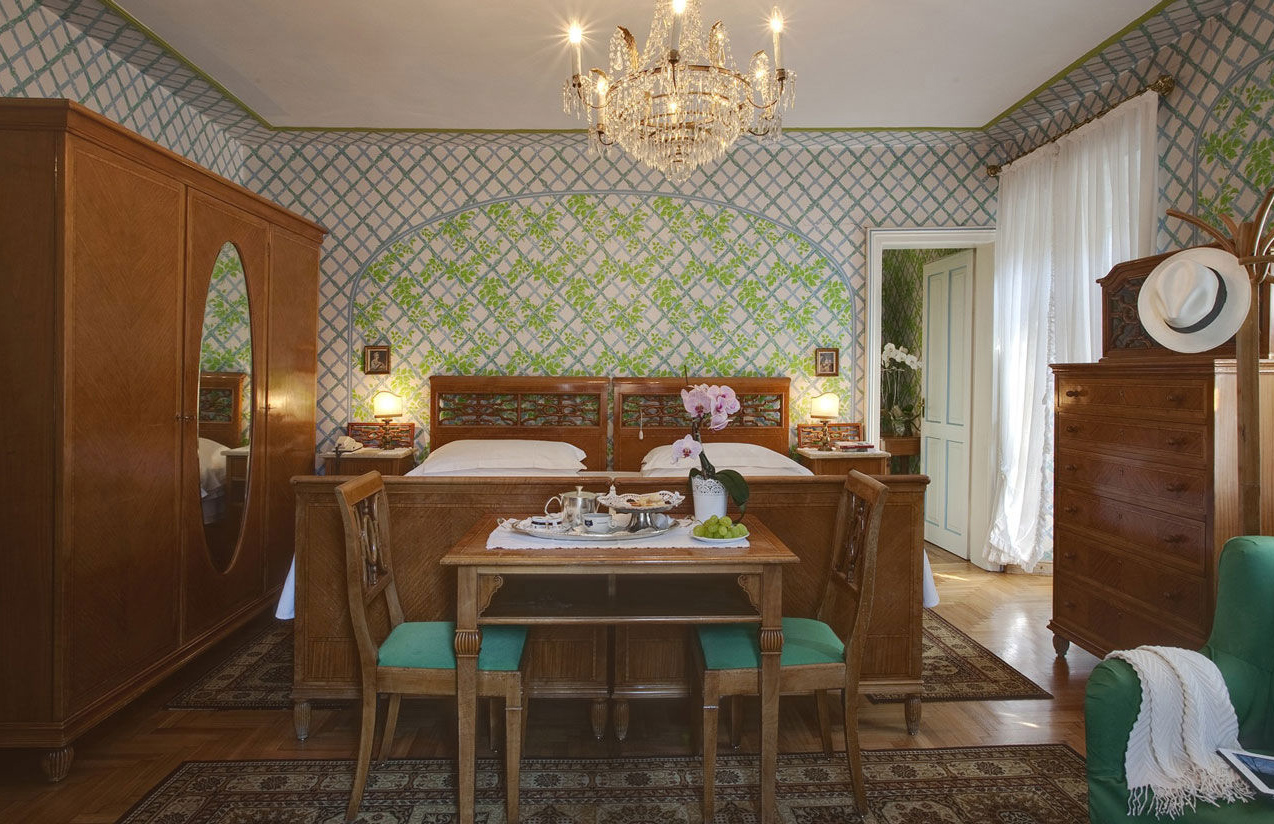
The region’s elite and this small former Habsburg post office go back a long way in Cortina. Since its foundation in 1804, the family-run hotel has been deeply intertwined with the town and its denizens. Managed by the Manaigo family since the beginning, the hotel still serves as a creative hub for locals, travellers and global artists who see the Dolomites as their second (or third) home. Ernest Hemingway used to reserve Suite 107 as a temporary live-work space — his books and typewriter still feature in the suite’s decor — and the building has played a role in films like Paolo Sorrentino’s The New Pope. In the 1950s you might have happened upon Elizabeth Taylor and Henry Fonda sipping signature Puccini cocktails at the bar. The 72 rooms were revamped in 2019 by Milan Studio De Ponte, yet retain their original mountain spirit.
Faloria Mountain Spa Resort
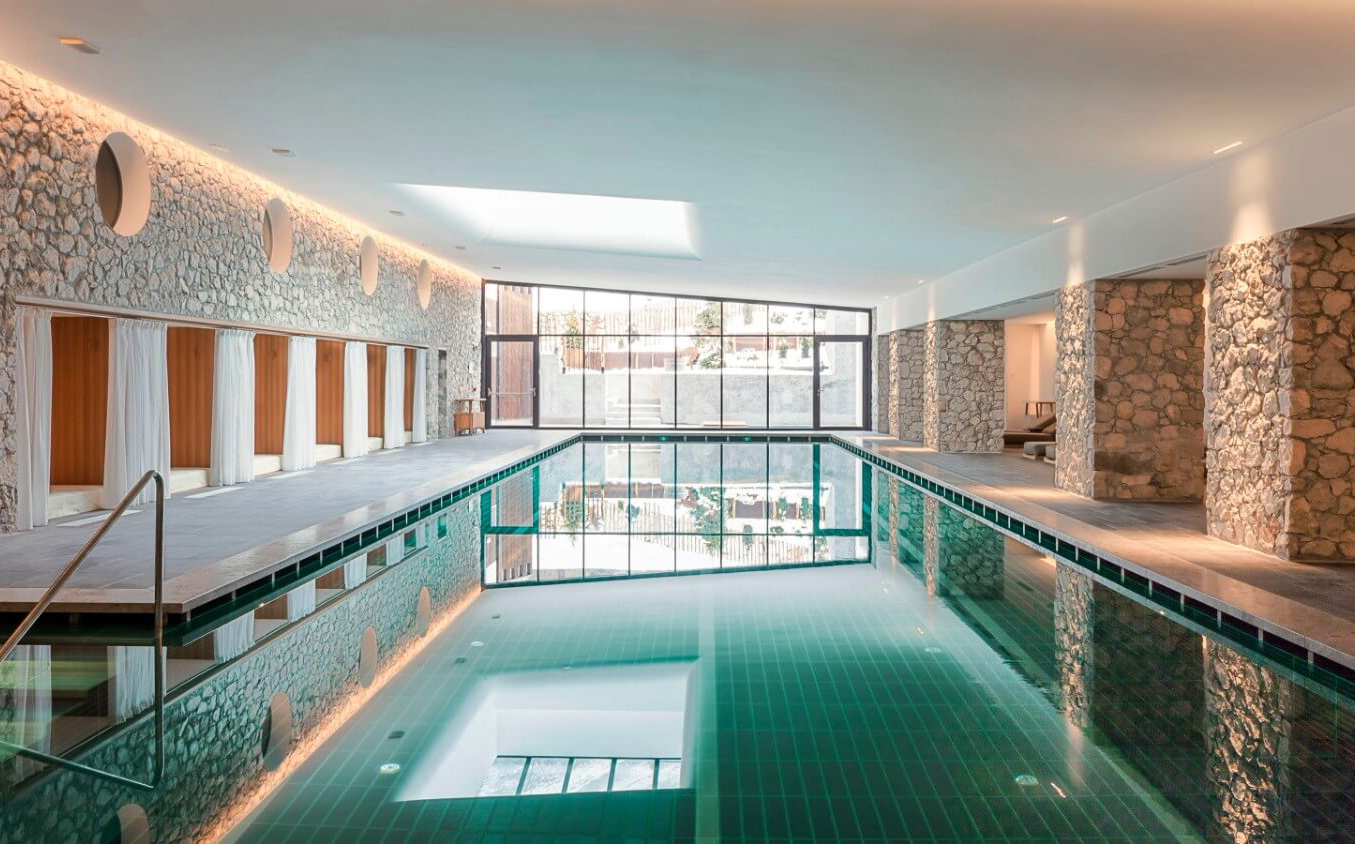
If a snug retreat from the slopes is all you desire, Faloria Mountain Spa Resort is the place to be. The family-owned mountainside chalet overlooks Mount Faloria and makes an ideal base for thrill-seeking mountaineers or wellness buffs out for wintertime self-care. Renovated in 2018 by Milan practice Flaviano Capriotti Architects, it is cosy in spirit and contemporary in form, putting a Nordic spin on Italian hospitality. Natural materials like larch wood and stone recall the forest and rock of the Dolomites. They’re used liberally throughout the 51 rooms and suites, restaurant and lounge, an aesthetic that feels instantly peaceful. Spaces are bathed in natural light and decked out in creamy tones — even the in-house spa and semi-Olympic indoor pool, which are some of the finest in the region.
Where to eat and drink
Rifugio Averau
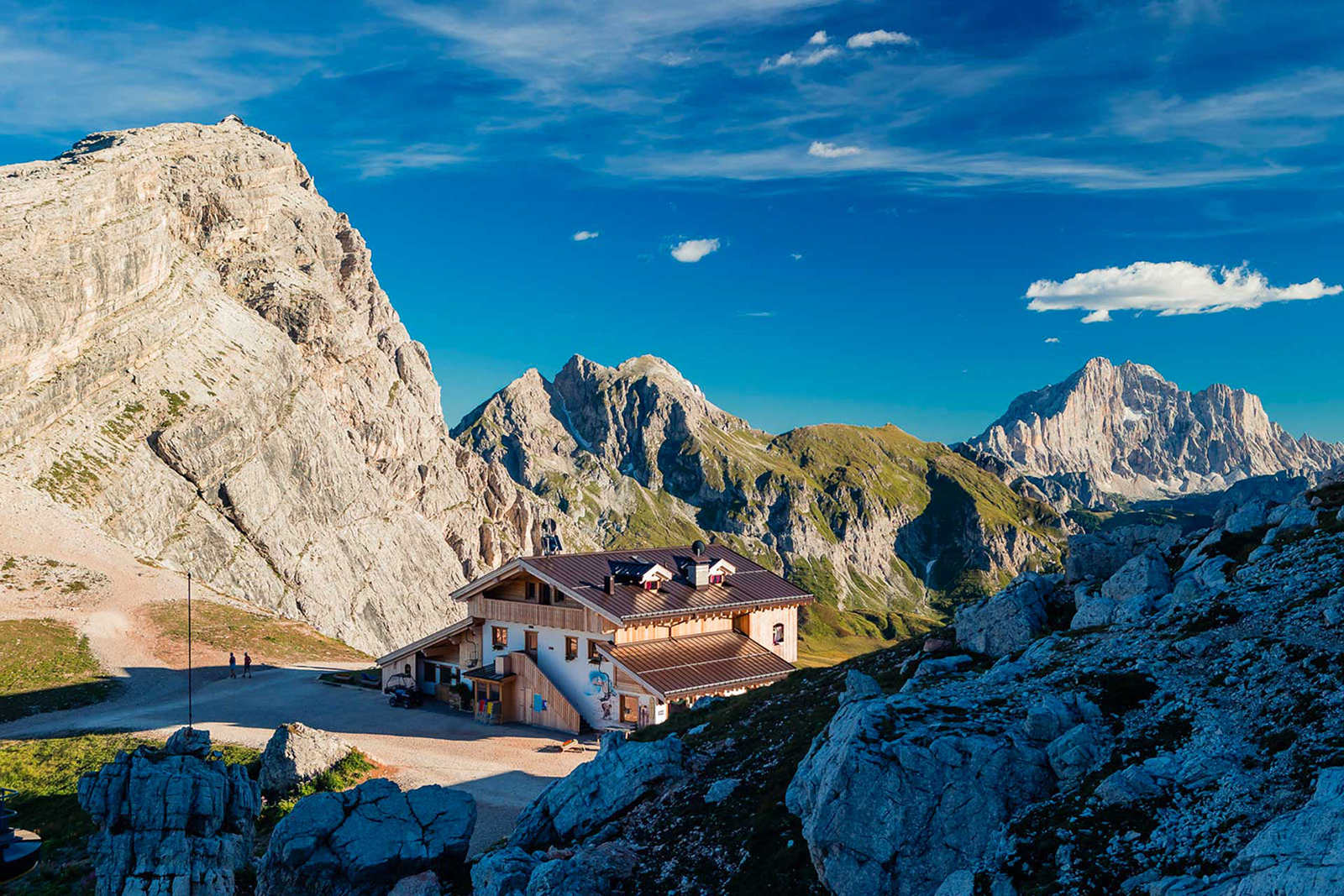
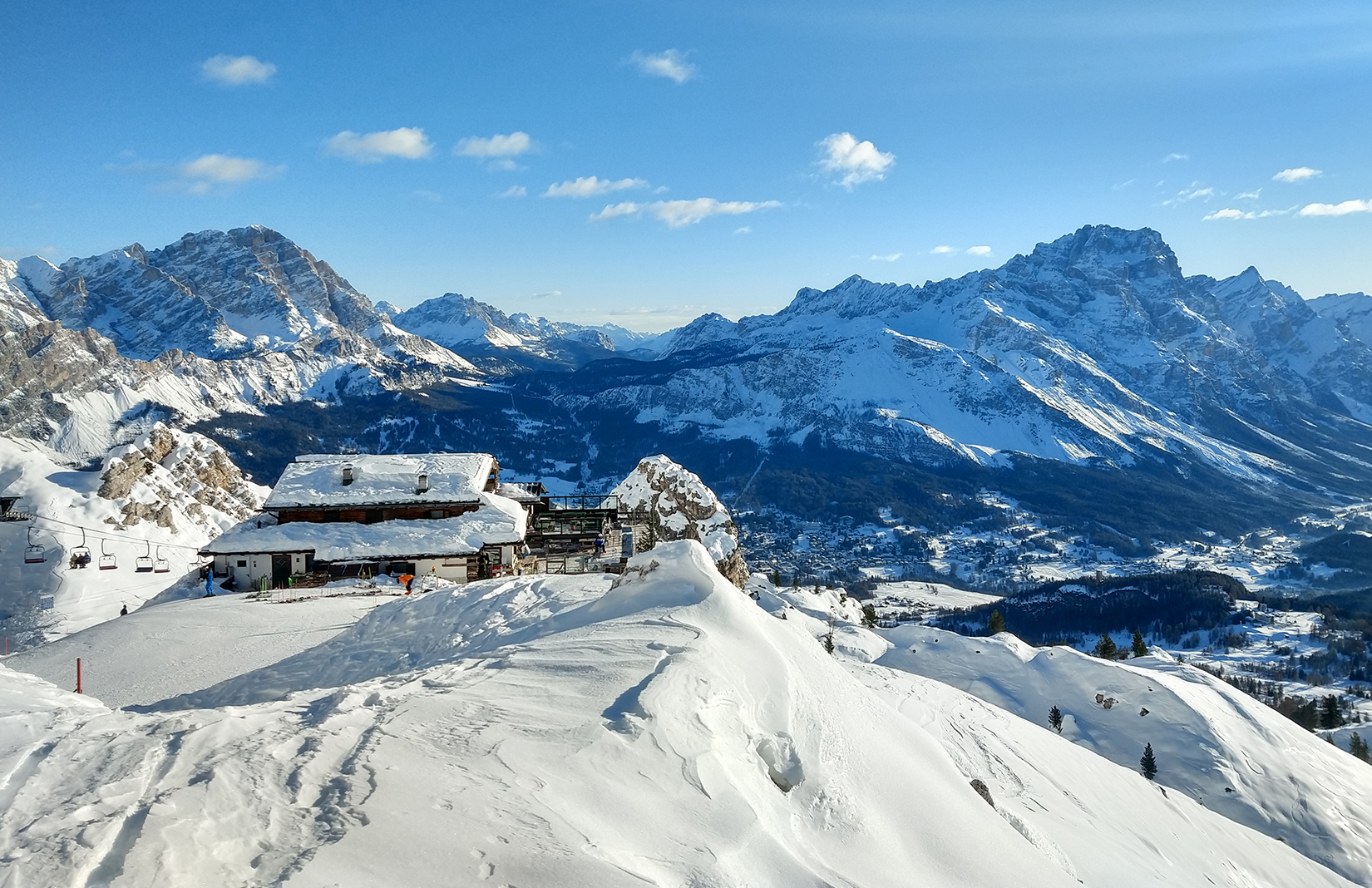
Breathtaking views of Cinque Torri, Civetta, Marmolada and Tofane are on the menu at this high-altitude hut on the slopes of Mount Averau. Helmed by chef Matteo Siorpaes, whose family has run the rifugio for 40 years, the restaurant serves up delicacies from the Veneto region’s rich culinary heritage and wines from across Northern Italy. The small adjacent hotel is the quintessence of alpine Italy. Rustic spaces have wooden panelling, Tyrolean chairs and an informal attitude that encourages social interaction. In between descents, guests can lounge on a terrace with panoramic Dolomite views while savouring a plate of cappelli d’Alpino (ravioli filled with cheese and nuts) and prosecco cake.
Sanbrite
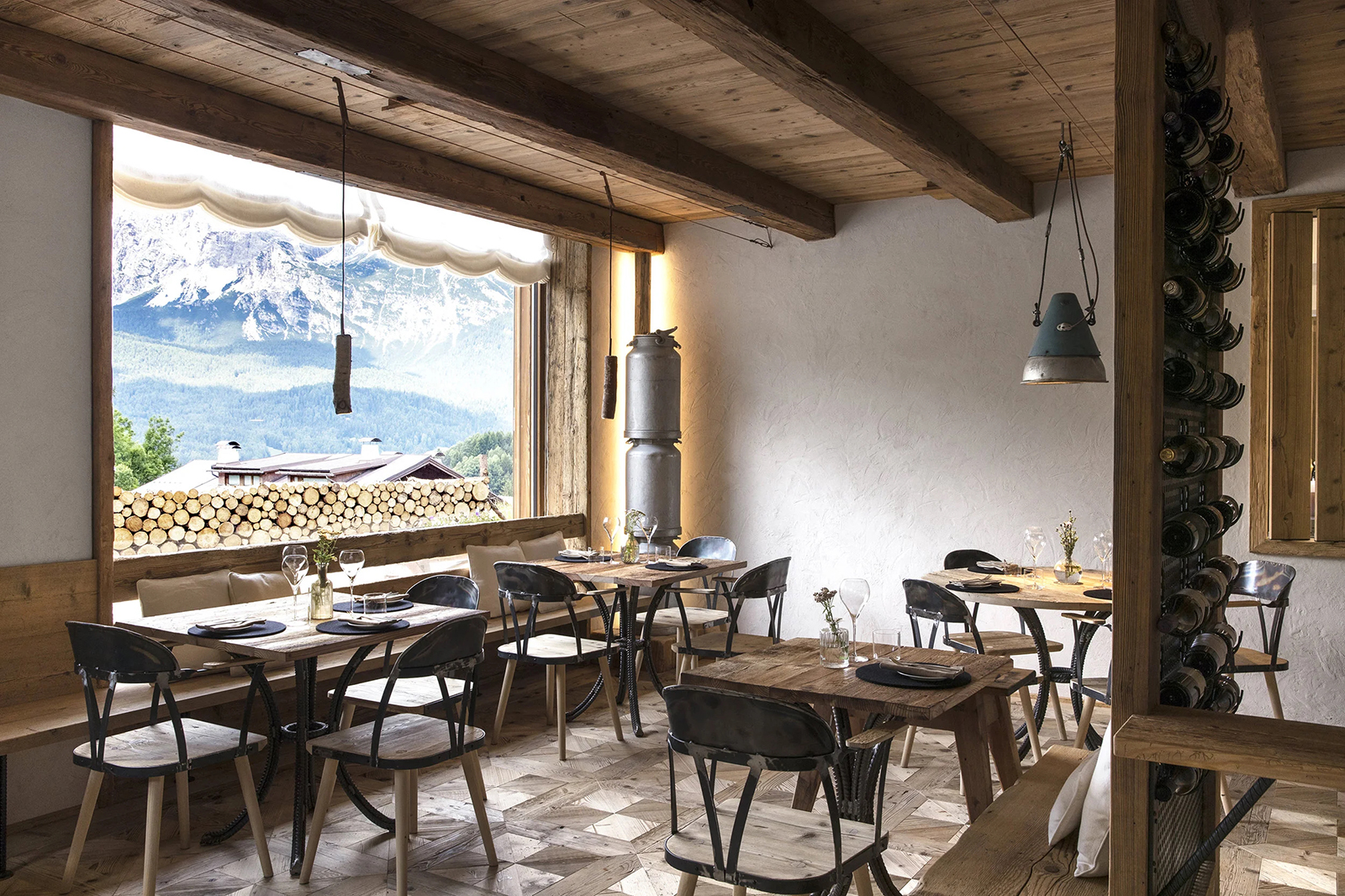
Couple Riccardo Gaspari and Ludovica Rubbini opened Michelin-starred Sanbrite in 2017 with the goal of offering sustainable cuisine made exclusively with produce from their own mountain estate. A former skier and assistant to chef Massimo Bottura, Gaspari has refined a fine-dining concept deeply rooted in his Dolomitic heritage, with nature at the centre. The location, an old barn next door to the Gaspari family’s cheese factory, embraces a cosy, rustic atmosphere reminiscent of a family home. A large window overlooks the Tofane mountains, bathing the creamy-hued space in natural light by day. With the addition of artisan-crafted furniture in wood and stone, the restaurant looks right out of a Renaissance painting.
Alajmo
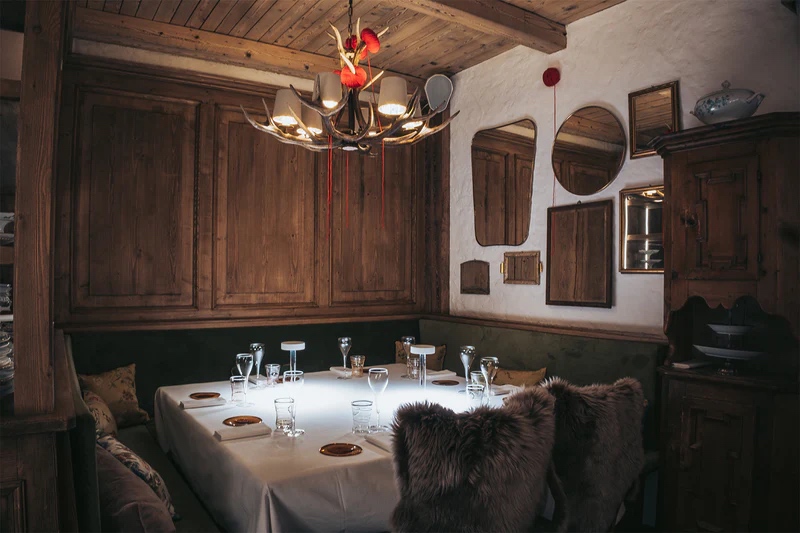
In 1964, the legendary El Toulà restaurant opened here, catering to international jet-setters. Now it’s been brought back to life as a fine-dining haunt, equally sought after by elite visitors. Michelin-starred restaurateurs Max and Raf Alajmo head up the three-storey space, welcoming everyone with aperitivi at the ground-floor cocktail bar Alfredo (named for Alfredo Beltrame, founder of El Toulà). The second and third floors house two dining rooms overlooking Cortina and beyond. The menu includes a spectacular house cappuccino di patate con trota affumicata e le sue uova (potato cappuccino with smoked trout and eggs), along with risotto al midollo, caviale e champagne (marrow risotto with caviar and champagne), a speciality of chef Mattia Barni and his team.
Zelda cocktail club
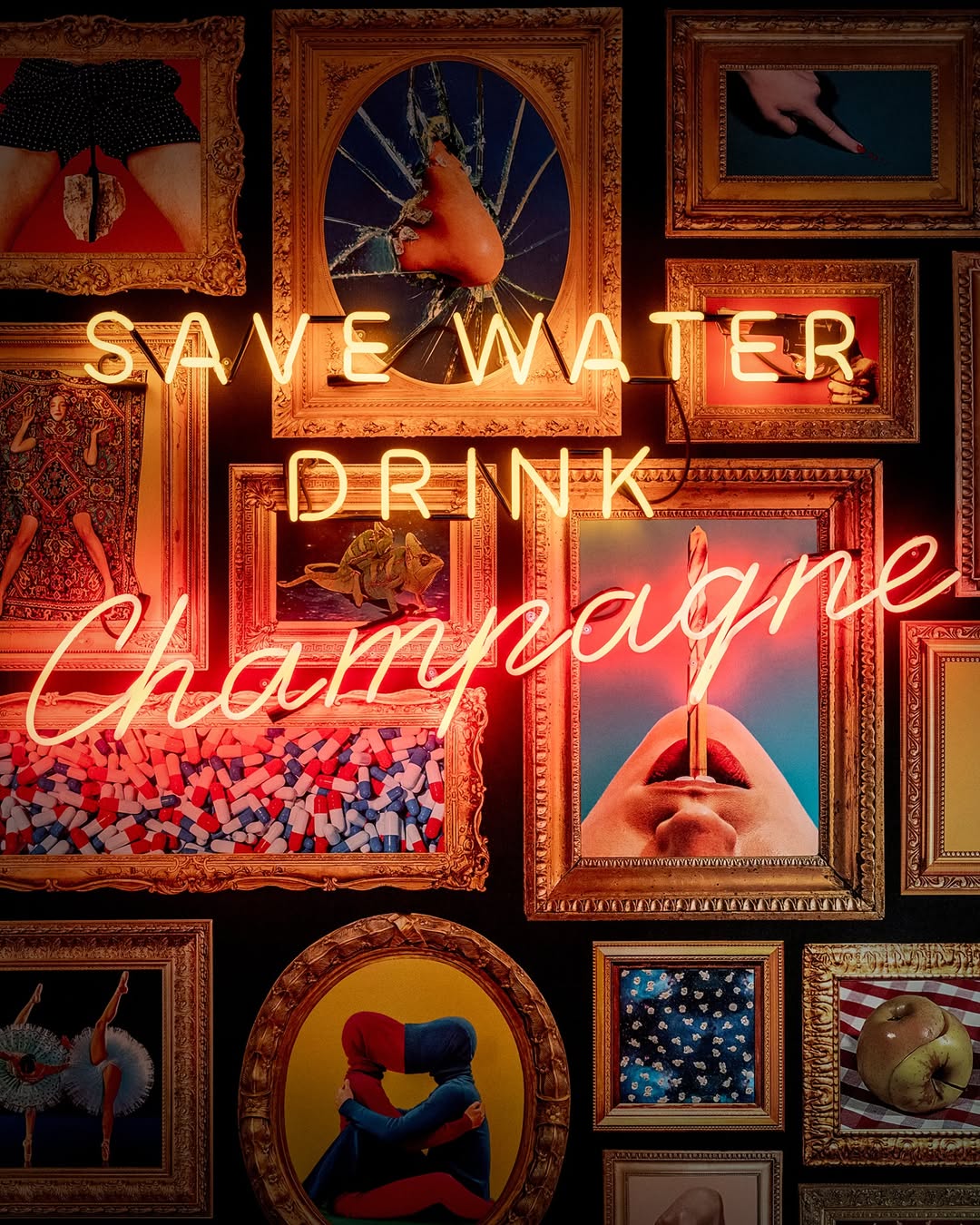
Sassy and flamboyant — like Zelda Fitzgerald, the muse behind the concept — this cocktail club within the Ambra Hotel embodies Cortina’s high-altitude, high-octane party spirit. Step into the hotel’s ground floor and you’ll find yourself in a pop-art installation. Walls covered in Toiletpaper magazine wallpaper and a ‘Save Water Drink Champagne’ neon sign by F/Art set the tone, part of the design by architect Gian Luca Perissinotto, Burro Studio and mother-daughter hoteliers Elisabetta Dotto and Maria Vittoria. The drink list, as dazzling as the space, comprises three main themes: Dolo-MITICO for aperitivo; Bubble Experience; and Warm & Cold Sensation for after dinner.
Where to shop
La Cooperativa di Cortina
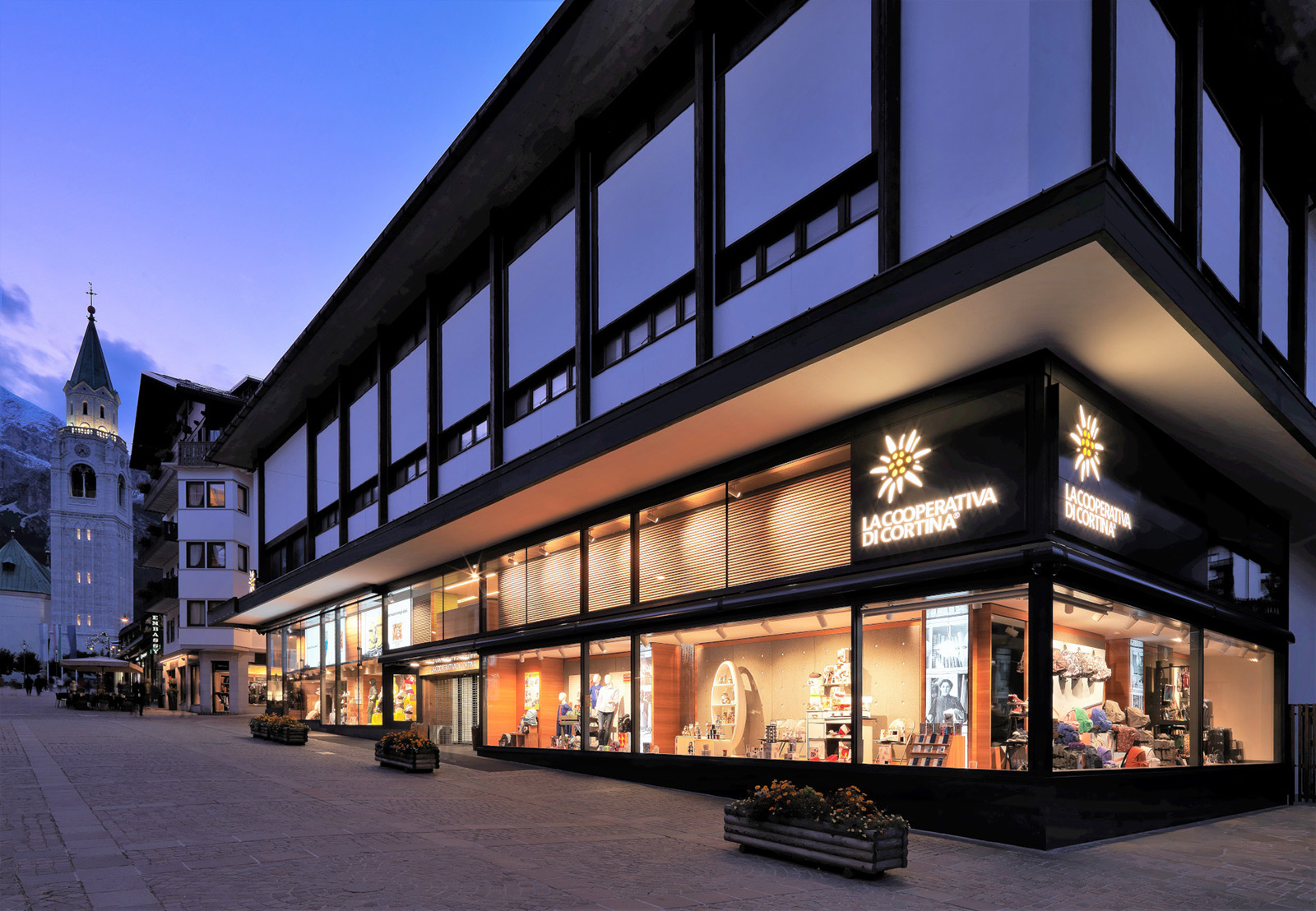
Italy’s highest shopping emporium, dating back to 1893, is an essential factor in Cortina’s heritage and community. Originally a warehouse selling flour, wheat and fabric, it transformed into the town’s biggest retail hub to showcase the wealth of local artistry and craftsmanship. Visitors can browse through books, homeware, clothing, stationery and gourmet treats. There’s something for every palate and every whim.
Magamaison Cortina
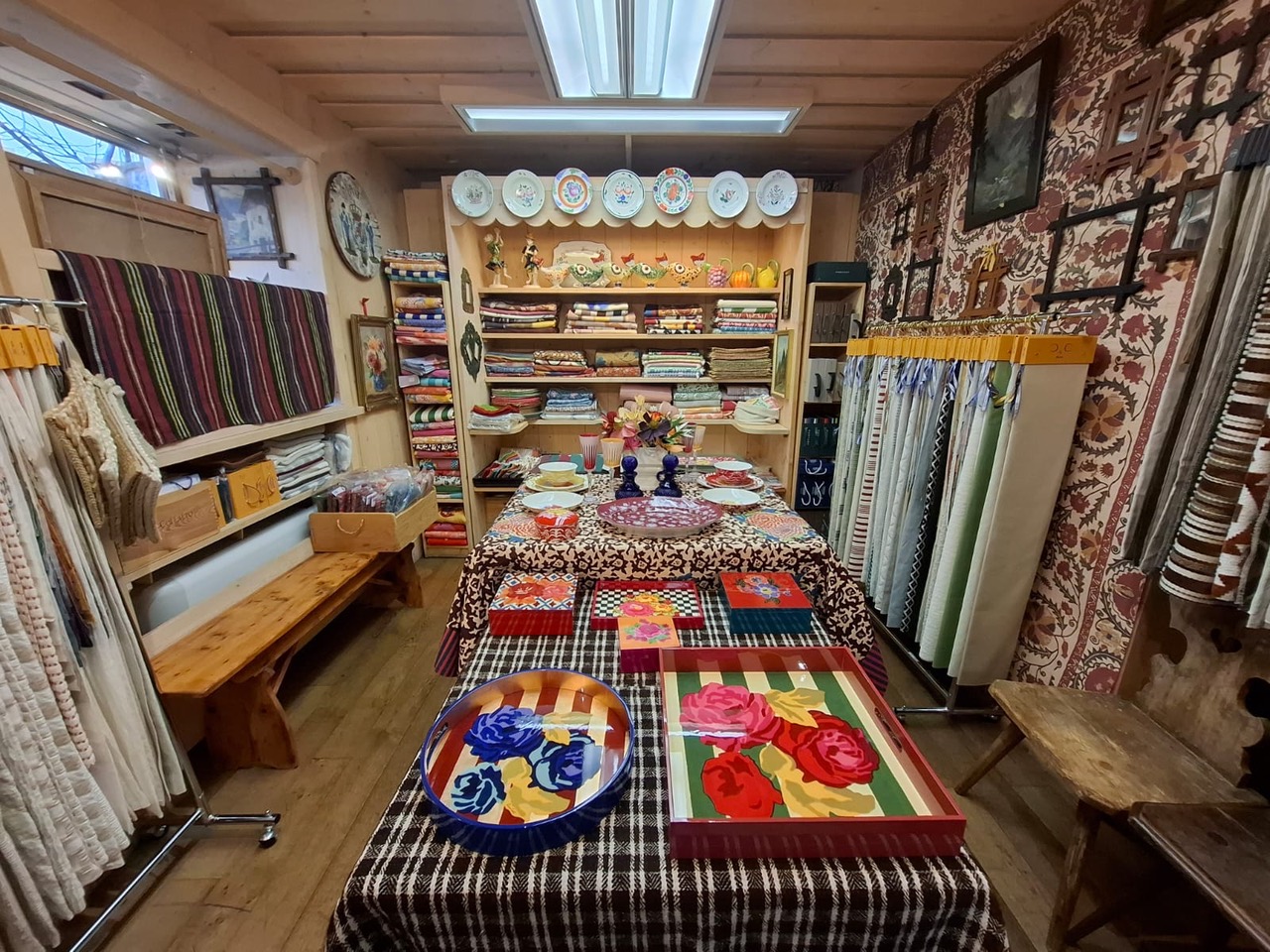
Founder Maria Gabriella Sorbara Sammartini, originally from Bologna, chose Cortina as her second home after falling in love with the town during a holiday. Her shop in Piazzetta San Francesco is a love letter to the town that embraced her: a library of fabrics and objects by local and Italian artisans that reflect her extensive research and eye for Cortina’s special aesthetic.
Lovat Patisserie
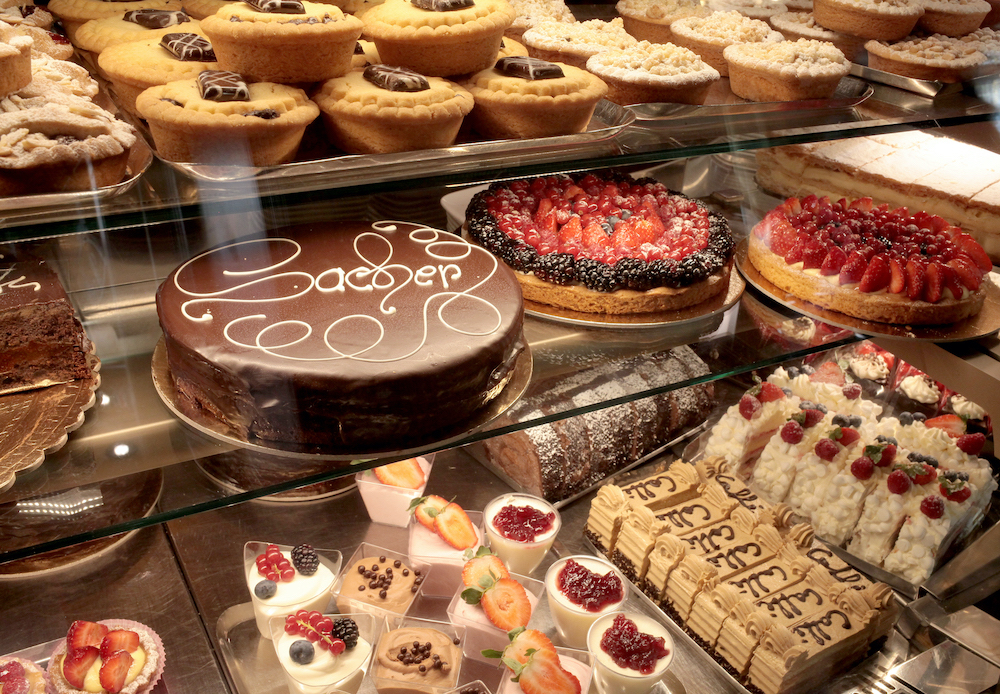
Founded in 1928 at the very centre of Corso Italia, this patisserie is a cherished landmark for locals and travellers, who visit for the legendary cakes or a cup of espresso with a side of people-watching.
Despite a 2005 revamp, the shop still retains its original Ampezzano style and old-school decor. A selection of pastries squeeze into the counter, including the must-try Sachertorte and Flockentorte.