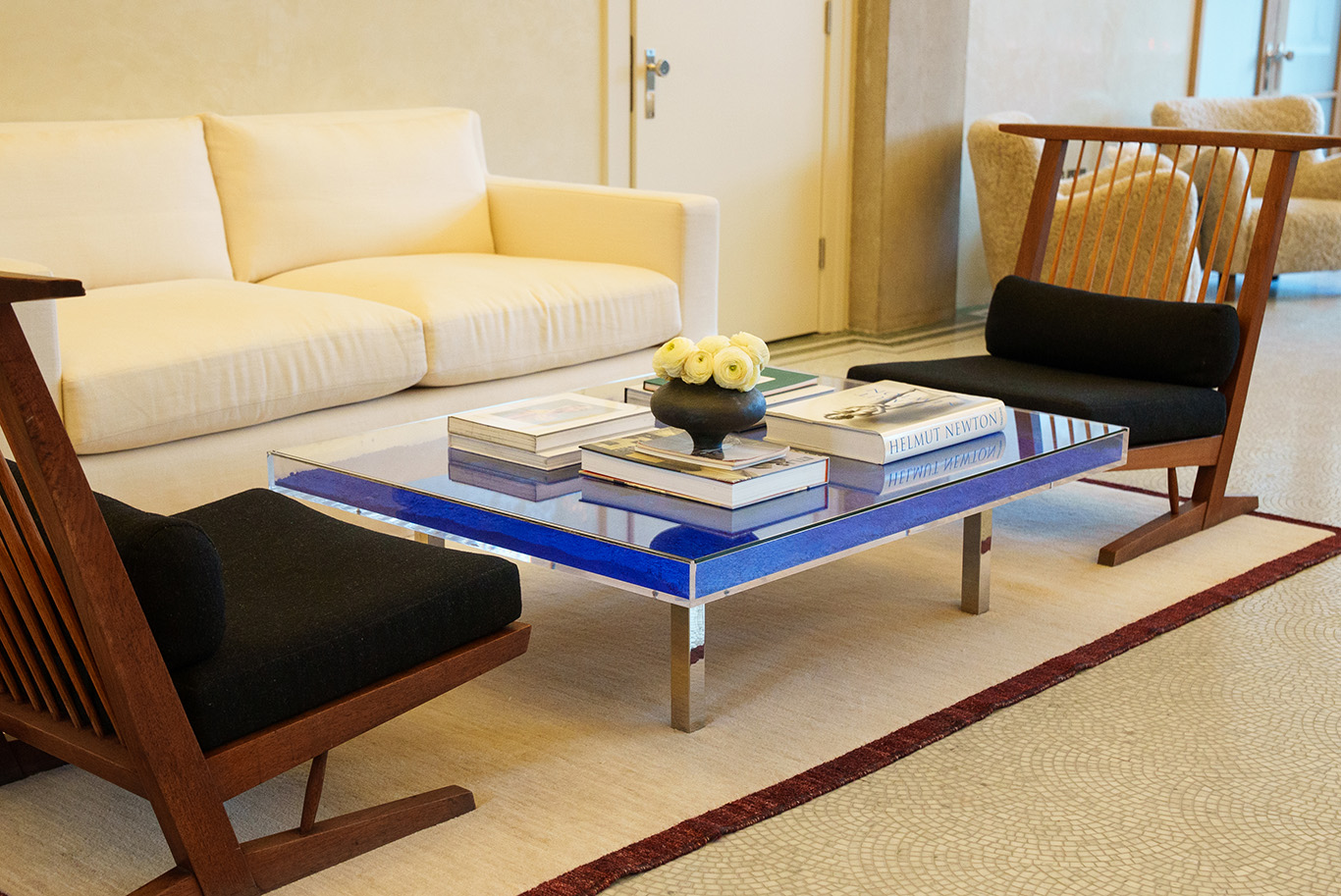
In the lobby at 180 Thames, a new residential development set back from Victoria Embankment in London, a Lalane Rhinocéros screen oversees a lofty space furnished with a raw George Nakashima Conoid table and two Nakashima Conoid Cushion chairs. But arguably what visitors are most drawn to is the Yves Klein coffee table, styled with flowers and a selection of books. Essentially an Yves Klein pigment painting — his Untitled Blue Monochrome, perhaps — mounted horizontally and protected in a Perspex box, it pulls immediate focus with its deep, bluer-than-blue cobalt hue. The Perspex practically melts away, leaving the pigment to mesmerise.
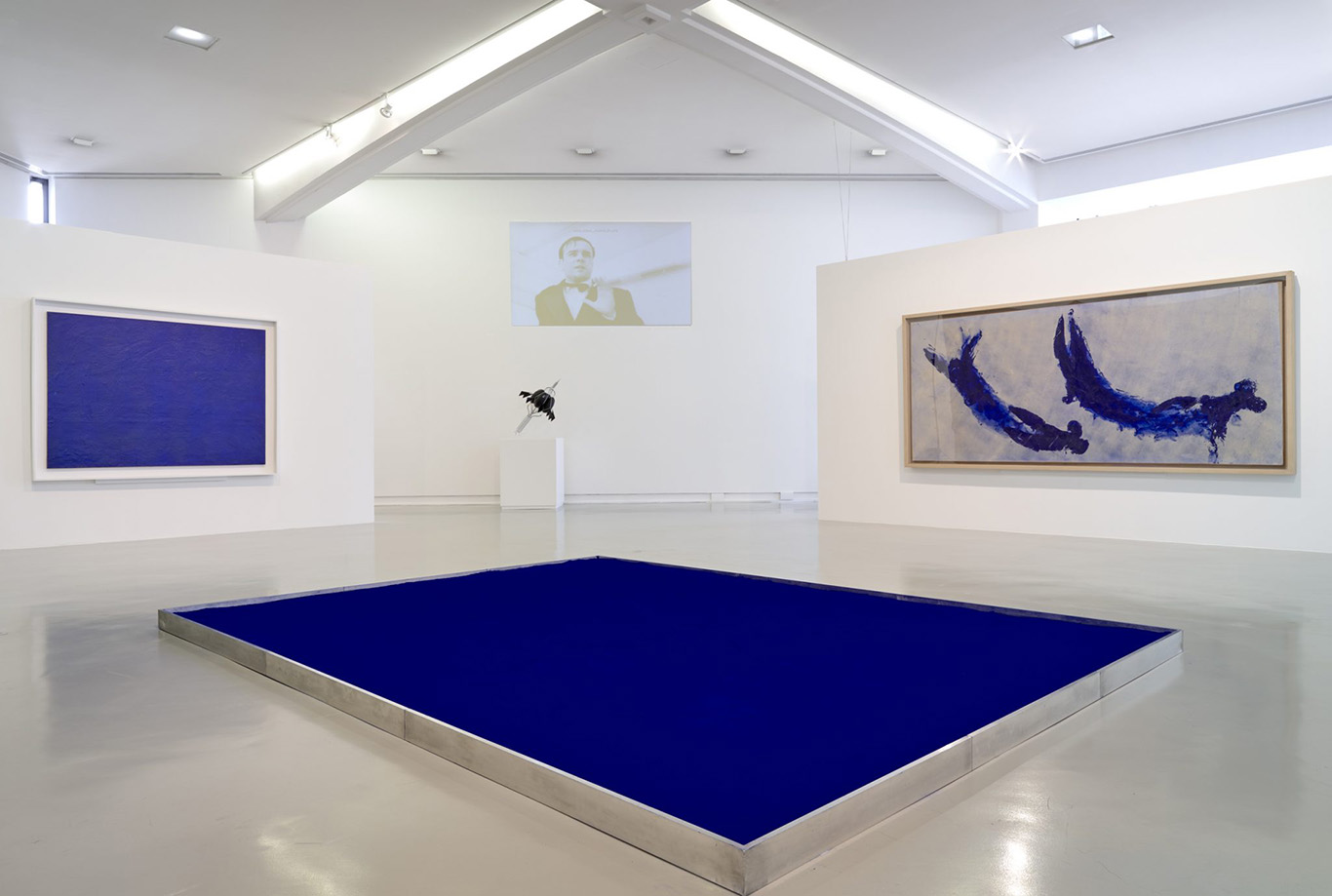
‘The colour is incredible,’ says Alex Eagle, who designed the space with her partner Sophie Hodges. ‘No one even needs to know who Yves Klein is for the colour to resonate and feel special.’
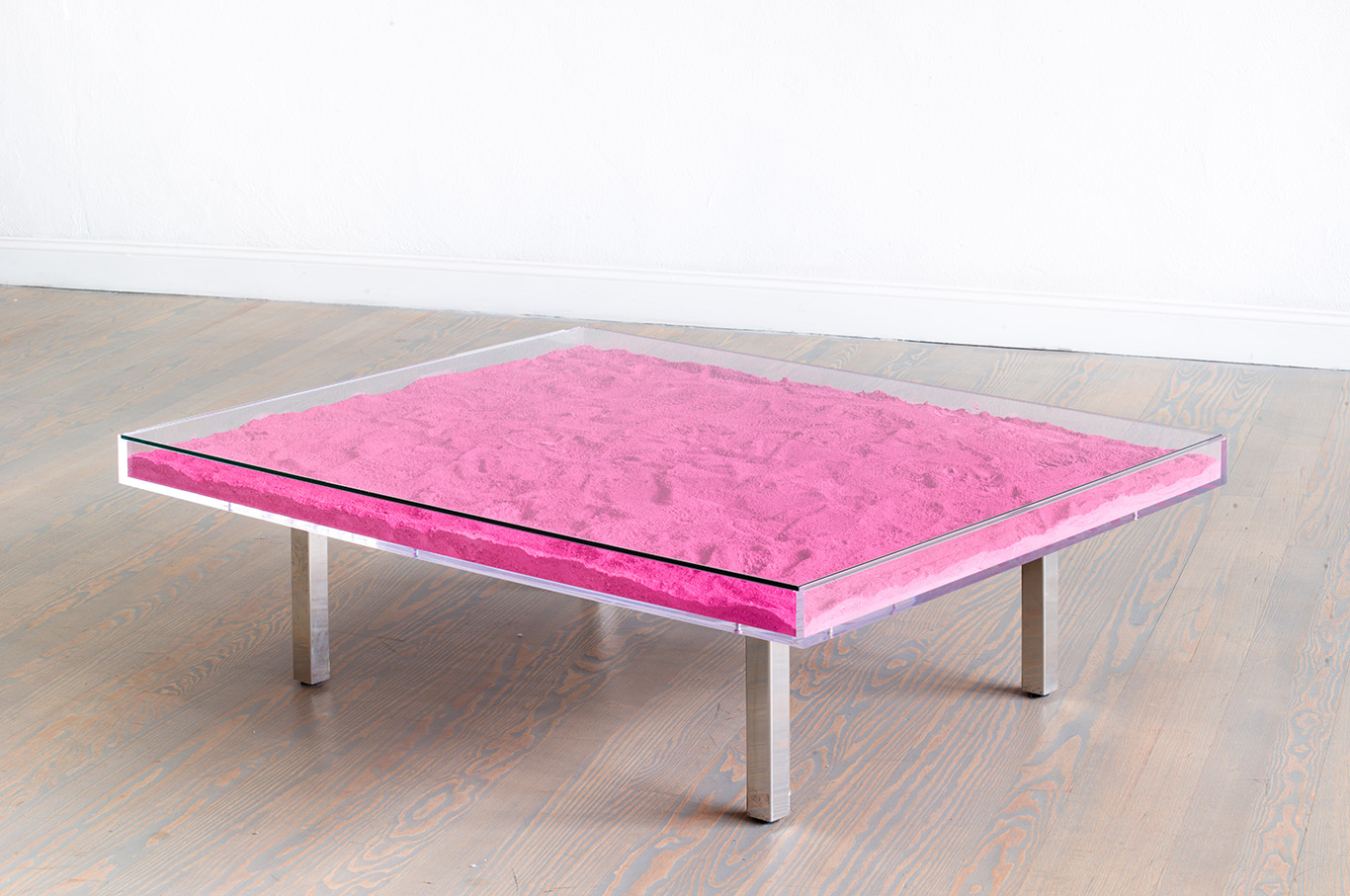
The Table IKB by Klein, one of the most influential artists to come out of midcentury France, is a rare item, full stop, but also a rare piece of design by a blue-chip artist that has held its value for decades. What distinguishes it from other collectible design is that it never appreciates, at least beyond rises in labour, raw material and shipping. It doesn’t depreciate either. Pieces in International Klein Blue, the colour Klein famously registered with France’s National Institute of Industrial Property, run around £20,000. As do the versions in Monopink, another registered hue, and gold leaf, a favourite of Klein’s for its ‘absolute’ limitless depth. Recently the latter rose slightly in price along with the price of gold.
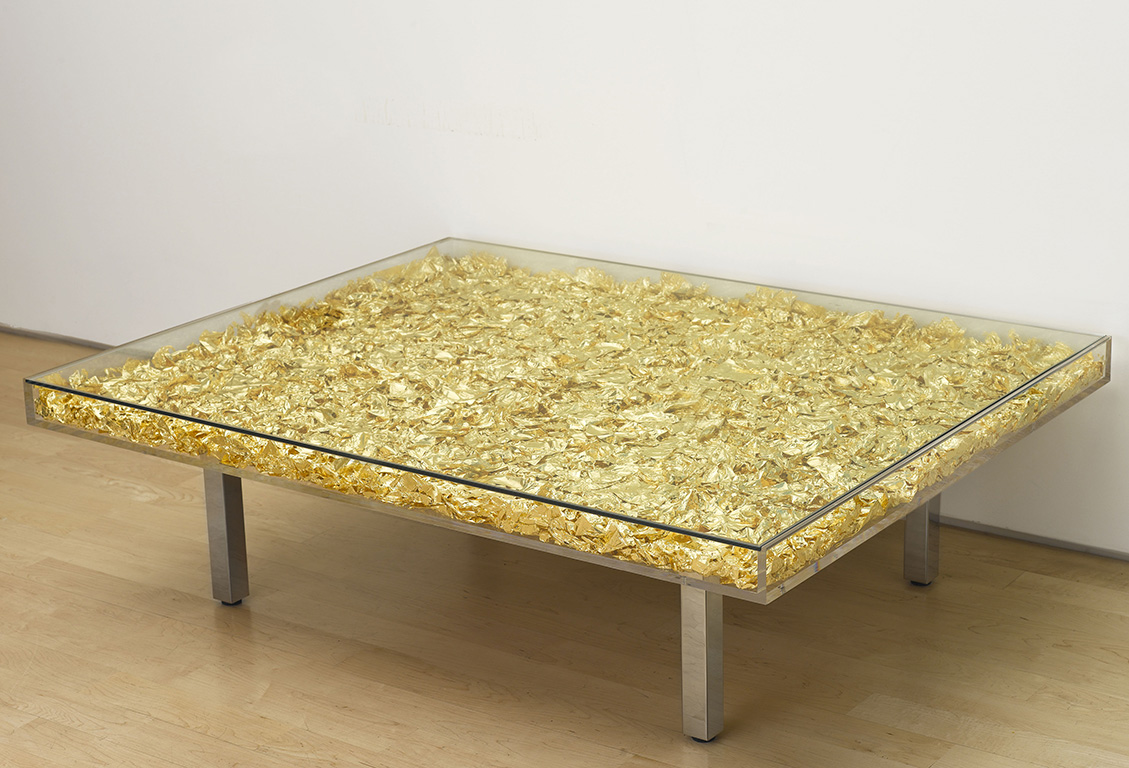
The 180 Thames version is one of, some say, 1,000 in the world, produced on demand by the artist’s estate, as long as the demand is there.
Which it is. Jon Tomlinson, who sells functional design created by artists through his New York company Artware Editions, has installed multiple tables in local Chanel boutiques, and recently shipped one down to Chanel in Boca Raton. The supertall residential tower 432 Park Avenue has two in the lobby. The architect Peter Marino, says Tomlinson, has placed them all over the world. ‘In New York City and the Hamptons alone, I’ve installed over 100 in blue, gold and pink.’
Klein’s career was a heroic effort to capture immateriality with paint and infinite space in a finite work. Yet it lasted only eight years before he died suddenly, in 1962, of a heart attack. At that point he’d constructed two tables as a lark, both in wood. ‘He was playing around with the conception of infinity,’ says Tomlinson. ‘He basically took a painting, laid it flat and put legs on it.’ The simple alteration challenged what an item of furniture can be. Yes, it can serve as a surface for display, as at 180 Thames, or it can exist as a showpiece in and of itself. Sadly the artist didn’t live to see the tables used as they were intended, ‘and he never oversaw this edition we’re selling now,’ says Tomlinson.
Few tables were manufactured before the 1980s, when Klein’s way with colour began to catch on commercially. Klein’s widow, Rotraut Klein Moquay, trialed the Perspex edition with stainless-steel underpinnings, and has overseen its manufacture ever since through the artist’s estate. Each Table IKB is handmade in France and granted an alphanumeric serial number and a packet of authenticity. Those without authentication are likely the work of charlatan.
Tomlinson reckons the gold version, despite its ‘Trumpian connotations’, is stunning in the right setting. The pink tends to sell well in Miami and LA. ‘But,’ he says, ‘clients want someone to know the minute they walk into the room that it’s an Yves Klein, so they prefer the blue.’
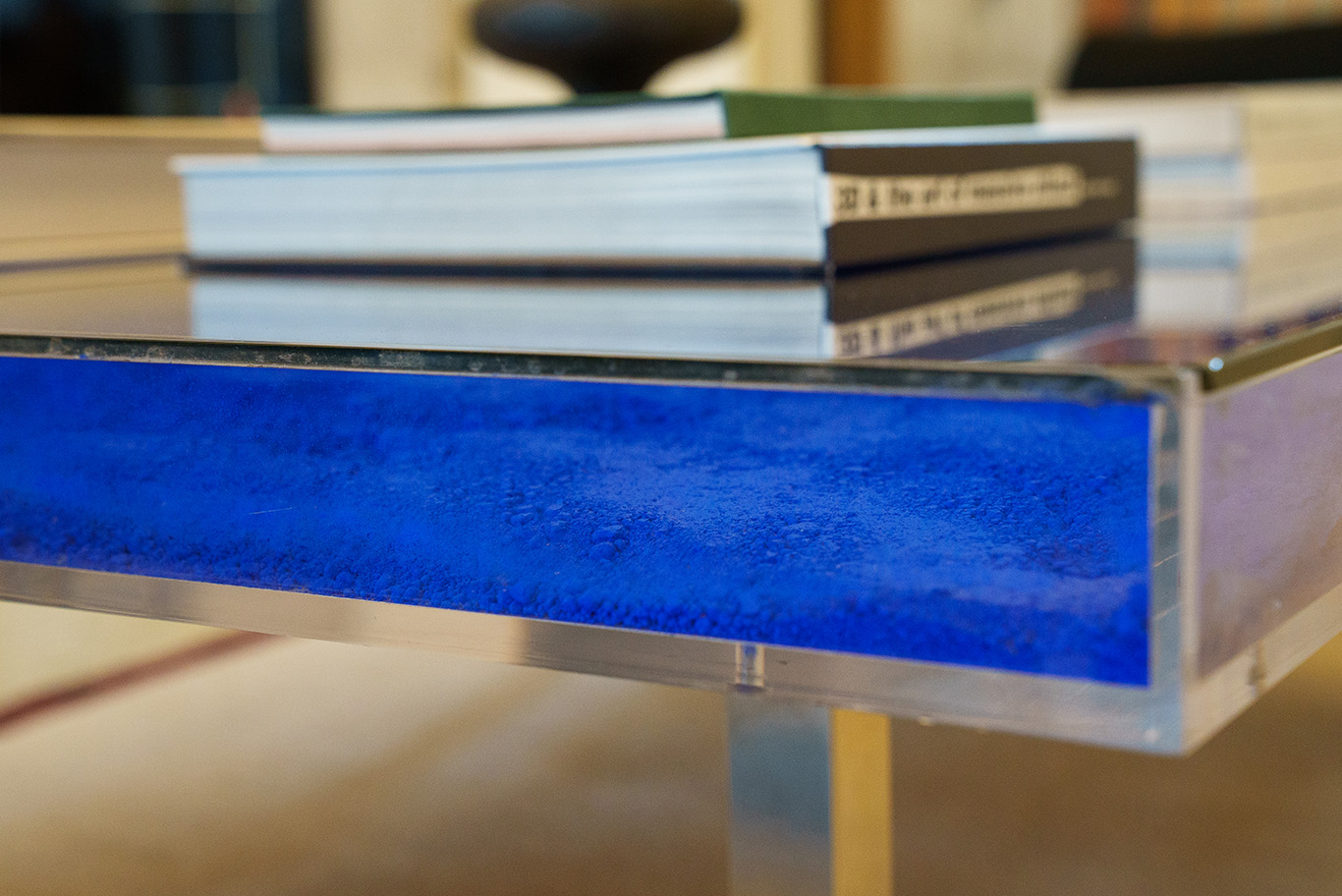
To see one in the wild, set up for daily use, is unexpected, almost surreal. ‘The fact it’s a living, working, usable sculpture makes it an incredibly versatile and special thing in one’s home,’ says Eagle. That duality, however, is a responsibility. The loose pigment is scarcely easier to control than sand in a playground box. Tomlinson, who owns all three colours, says the pigment is vulnerable to static electricity, like when a cleaner uses a Swiffer or microfibre cloth. ‘Over time the pigment will crawl up the side or the gold leaf will move and stick to glass,’ he says.
‘At my country house, sometimes friends will try to put up their feet on it. And I hate to be that person, but don’t put your feet on that table.’ He’s fielded calls from certain Chanel boutiques that need help buffing Perspex that’s been scuffed by the shoes of bored shopping partners.
‘Kids are fascinated with the gold one,’ says Tomlinson. ‘When it’s super-dry in winter you can make the gold leaf move with your finger. But in the gallery we serve pizza on them, have drinks…. We tell people, Don’t be afraid of it.’