‘Many contemporary artists now say that Vasarely was 50 years ahead of his time,’ says Pierre Vasarely, grandson of Victor and president of his namesake Foundation. At the height of his career, the Op Artist proposed projects to IBM. He was venerated by David Bowie and Andy Warhol. He seemed to grasp the globalised, algorithmic, metaphysical aesthetics of the future while anticipating the scale of their social challenges.
In the late 1960s, Victor Vasarely saw the beginnings of technology and industrialisation usurping creativity, and predicted the rise of monotonous ‘grey cities’. ‘We are at the dawn of a more universal consciousness, skyscrapers hide the sun, neurosis, moroseness, affect the inhabitants of the big suburbs, of the big agglomerations,’ he declared in his manifesto, Polychrome City of Happiness. ‘The solution to all these evils goes through an integration of plasticity in our society’
‘He warned people to be careful,’ says his grandson. ‘We are planning cities without beauty, colour and nature — and we will face big problems in the future.’
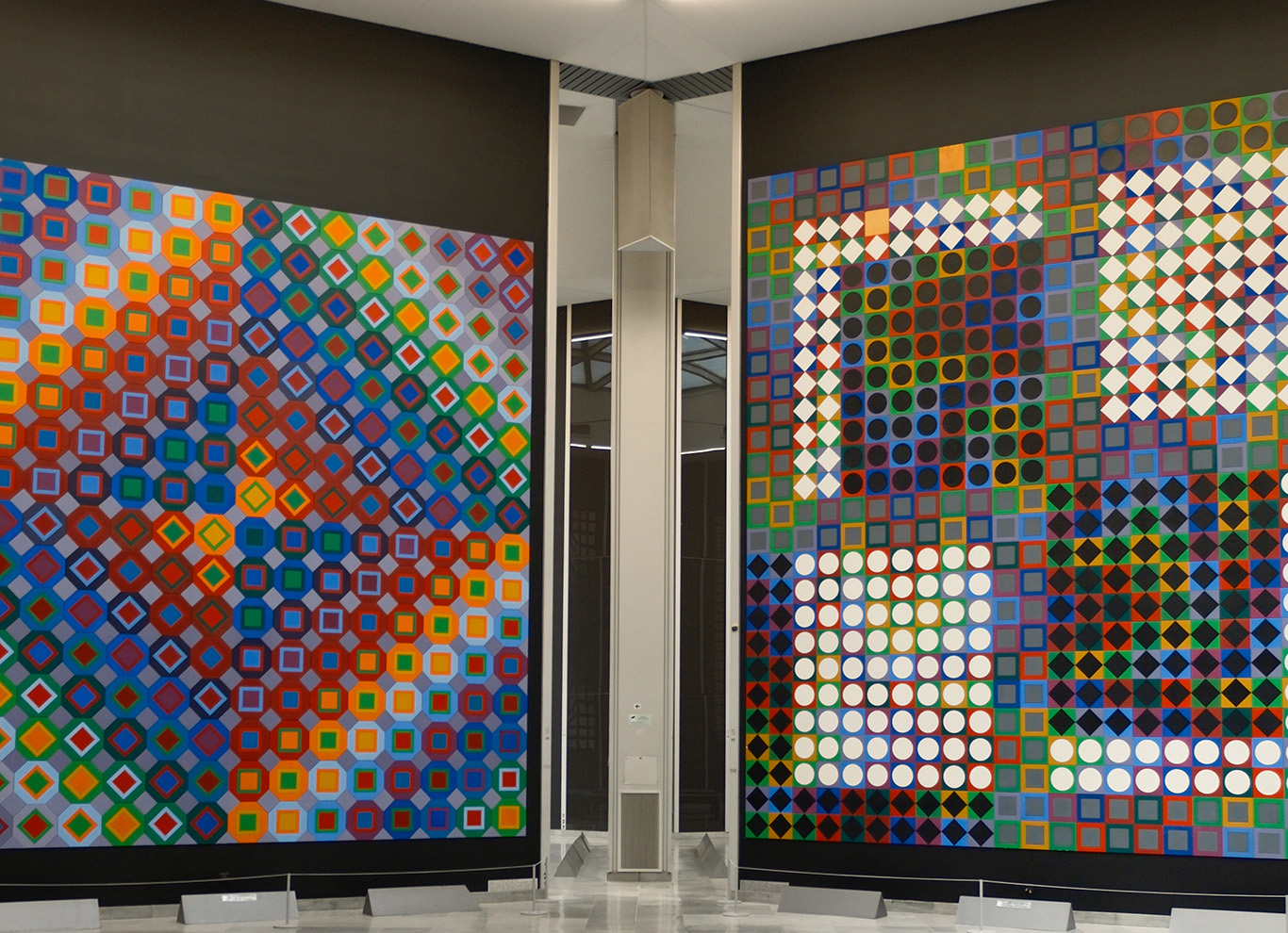
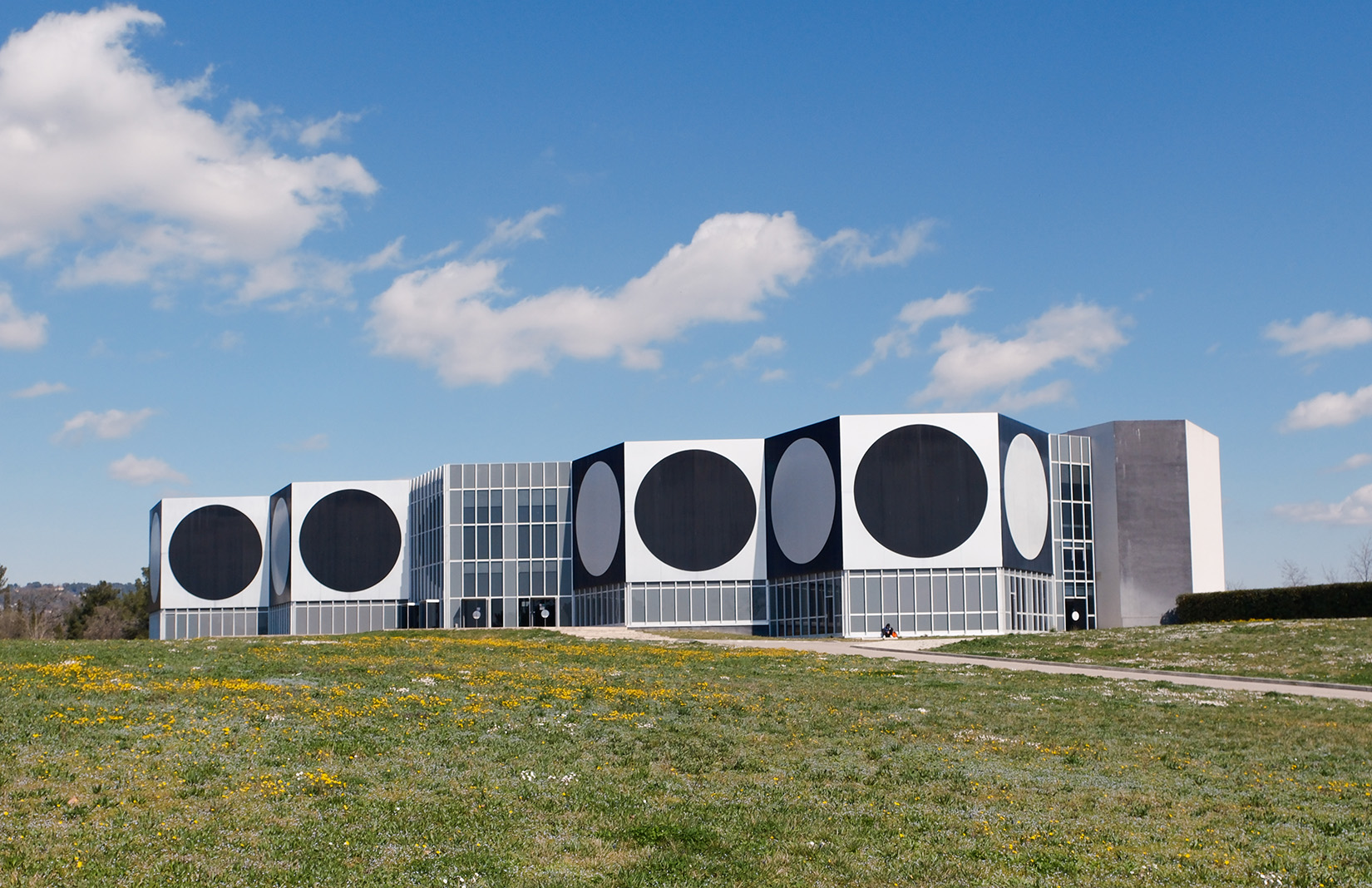
That was decades ago. This month the Vasarely Foundation’s Centre Architectonic celebrates the 50th anniversary of its inauguration on 14 February in 1976. Located in the suburbs of Aix-en-Provence, the building was imagined by Victor and his wife Claire, also an accomplished artist, as a total work of Op Art and architecture for ideals of utopian urbanism. It was a 5,000sqm piece of urgent activism to empower young artists to work beyond canvas to new monumental, non-fungible and urban realms. Completed one year before the Centre Pompidou in Paris, it was an extension of Bauhaus thinking for new generations with new problems.
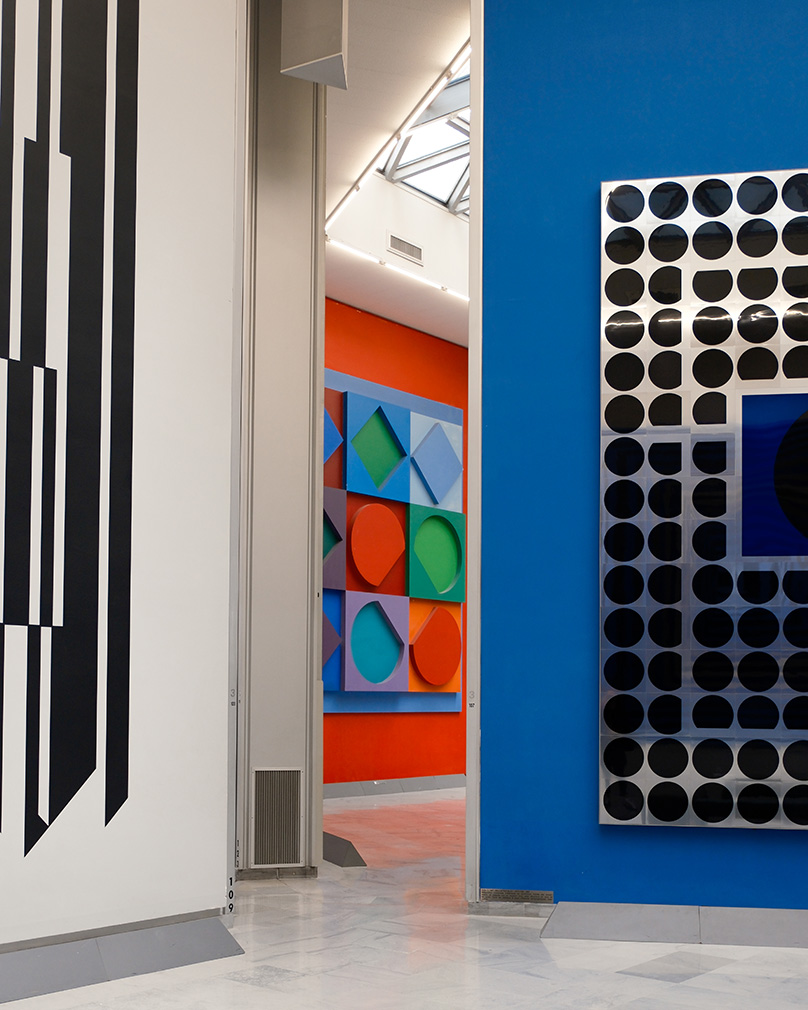
Photography: Harriet Thorpe.
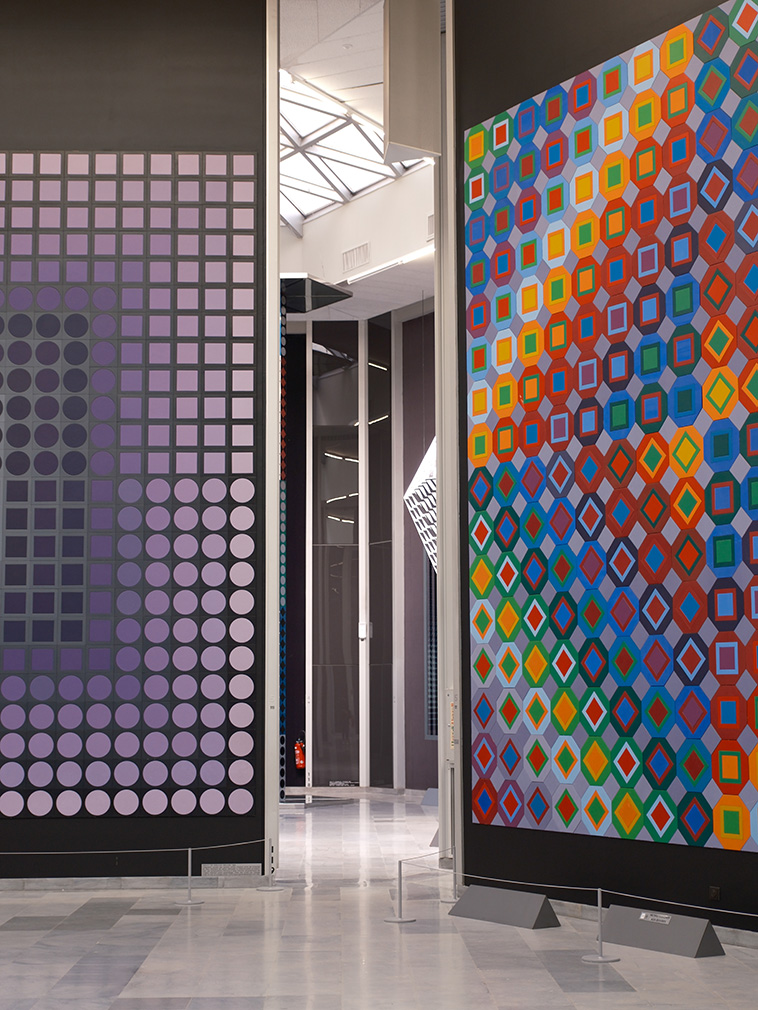
Photography: Harriet Thorpe.
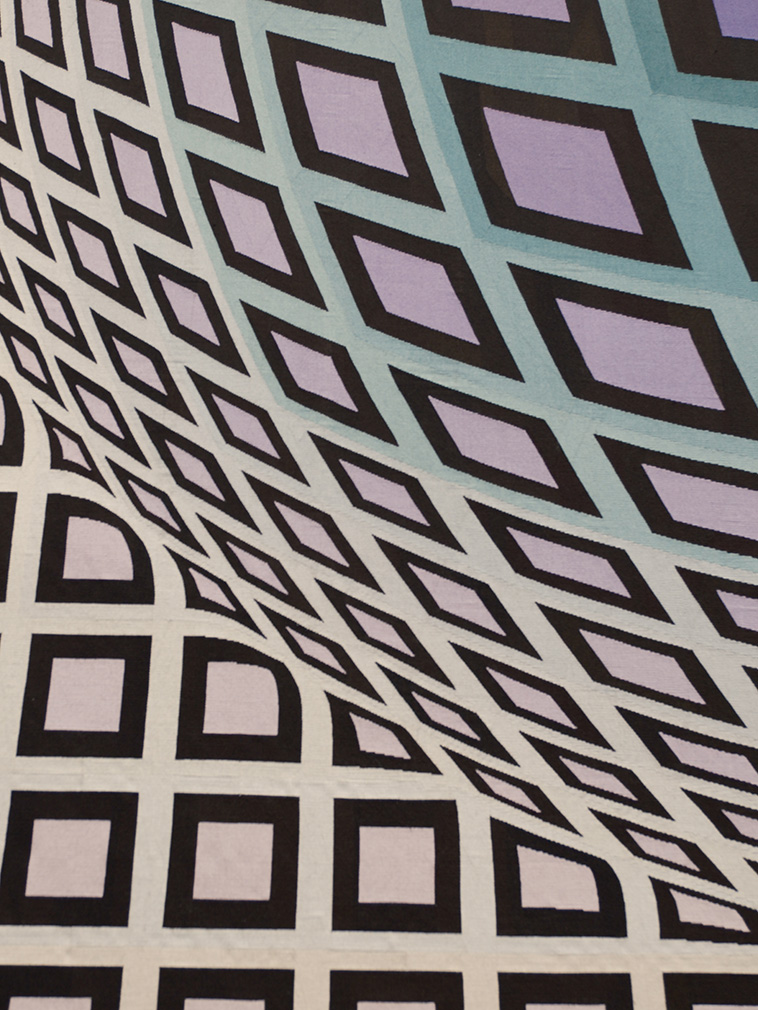
Photography: Harriet Thorpe.
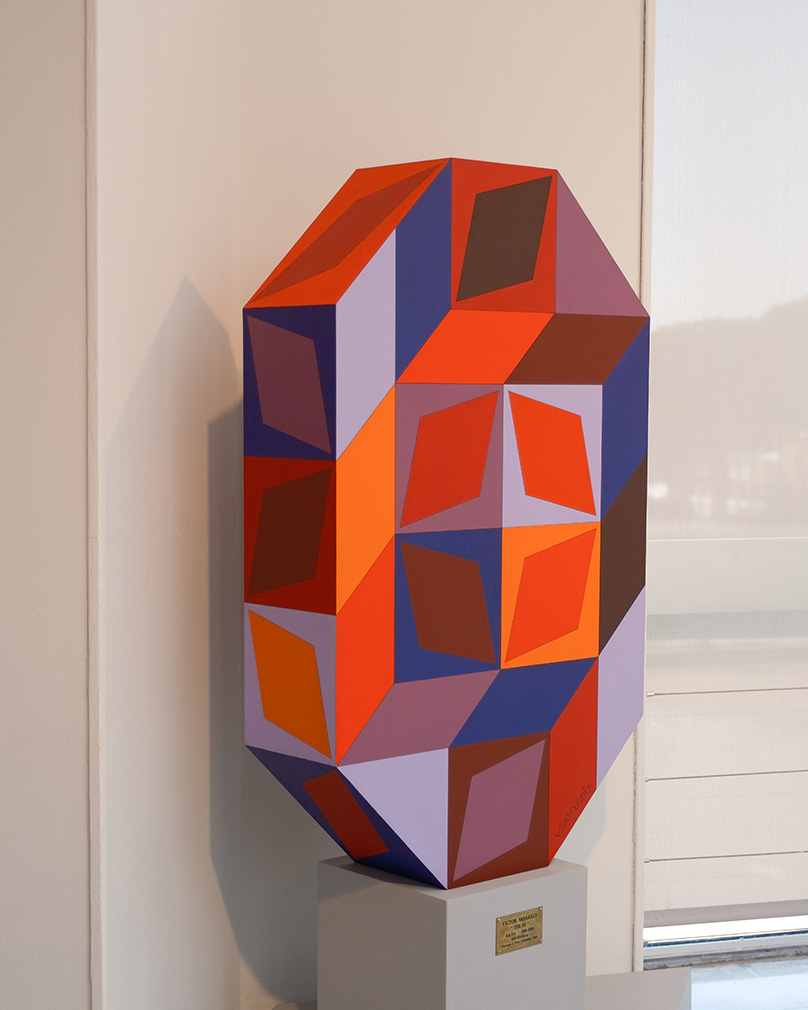
Photography: Harriet Thorpe.
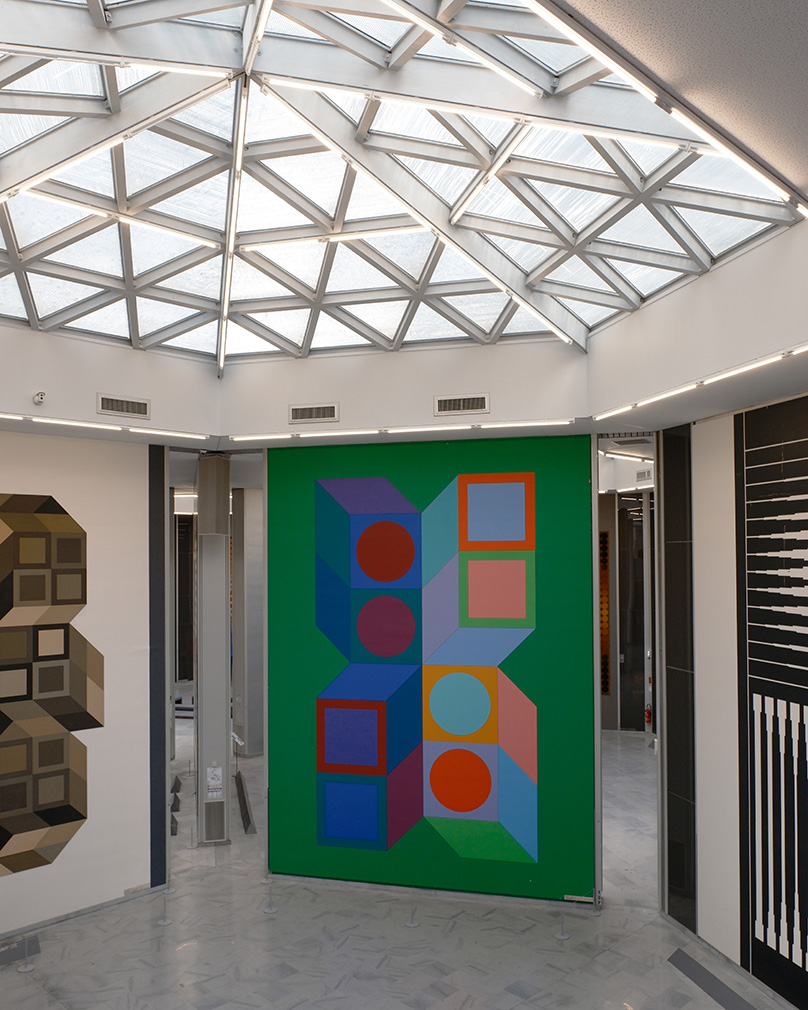
Photography: Harriet Thorpe.
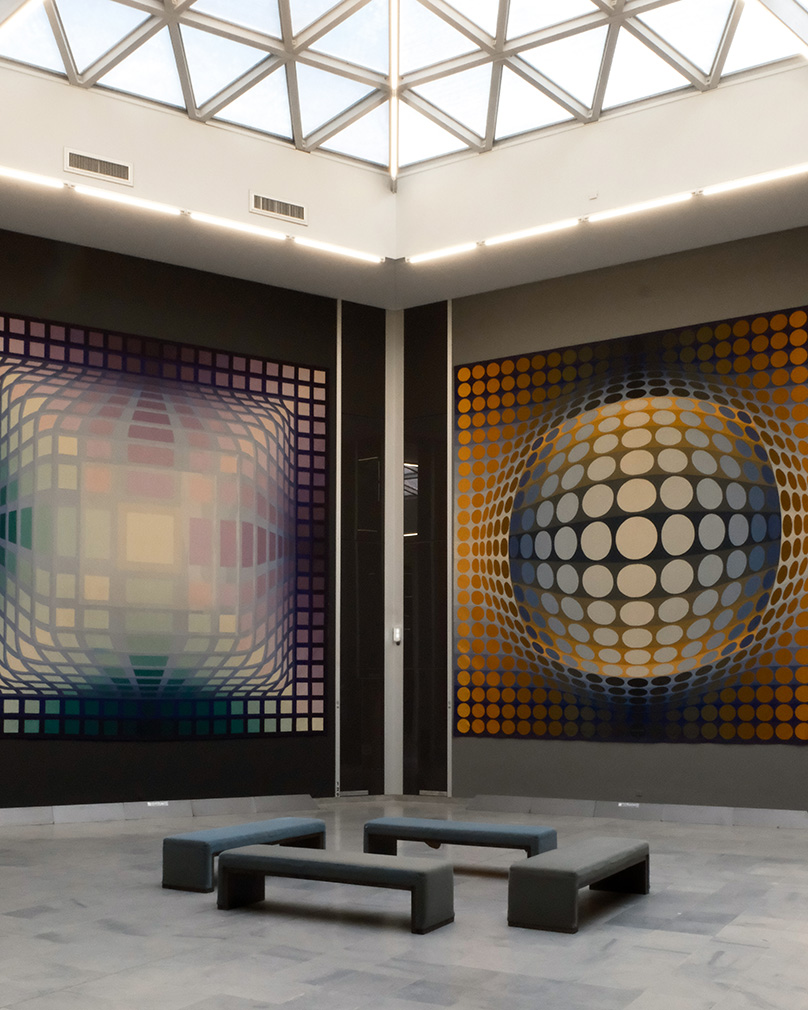
Photography: Harriet Thorpe.
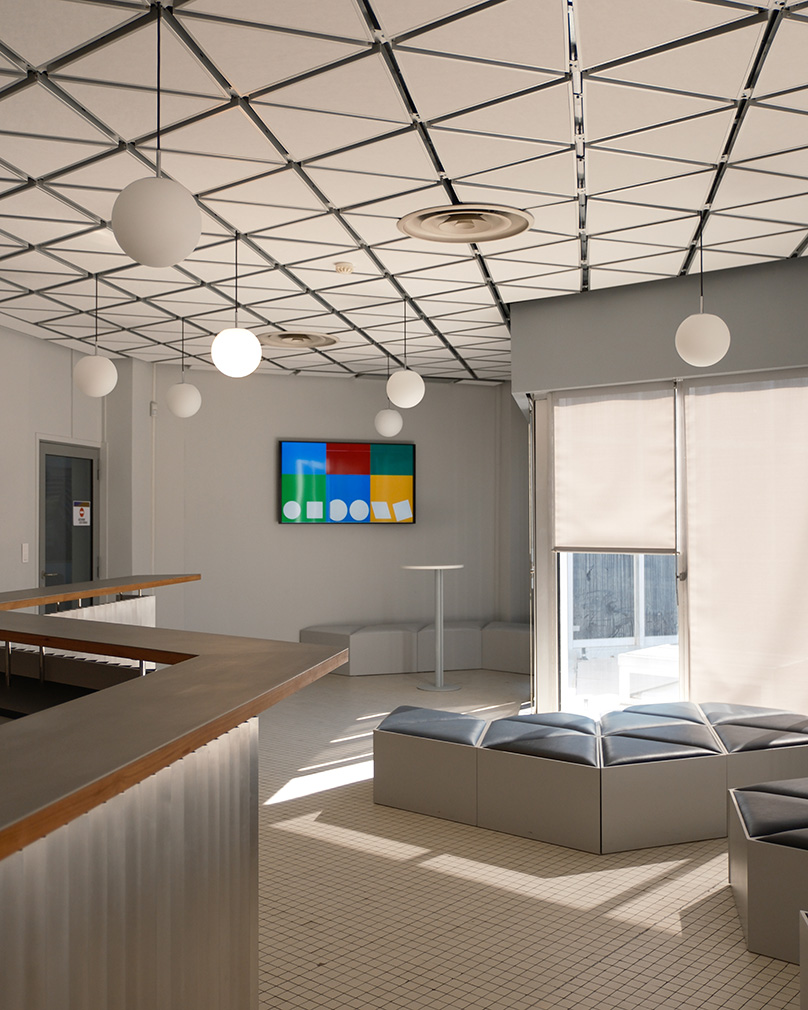
Photography: Harriet Thorpe.
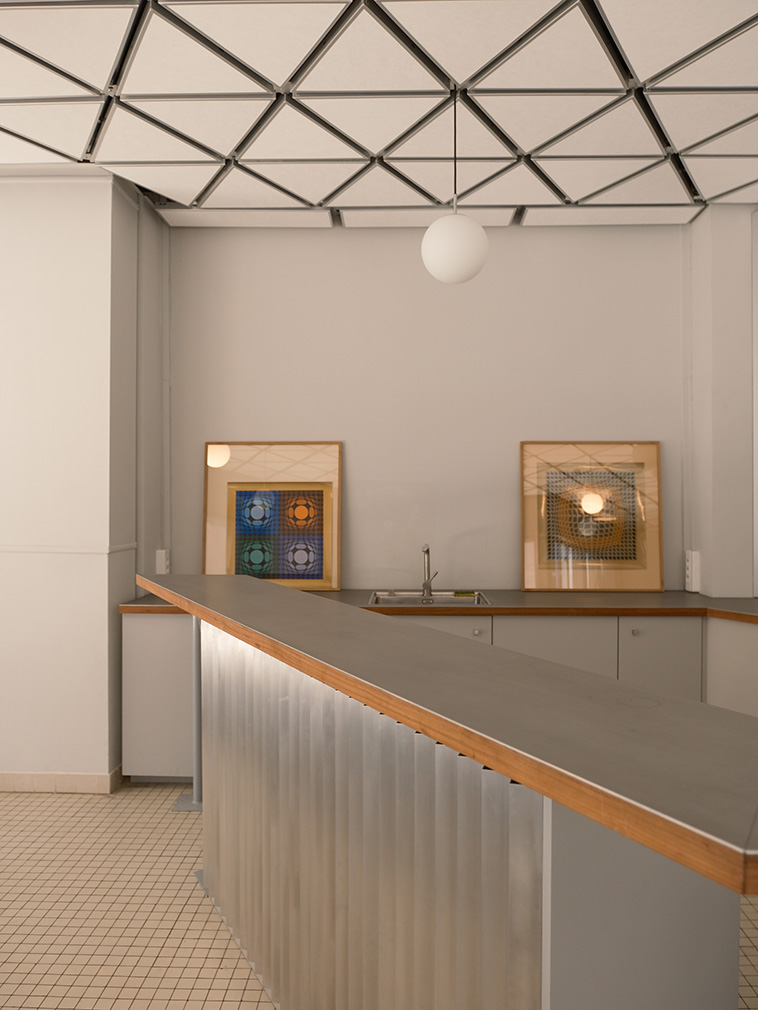
Photography: Harriet Thorpe.
Born in Hungary, the Vasarelys met while studying at the Bauhaus-inspired Mühely school in Budapest and moved to Paris in the 1930s, where Victor worked in advertising while cultivating his pioneering style. Featured in MoMA’s 1965 exhibition The Responsive Eye during the peak of his success, Vasarely became synonymous with optical, spatial, kinetic and geometric environments.
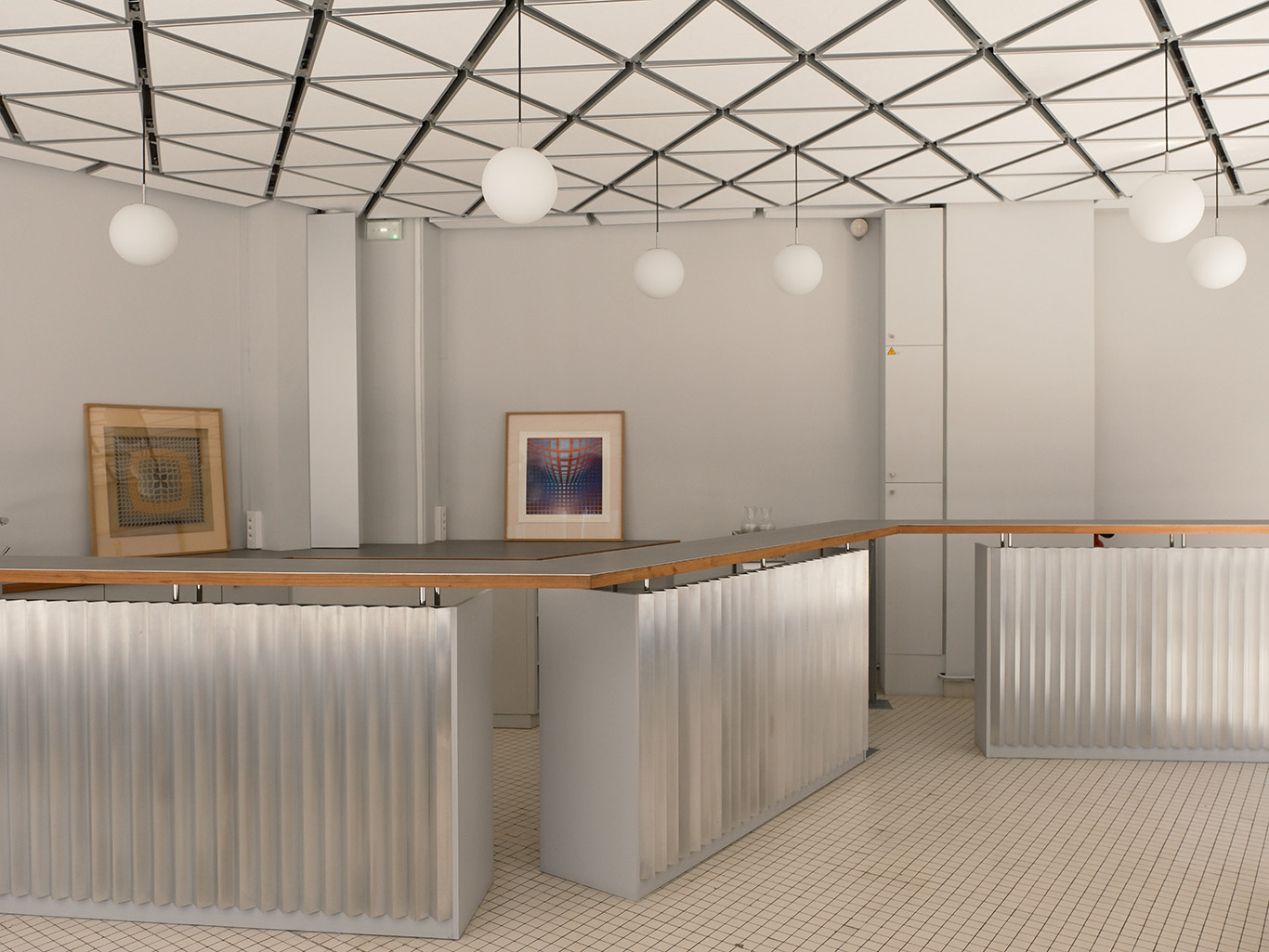
The ultimate environment, Centre Architectonic is a force in the landscape, its facade of black and white aluminium panels like a wake-up call. Inside, it suggests new ways of moving through space with seven connected hexagonal rooms hung with huge paintings and tapestries, like a geometric maze for thinking outside the box.
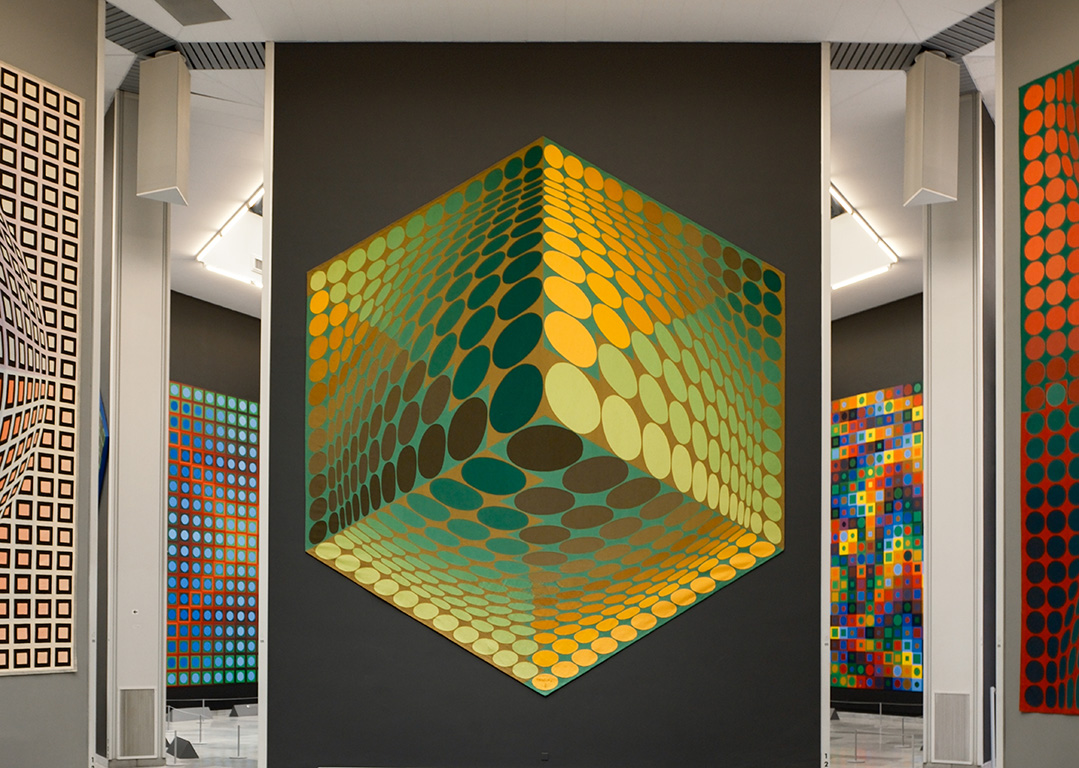
The Vasarelys challenged glassmaker Saint Gobain to engineer pyramidal skylights using lead, plastic, wood and aluminium, and designed interactive, mechanical slideshows capturing people’s attention to revolving conceptual drawings — a machine for display and communication that preempted our computer screens.
‘Even when I was a child, I remember them working all day long [on designs for the Centre Architectonic] without weekends or holidays,’ says Pierre. ‘It was their passion.’
There are plans on the horizon for the Centre. With its restoration now complete, the next goal is restoring 20 monumental textile, ceramic, aluminium and cardboard artworks. ‘Each one is a new dilemma,’ says Pierre. Victor’s former studio near Paris, now a historical monument, will be refurbished as well.
And this June an exhibition on the Centre’s history opens with support from the Centre Pompidou. While the Vasarelys built installations in cities like Caracas and Mexico City, and opened museums in Gordes, New York and Hungary, the Centre Architectonic articulated most powerfully their vision for a society that is uplifting, adaptive and inclusive.