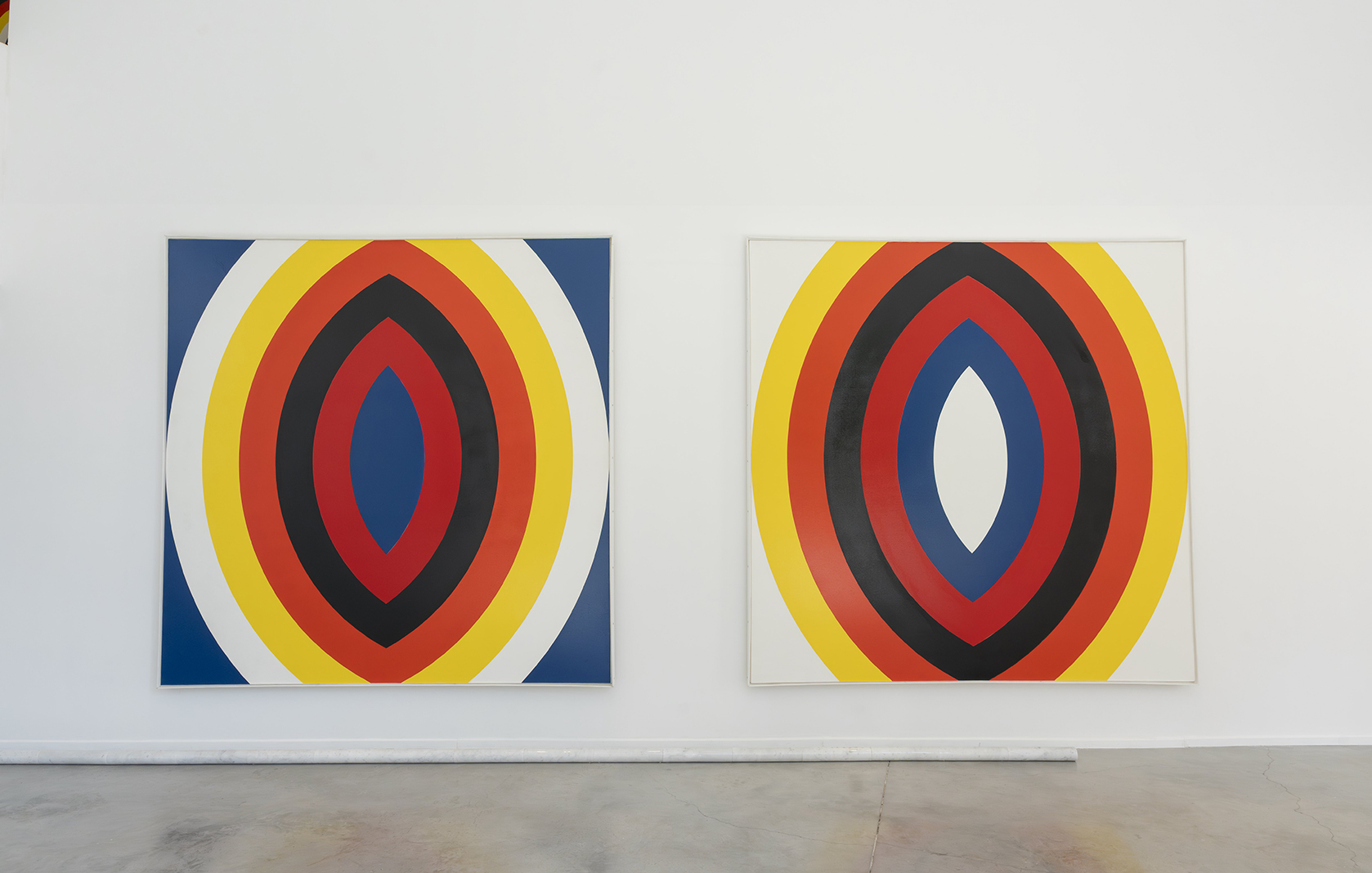
In the latter half of the 20th century, the Greek-American minimalist Nassos Daphnis pushed the boundaries of abstract painting with his geometric colour fields that appeared to escape from the confines of the canvas. Like the Op Artists and De Stijl heroes before him, Nassos made dynamic gestures from static planes of primary colour, and he pioneered a singular genre: ‘hard-edge painting’.
The sculptor Rita McBride may not have considered herself the conceptual heir to Daphnis, who passed away in 2010 at the age of 96. Her crisp, colourful, often colossal artworks distill forms in monolithic architecture. Yet the sharp definition and sleek surfaces of her 3D constructions belie graceful, expansive movement, encapsulating ‘hard edge’ ideals in a larger and more freeing format. Both artists build on midcentury explorations of utopia and both test the limits of their media.
Curator Gregory Lang draws a through line between these two bodies of work for Abstract Constructions, on view at Fondation CAB in Saint-Paul-de-Vence through October. Placing Daphnis’s flat and McBride’s three-dimensional works in dialogue, he suggests they take a similar journey through the space — and take viewers along with them. The result is a ‘crossed trajectory’ that encourages reflection and social interaction.
‘Though separated by a generation, their works reveal the tensions and evolution of a movement that redefined modern art,’ says Lang. ‘McBride reveals the limits of minimalism’s purity, contrasting Daphnis’s modernist ideals with her own expansive, embodied approach. Brought together for the first time, their pieces… will lead visitors through a spatial abstraction situated between unadorned structure, smooth surface and minimal architectural form.’
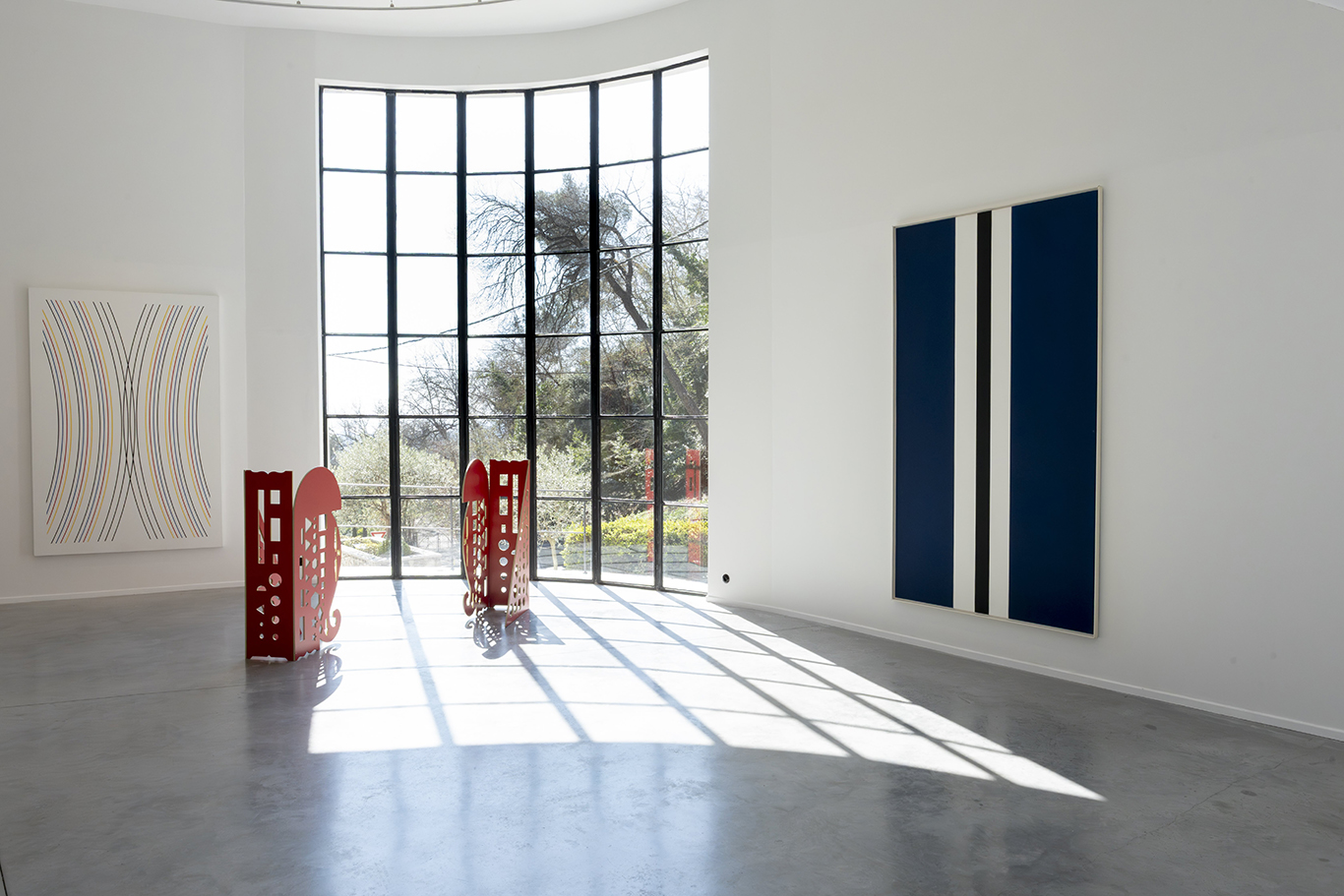
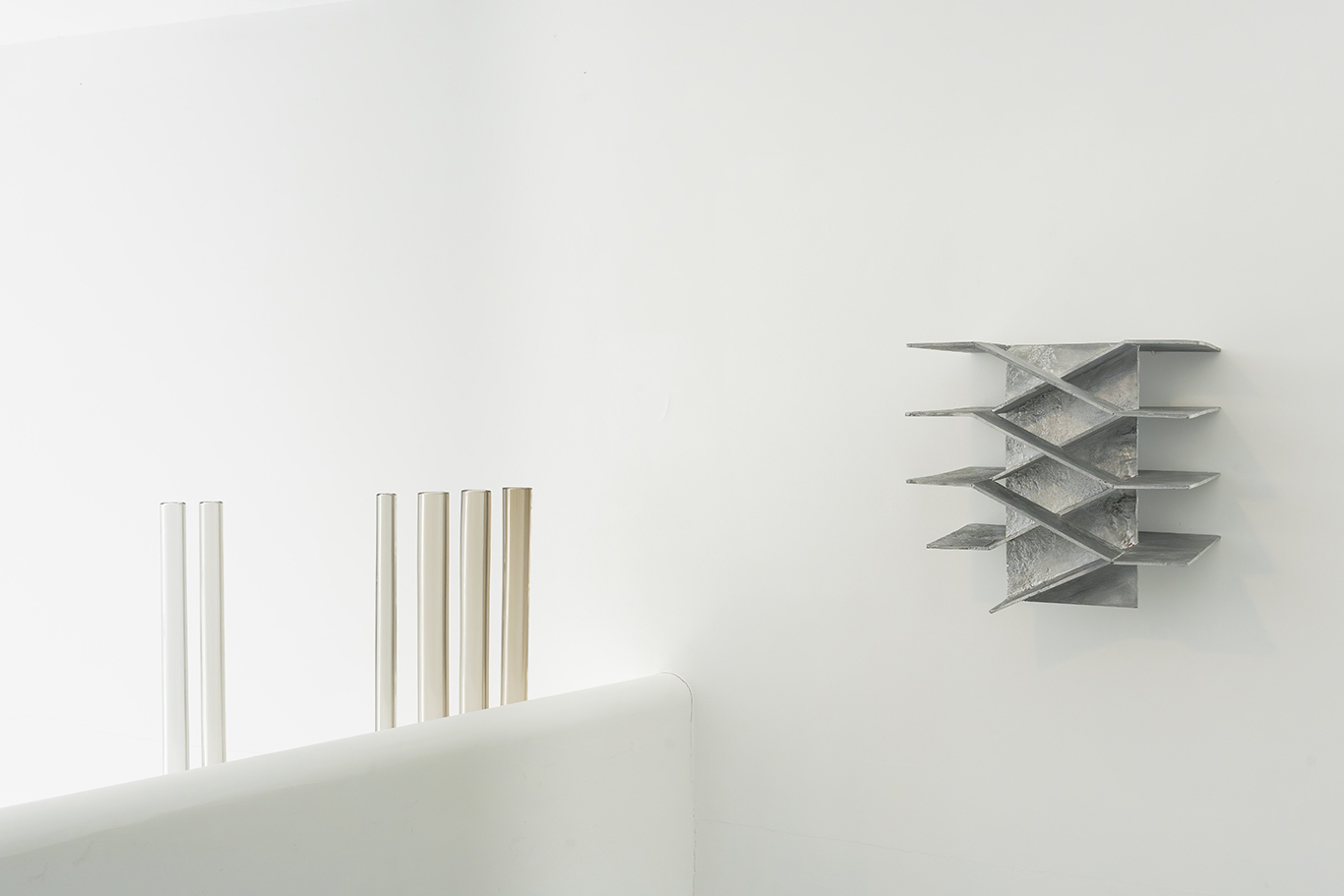
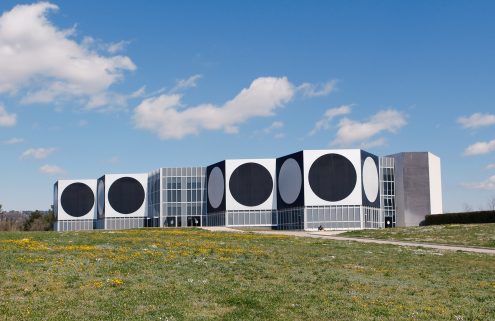
In the scrubby hills above Nice, moments from the sculpture gardens of the venerable Fondation Maeght, the two collections make attractive bedfellows. Among their tangible connections are their attention to pure, pared-down geometries and smooth, glossy surfaces (McBride has used glass, marble, bronze, aluminium and laminated wood in her work). Yet they also intersect on a conceptual level. ‘Both artists use line to demarcate and disrupt,’ says Lang, ‘Daphnis within the picture plane, McBride within the gallery space or urban environment. While Daphnis’s paintings use flat, geometric lines to create optical tension on a canvas, McBride extrudes these lines into architectural frameworks in her modular sculptures.’
Together, he says, they create a spatial ‘parcours’ in which lines, silhouettes and ‘dynamic vectors’ guide perception and movement. The difference lies in scale and embodiment. Where Daphnis’s lines are contained, McBride’s are porous — ‘absorbing the chaos and complexity of lived experience,’ says Lang. ‘She doesn’t merely preserve minimalism’s legacy — she redefines it, revealing the line as limit and a pathway.’
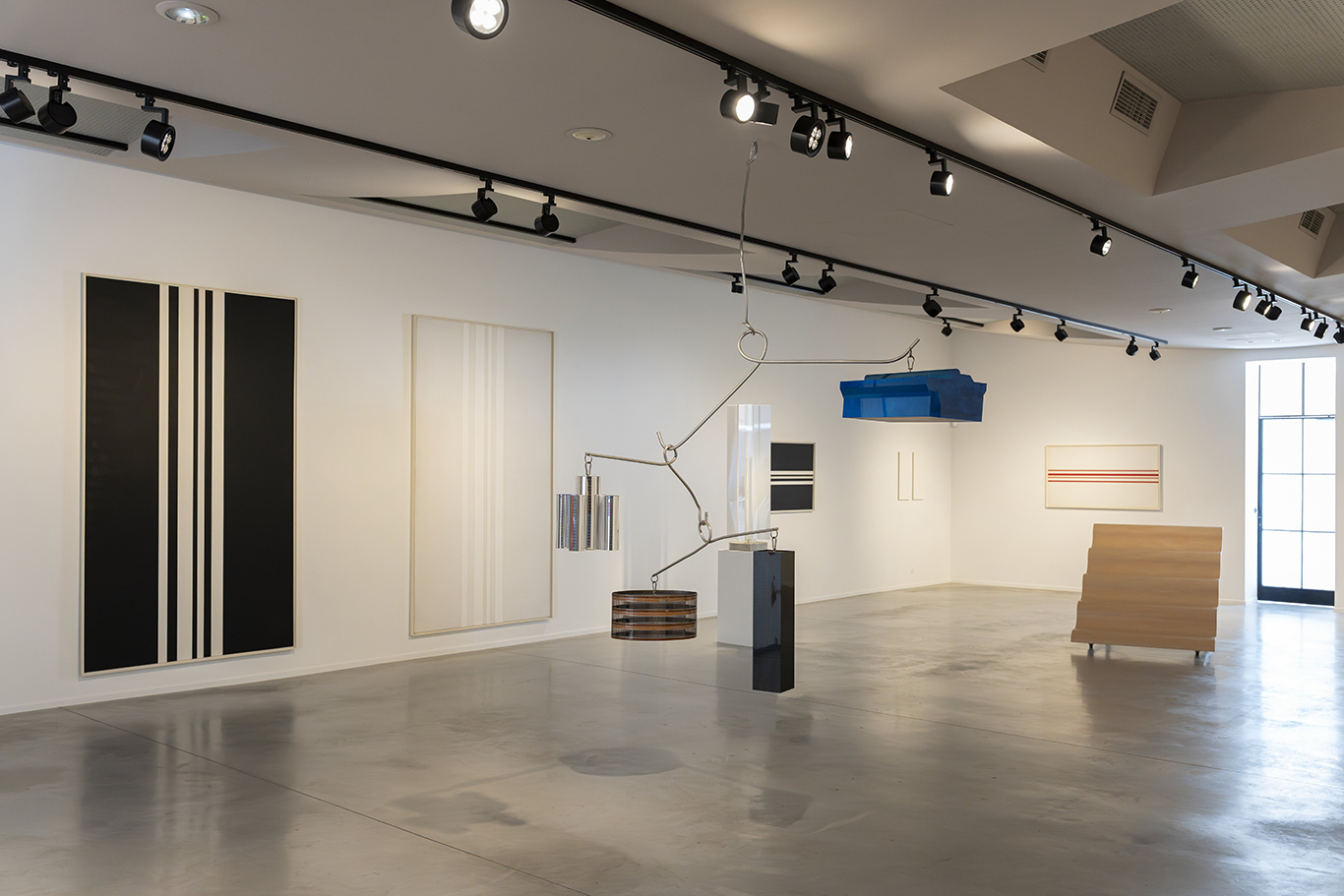
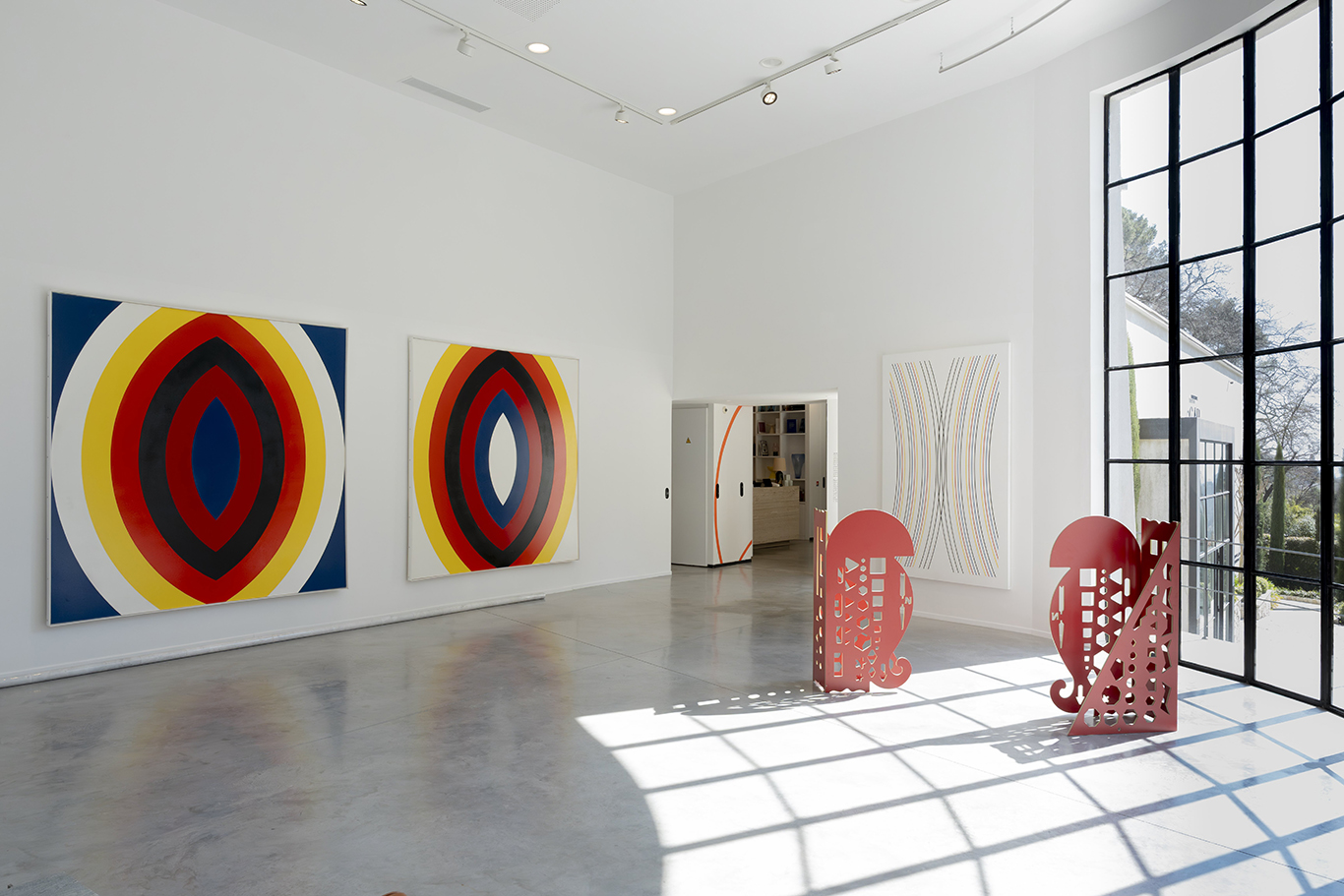
According to McBride, who recently completed installing her work across the grounds, ‘My favourite moments happen when immersed in the artworks and their new position with new “neighbours” within a curiously stimulating context.’ She says she feels honoured to be joining the grandees of Saint-Paul-de-Vence and engaging with the context of the neighbourhood. ‘The heavy history is real and vital. That is rare these days.’