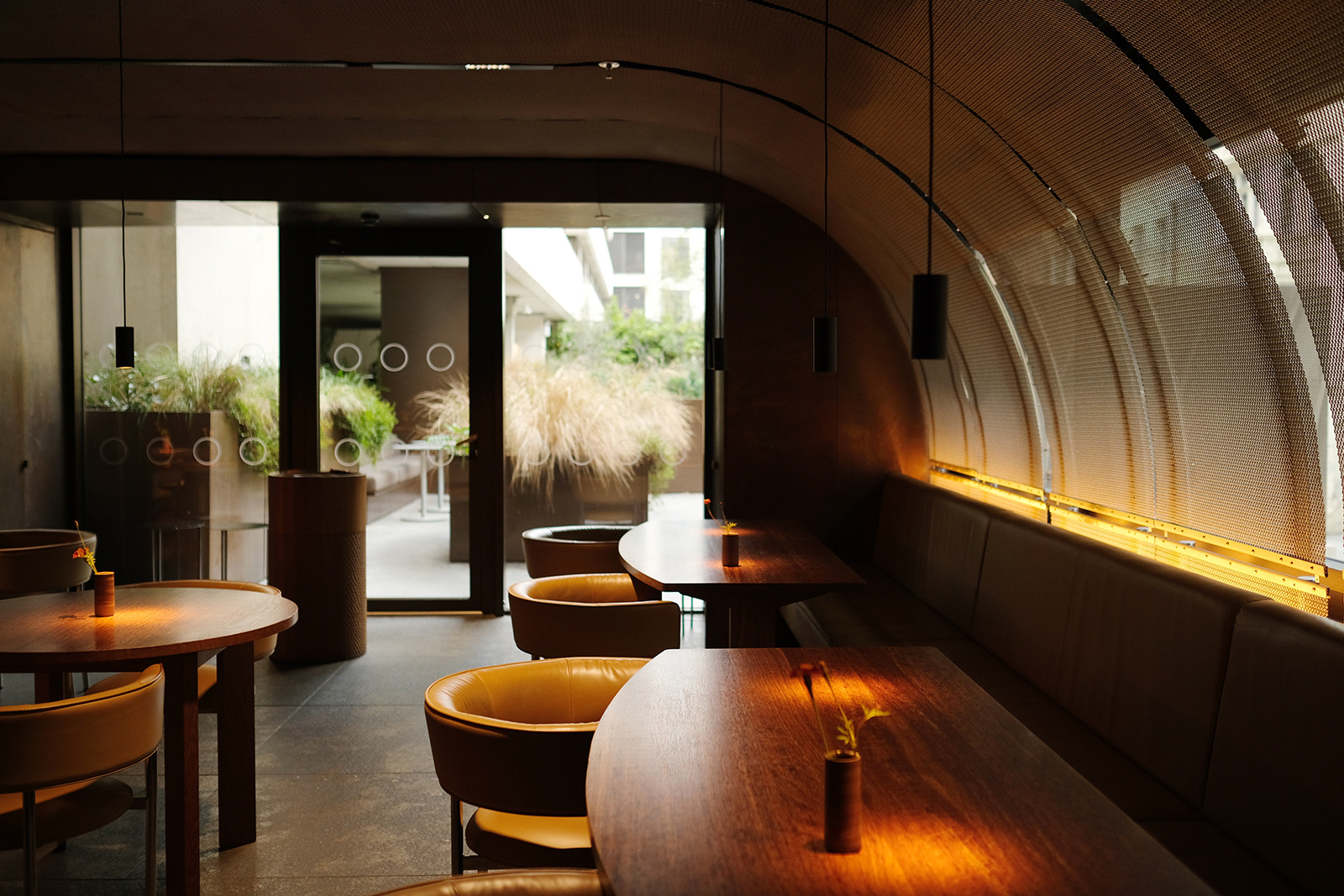
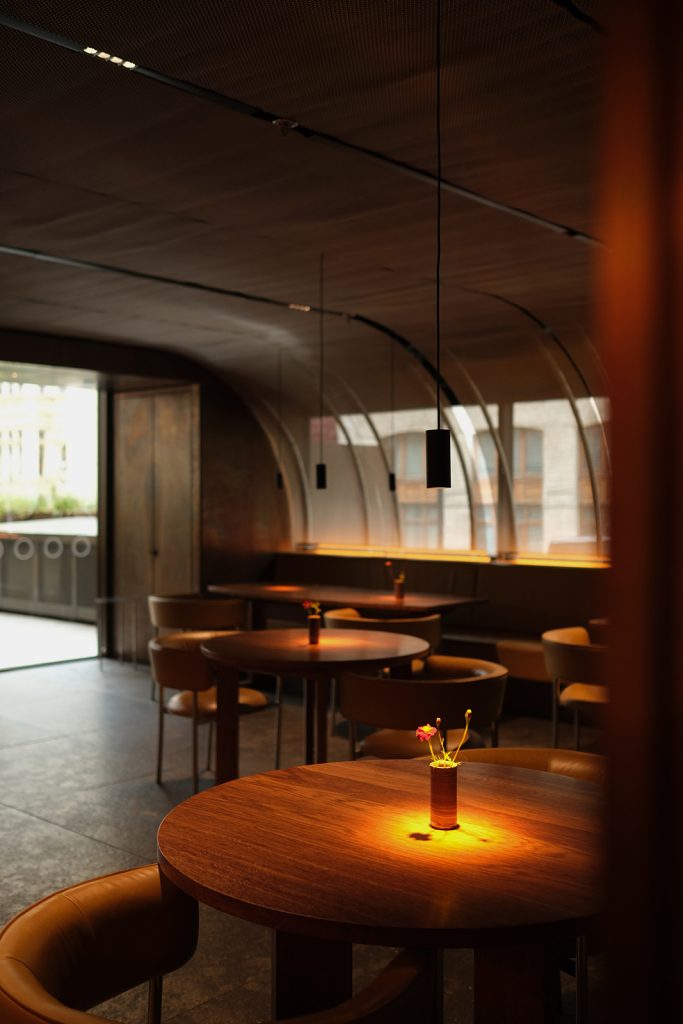
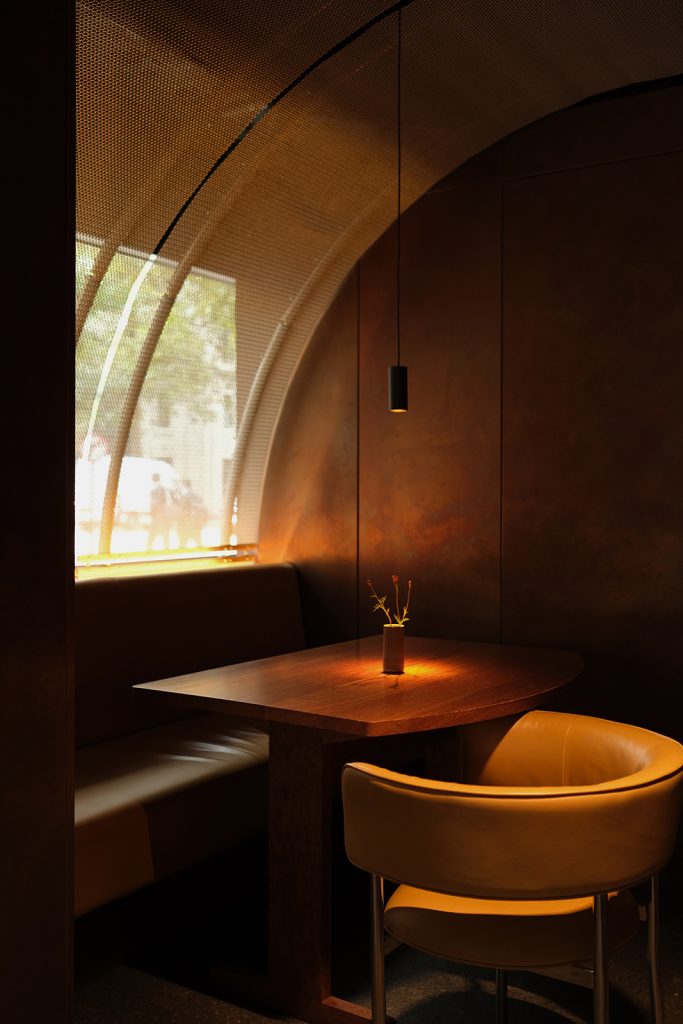
After dark, the quiet end of London’s Strand feels like a film set, with its old, abandoned Tube station wedged between Victorian townhouses and glimpses of the Thames down the side streets. In that respect Ikoyi fits right in. Taking up a corner wedge of the Brutalist 180 Strand building, the restaurant glows like a lantern through mesh window shades like a scene by Wong Kar Wai.
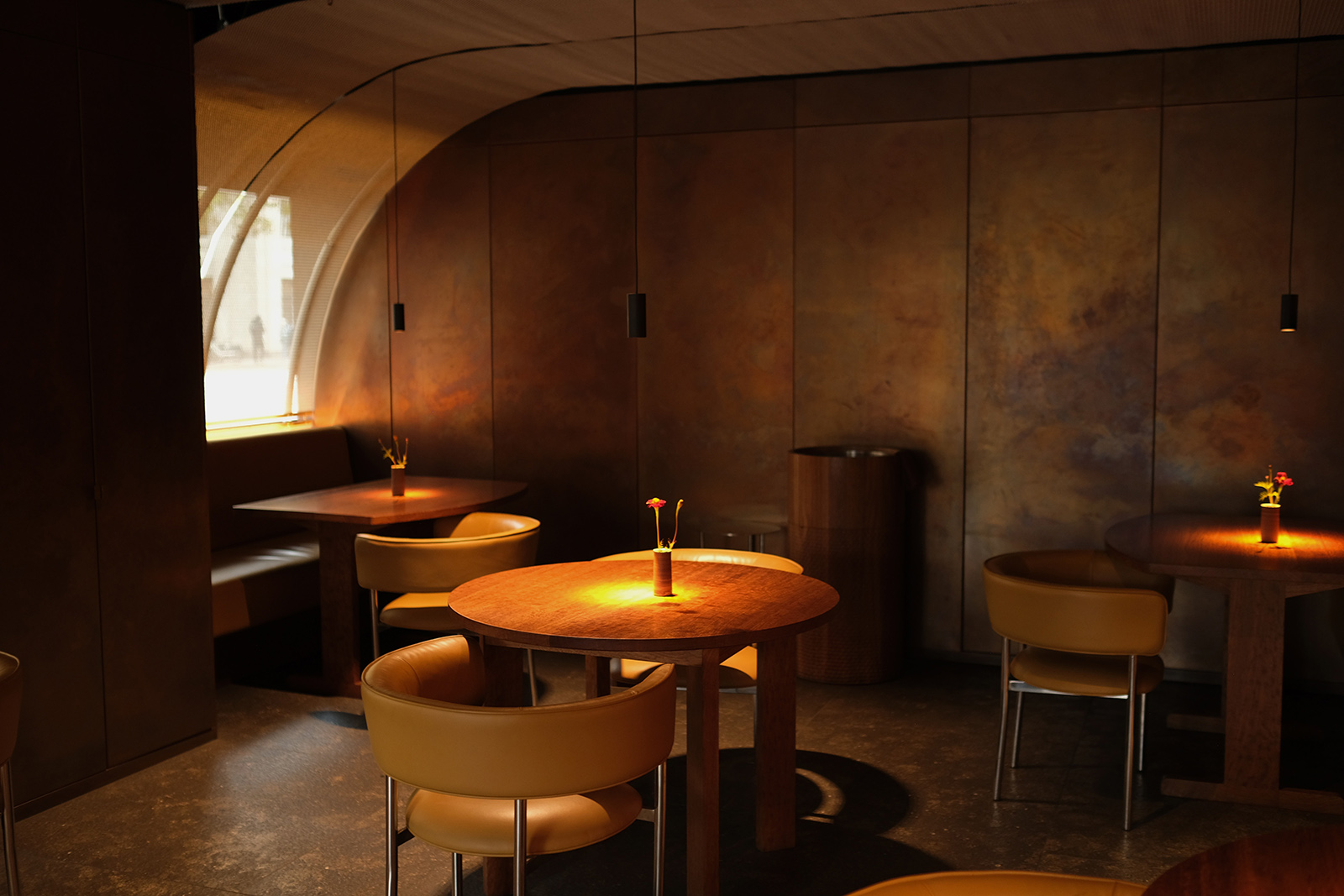
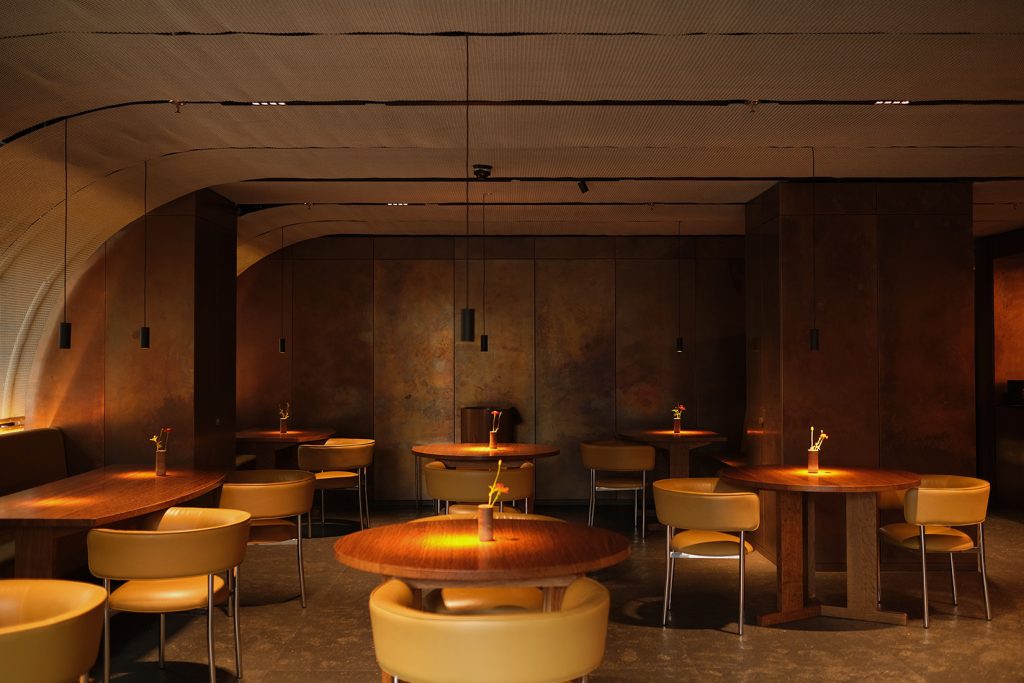
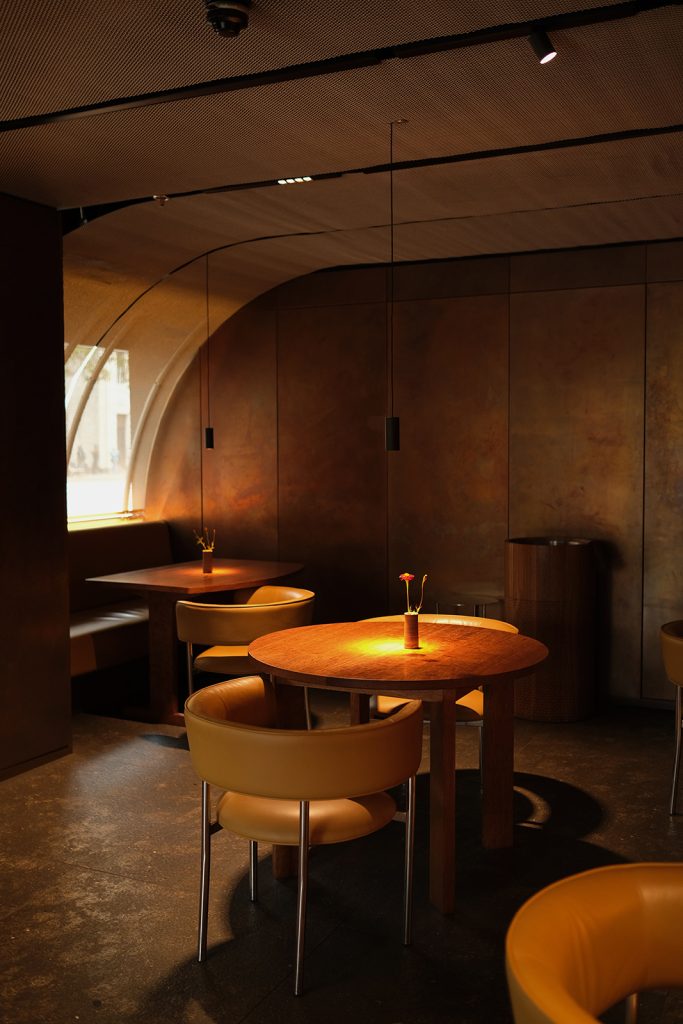
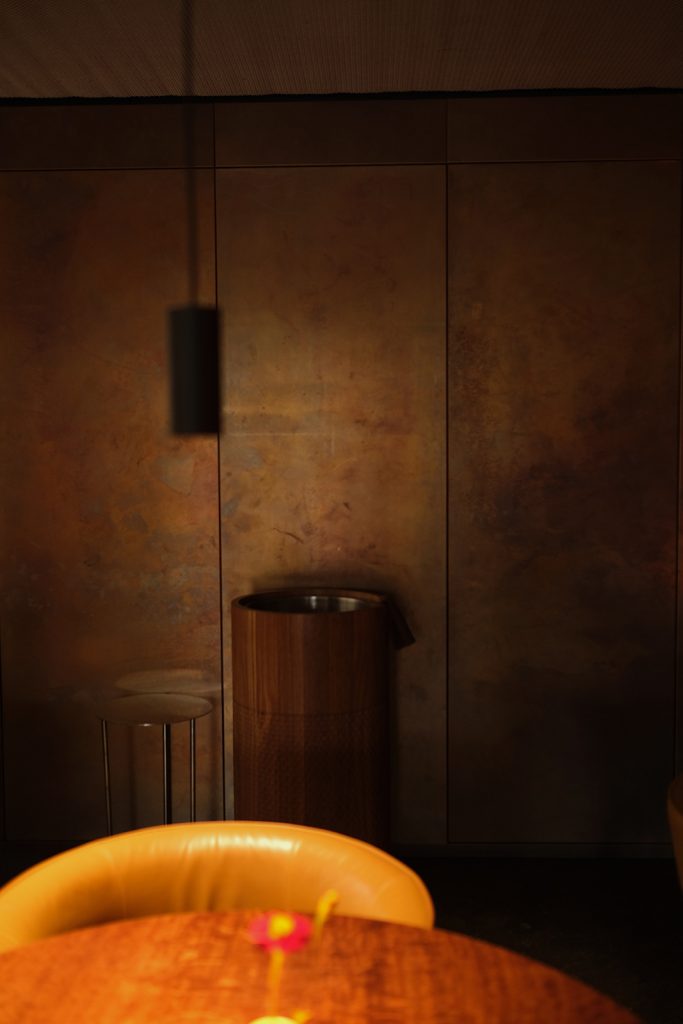
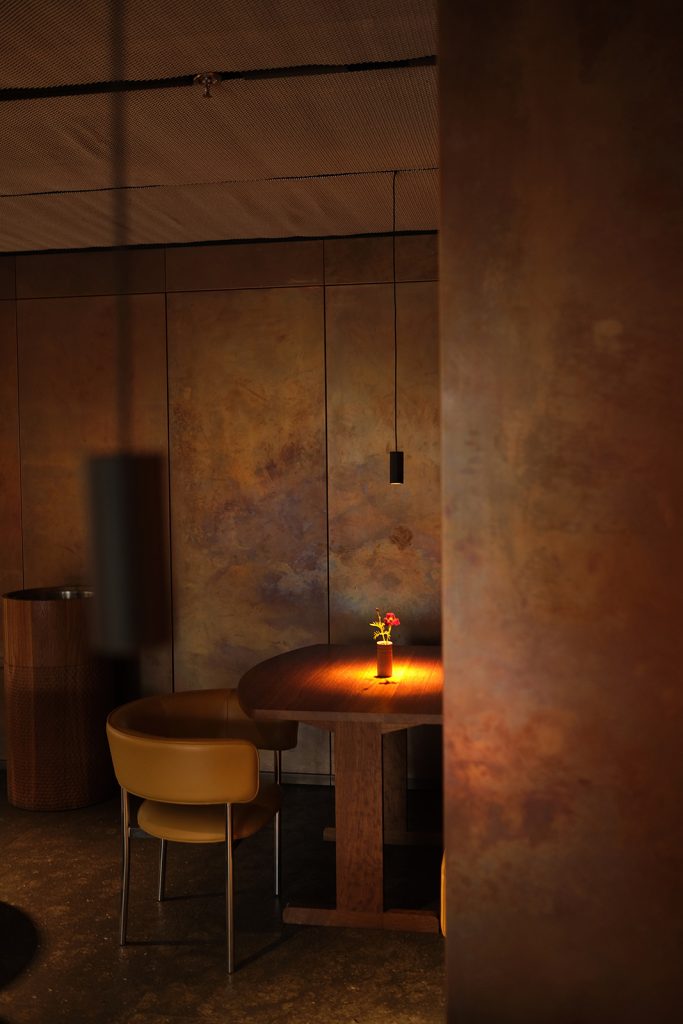
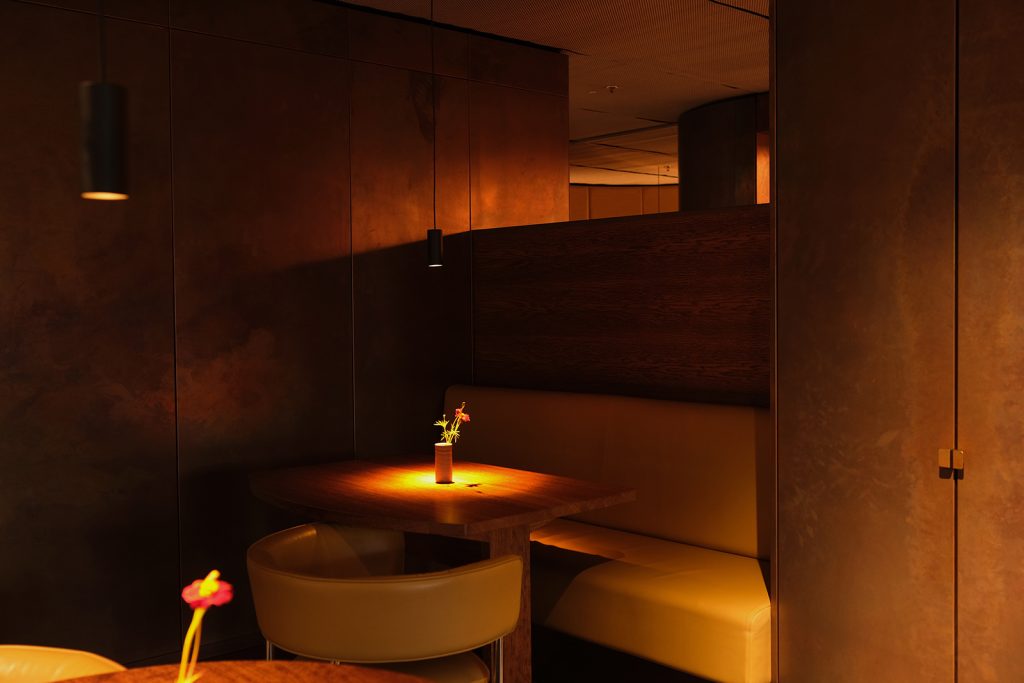
Ikoyi’s chef and co-owner Jeremy Chan likens the interior to a ‘metallic cave’. Wrapped in oxidised copper sheets by David Thulstrup, who designed the space to Chan’s scrupulous specifications, it is a polished forum trained on the theatre of the open kitchen. Its condition is almost clinically pristine — ‘symbolic,’ says Chan, ‘of how we treat our produce and our guests.’
Photography: Rosella Degori.
Photography: Rosella Degori.
Photography: Rosella Degori.
Photography: Rosella Degori.
Photography: Rosella Degori.
Photography: Rosella Degori.
Photography: Rosella Degori.
Photography: Rosella Degori.
Photography: Rosella Degori.
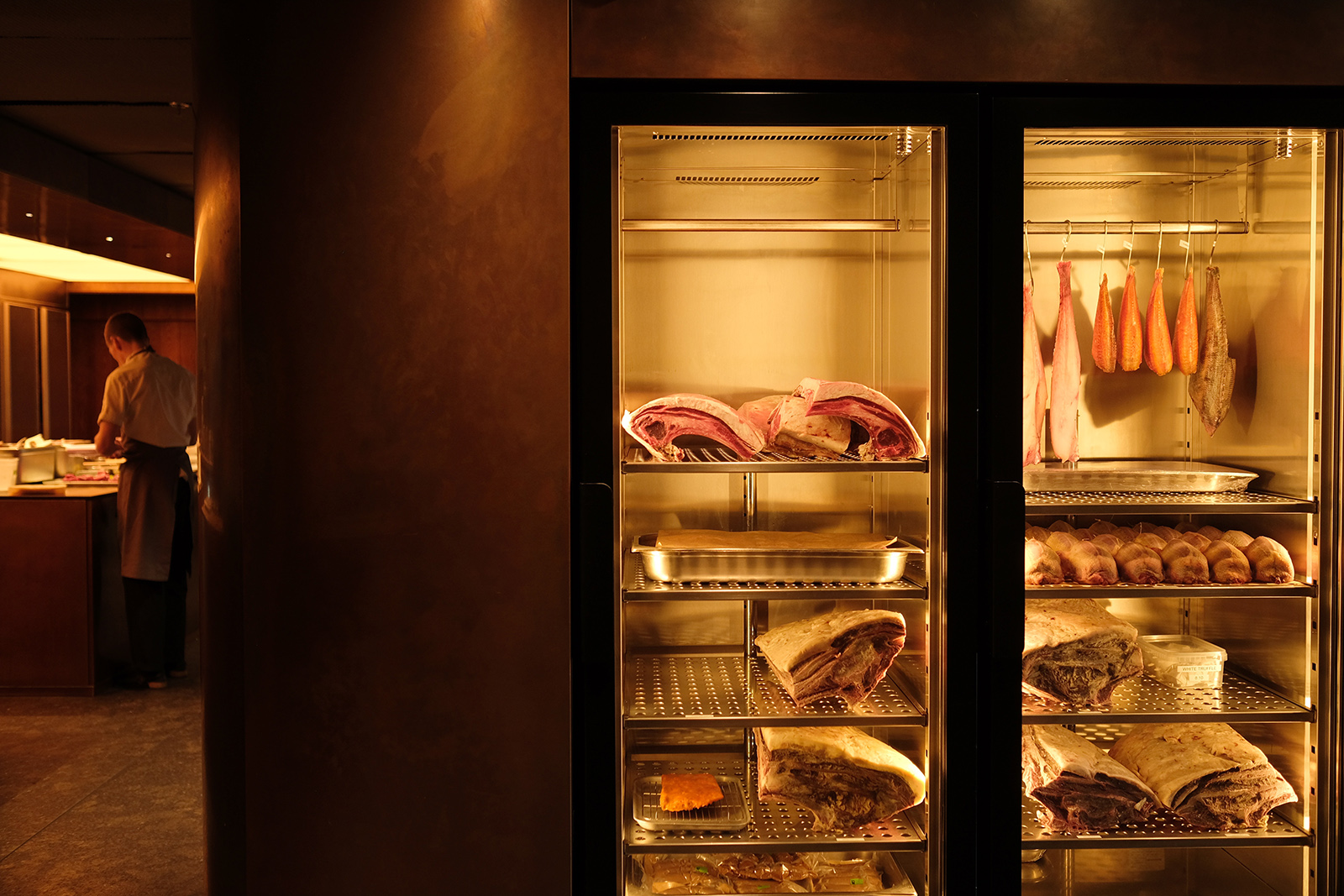
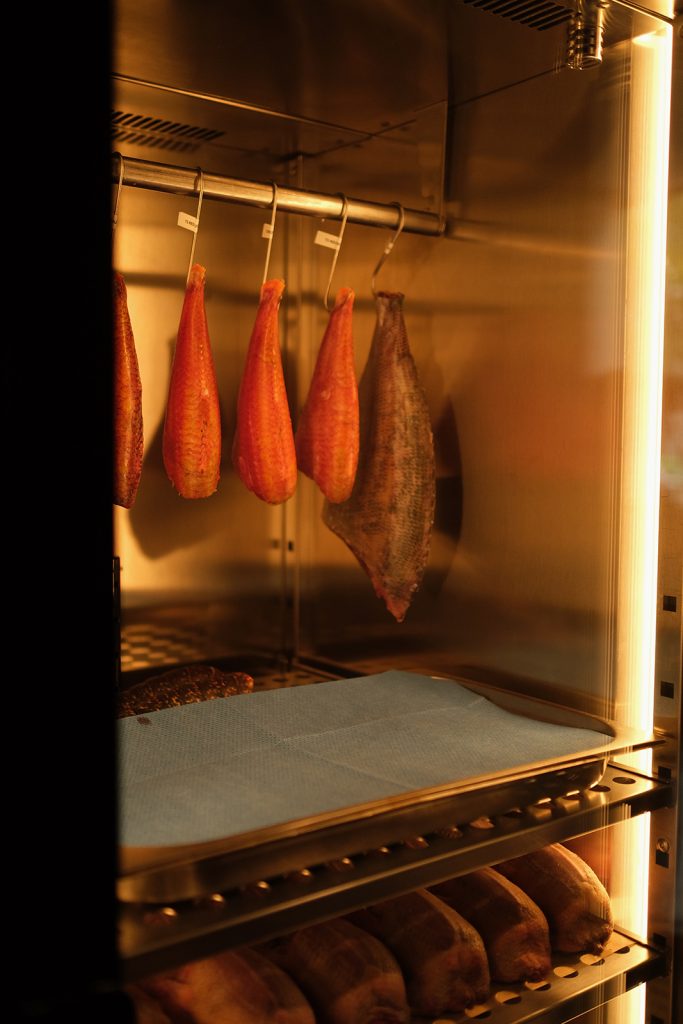
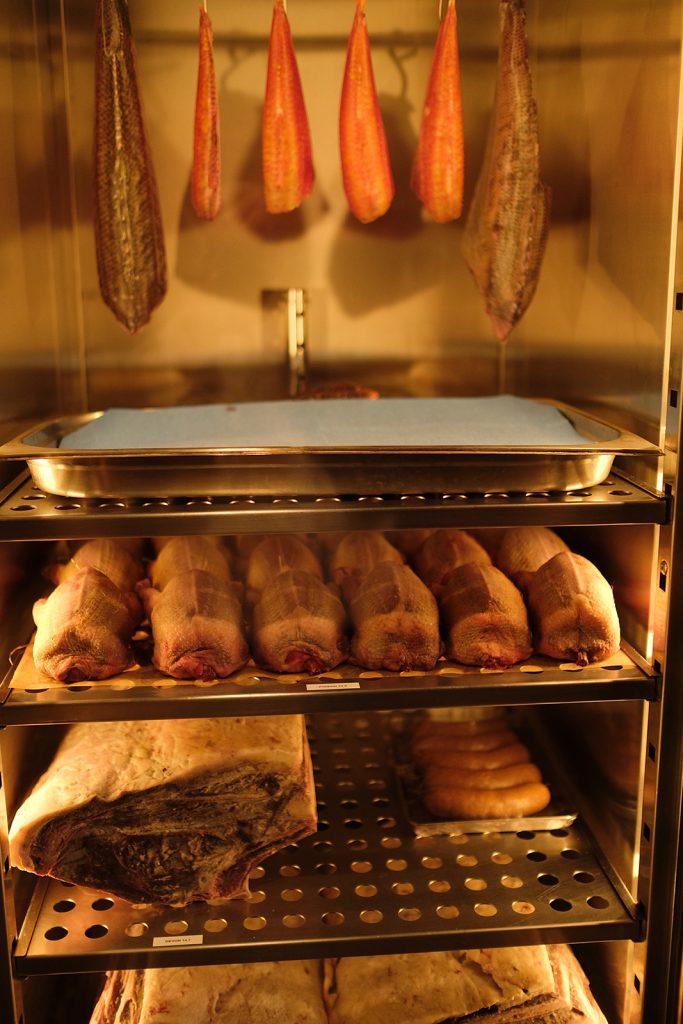
In the interest of full materiality, Chan eschewed art on the walls. Instead, the central feature is the aging chamber framed in the entrance — not, as one might think, a meat fridge but rather a moisture-controlled, oxygenated cell for controlled desiccation. Built into the copper panelling, it displays no branding, no control panels. It is, in a word, lean. ‘It looks like it was built to be in an art gallery — like a Damien Hirst exhibit.’ (Chan was not, he is quick to say, inspired by Hirst.)
Dry-aging chambers have long since become staples of chop houses and Michelin-star restaurants like Ikoyi, where grass-fed beef and line-caught fish are revered. Aside from their brazen authenticity, they are literally transparent, allowing customers to peek behind the scenes. Not to mention they make meat better, with humidity extractors, temperature regulators and antibacterial filters. Chan’s was designed and customised in Italy with targeted ambient lighting and an app that controls the humidity levels. He raises the humidity slightly to ripen the flavours of the meat — ‘not so much that it gets that blue cheese funk but a subtle, sweet, nutty, mushroomy aroma. It tastes clean. That’s what’s unique about the flavour — that clean taste after such a long period of aging.’ (Chan also keeps an aging facility in Cornwall that pre-ages the beef for up to five months.)
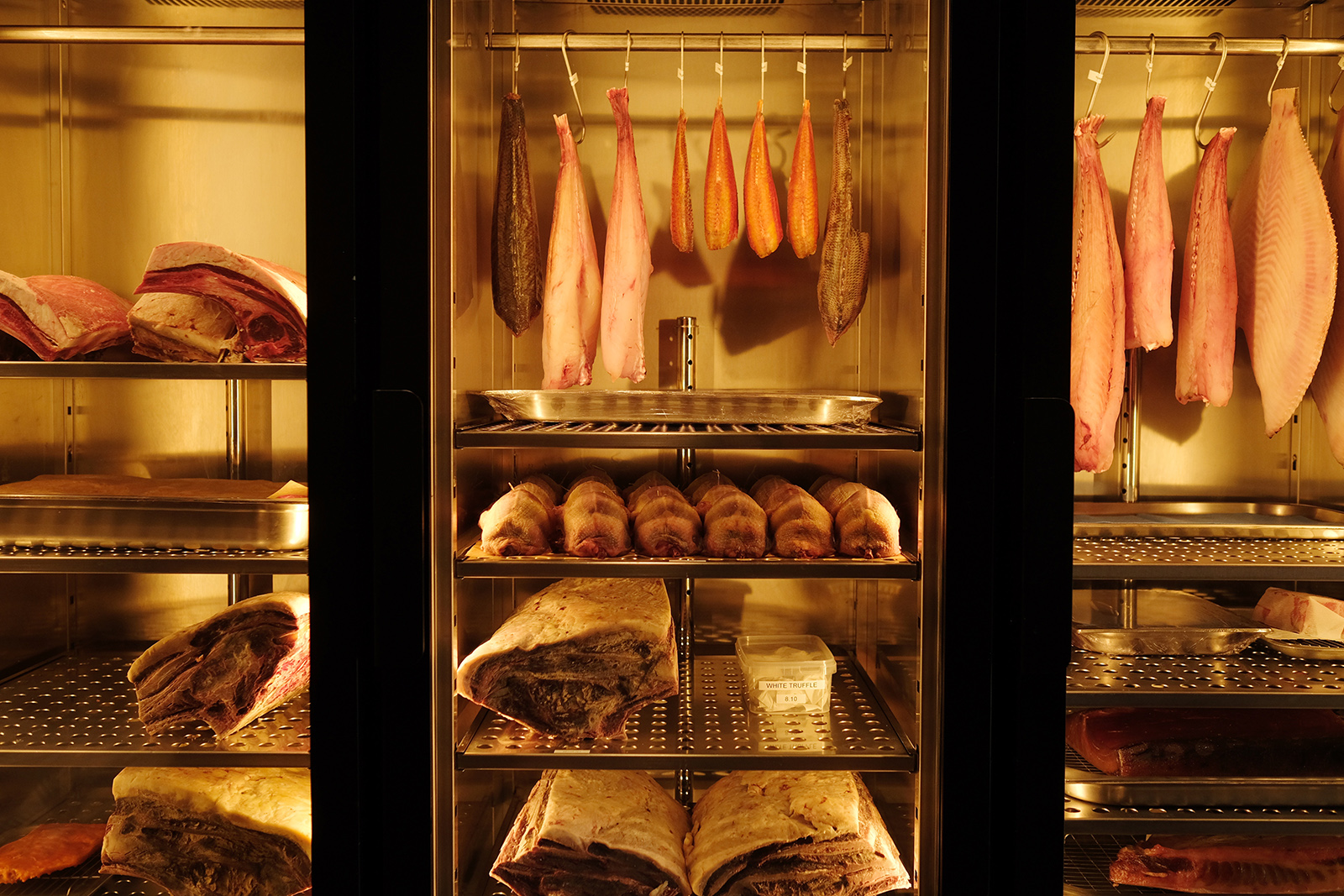
Liaising with his designers, Chan made sure the primal cuts look like they’re floating on thin sheet-racks — a continuation of the metallic theme. What differentiates Ikoyi from an upmarket steakhouse chain with its own aging chamber is the next step: the laser focus of a chef working 16-hour days to bring a few choice cuts to a few choice people. Each morsel is cooked to unique specifications based on its special properties, prepared and presented — like the interior design — with a minimalist’s hand.
If the scene looks a bit in-your-face, that too is by design. Chan speaks of the place as a ‘fetish cave’ with a ‘brutal, gruesome level of cooking’ and expects diners to worship with a similar intensity. ‘I want them to be disturbed and moved by the newness, to submit to something very pure and real,’ he says. ‘Otherwise what’s the point. They should just go to a steakhouse.’