In the birthplace of Alexander Calder, one of the 20th century’s most significant — and recognisable — sculptors, the Swiss architects Herzog + de Meuron and Dutch landscaper Piet Oudolf have unveiled a permanent home for his work and legacy. Philadelphia has been waiting for Calder Gardens practically since the artist passed away nearly 50 years ago. The cultural desination that will finally open this weekend will no doubt satisfy those who are left, and generations to come.
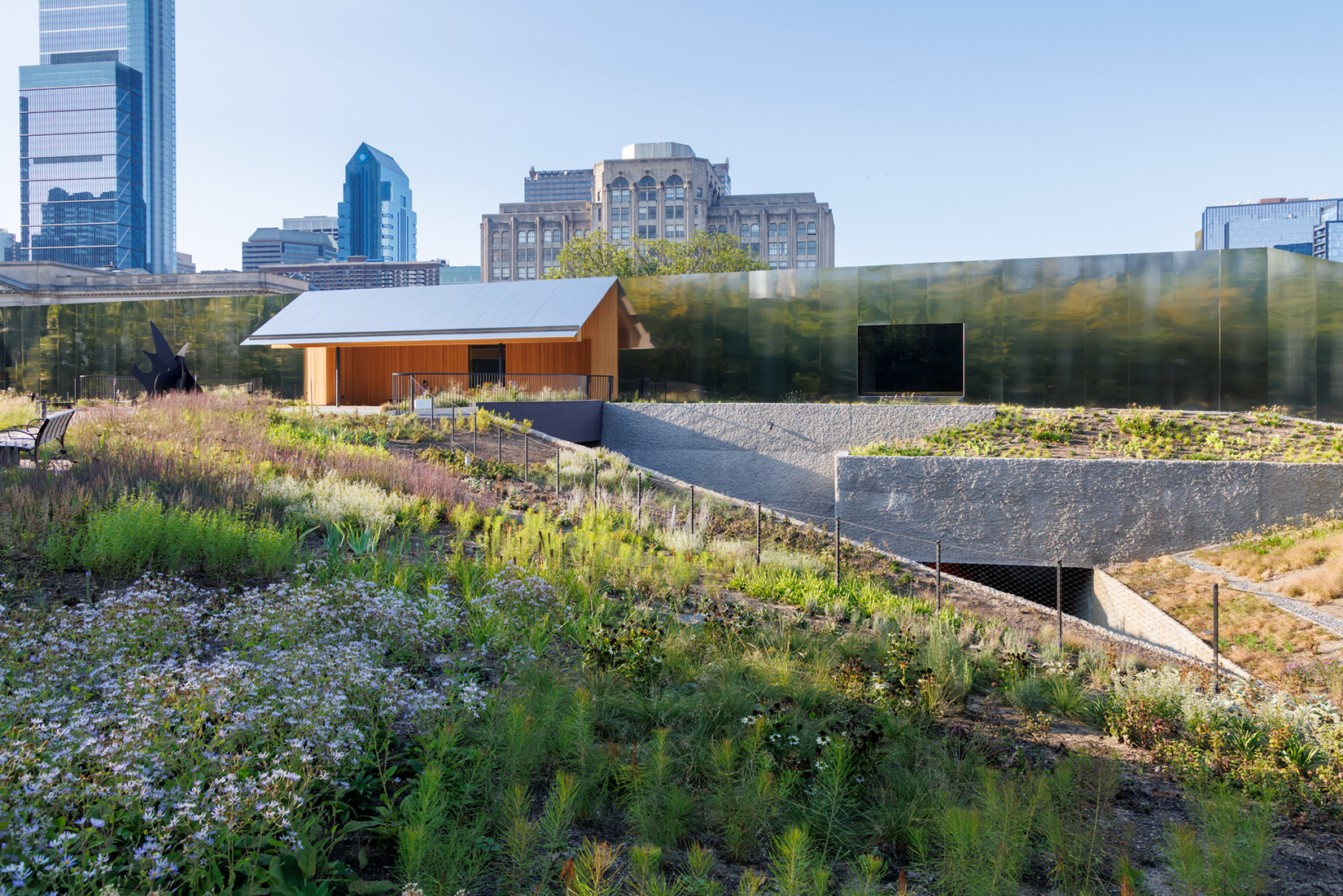
Set back from the Schuykill River, on an unloved patch of downtown bordered by highways, the new 18,000 sqft building sits low and long within its native landscape. Protected from traffic noise by a tapered metal facade, its entry draws visitors down into sunken gardens that house the grand steel installations Calder is celebrated for. With the visitors comes light, which floods the subterranean galleries through tall banks of glass and angular gaps between pleated walls.

Calder Gardens, 2025. Photography: Iwan Baan. Artwork by Alexander Calder © 2025 Calder Foundation, New York / Artists Rights Society (ARS), New York.
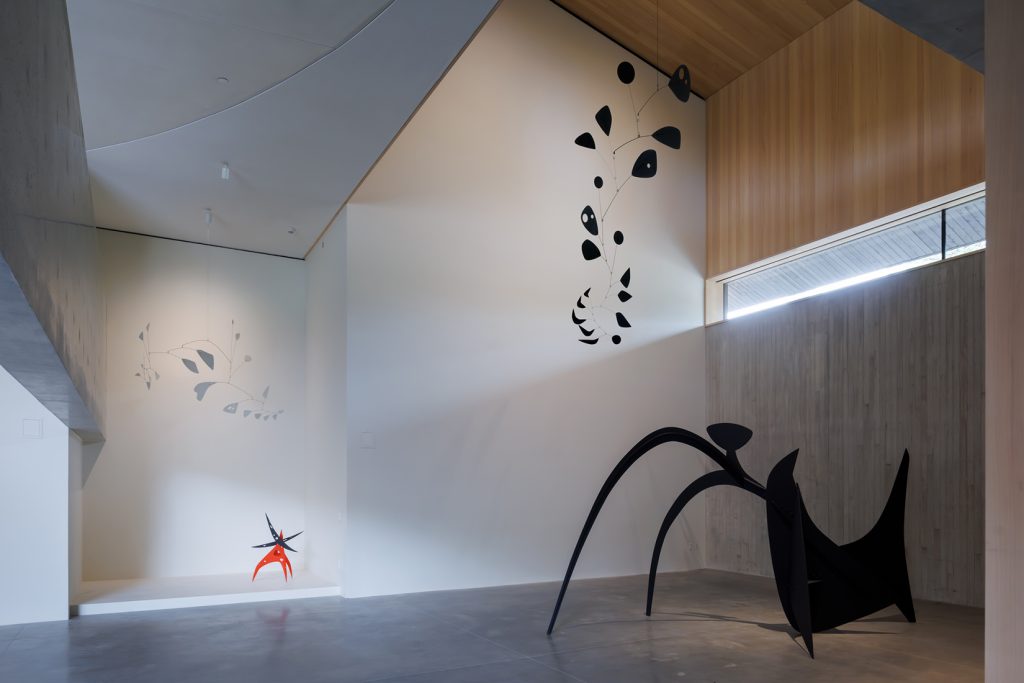
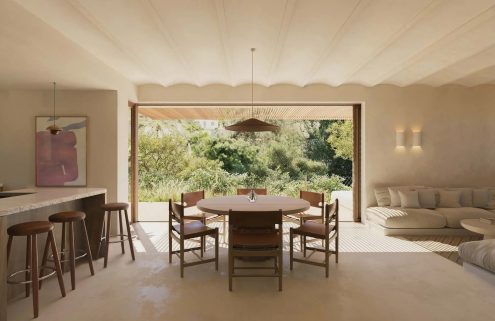
Calder Gardens, 2025. Photography: Iwan Baan. Artwork by Alexander Calder © 2025 Calder Foundation, New York / Artists Rights Society (ARS), New York.
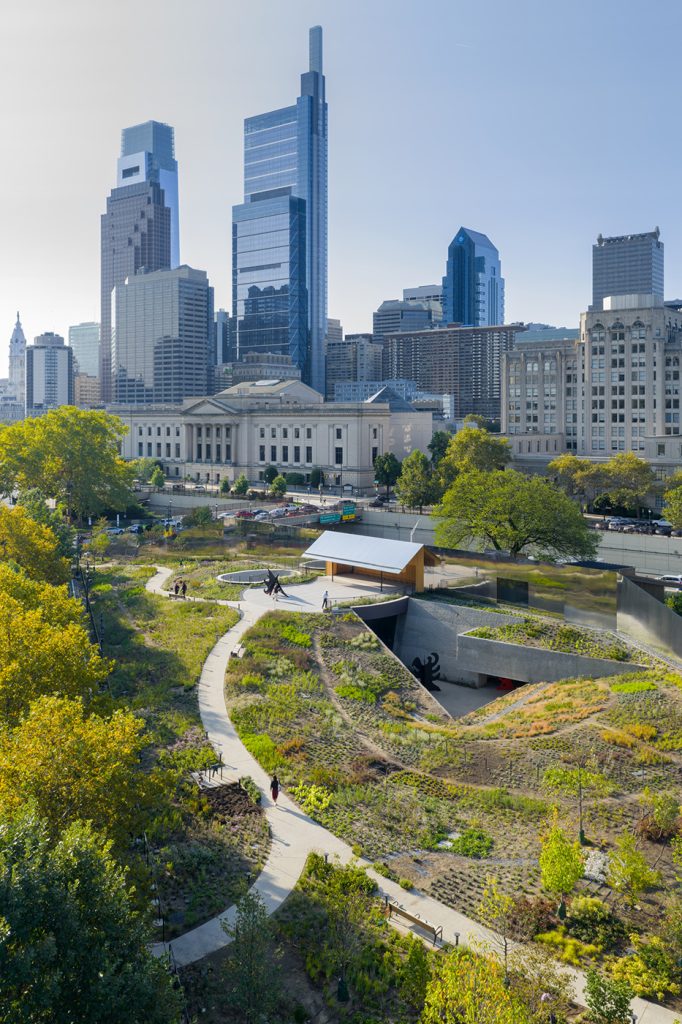
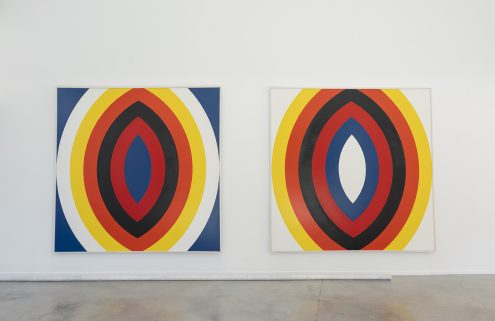
Calder Gardens, 2025. Photography: Iwan Baan. Artwork by Alexander Calder © 2025 Calder Foundation, New York / Artists Rights Society (ARS), New York.
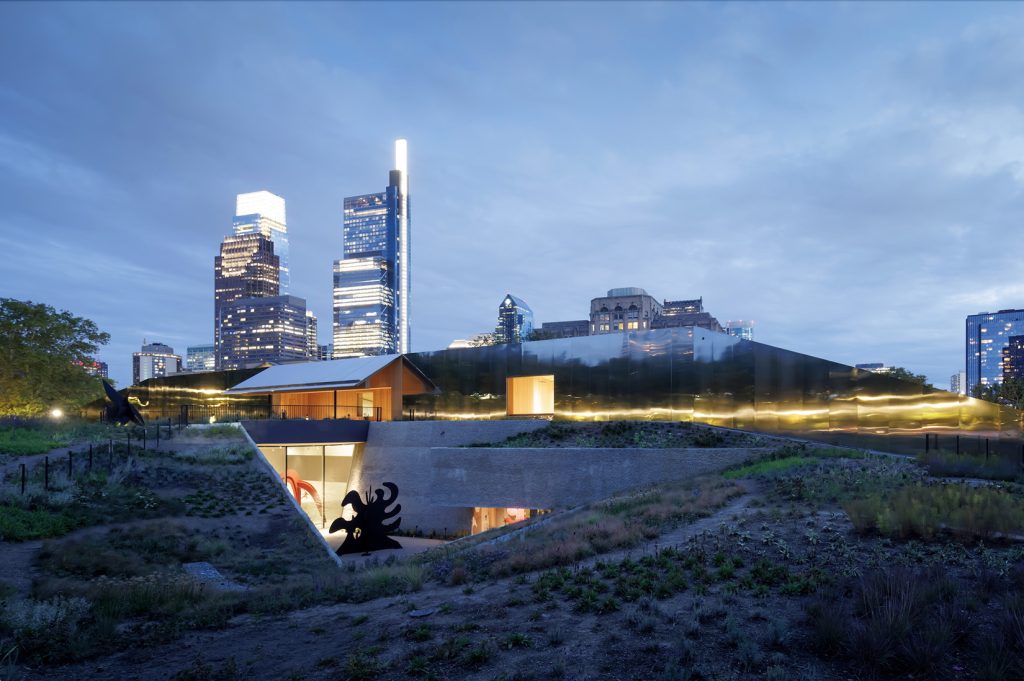
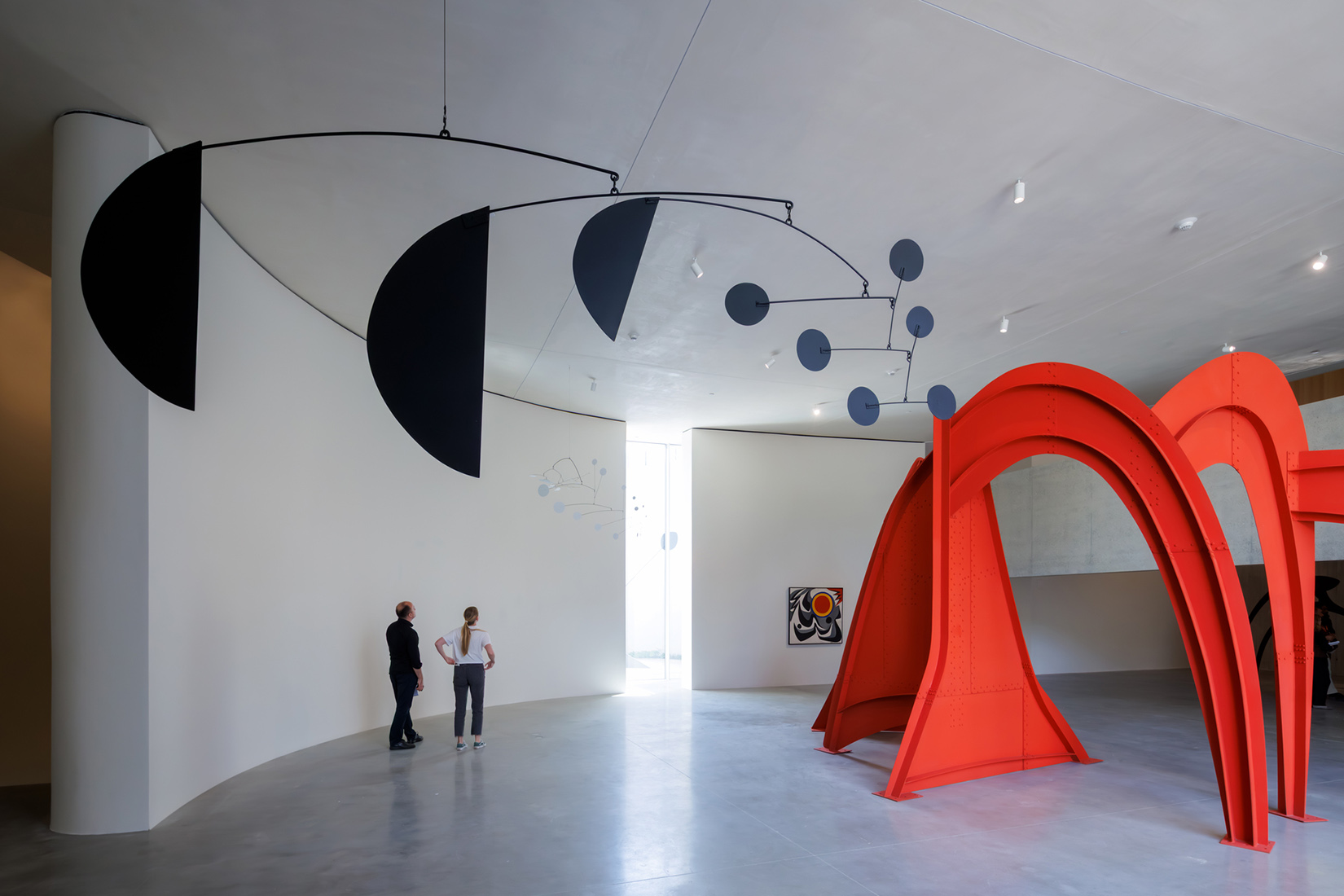
Calder Gardens, 2025. Photography: Iwan Baan. Artwork by Alexander Calder © 2025 Calder Foundation, New York / Artists Rights Society (ARS), New York.
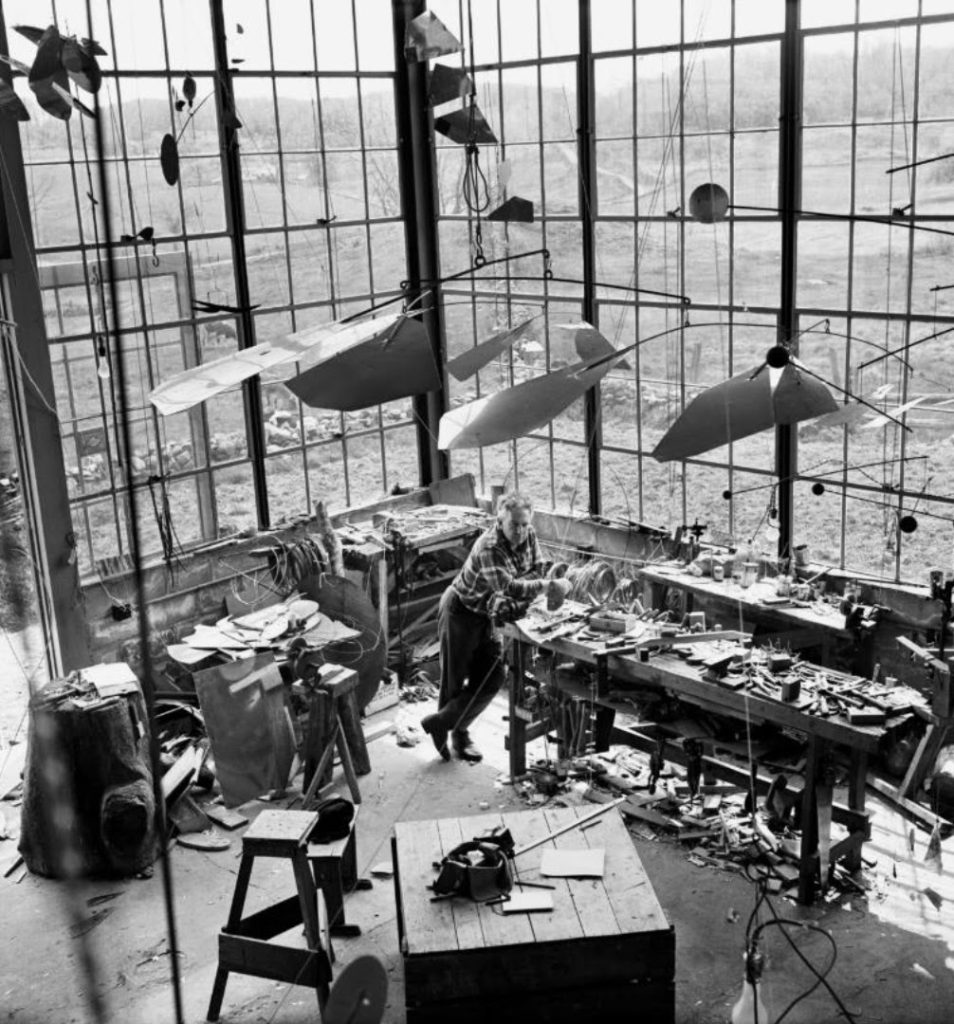
Calder in his Roxbury studio, 1941. Photograph by Herbert Matter
© Calder Foundation, New York. © 2025 Calder Foundation, New York / Artists Rights Society (ARS), New York.
From here, guests can climb to a mezzanine from which to view mobile artworks from above. This space connects to the cavernous main hall, and opportunities to view the monumental works from various vantage points. The mobiles, stabiles, paintings and drawings are presented without labels, allowing the artworks to speak for themselves. ‘My grandfather… explored how art can be experienced in a perpetual present — one that is always unfolding,’ says Alexander SC Rower, president of the Calder Foundation and grandson of the artist. ‘Calder Gardens does not so much present a story as it offers an opportunity to activate this challenging notion. The architecture and gardens invite us to direct our own journey, to interpret what we see in a uniquely personal way, to use our hearts more than our heads.’
Geometry, colour and movement are the hallmarks of Calder’s art. To best highlight them, the architects sought to avoid rather than adopt these characteristics as design elements — and counter the monumental architecture of the iconic museums nearby. They decided instead that Oudolf’s gardens would provide the museum’s ’face’ — hence the name of the destination. And they faced the south side of the building with understated wood panelling reminiscent of Calder’s longtime Connecticut home.
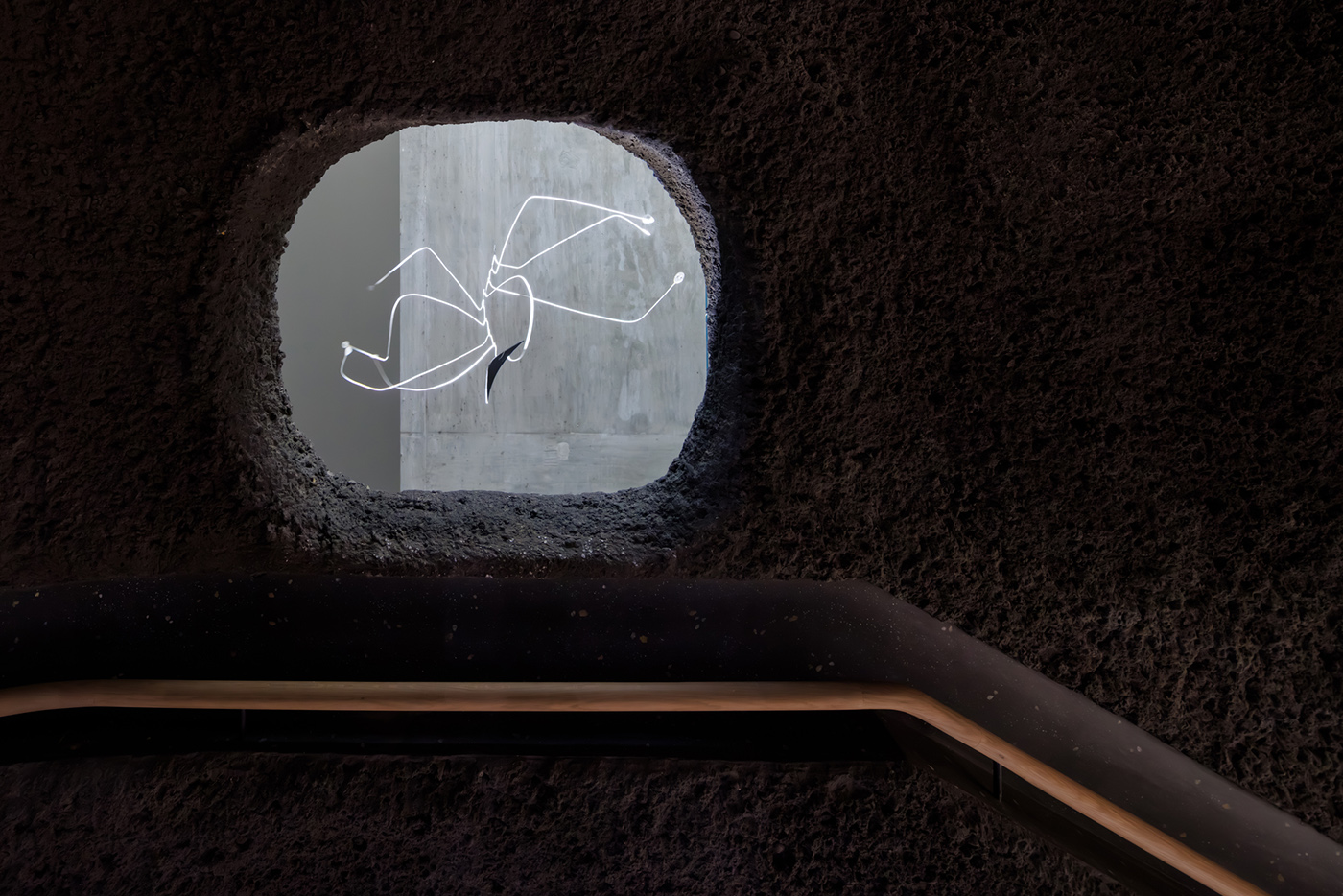
‘Calder Gardens embodies a kind of “no-design” architecture, allowing the works of art to express their diversity and ambiguity across numerous different spatial contexts,’ says Jacques Herzog. ‘In this unique commission… I focused on space over form, leading me to explore below-grade areas and discover the defining spaces of the structure.’
Playing off the shapes and voids of Herzog + de Meuron’s work, the gardens incorporate more than 250 varieties of native and perennial plants, spread across meadows with views to the art that the public can access. ‘I have designed a landscape that responds not only to the specific conditions of the site but to Calder’s powerful embrace of movement and change as defining elements of his art,’ says Oudolf. ‘Here in Philadelphia, Calder’s sculptures will be placed in dialogue with gardens that are constantly evolving.’
Art selections will rotate over time, dictated by the season. Temporary exhibitions will include ‘sonic experiences’, screenings and lectures that will encourage repeat visits.
The venue opens to the public on 21 September, after a free grand-opening parade on the 20th.