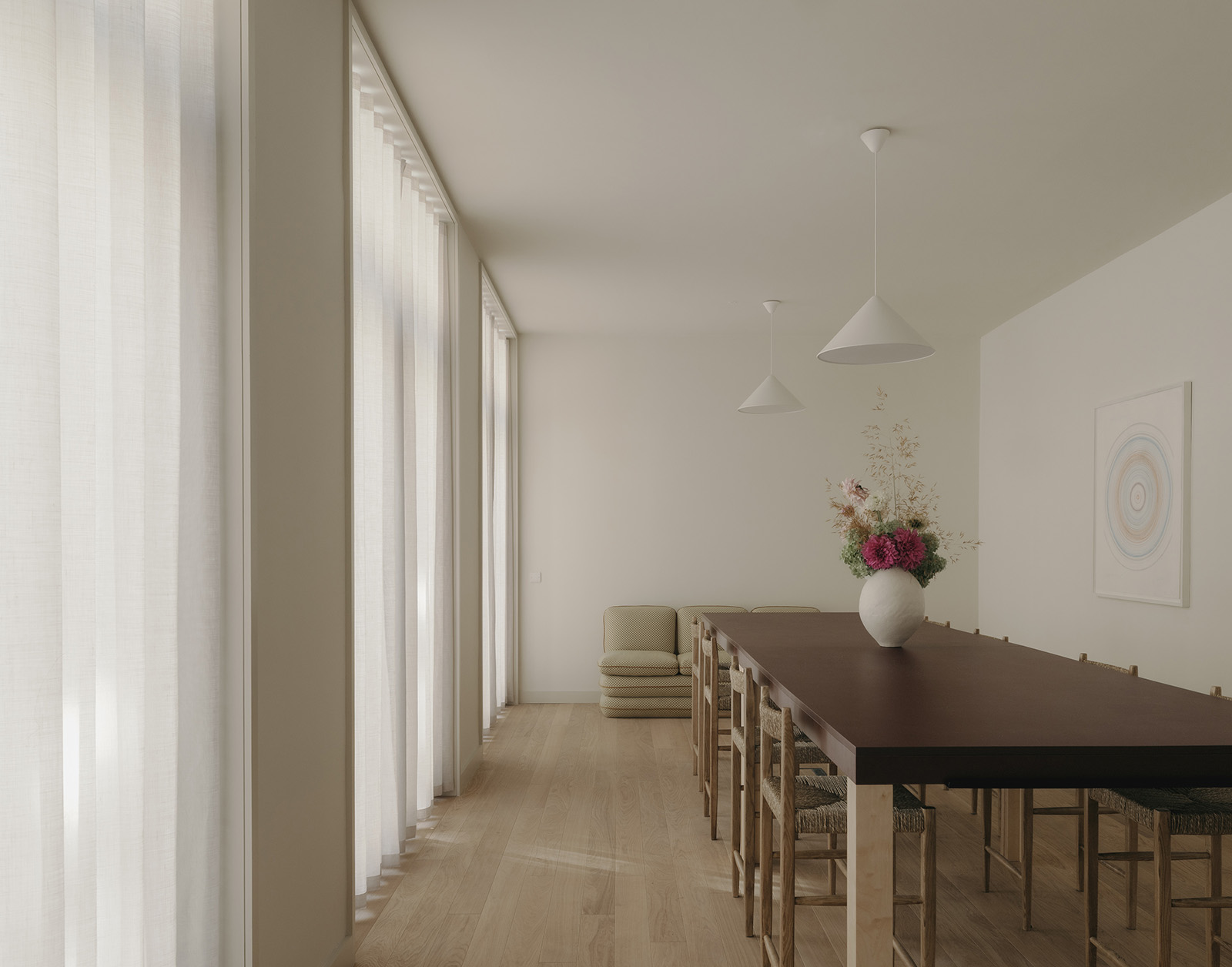
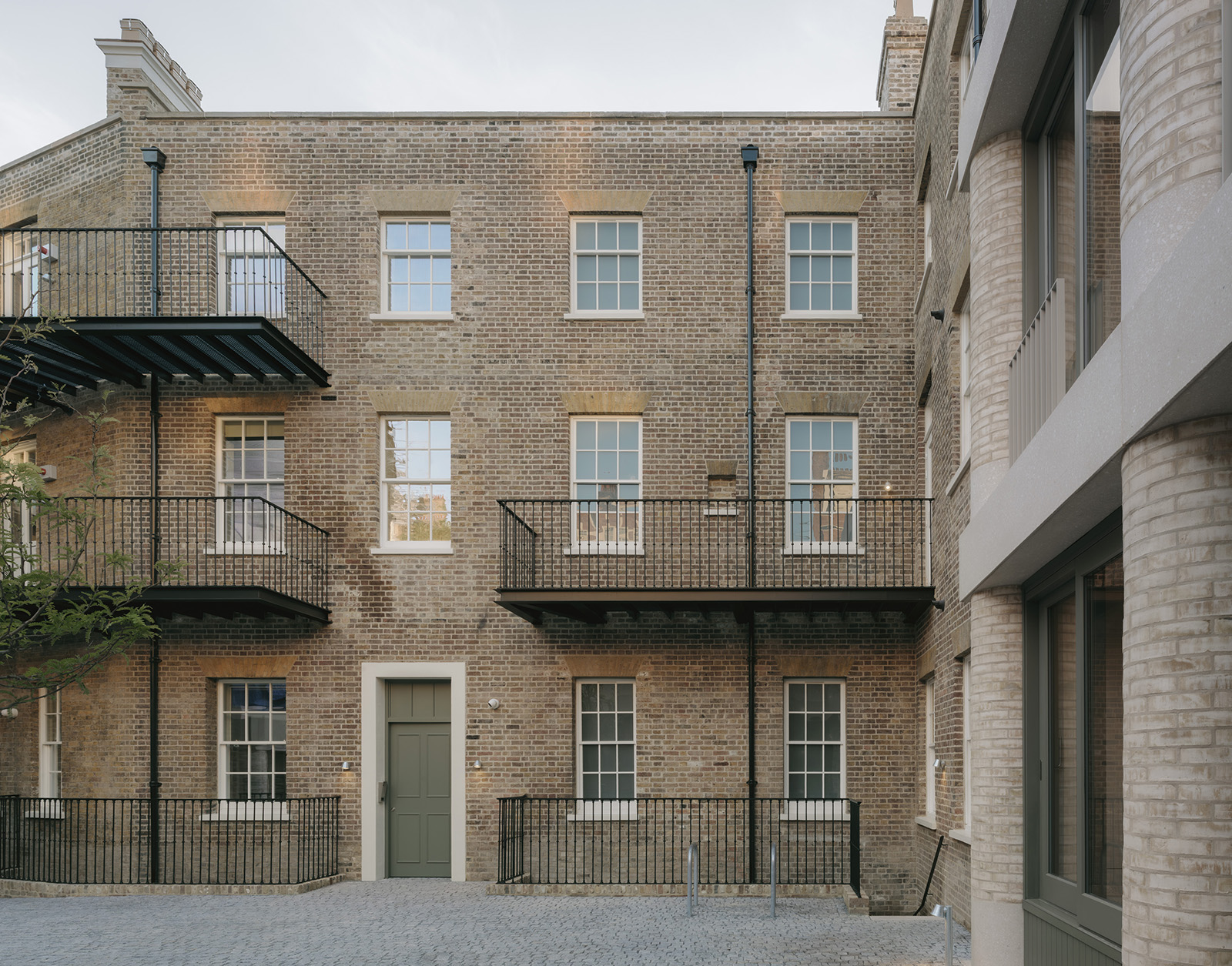
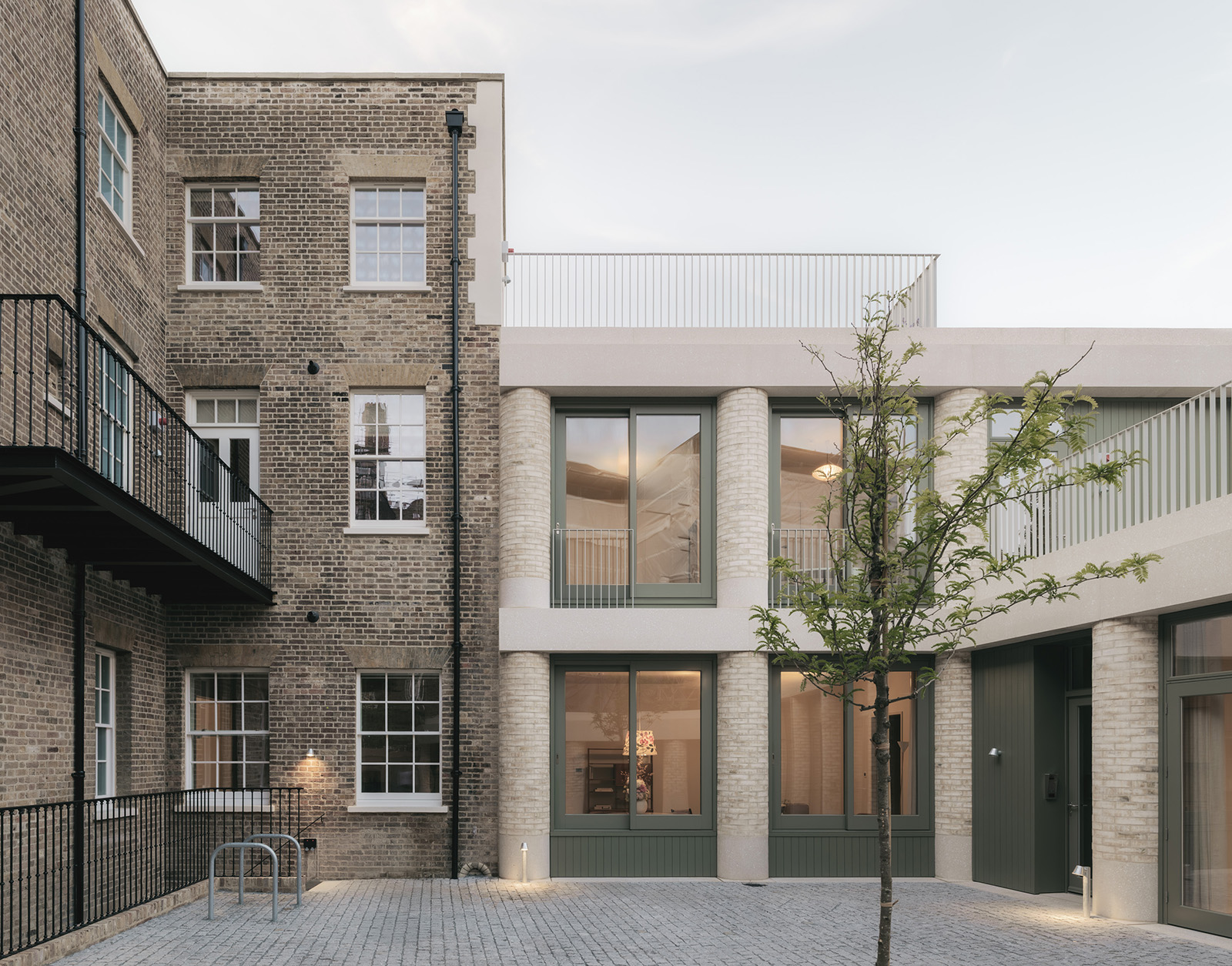
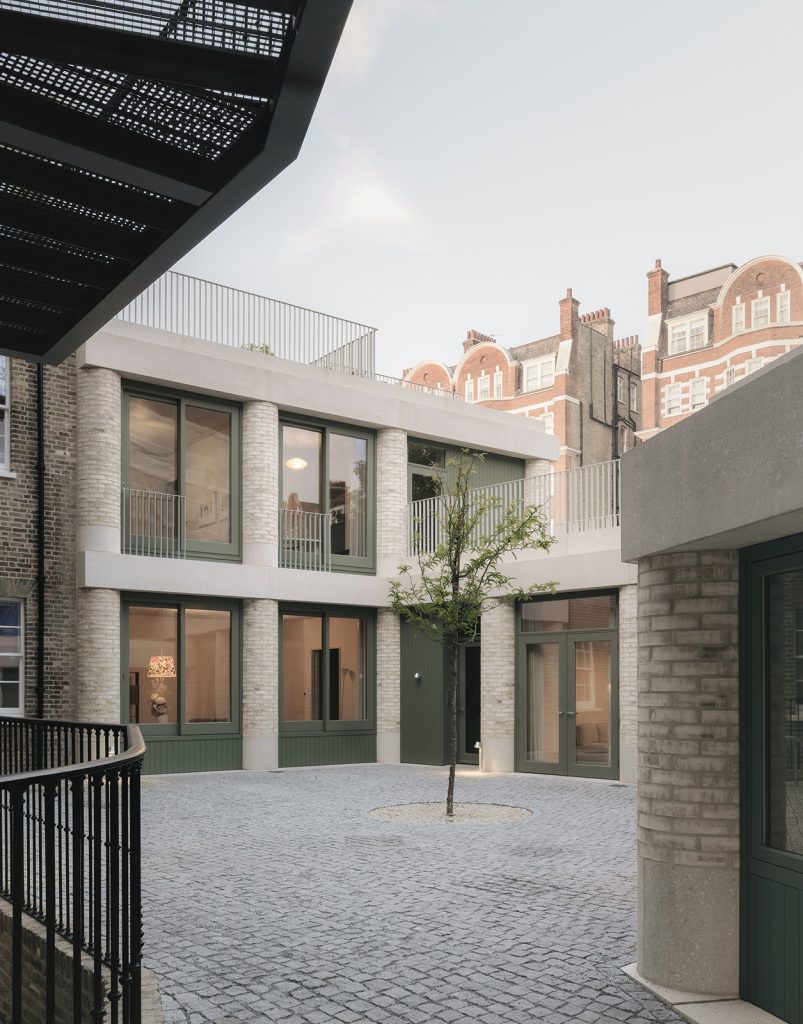
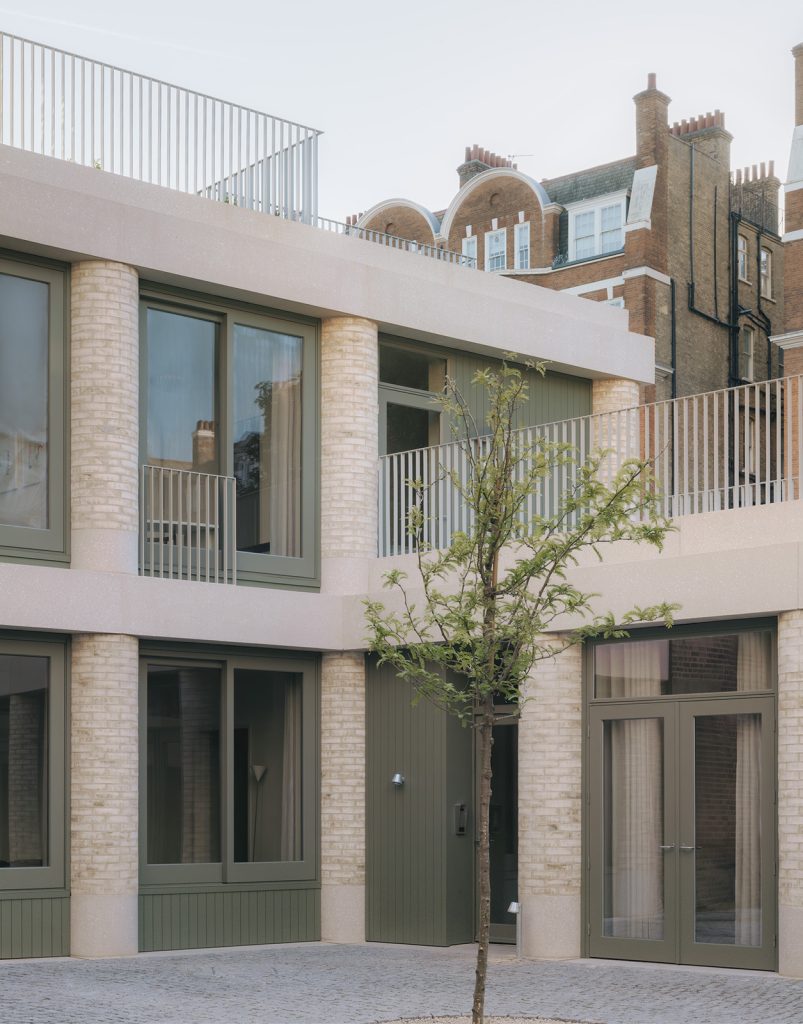
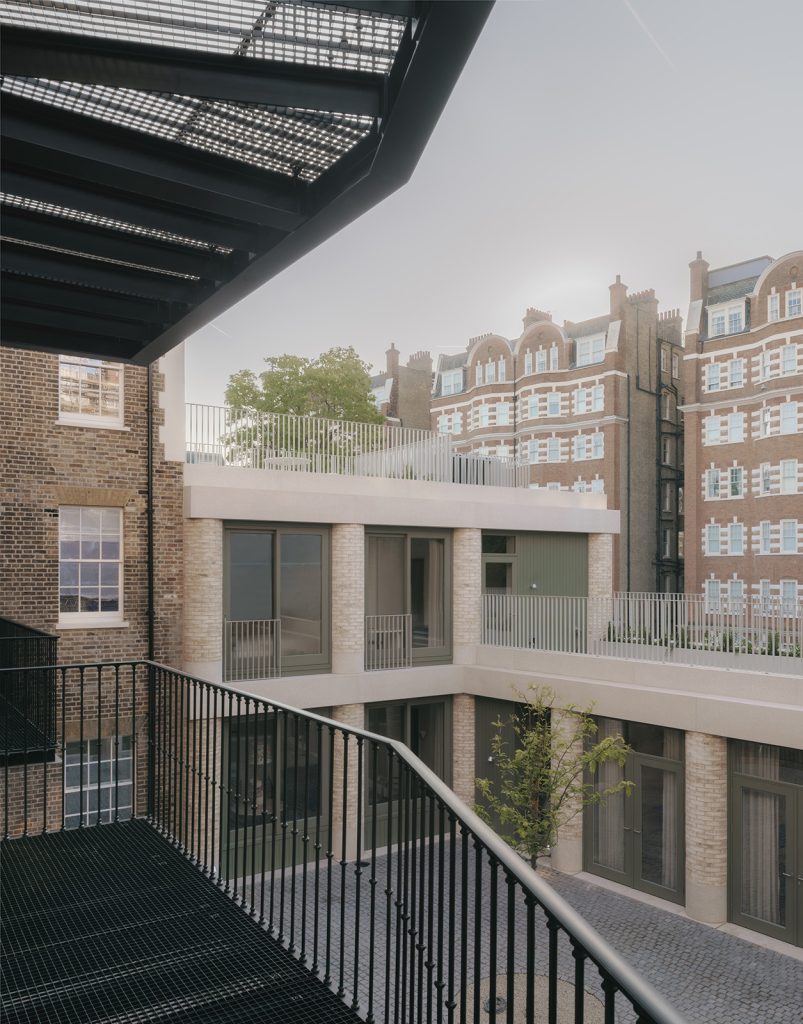
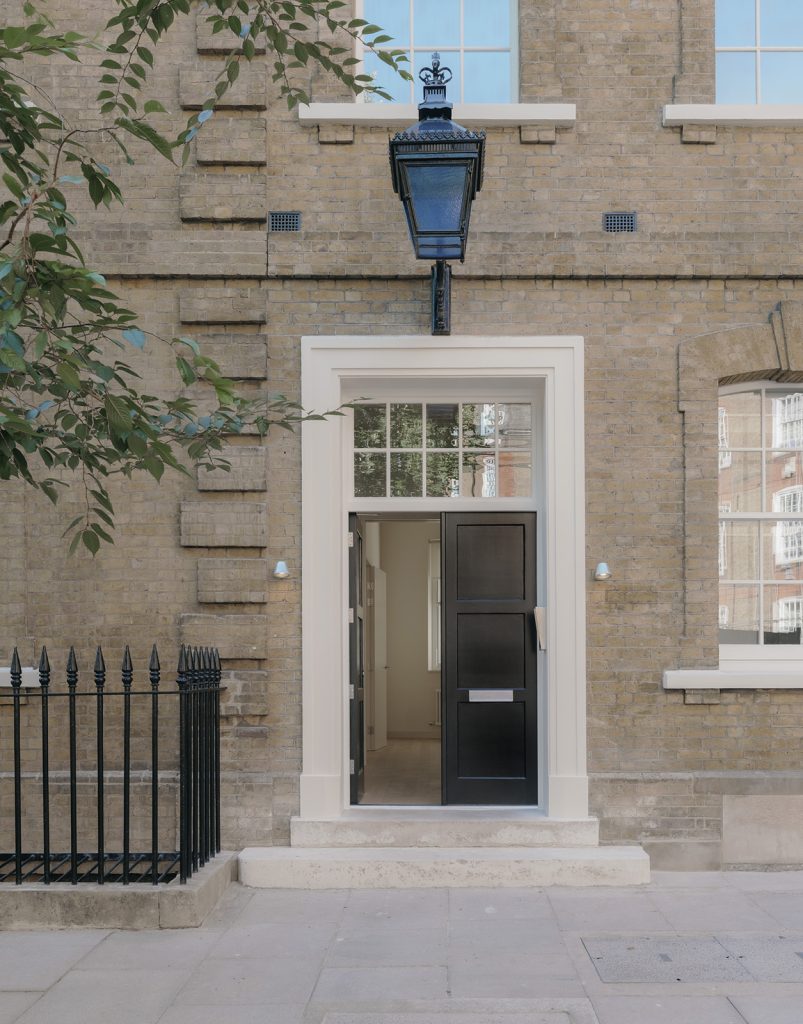
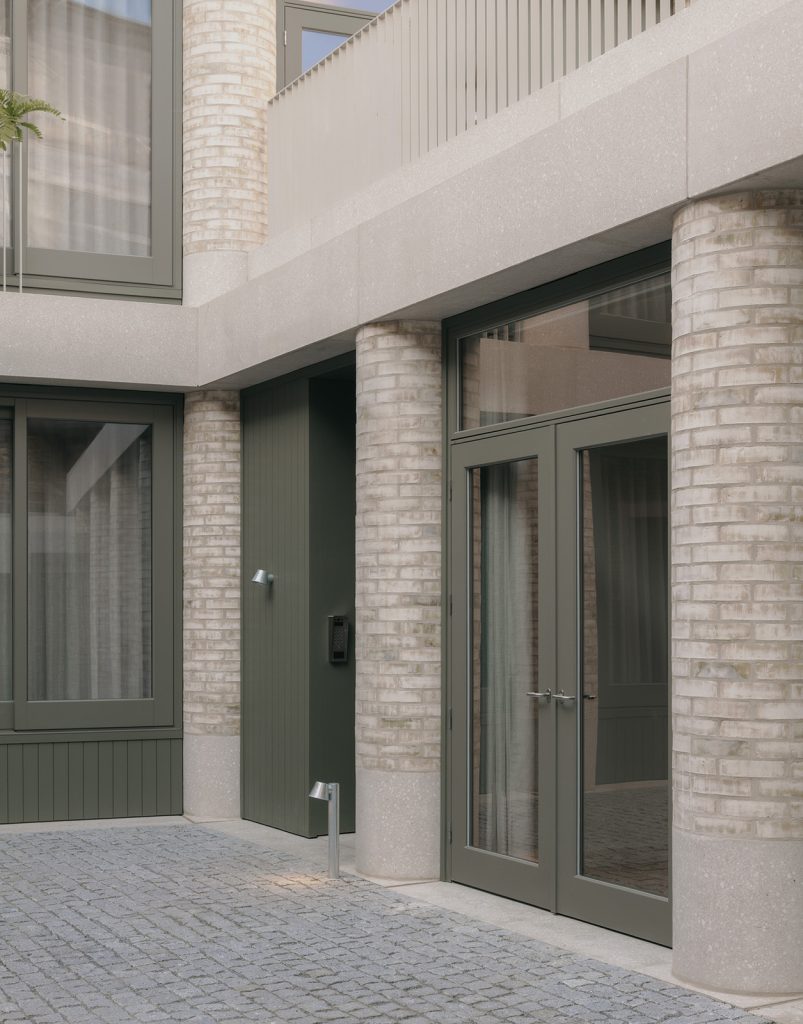
A different sort of occupant slept here once upon a time, when this corner block in North London served as the police headquarters for leafy St Johns Wood. The Victorian façade is still pleasantly golden, affixed with its original iron lantern and Gibbs brickwork. But round back, a recent development by Wendover has opened it up into nine creamy, sunlit apartments around a European-style courtyard. The new annex, Wendover’s debut rental project, reflects the material language of the original building using paler brick and softer shapes for a more contemporary, more genteel resident.
Photography: Simon Menges.
Photography: Simon Menges.
Photography: Simon Menges.
Photography: Simon Menges.
Photography: Simon Menges.
Photography: Simon Menges.
Photography: Simon Menges.
Photography: Simon Menges.
‘While not technically required as the building was not listed, we meticulously restored the facade and recreated like-for-like details that may have been in place when the building was first constructed,’ says Jan-Paul Coelingh, a partner along with Gabriel Chipperfield and Saul Sutton. ‘And we ensured any new functional interventions were integrated as sympathetically to the original fabric as possible.’
According to Chipperfield, ‘The prospect of bold, interesting architecture and unique space-making within quite a classical and conservative area of town was ultimately what drew us to the project.’
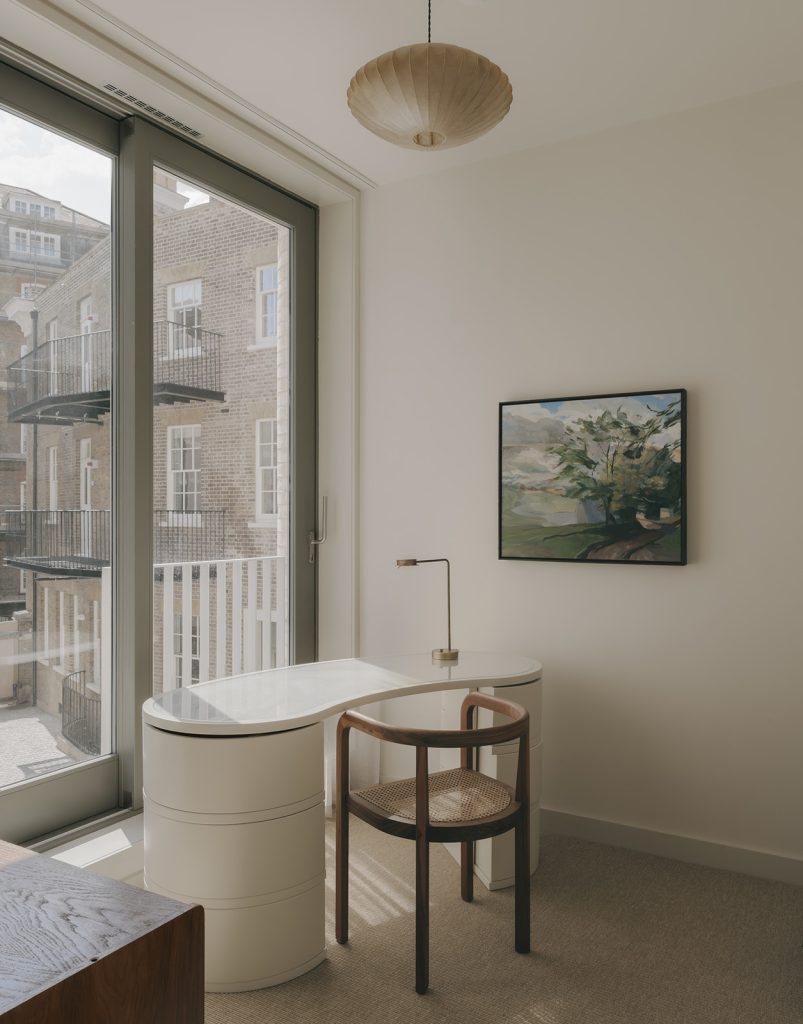
The architects freed up 930sqm of space for apartments of different sizes and configurations, applying principles of the modern wing to the historical and vice versa. Starting with clear, light-filled spaces with contemporary joinery, they added traditional colours, flooring, bathroom tiling and wash basins to ease the transition between the old and new architecture. ‘We sought to find a simple common language that would work for both,’ says Coelingh.
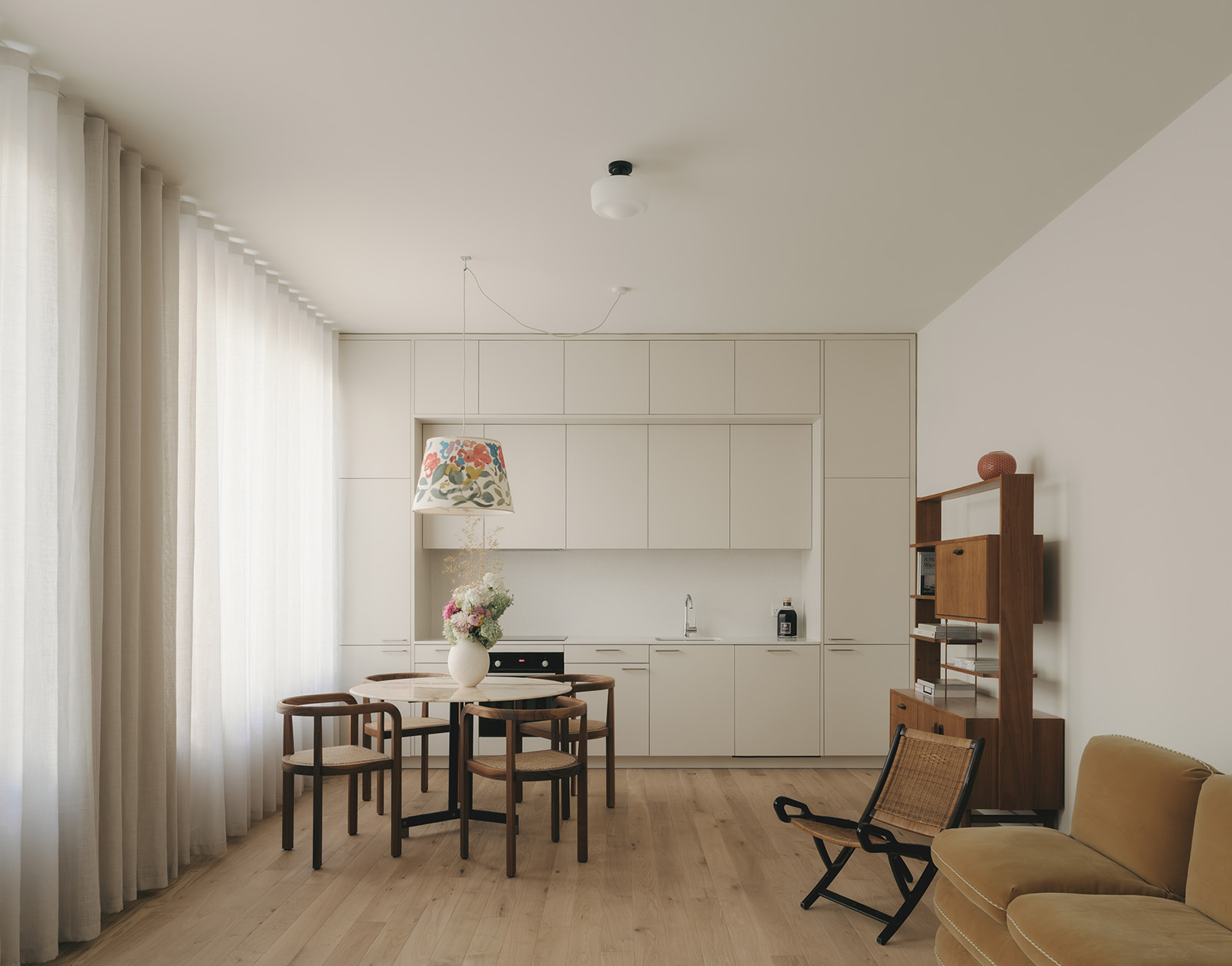
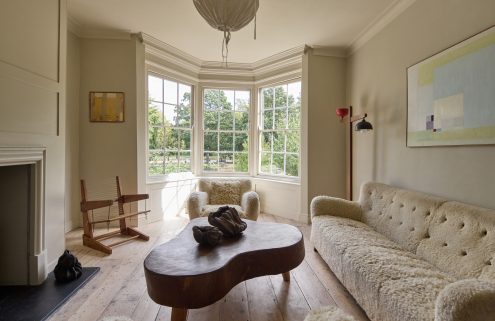
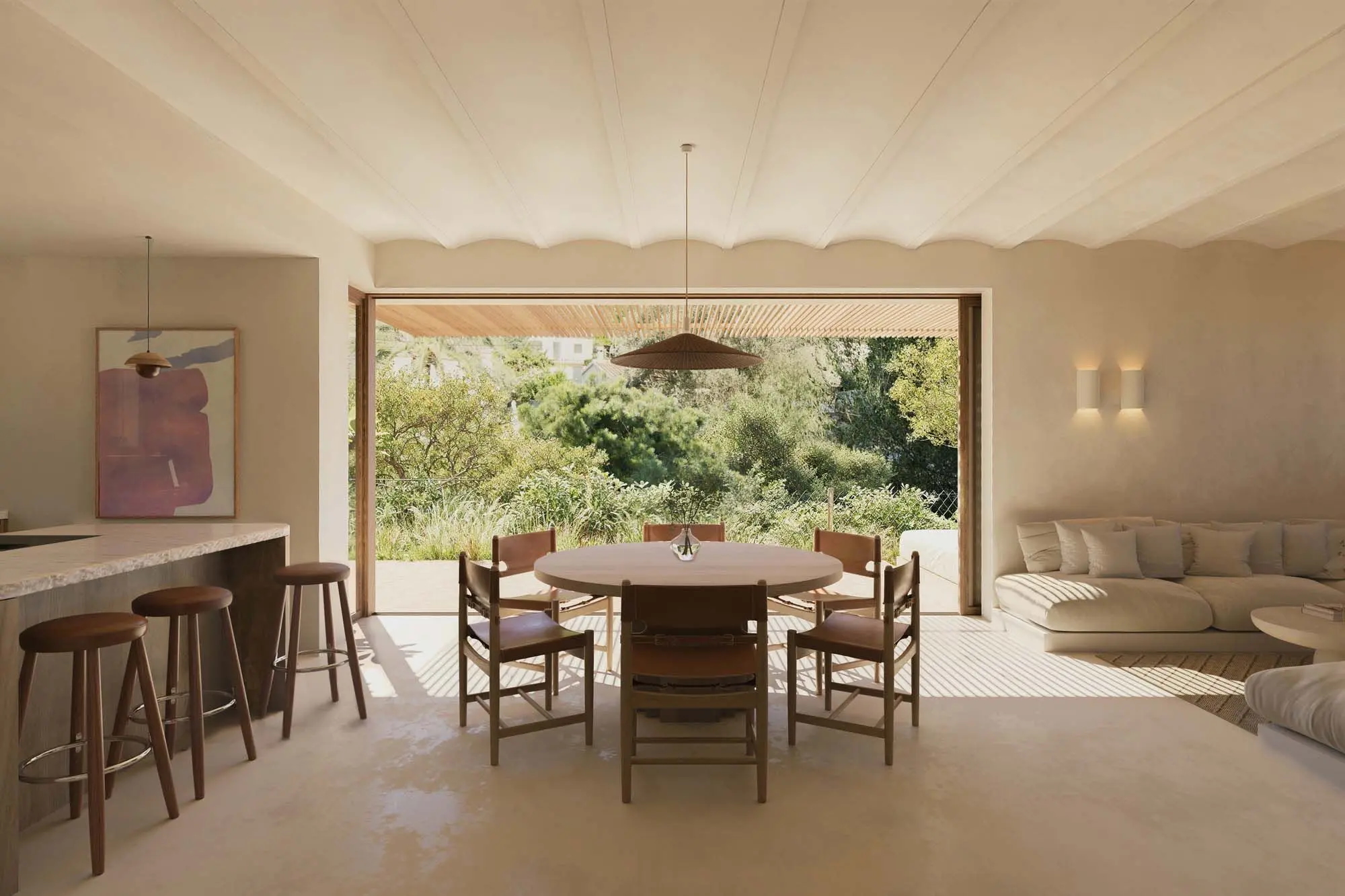
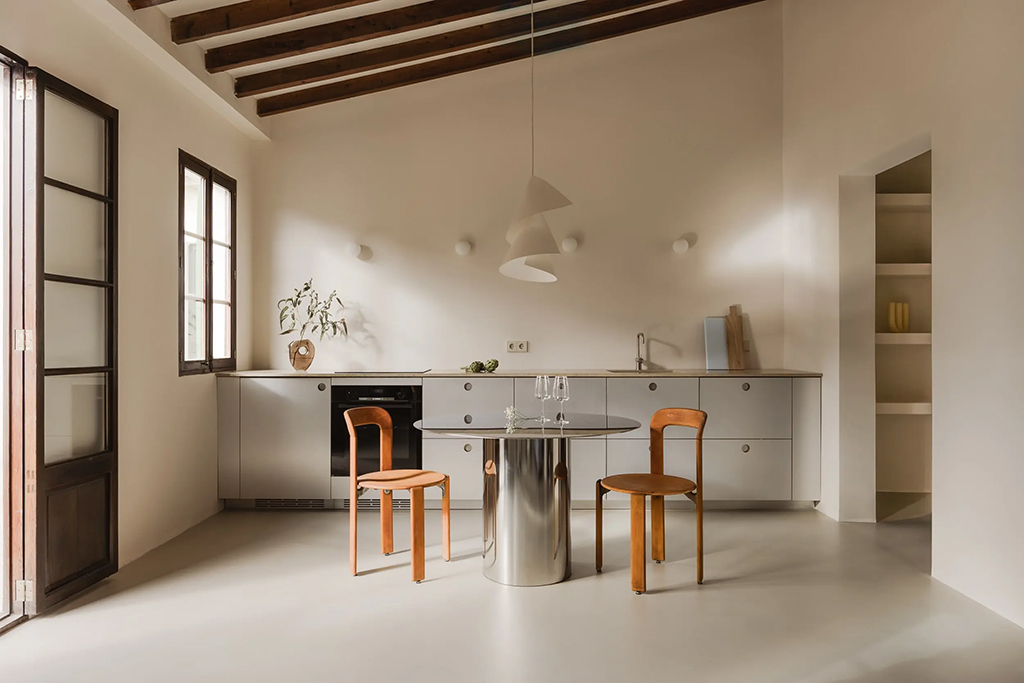
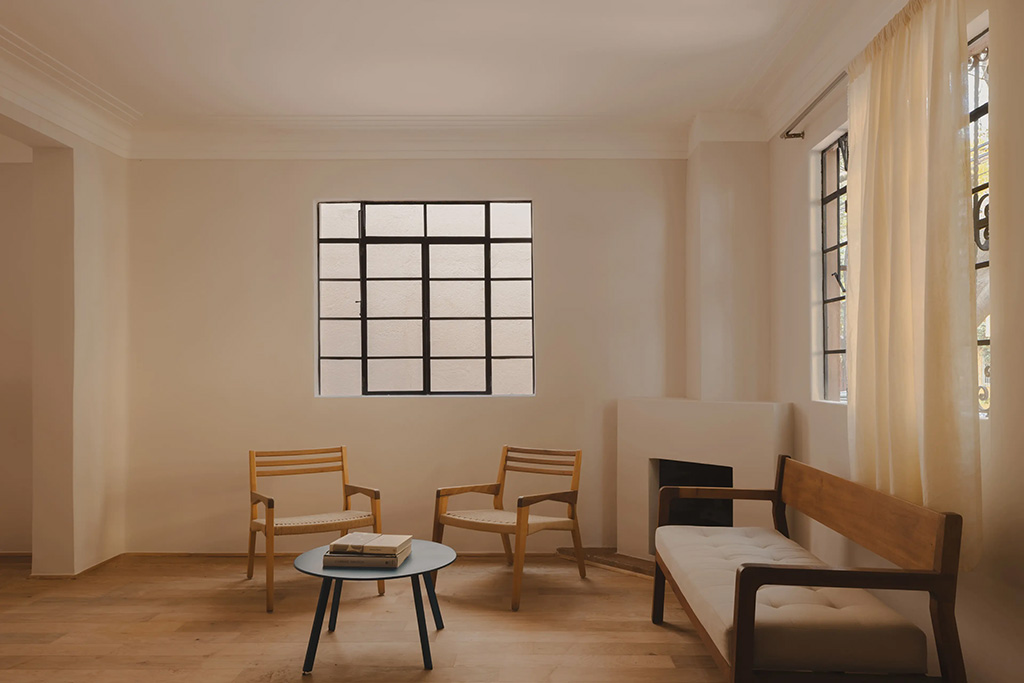
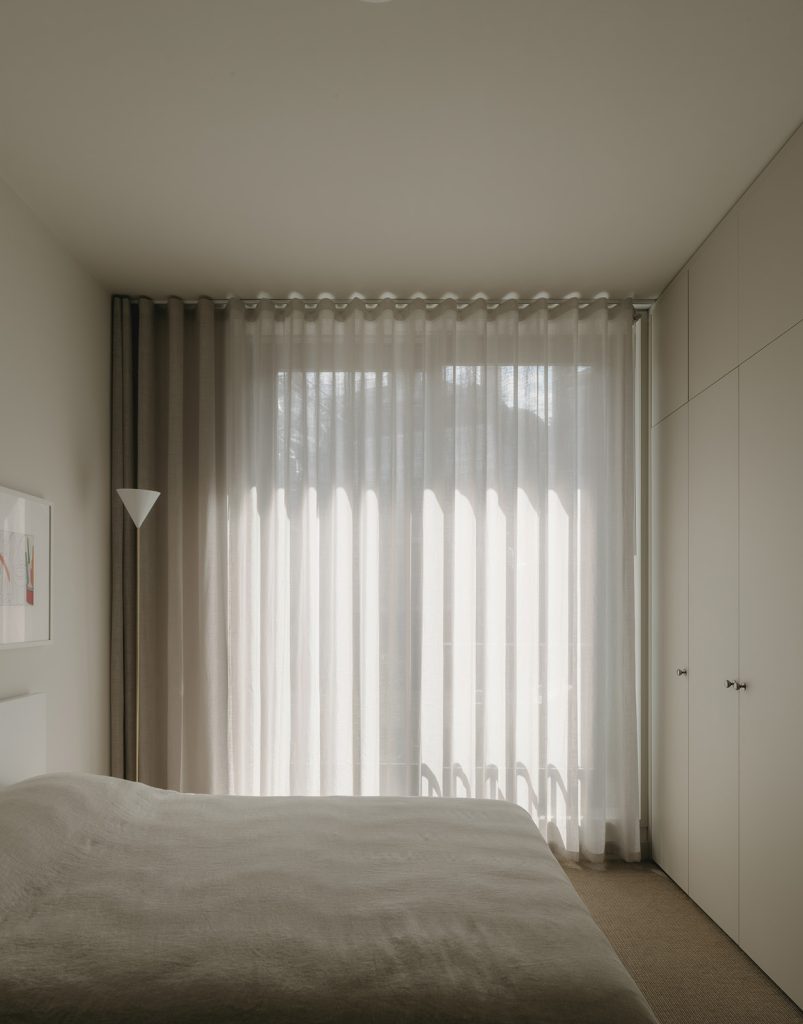
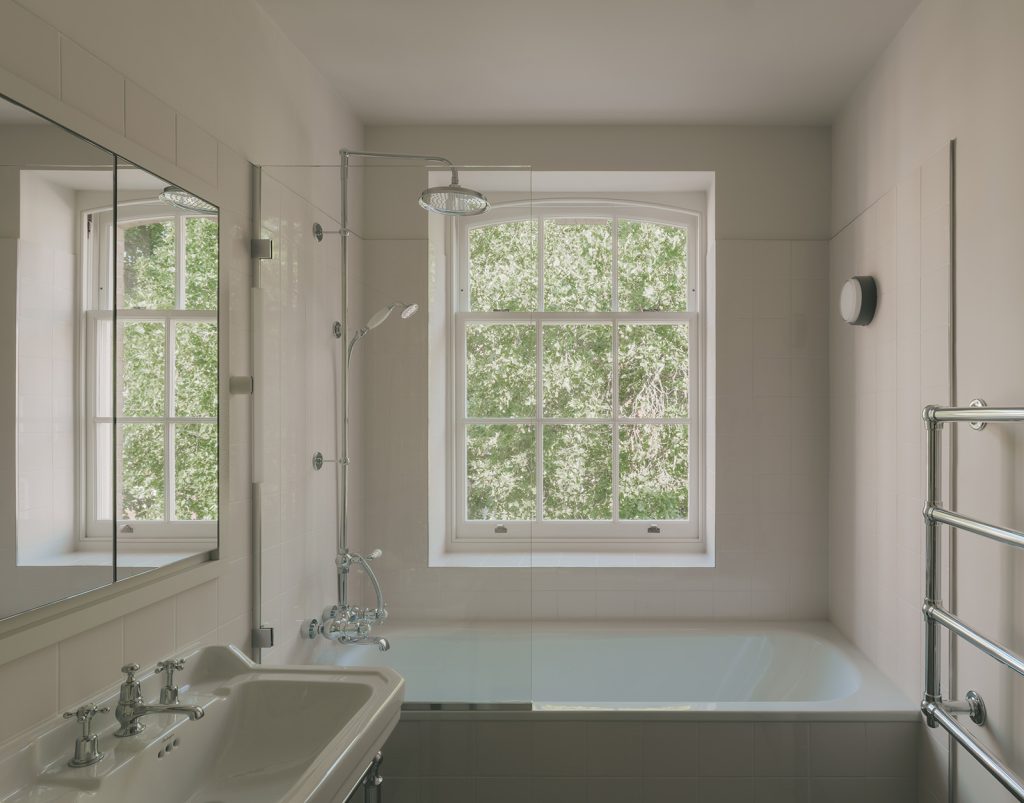
Though each apartment has its own unique floor plan, they share a restrained elegance and consistent creamy palette, allowing the building’s heritage features to take precedence — and offering a canvas for residents. In the kitchens, solid oak flooring is paired with off-white lacquered joinery and terrazzo worktops. Bathrooms more directly reference the building’s civic history with Edwardian-style basins, ribbed glass and tiles with traditional black-edge detailing. Lighting makes a statement in its inconspicuousness. One can draw a clear line from David Chipperfield, Gabriel’s father, in the property’s devotion to light, clarity and generous proportions.
Still, the core of the project is the cobbled courtyard, the architects say. Overlooked by tall olive-trimmed windows and fire escapes from the original building, it becomes a visual and social axis for residents. ‘[We] were struck by the potential of what one could build within the confines of this courtyard,’ says Chipperfield. ‘We wanted to push for a communal and open way of living, with strong purposeful architecture.’ It can be accessed by every resident, whether through the cycle store, the co-working library or the communal hallways. And it acts as a ‘thoroughfare’ for congregating residents, part of the European ideal.