Thirty-five years after his death, George Nakashima is still one of the world’s most popular names in furniture-making. The Japanese-American fascinated design aficionados with his raw edges and hand-turning, hallmarks he developed after settling in New Hope, Pennsylvania, following the Second World War.
Coming out of internment on the West Coast into a woodland utopia on the East, he set to designing a family compound for workshopping his passions. Nakashima’s complex joining techniques made nails superfluous and popularised exposed dovetails. The gnarled hardwoods he showcased — East Indian rosewood, American black walnut, cherry — were true, unprocessed cross-sections of fallen timber, dictated by sun, weather, landscape and time. They tell the story of all that came before.
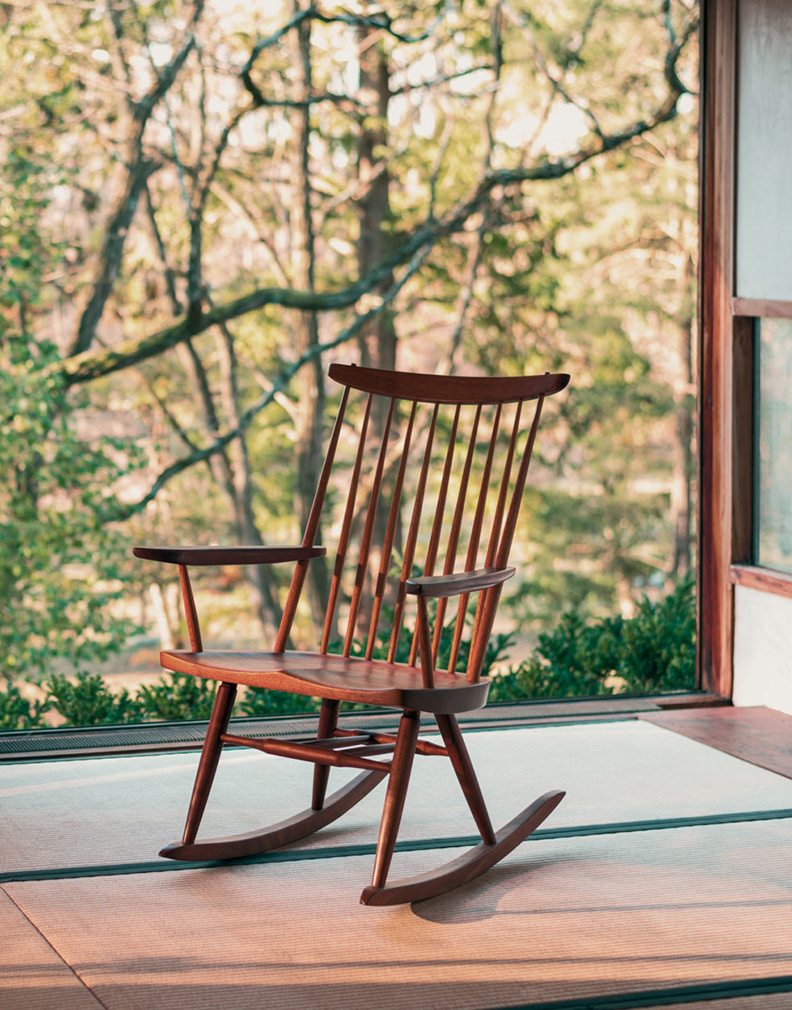
Host Chair Rocker. Photography: George Nakashima Woodworkers.
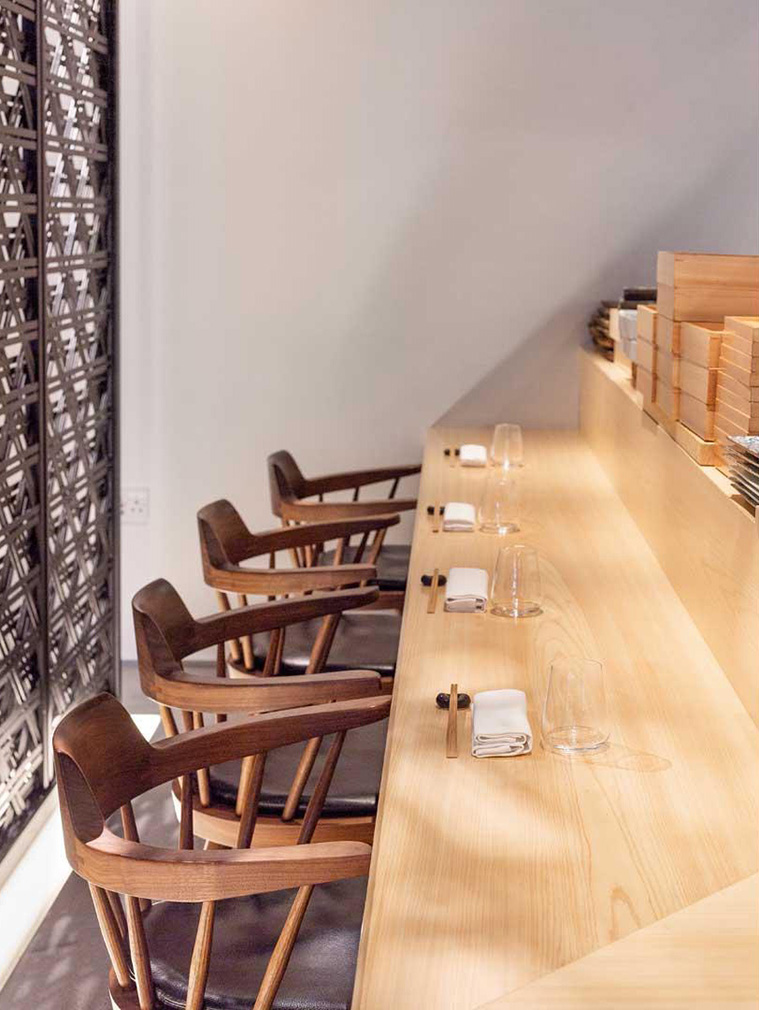
The izakaya counter at Akira in London. Photography: courtesy of Japan House.
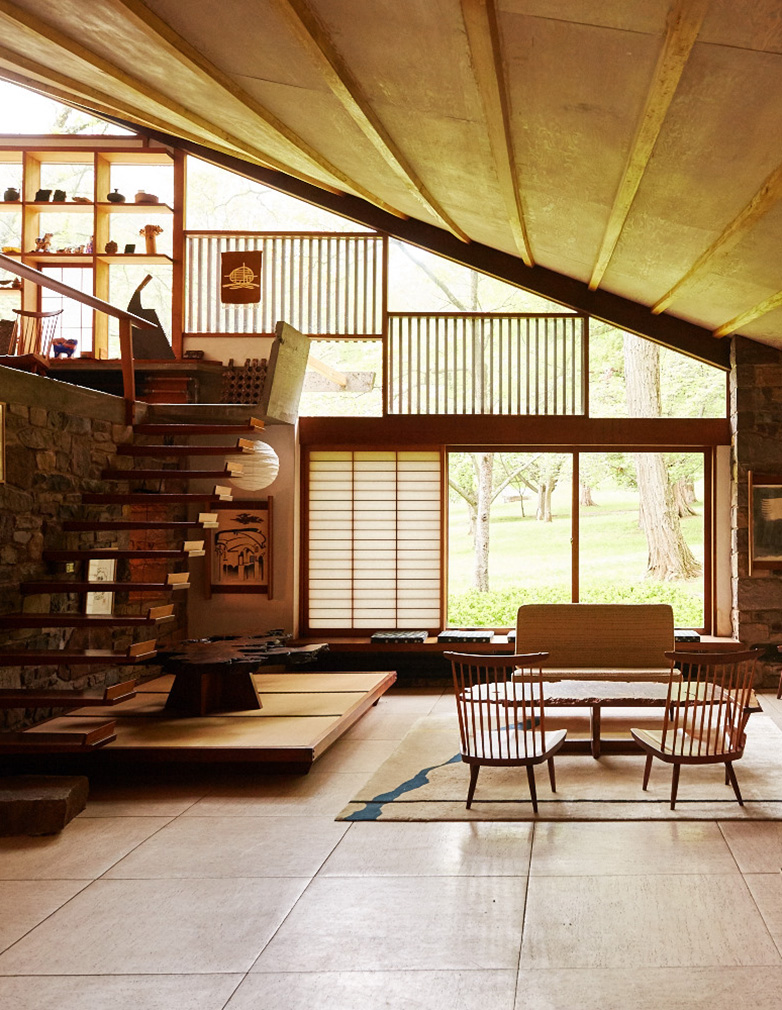
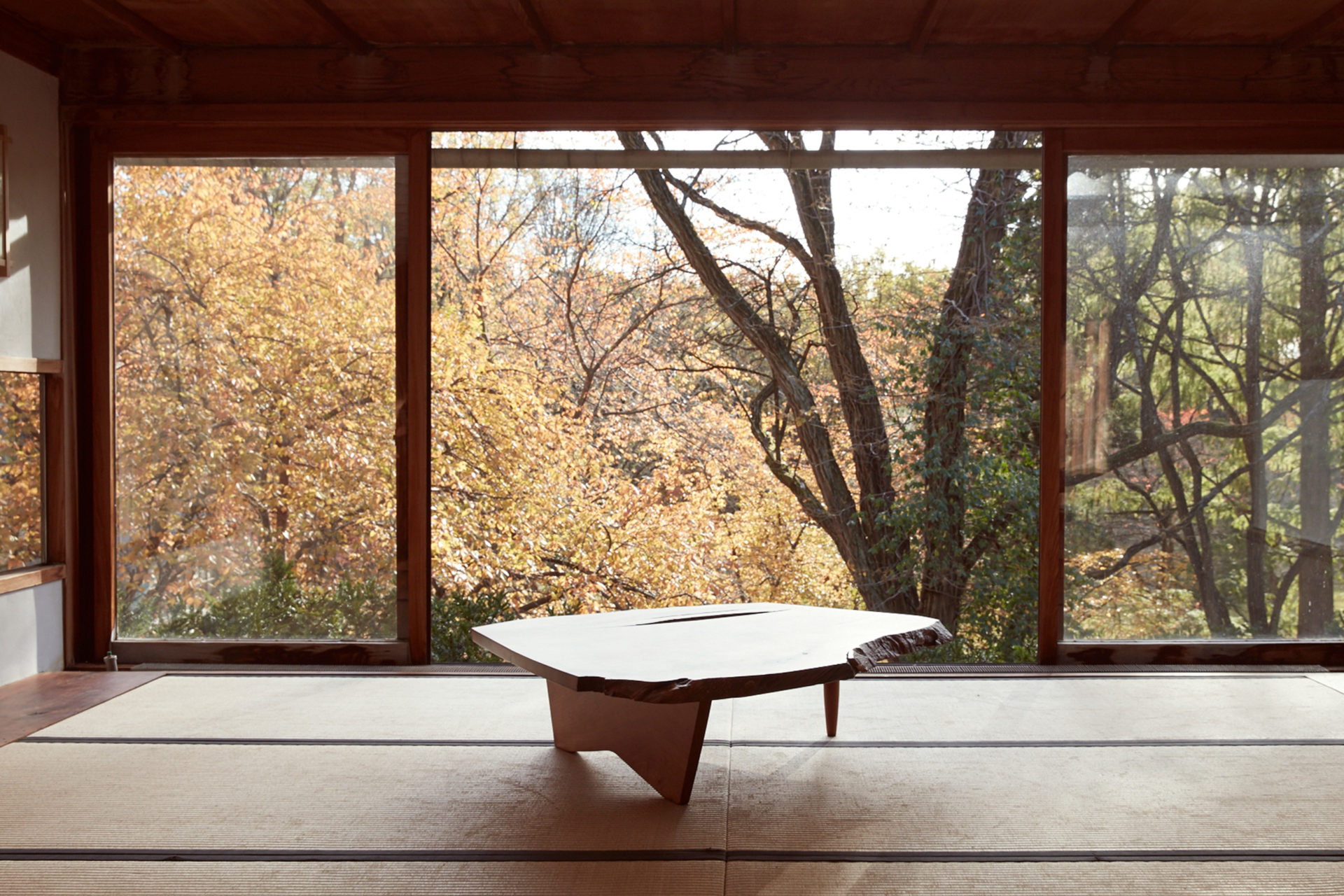
Nakashima Family Home, New Hope. Photography: Nakashima Foundation for Peace.
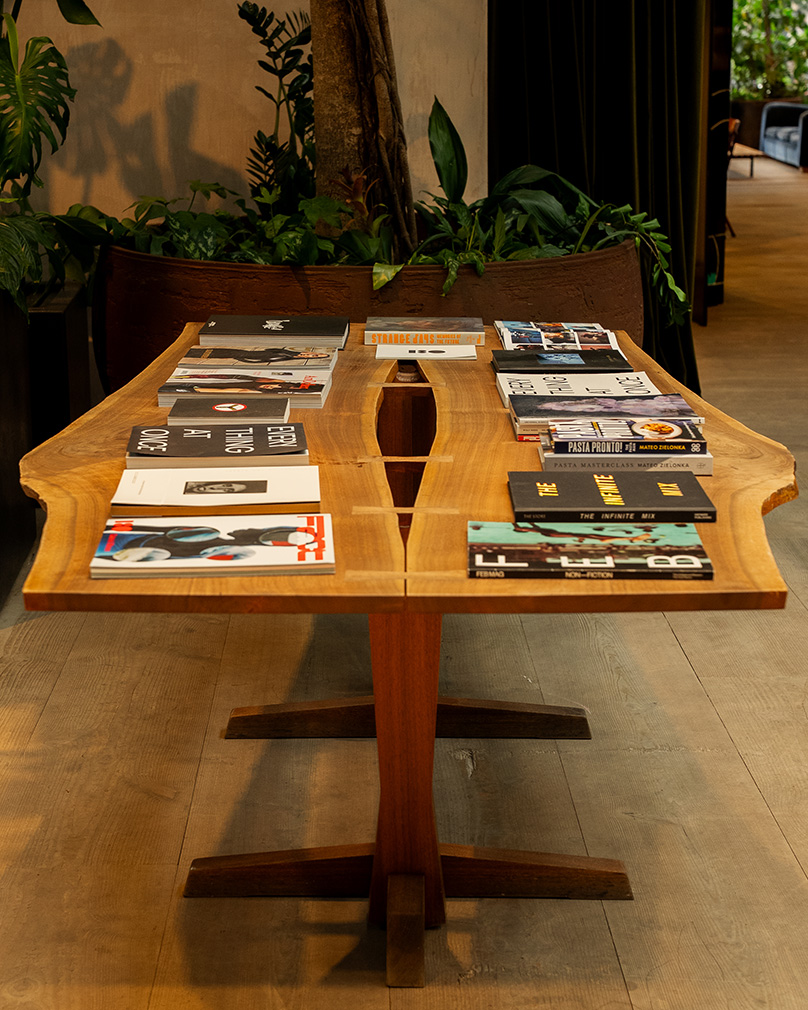
A George Nakashima table at 180 Quarter. Photography: Feiyang Xue.
Reception House, New Hope. Photography: George Nakashima Woodworkers.
And we all love a good story. With demand for Nakashima spindle-back chairs and sculptural Conoid tables as high as ever — and auction prices outstripping their studied appraisals — we’ve gone on a hunt for the furnishings in the wild. Our favourite Nakashima appreciation sites are rounded up below.
Moderne Gallery, Philadelphia
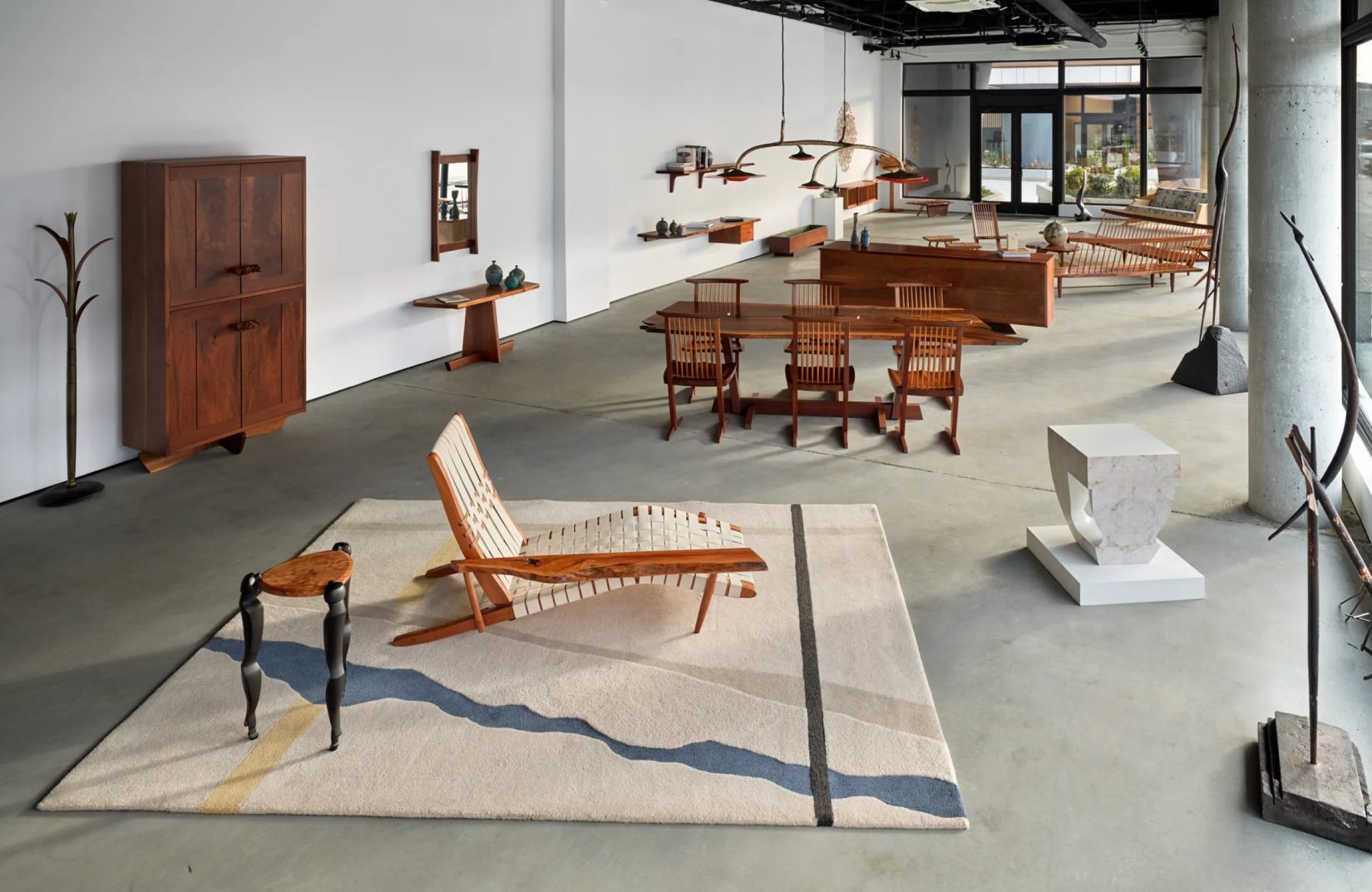
In the designer’s backyard, this 40-year-old gallery deals in crafted wood pieces from the past century and worked hard to spearhead Nakashima-appreciation across the US. Directors Robert and Joshua Aibel remain the foremost Nakashima dealers in the country and their current exhibition, George Nakashima: Foundations Of Form, displays early-career chairs, coffee tables and bookcases that embody the intuitive design language Nakashima adapted to modern living. A rare 1935-6 Untitled (Karuizawa) Chair, built with Asian cryptomeria branches with a jute seat and visible joinery, was a prototype for those he designed for St Paul’s Catholic Church in Karuizawa, Japan.
The Connaught Grill, London
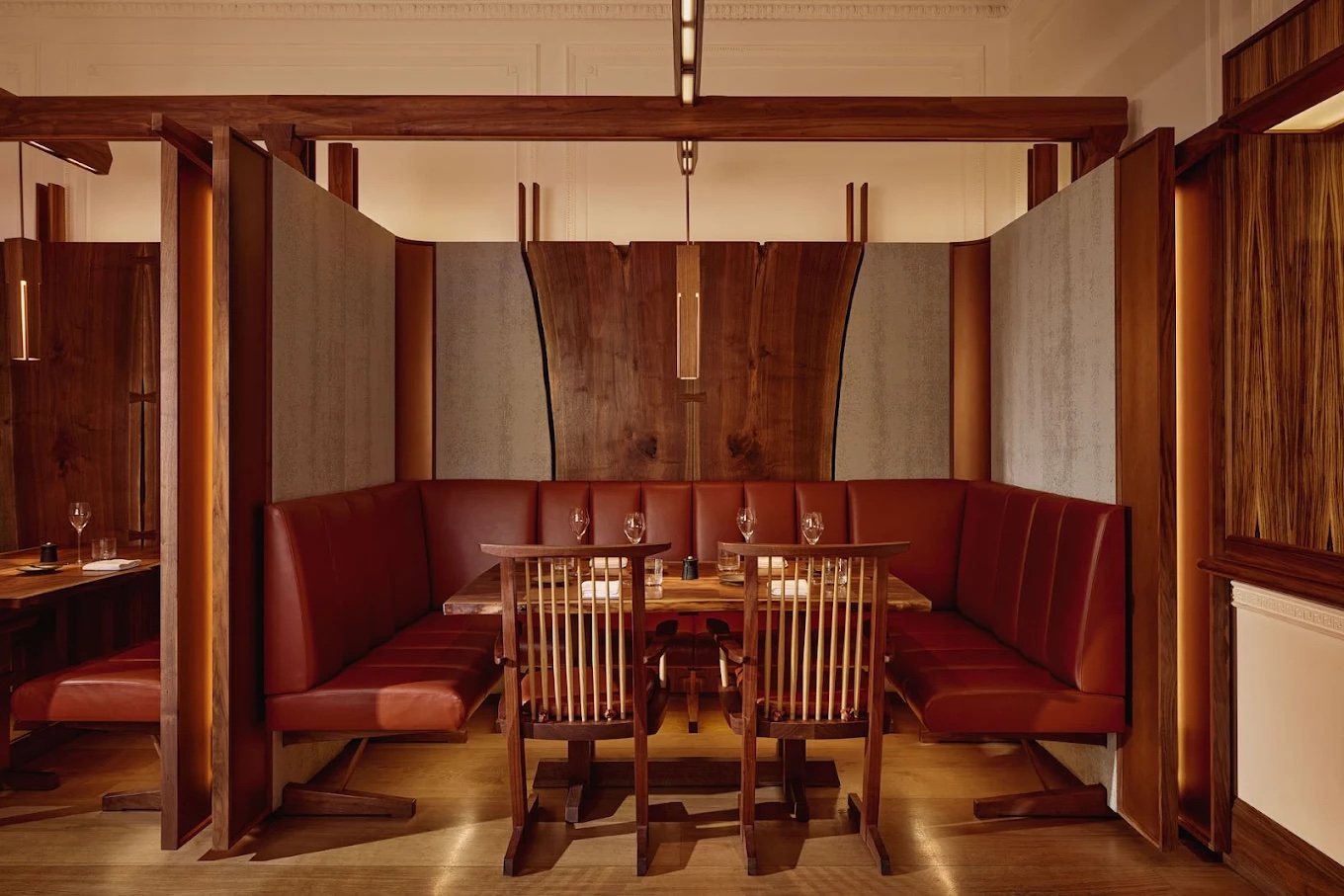
Five years ago Mira Nakashima, George’s daughter and an acclaimed designer in her own right, collaborated with architect John Heah on the Connaught revival, bringing her father’s one-of-a-kind raw-edge Frenchman’s Cove tables and Conoid chairs into a space that feels more gallery than restaurant. She sourced American black walnut planks from the Pennsylvania headquarters to craft bespoke wall panels with butterfly joints. The booths are in coves of rich grained wood, as if deep within a forest.
Little Smith, Tokyo
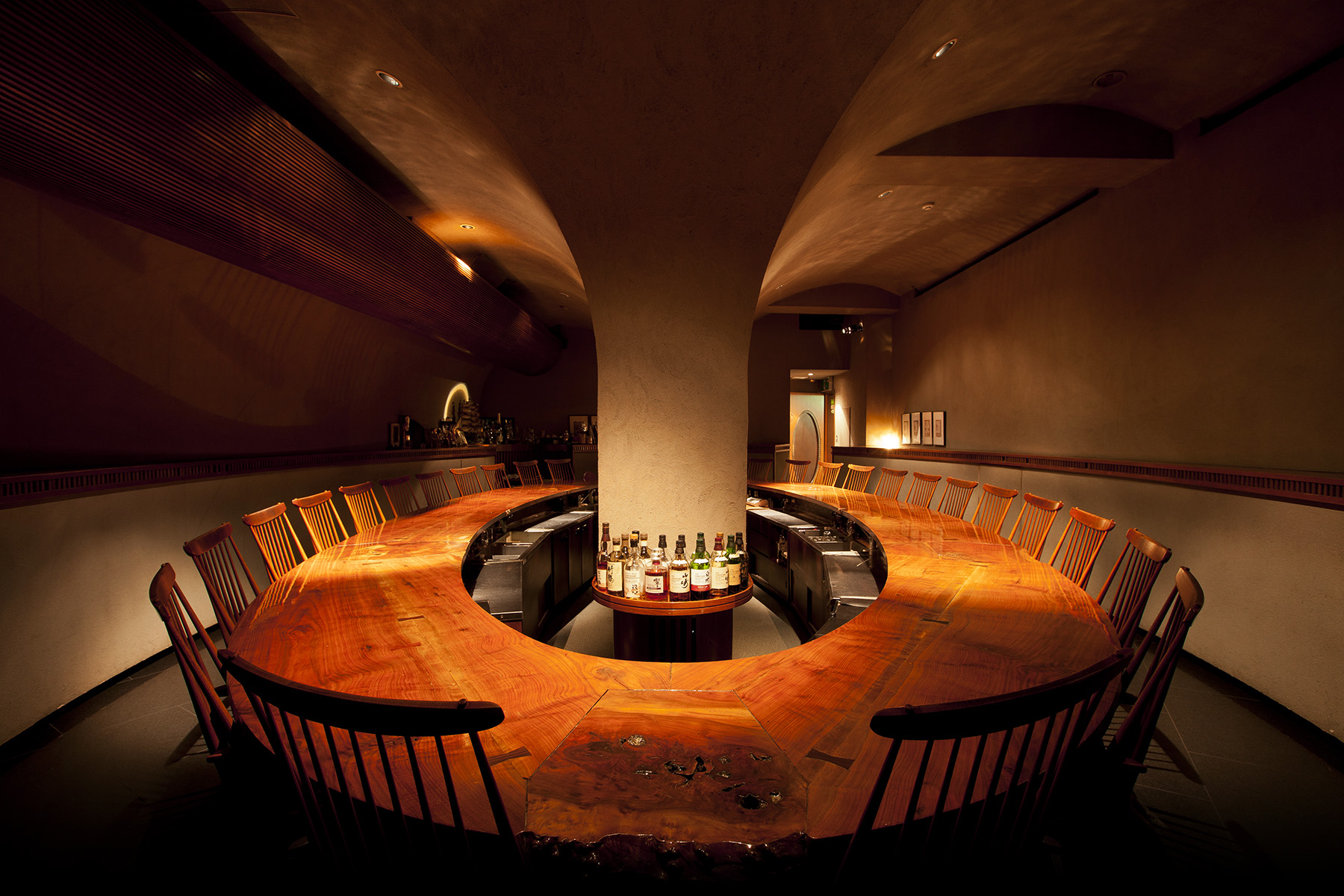
The family still had fans in Tokyo when, in 1993, this subterranean Ginza café was made over as a bar for serious whiskey buffs, with an intimate one-room interior by architect Takahiko Yanagisawa. The single horseshoe-shaped table, constructed by Sakura Seisakusho with Nakashima’s values to mind, is paired with more than a dozen Nakashima loungers with spindle backs and upholstered seats.
Conoid Studio, New Hope
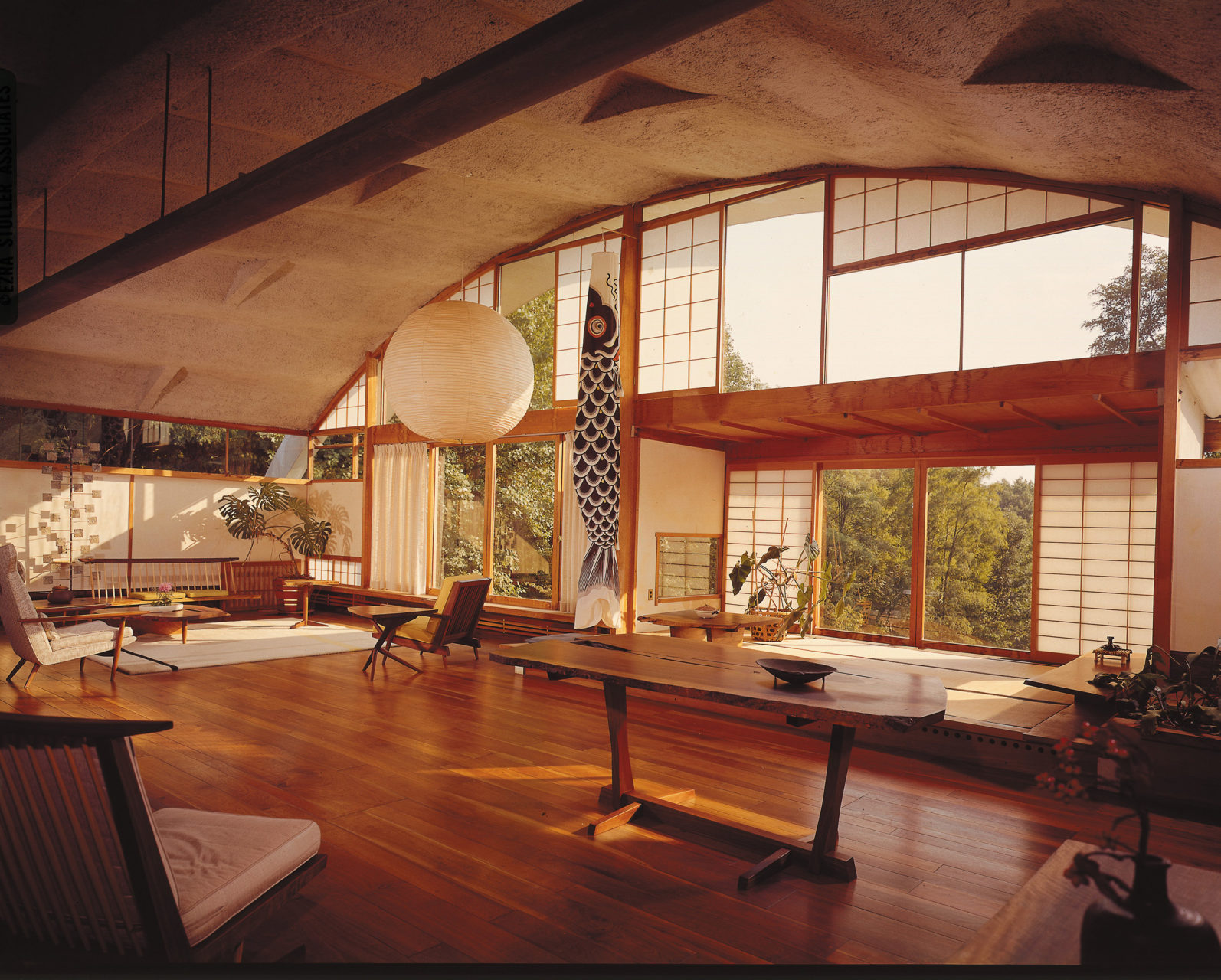
On the Delaware River north of Philadelphia, the Nakashima Woodworkers campus has 17 structures the late designer built over decades. But the one that most excites Nakashima pilgrims might be his primary design studio, considered a tour de force for its warped-shell design, built in reinforced concrete. A dialogue between traditional Japanese methods and American materials, it looks more like a family home, with a kitchen and lounge where furniture basks in light from shoji-screens and south-facing glass walls — the product of a true craftsman. The gravity-defying single-arch roof was built in 1957, more than a decade after the family home was designed following their release from the Minidoka prison camp. Mira Nakashima apprenticed here after studying architecture in Japan, and still works here today.
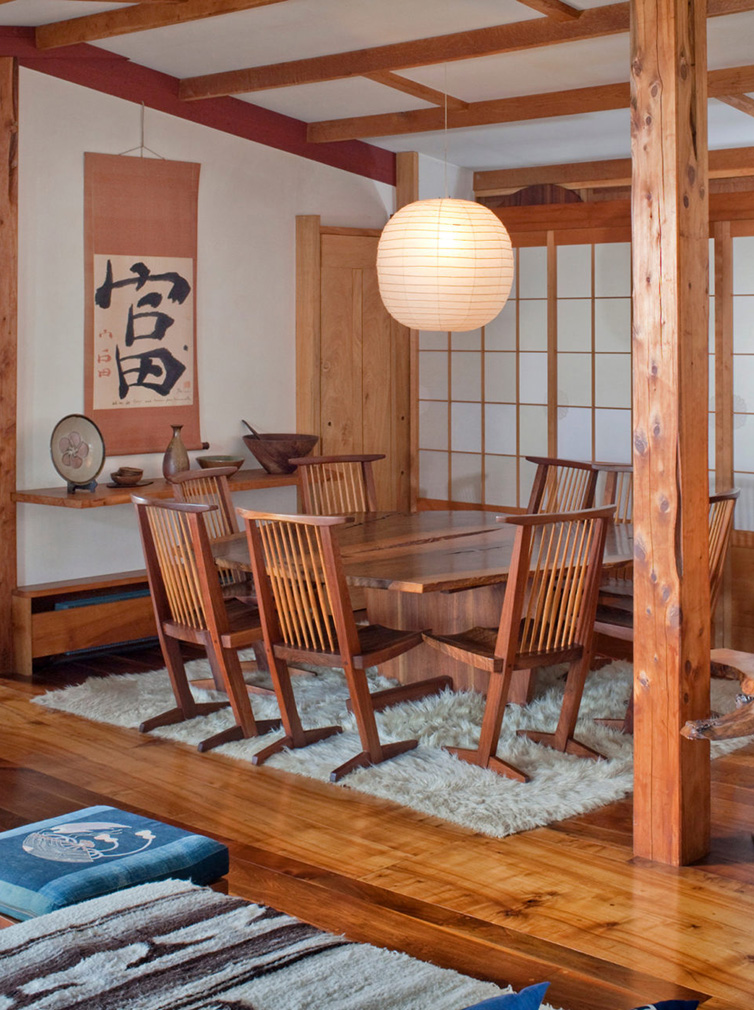
Reception House, New Hope
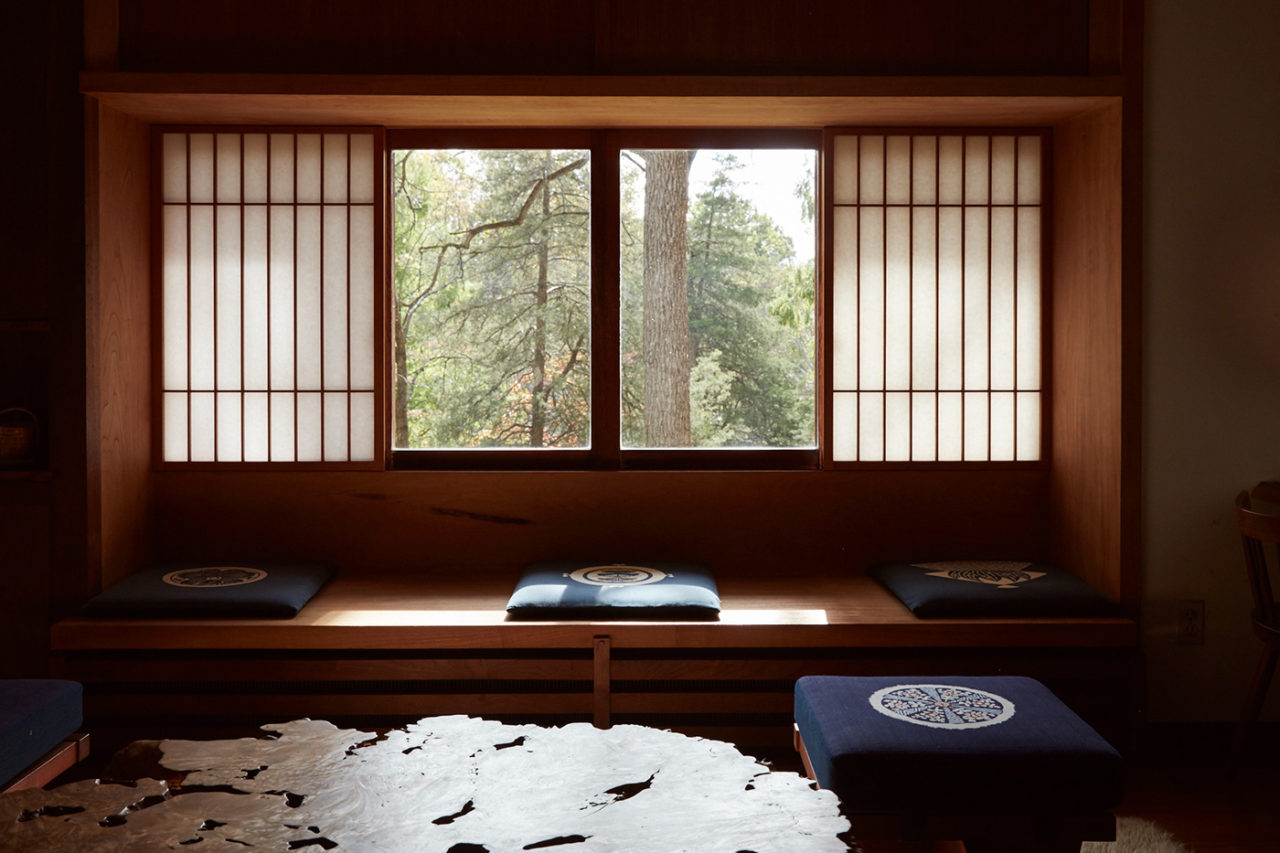
Facing a fossil fuel crisis in the 1970s, Nakashima built a house for entertaining that made efficient use of materials and space with enduring electric appliances and window sills that double as benches and desks. Its cedar roof sits atop a scissor-truss ceiling, and the floors were laid with wide-plank birch and walnut offcuts, assembled like a jigsaw. The entire building depends on a single fireplace for its heat, with a metal hood that doubles as a cooking surface. Diners ate at the two-board, book-matched English walnut table that Nakashima later riffed on in his Peace Altar series. The house is still used today, and guided tours can be booked April through October.
Akira, London
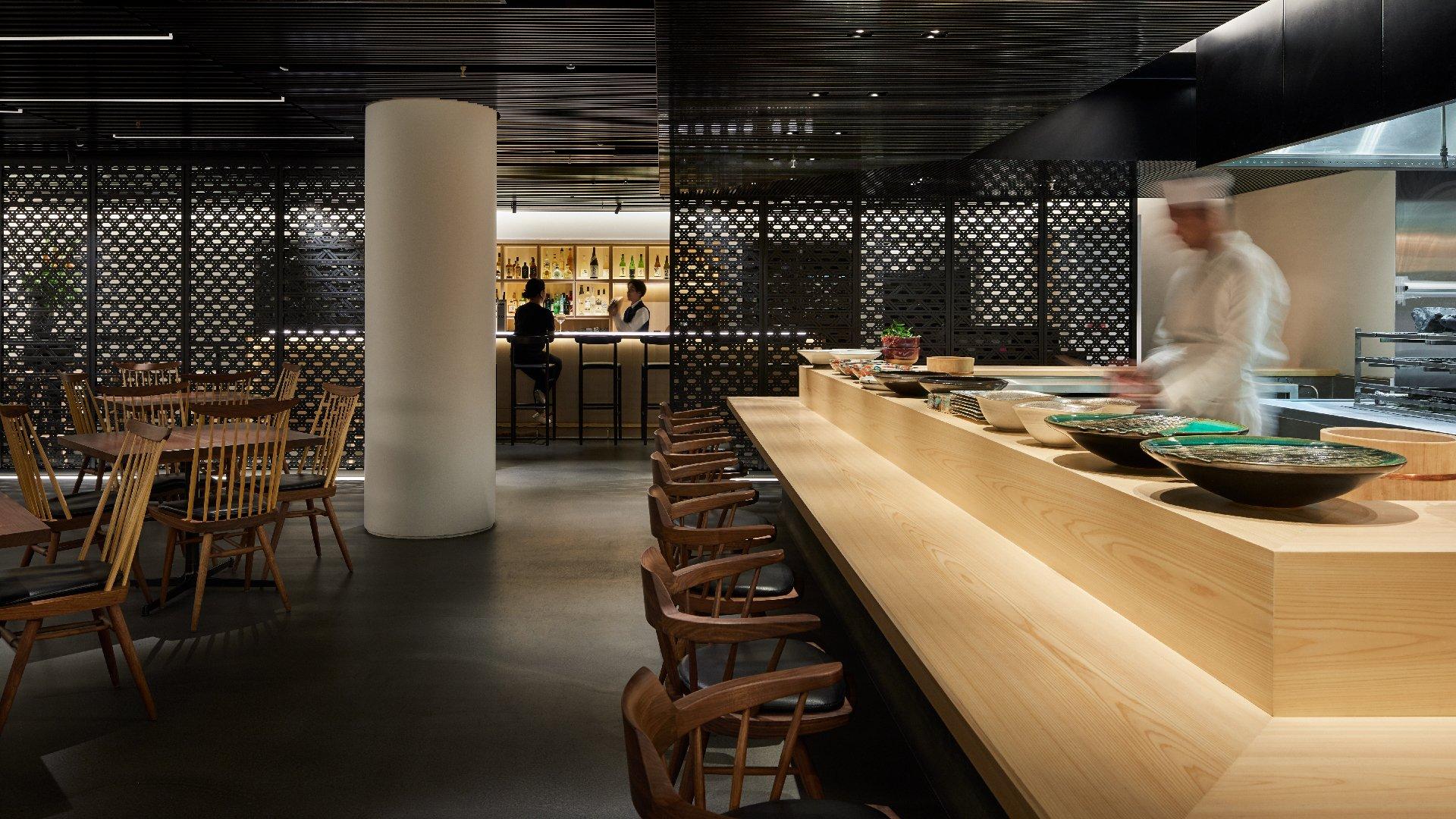
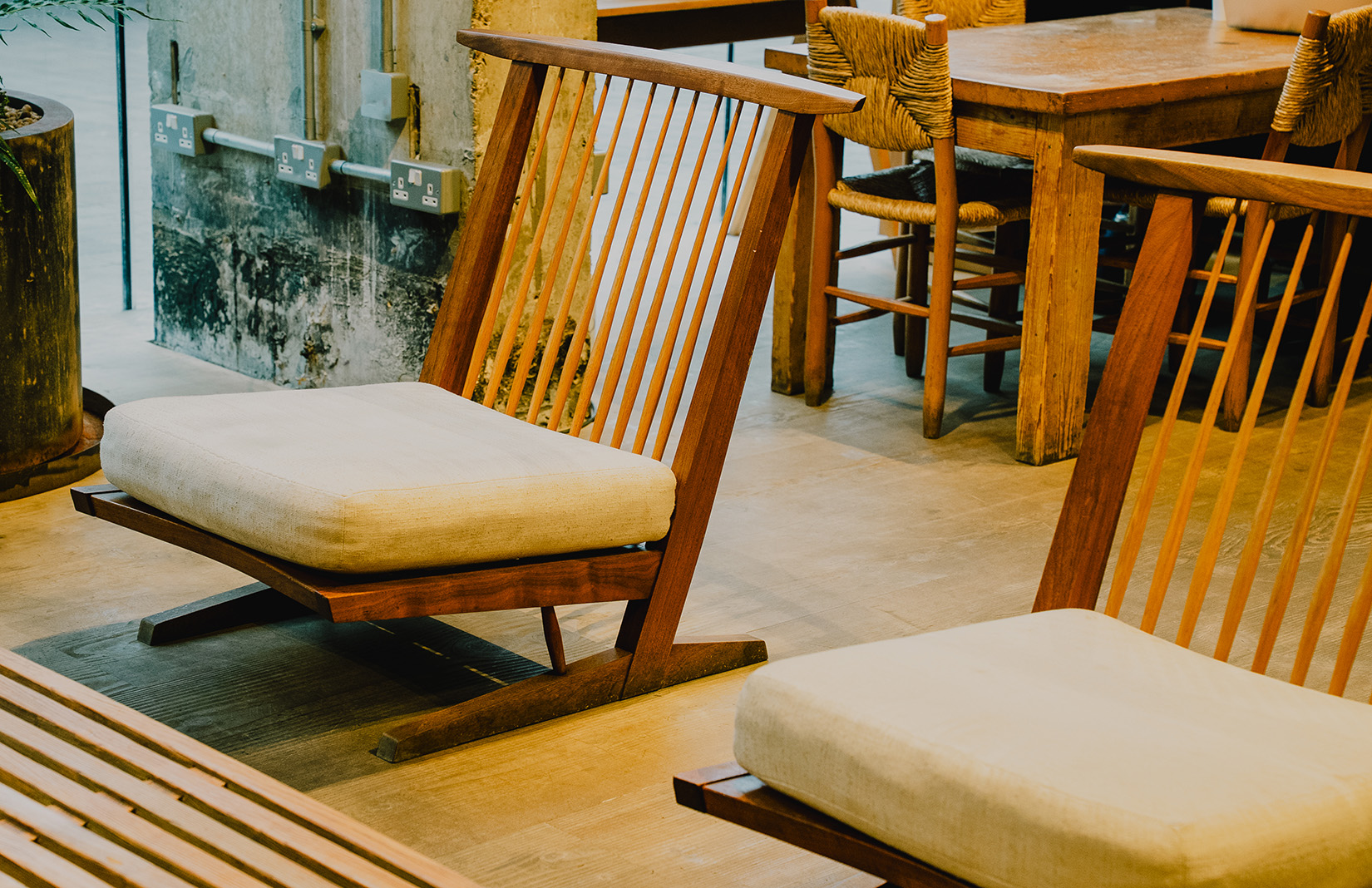
This intimate izakaya sits on the first floor of Japan House, the Japanese cultural centre in London’s Kensington neighbourhood. Chairs in the dining room, bar area and open-kitchen counter are Nakashima designs, made by the Sakura Seisakusho studio in Shikoku Japan with the designer’s favourite black walnut and topped with black leather cushions.
180 Quarter, London
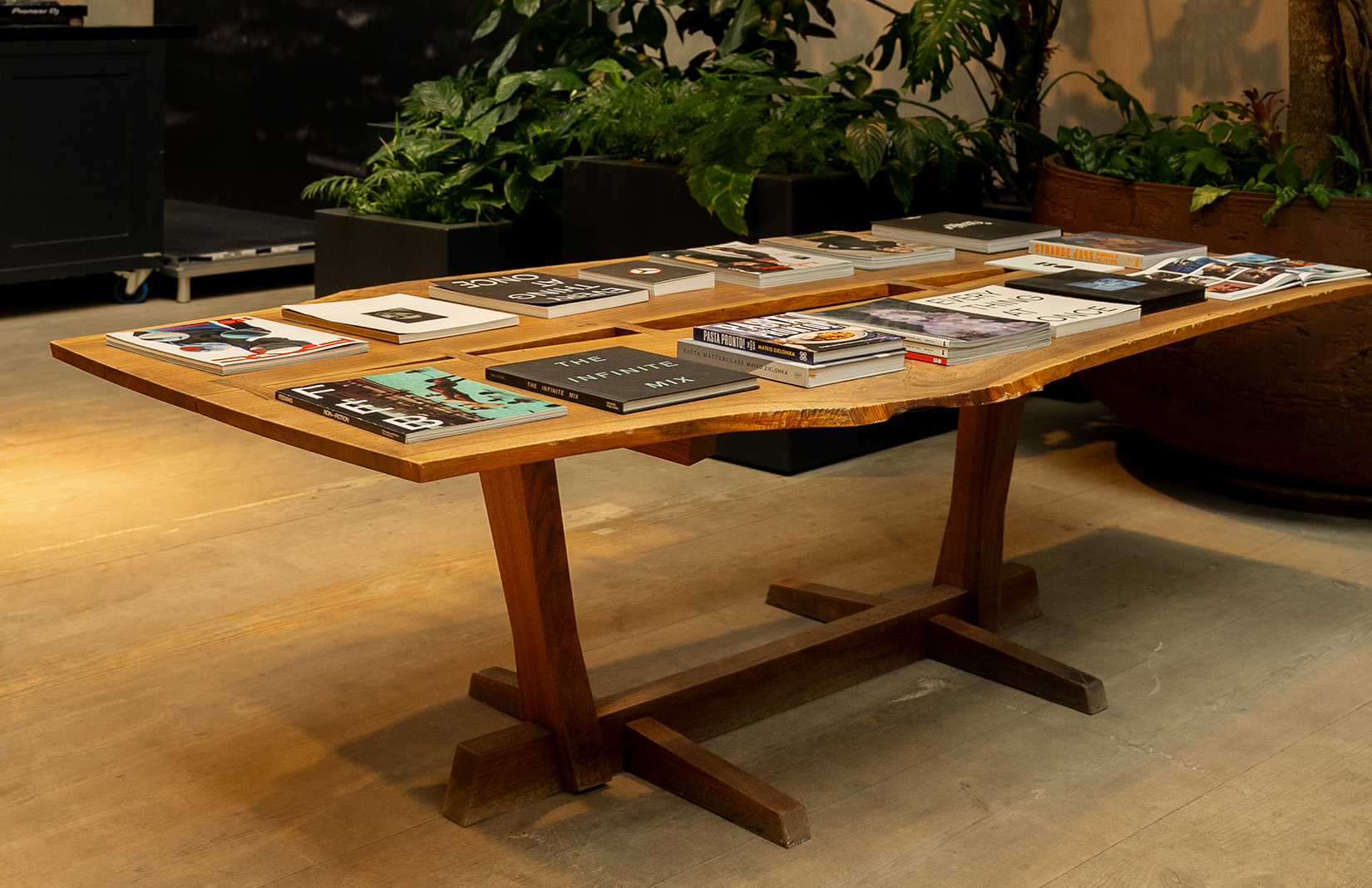
The free-edge table at the entrance to 180 Quarter’s central atrium, in London, is handcrafted from a single piece of wood, split in two identical pieces tied together with butterfly joints where the edges naturally want to fall away. Nakashima furnishings feature around the building; a bench in the foyer of 180 Thames pulls focus with its unique shape, which follows the natural swell and taper of the mother tree.